Ponce de Leon Inlet, FL 





Select a photograph to view a photo gallery
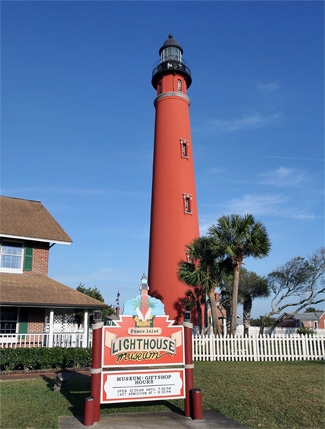

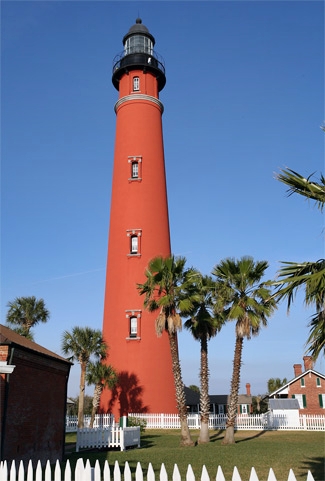
Photo Gallery
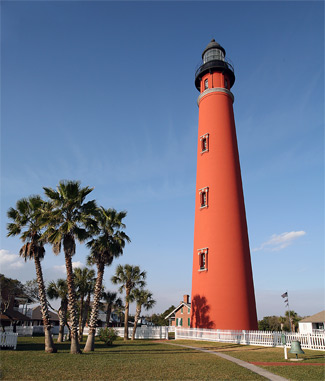
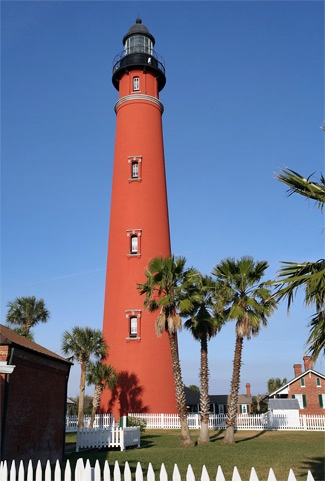

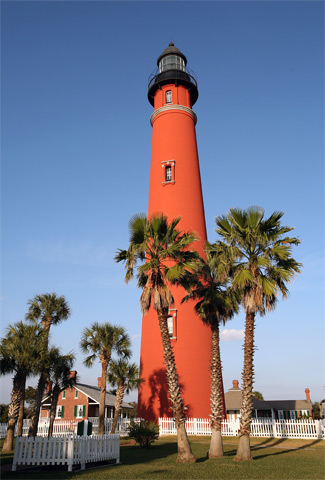
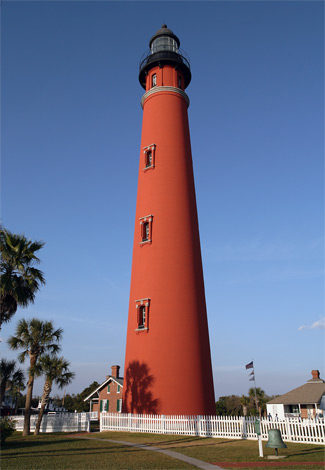
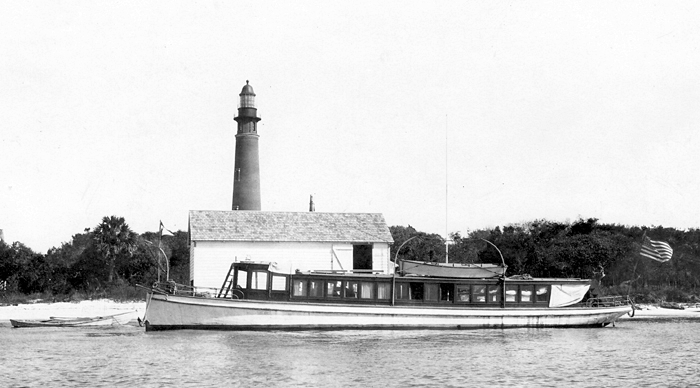

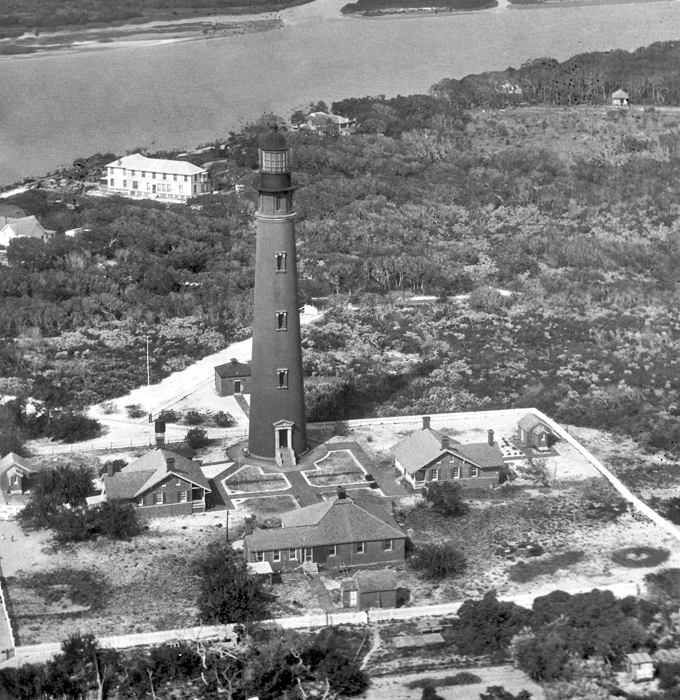
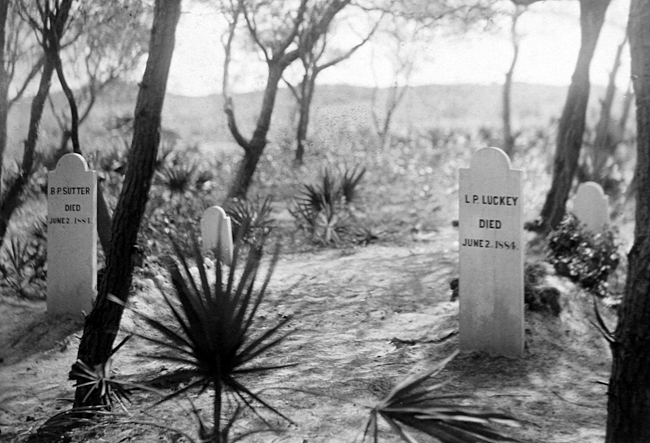
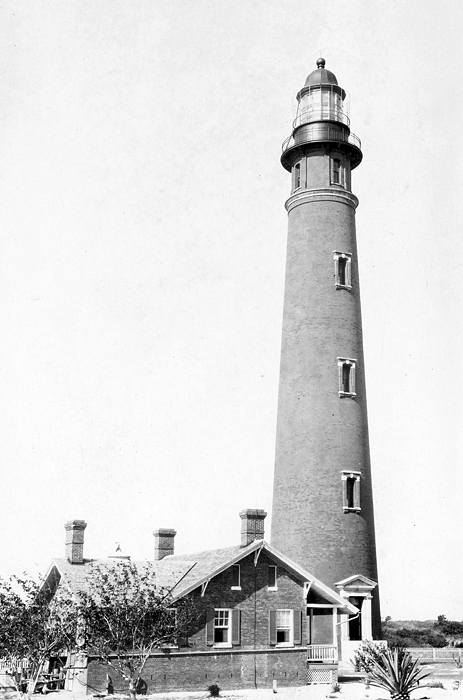
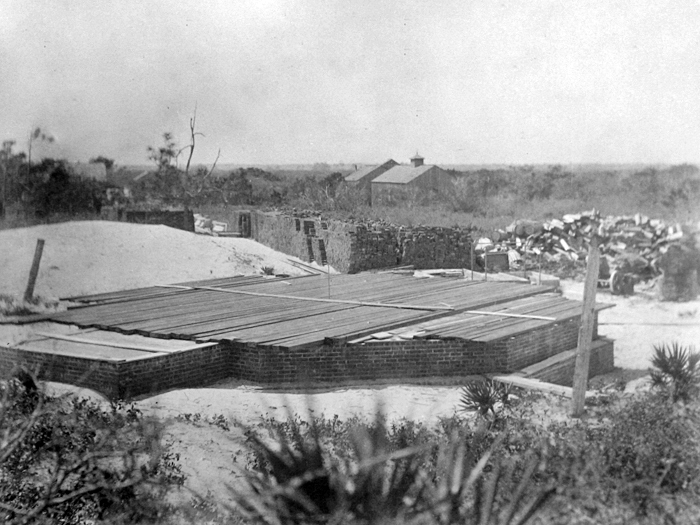
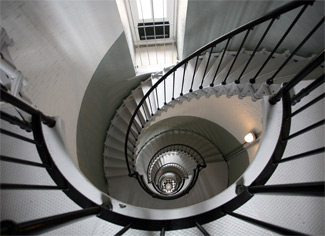

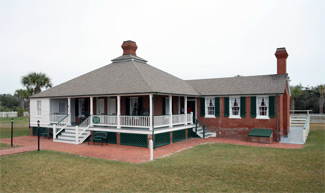
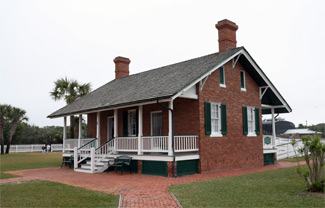
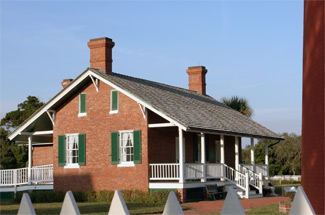
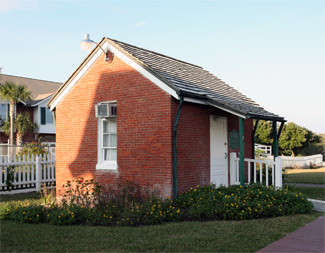
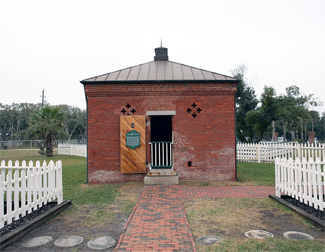
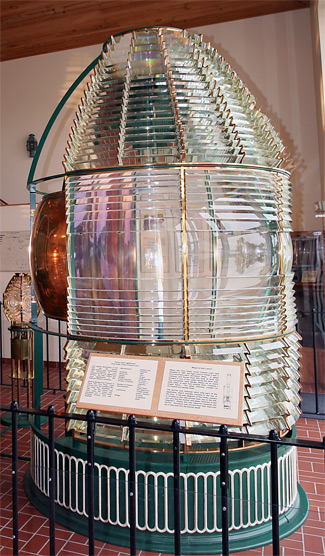
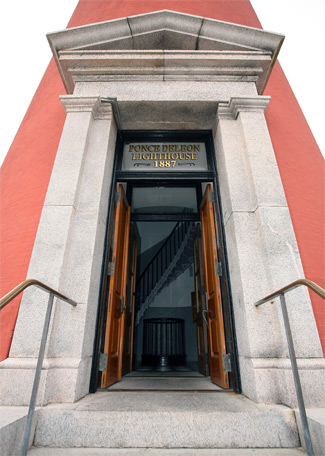
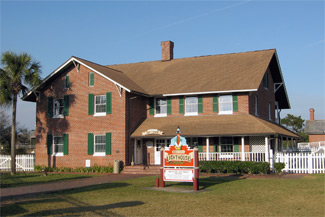
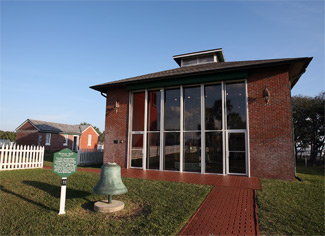
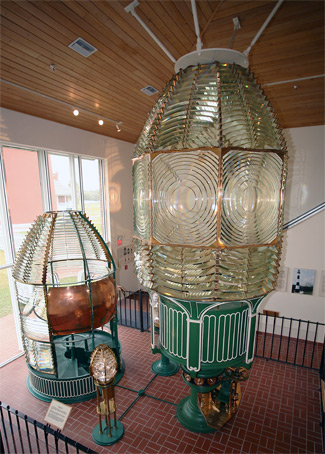
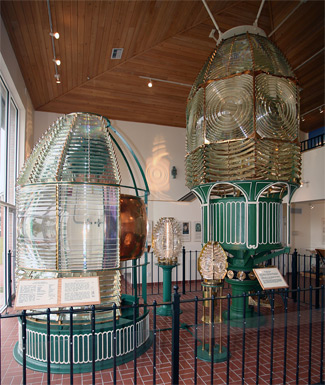
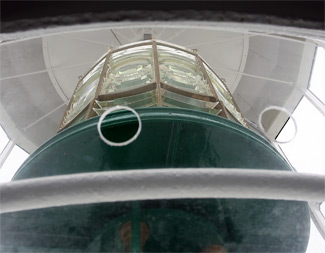
Photo Gallery
Photo Gallery
|
Keeper Williams didn’t have much work to do, for the government had failed to provide oil for the eleven lamps in his lantern room. During a violent storm in October 1835, the dwelling was washed into the inlet and the foundation of the tower was undercut. Soon thereafter, the station also suffered the effects of the Second Seminole Indian War when a raiding party visited New Smyrna and ravaged the lighthouse. It is reported that Chief Coacoochee procured one of the reflectors from the lantern and used it in his headdress during the Battle of Dunn Lawton fought near the lighthouse. This is unlikely, as the reflectors were swept out to sea in the October storm, but the Seminole leader might have found a reflector that had washed up on a nearby shore. Repair work on the crippled tower was not possible during this time due to the troubled relations with the Native Americans, and the lighthouse eventually collapsed in April 1836. Congress appropriated $7,000 on March 3, 1837 to rebuild the lighthouse on a new site, but this sum reverted to the treasury in 1839.
The Florida legislature sent a resolution to Congress on February 8, 1847 requesting a new lighthouse for Mosquito Inlet. This request, however, was not acted upon, and the matter would not be revisited until after the Civil War. The Lighthouse Board’s annual report of 1870 stated that the level of commerce passing through Mosquito Inlet did not by itself justify a major light, but since the inlet was positioned roughly at the center of the 100-mile stretch of unlit coastline between the lights at St. Augustine and Cape Canaveral, a lighthouse at the inlet that would serve as both a coastal and a harbor light was merited. The board’s request that year for $60,000 to commence the construction of the lighthouse, however, went unfunded.
The Lighthouse Board repeated its request for a lighthouse at Mosquito Inlet each of the next four years to no avail. In 1882, the request was renewed, but now the estimated construction cost had risen to $200,000. Congress finally relented, but it did not supply the funding in one lump sum. Rather, payments were painfully strung out over the next five years, hampering work on the light station.
|
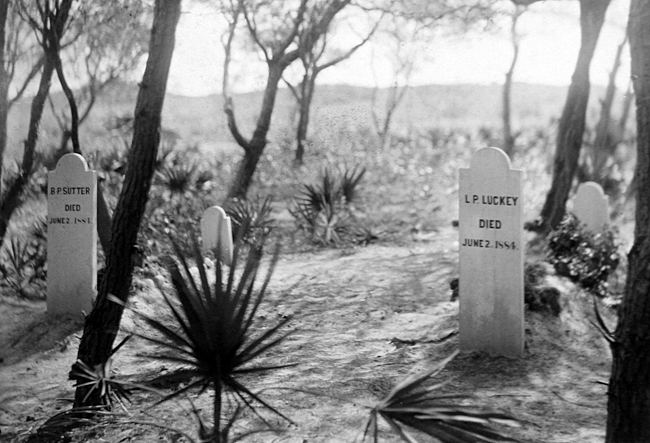
General Orville E. Babcock, chief engineer of the fifth and sixth lighthouse districts, was to oversee construction of the lighthouse but tragically, on June 2, 1884, the vessel transporting Babcock to shore overturned in the breakers at the bar, and he drowned in the inlet along with three other men.
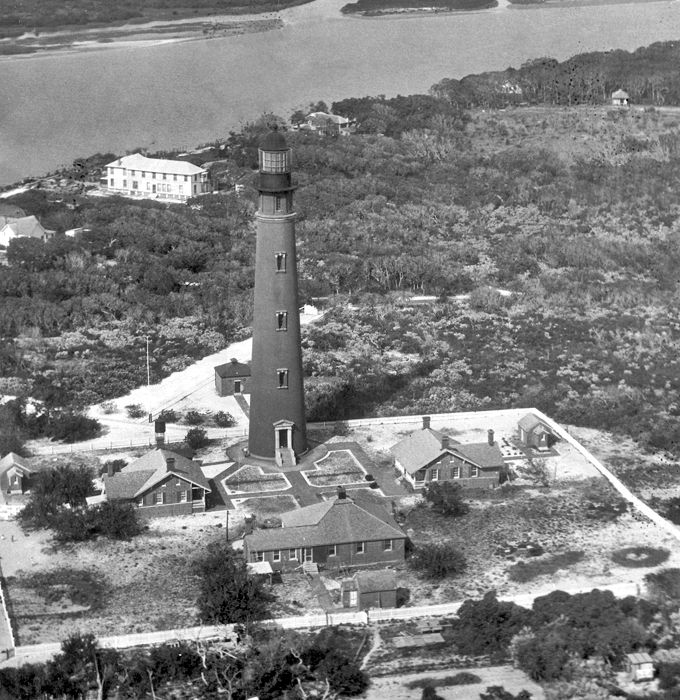
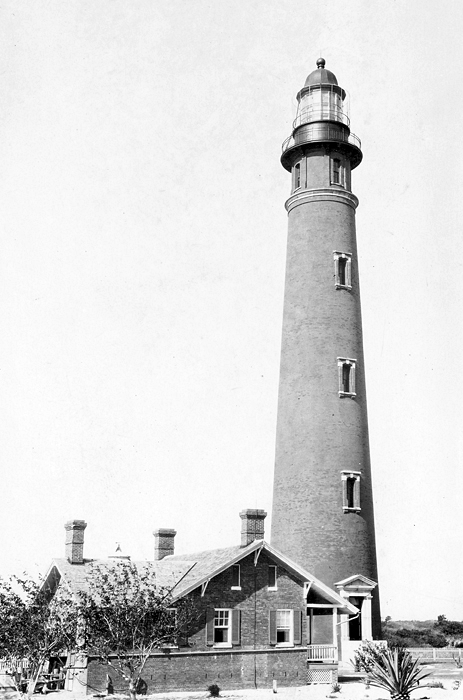
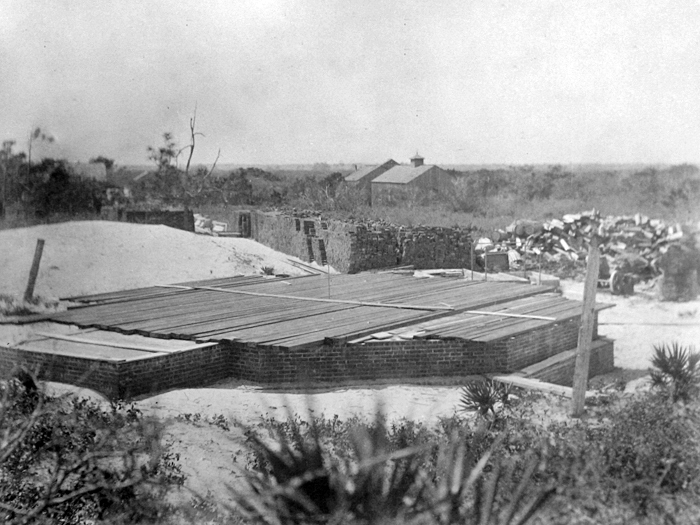
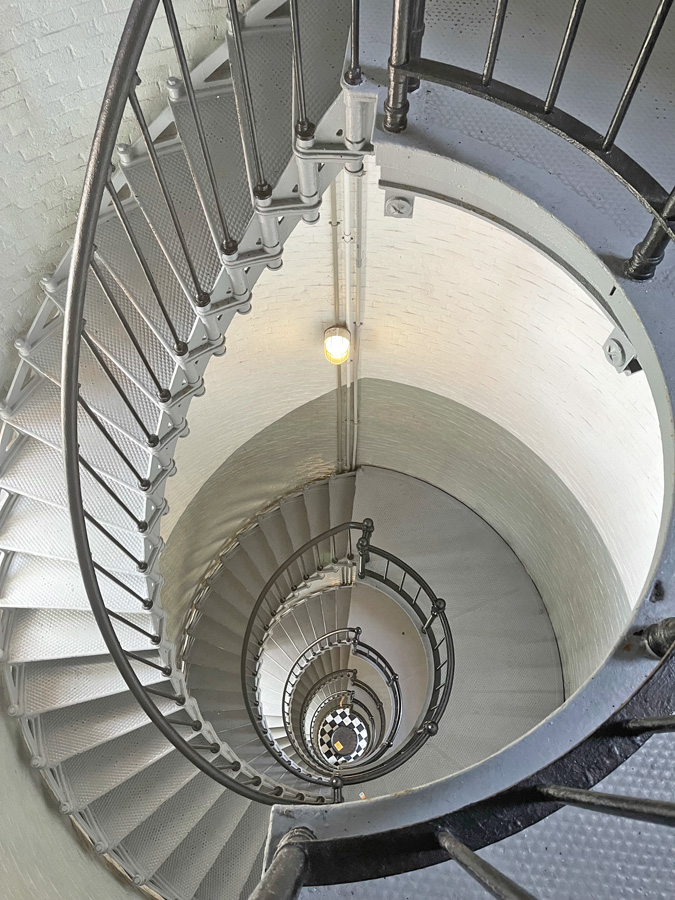
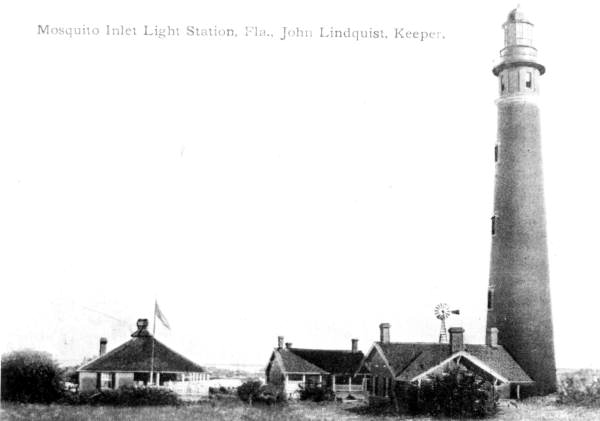
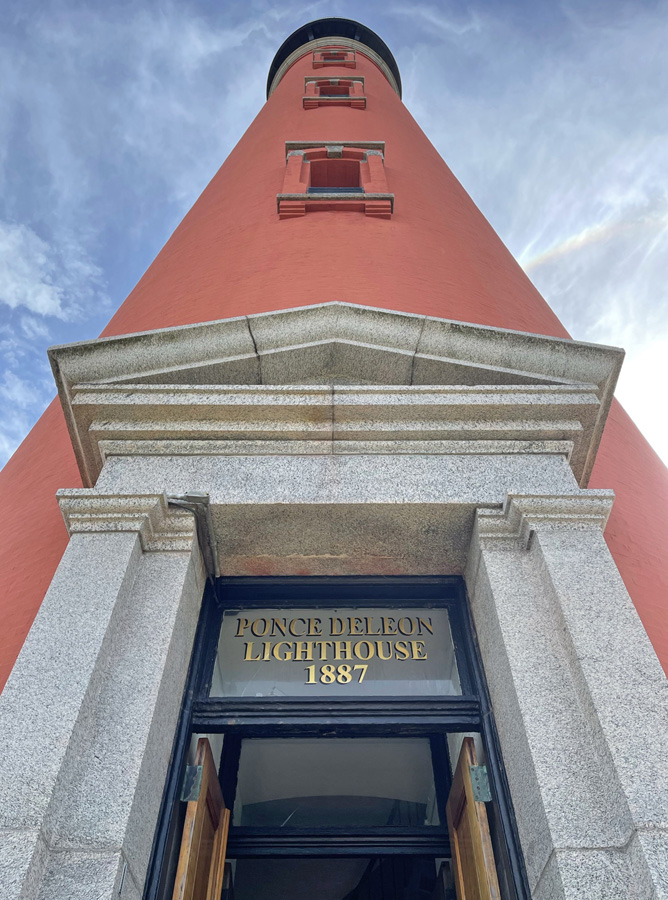
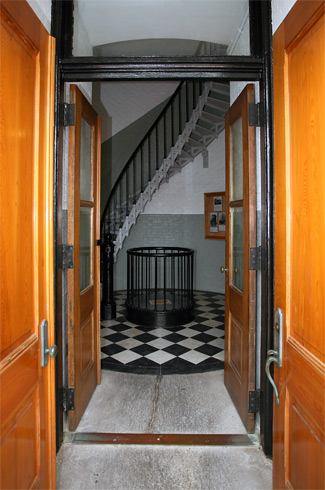
Jared Smith assumed responsibility in Babcock’s stead, and work on the project soon commenced. Over a million bricks would be used to construct the lighthouse, which slowly grew to its preordained height of 175 feet, six-and-a-half inches from the ground to the tip of the lightning rod. The only taller brick lighthouse in the country is Cape Hatteras. A brick foundation, extending twelve feet below ground, supports the massive tower which consists of an inner and outer wall connected by spoke-like interstitial walls. The outer wall tapers as it rises, while the inner wall maintains a constant twelve-foot diameter, leaving room for the 194-step, circular stairway.
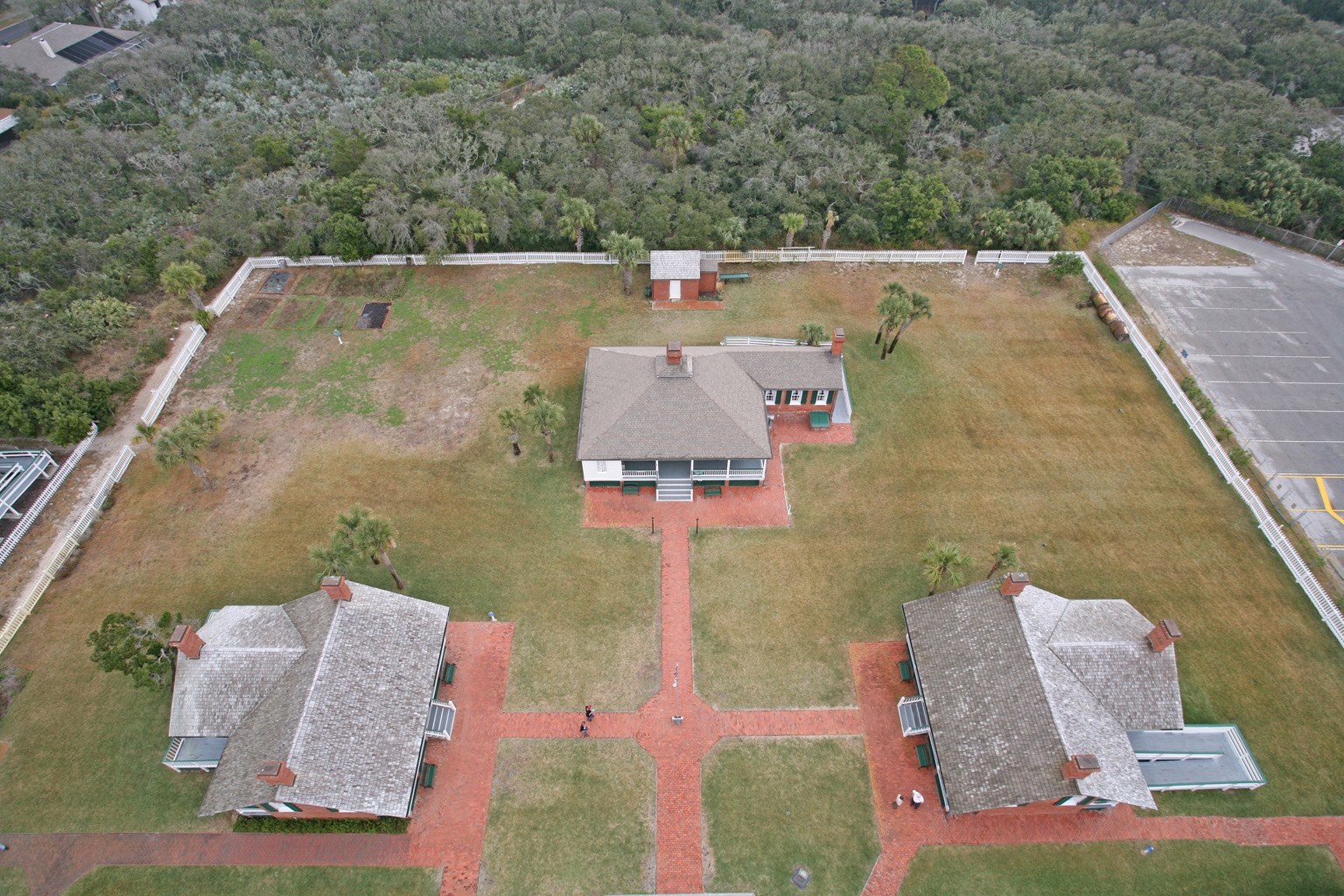
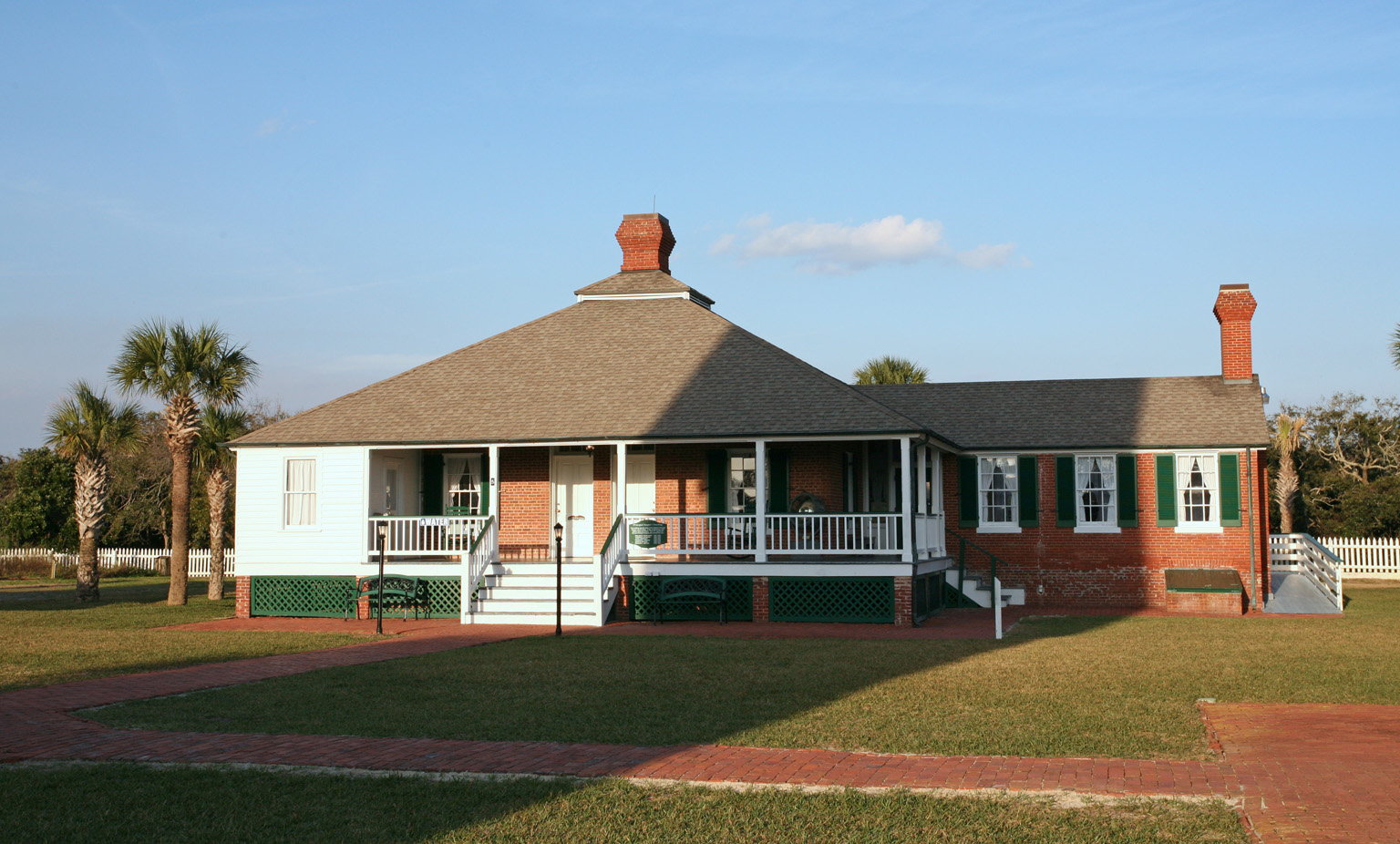
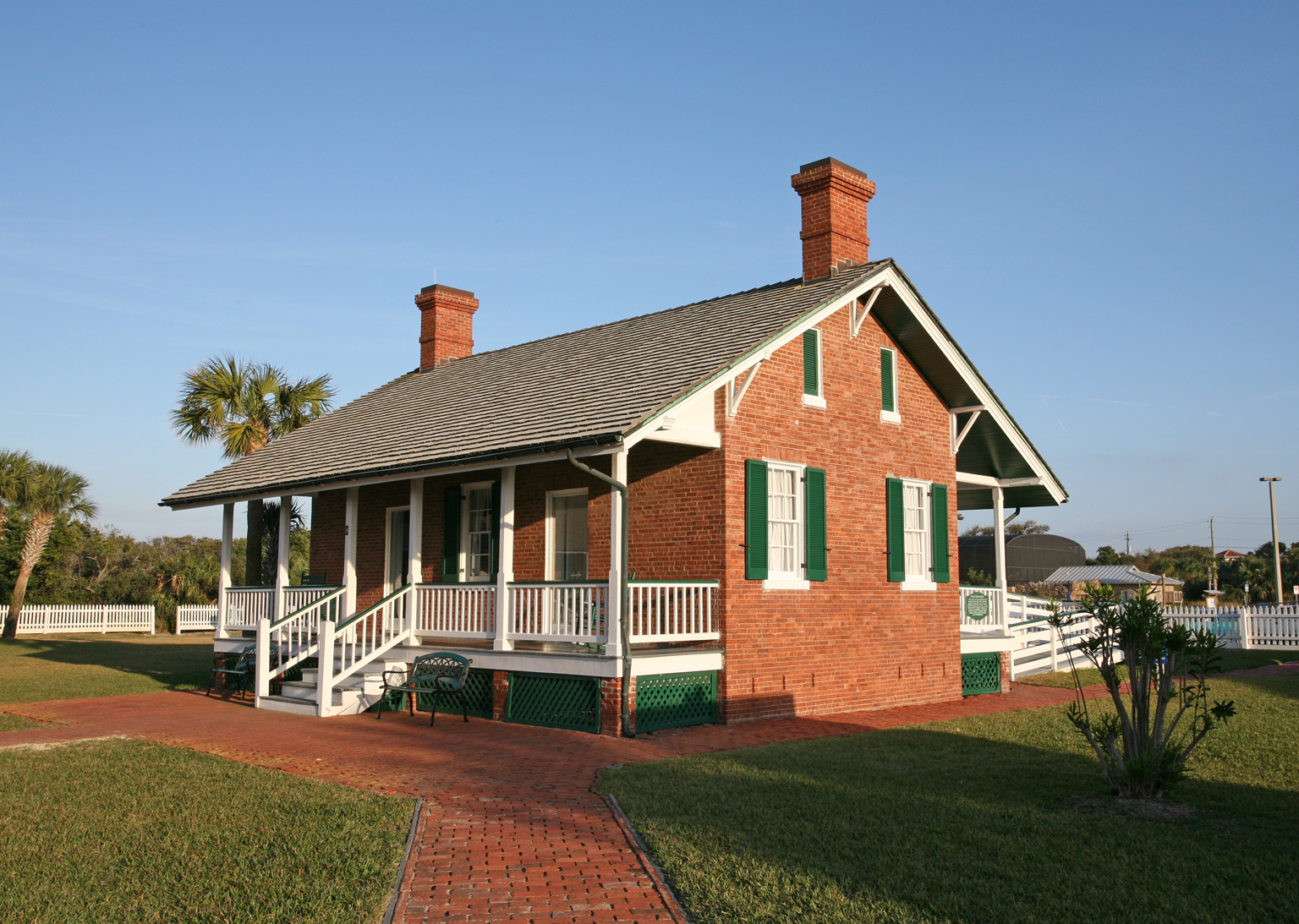
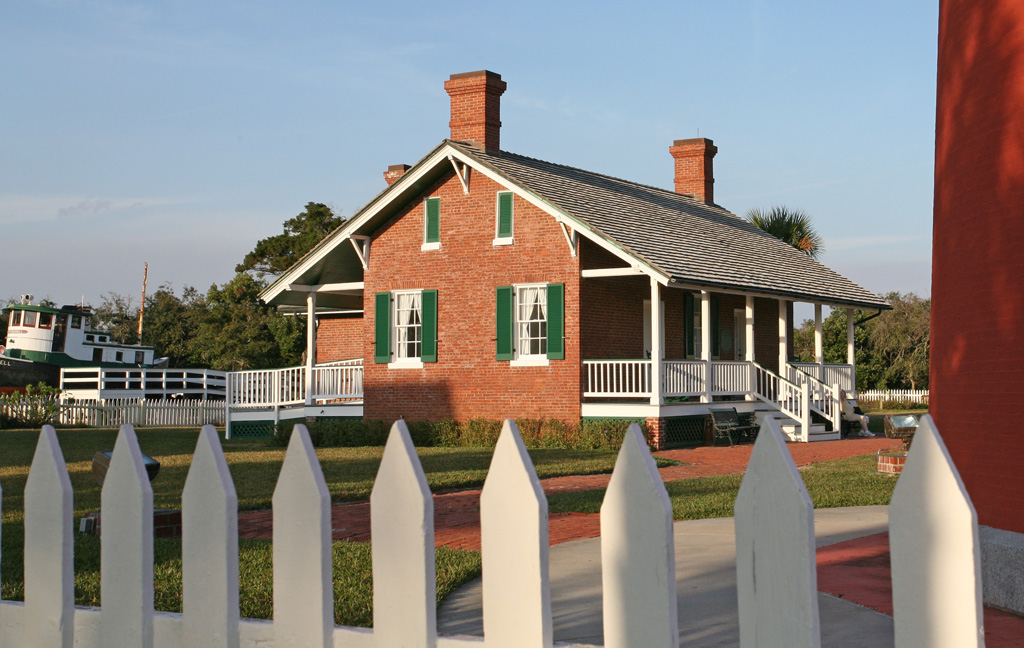
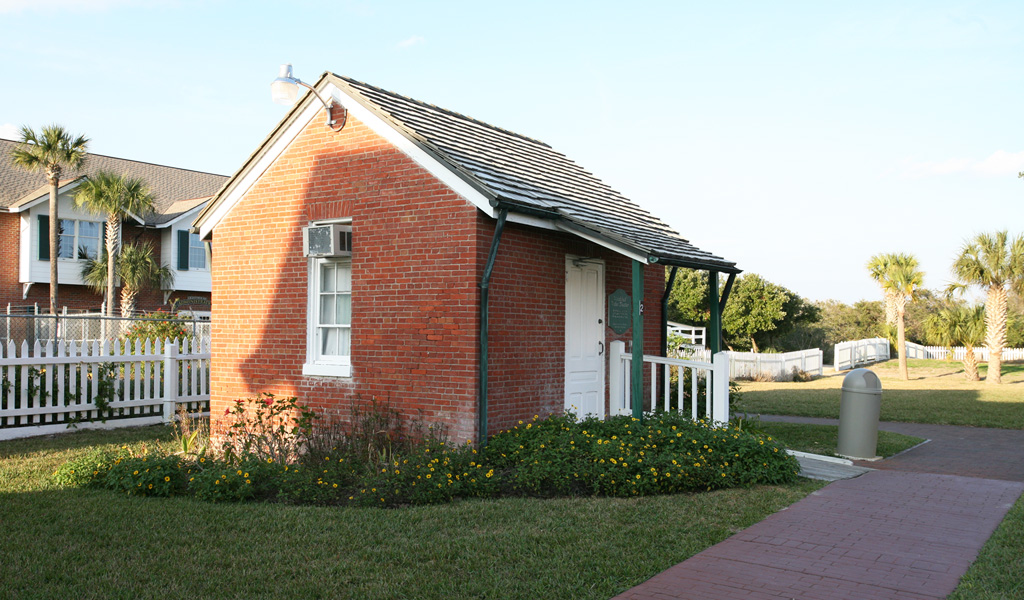
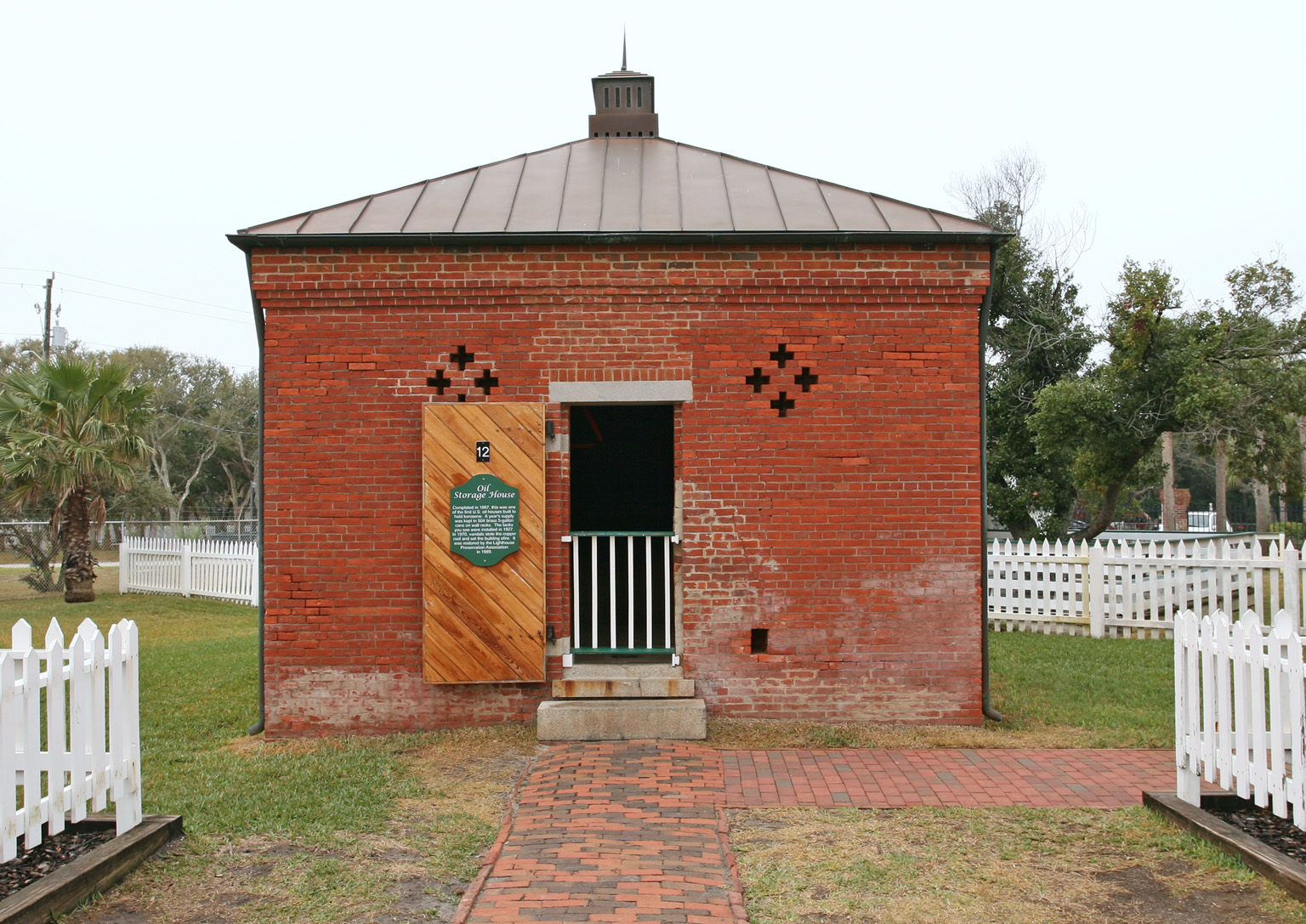
Originally, a multi-family residence was considered for the station, but instead, separate dwellings were built for the head keeper and the two assistants to afford them more privacy. The station is beautifully laid out in the shape of a cross, with the head keeper’s dwelling built at the end of a brick walkway directly east of the lighthouse, while the first and second assistant keeper dwellings are symmetrically positioned north and south of the walkway. The largest dwelling is a square structure with a chimney rising from the center of a double-hipped roof, and, of course, it belonged to the principal keeper. The identical assistant keeper’s dwellings are rectangular with chimneys at each end of their pitched roofs. A brick woodshed with attached privy was built behind each of the dwellings, and a large storage building was provided for the station’s oil.
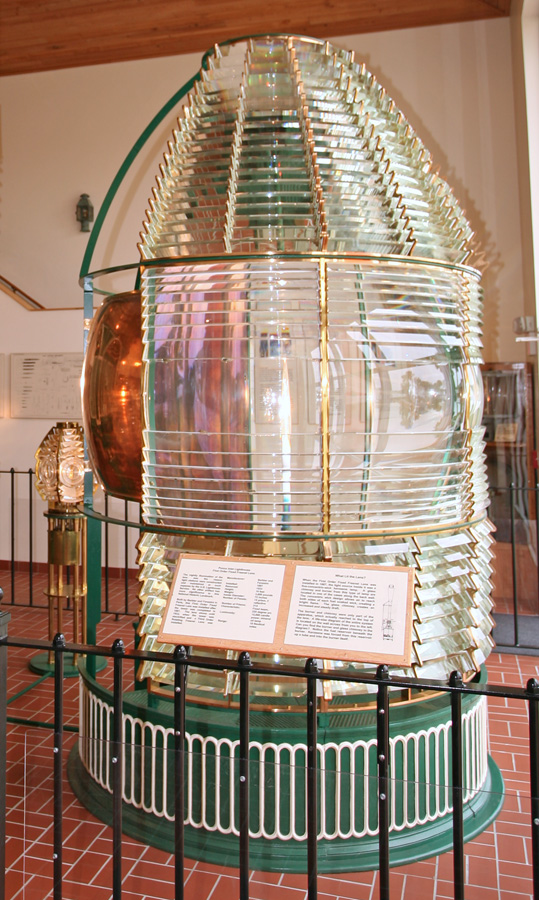
When the tower was completed, a first-order Fresnel lens, constructed in 1867 by the Parisian firm of Barbier and Fenestre, was assembled in the lantern room. The lens was somewhat unique in that the landward side of the lens was composed of three concave reflecting panels. The light was exhibited for the first time on November 1, 1887, by head keeper William Rowlinski, who had most recently served as first assistant keeper at Cape Romain Lighthouse in South Carolina. Born in Russia in 1833, Rowlinski immigrated to the United States at the age of seventeen and settled in Charleston, South Carolina. After fighting in the Civil War, he joined the Lighthouse Service in 1883, and started his service at St. Augustine Lighthouse before being transferred to Cape Romain.
Rowlinski served at Mosquito Inlet Lighthouse for just over six years, and even with the separation provided by the detached residences, he still did not get along with some of his assistant keepers. The disputes escalated to the point that the Lighthouse Board swapped Rowlinski with the head keeper at Georgetown, South Carolina. Thomas Patrick O’Hagan thus became the second head keeper at Mosquito Inlet in 1893, arriving at the station with his wife and four kids. When he was transferred to Amelia Island twelve years later, his posterity numbered eleven.
In 1896, lightning struck the lighthouse, destroying the electric call apparatus used for summoning the relief keeper. Two years later, the main gallery outside the lantern room was rigged with a spar and halyards, and the keepers were supplied with signal books, a set of international code flags, and a pair of marine glasses so they could communicate with offshore vessels.
|
On October 26, 1919, First Assistant Keeper Joseph B. Davis had a heart attack and died while climbing the lighthouse to light the lamp. When the light failed to come on, Second Assistant Keeper Benjamin F. Stone went to investigate and found Davis’ body on the stairs. With a heavy heart, Stone carried Davis’ body down the stairs and serviced the light that night.
Though accurate, the name Mosquito Inlet proved a deterrent to increased settlement in the area. To correct this problem, the name was officially changed to Ponce de Leon Inlet in 1926 in honor of the famed explorer, and the lighthouse became the Ponce de Leon Inlet Lighthouse.
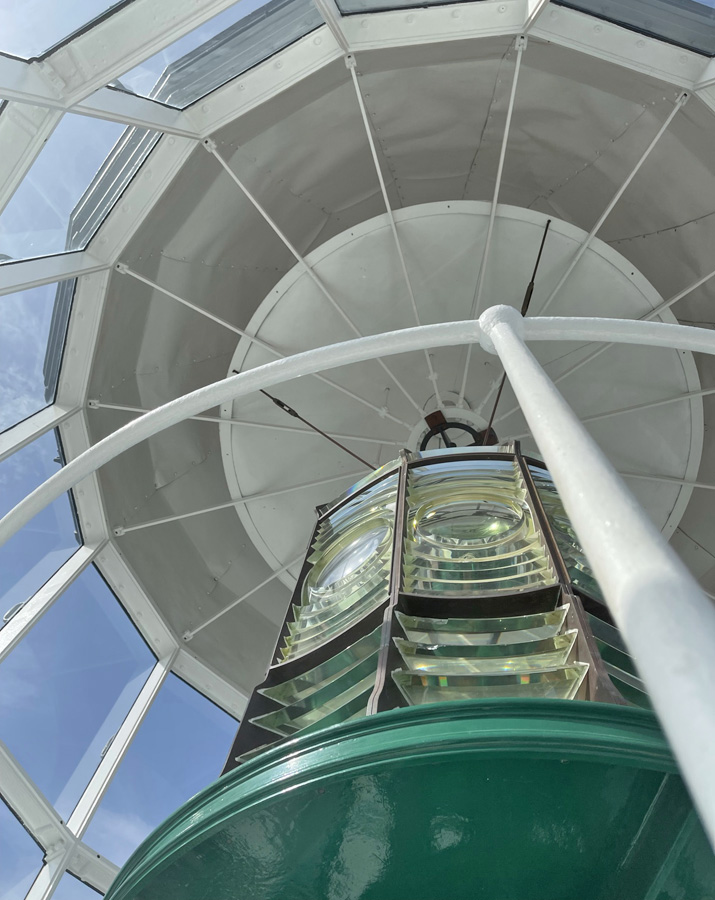
Ponce de Leon Inlet Lighthouse was electrified in 1933, and the first-order Fresnel lens was replaced by a third-order lens relocated from the discontinued Sapelo Lighthouse in Georgia. This new lens rotated producing six flashes in a fifteen-second period followed by a fifteen-second eclipse. The Coast Guard assumed responsibility for Ponce de Leon Inlet Lighthouse in 1939 and kept a crew at the station until the lighthouse was fully automated in 1953.
After automation, the station dwellings sat unoccupied until the Town of Ponce Inlet was incorporated in 1963 and began using one of the assistant keeper’s dwellings as a town hall. The Coast Guard abandoned the lighthouse in 1970 in favor a steel skeletal light tower located at their station on the south side of the inlet. At the urging of concerned residents, the Town took over the deed to the property, and the citizens formed the Ponce de Leon Inlet Lighthouse Preservation Association to manage the facility.
The third-order lens was removed from the tower in 1971 and shipped to the Coast Guard Academy Museum in New London, Connecticut, but after a museum was established at Ponce de Leon Inlet Lighthouse, the lens was returned for display in 1973. When a newly constructed high-rise condominium obscured the light at the Coast Guard station in 1982, Ponce de Leon Inlet Lighthouse was outfitted with a modern optic and reactivated.
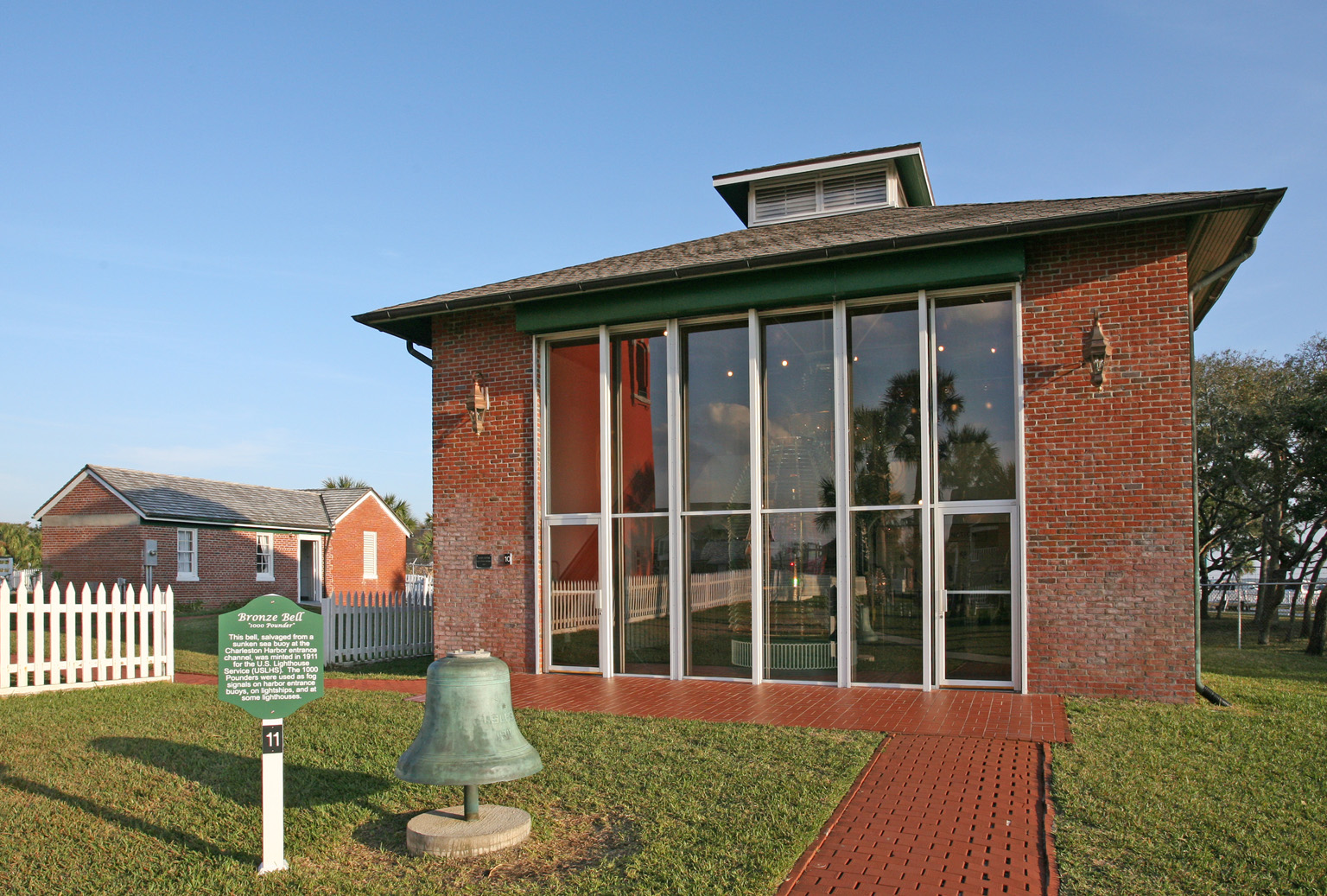
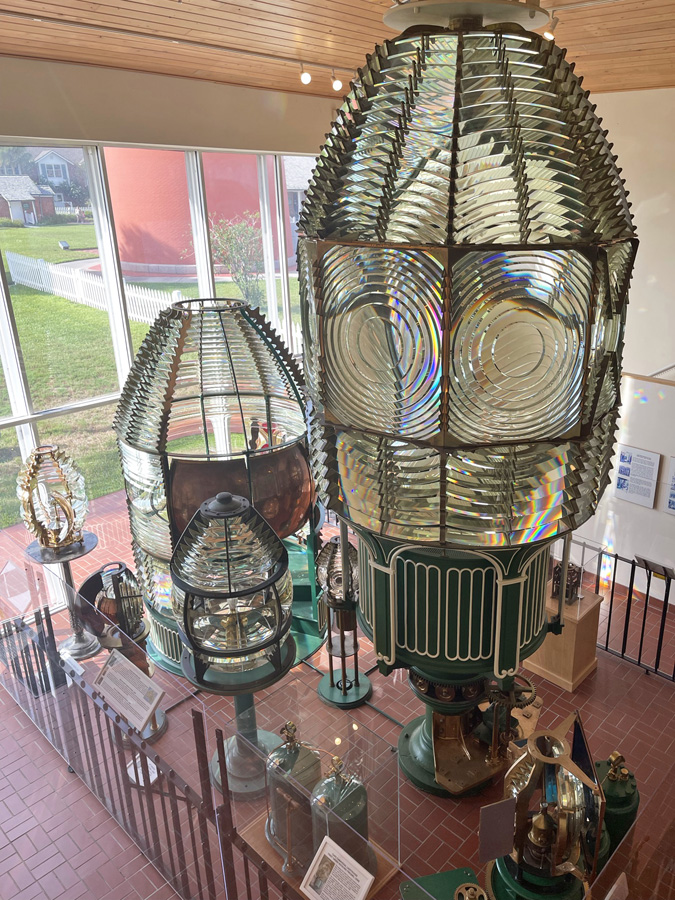
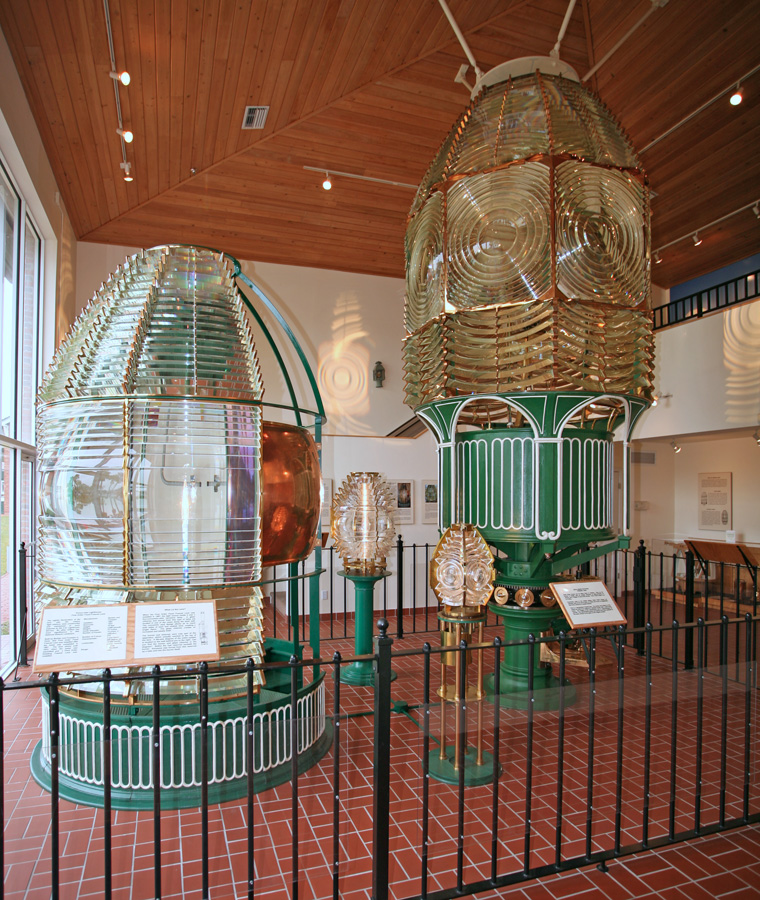
Ponce de Leon Inlet Lighthouse is one of the finest light stations in the United States and merits an extended visit. The dwellings now house exhibits on the lighthouse keepers and families. Even the modern redbrick gift shop is historically significant as it was constructed using the plans for the multi-family dwelling that was never built. A lens exhibit building was constructed on-site in 1995 and now houses the revolving first-order lens from Cape Canaveral Lighthouse. In 2003, the fixed first-order lens originally used in the Ponce de Leon Lighthouse was also placed on display, after it was returned by Mystic Seaport. Two smaller replica lenses are also on display along with other acquired lenses.
The station’s historical value continues to grow thanks to the tireless efforts of the preservation association. The third-order Fresnel lens was placed back in the lantern room in 2004, providing the public a rare chance to see an active, revolving, Fresnel lens. The lighthouse’s connection to the past was further strengthened when the wreck of the S.S. Commodore, which had carried Stephen Crane, was located and artifacts retrieved from the wreckage were placed temporarily on display at the station. The lighthouse serves today as a Private Aid to Navigation, maintained by the museum’s staff.
Keepers:
References