Bodie Island, NC 





Select a photograph to view a photo gallery
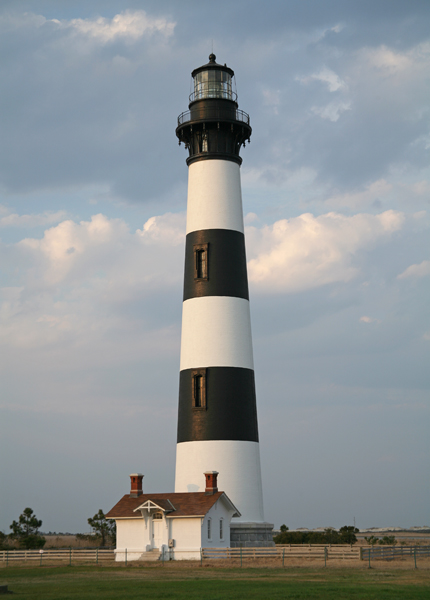
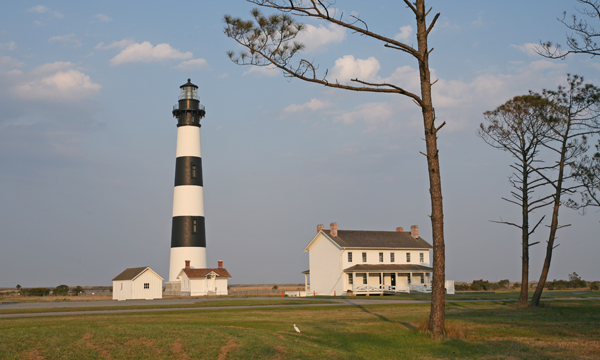
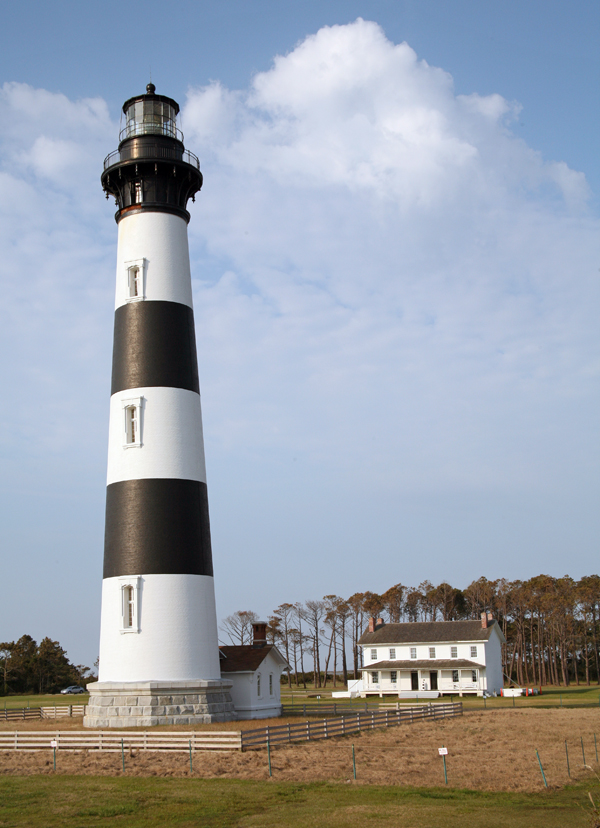
Photo Gallery
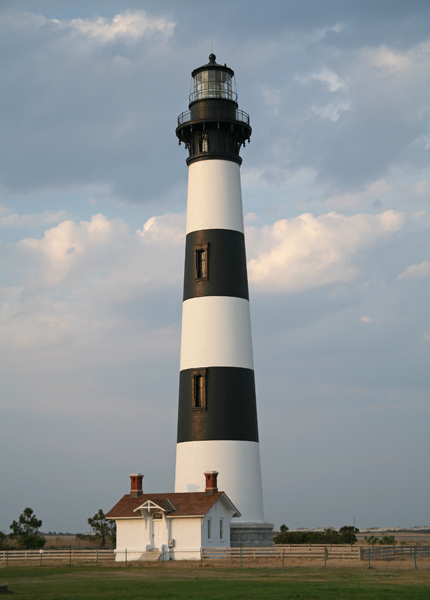
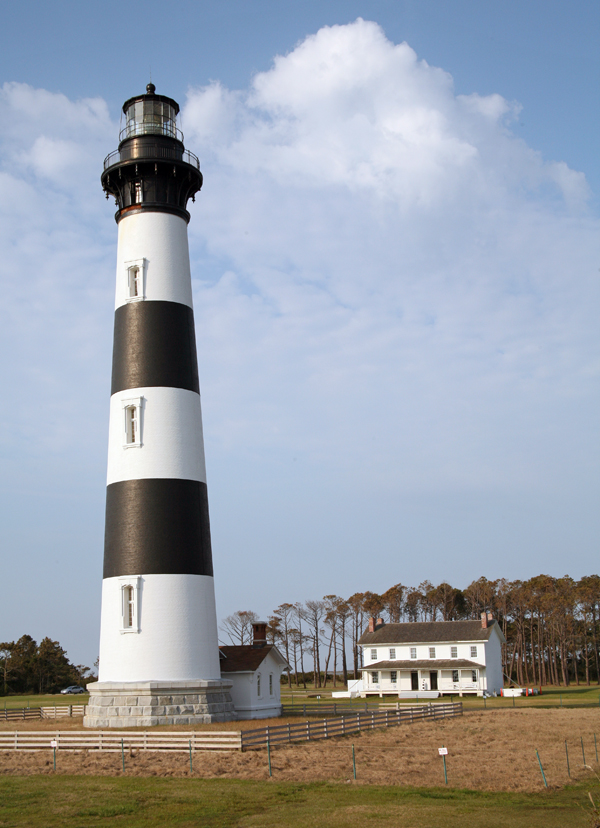
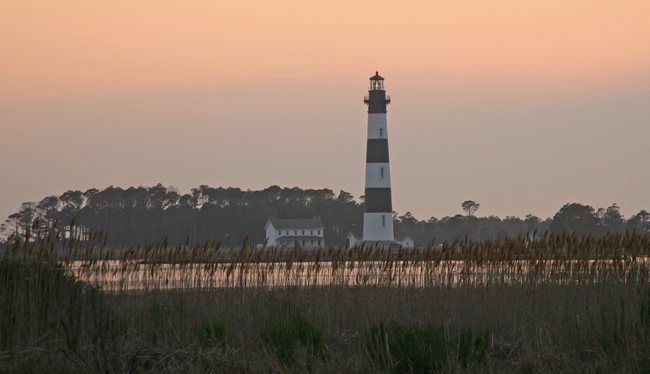
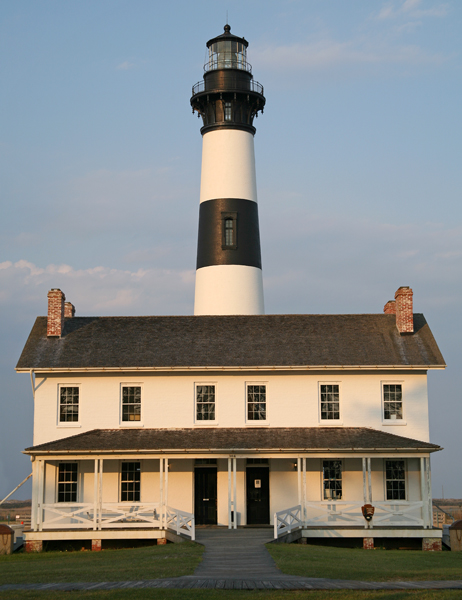
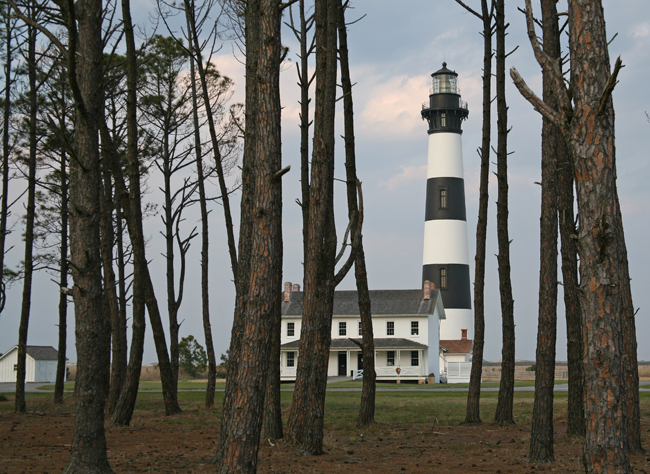
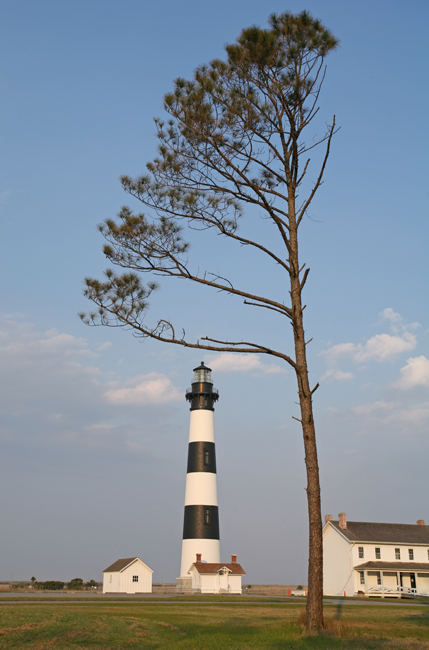
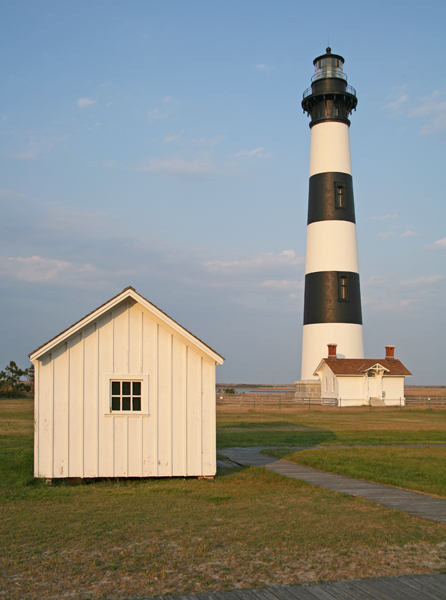
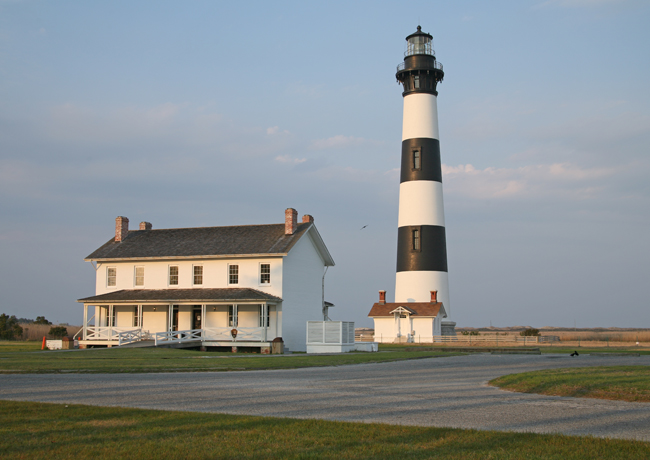
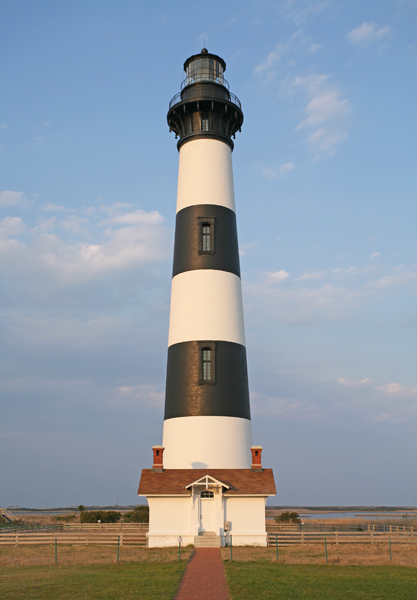
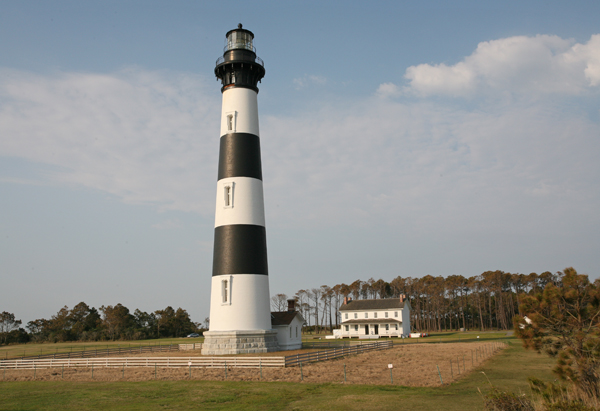
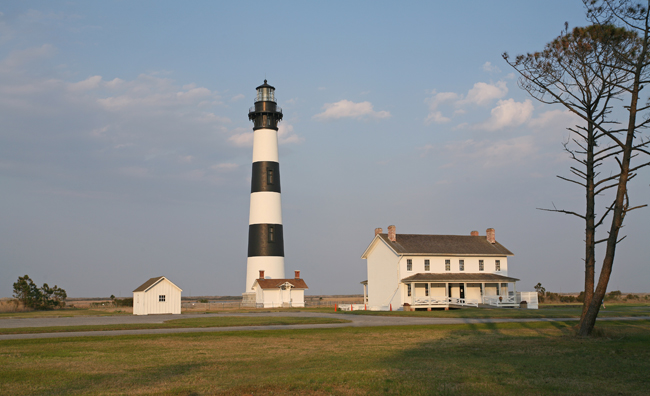
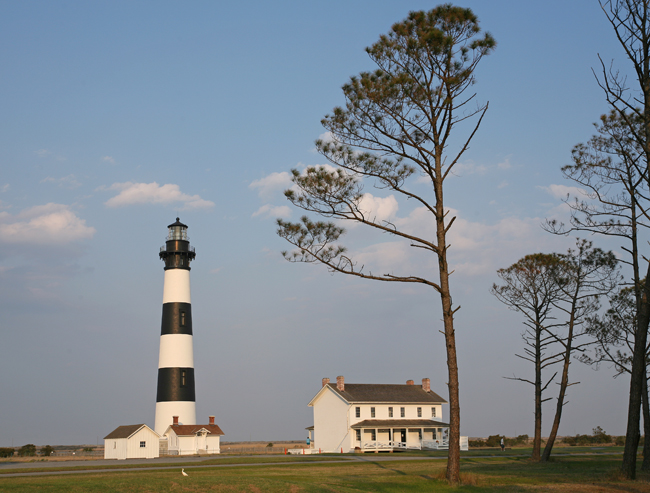
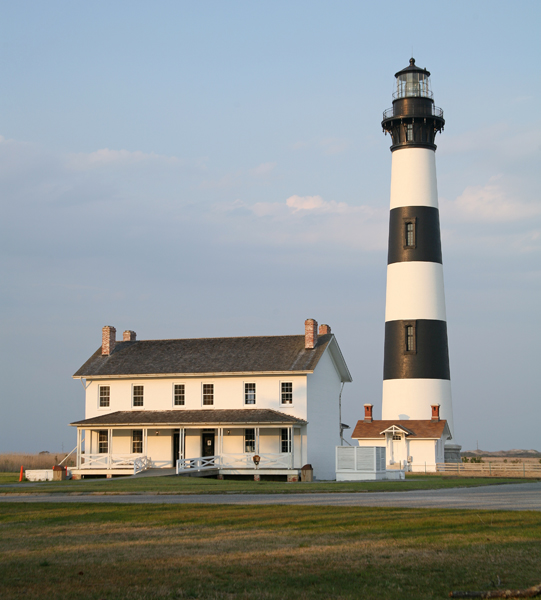
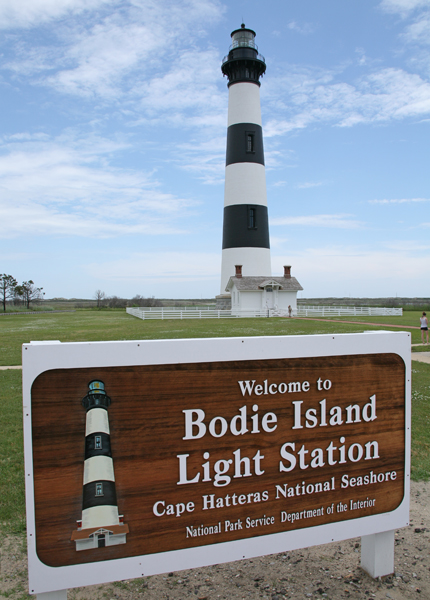
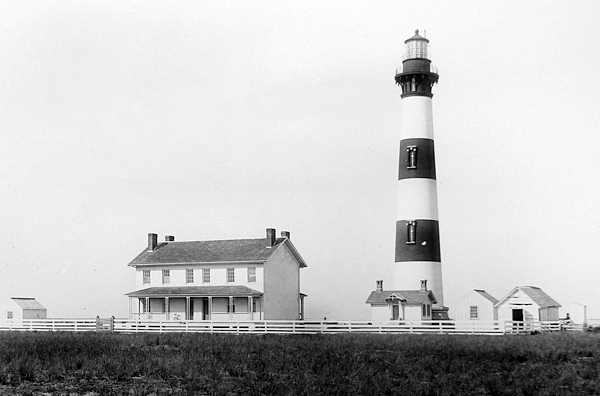
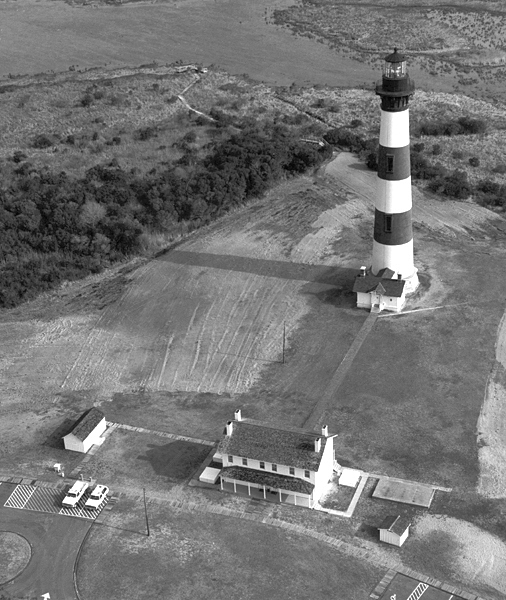
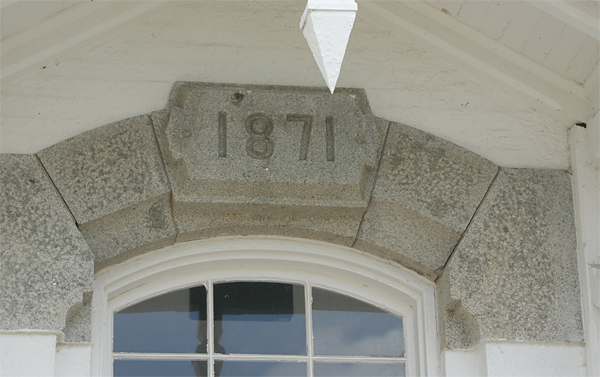
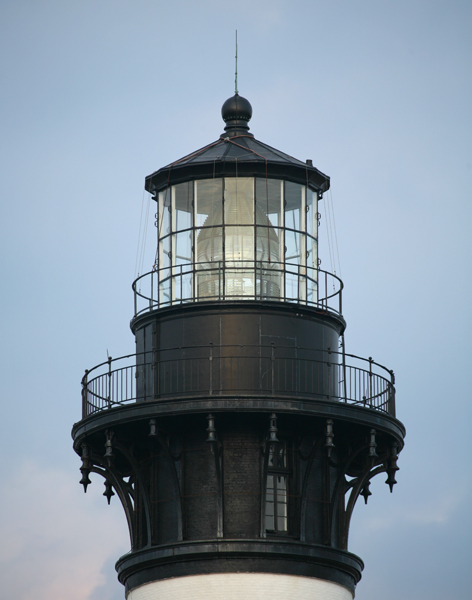
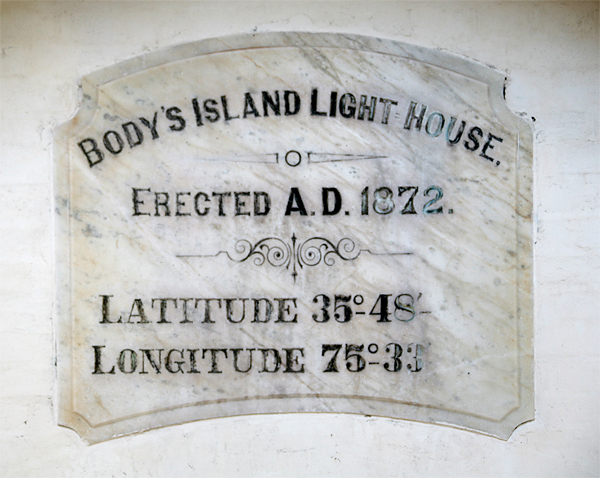
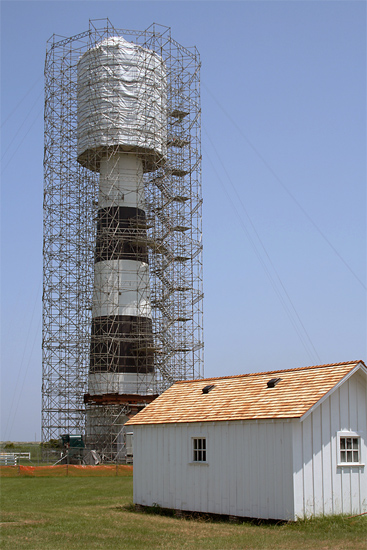
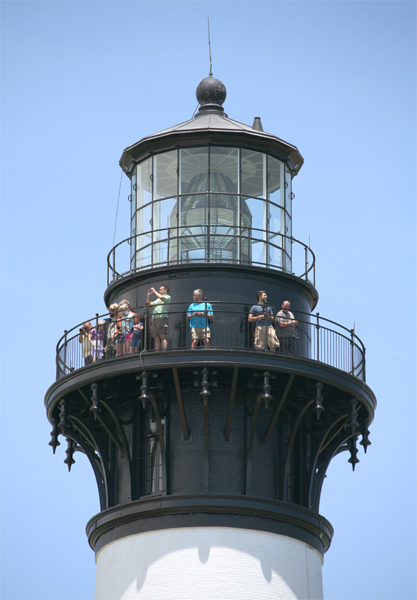
Photo Gallery
Photo Gallery
|
In 1838, Congress modified the wording of its 1837 appropriation so it would apply to a lighthouse on “Body’s Island” as well, but the construction of the lighthouse was fraught with problems, beginning with a multi-year delay because of difficulties in acquiring the land. Once the purchase finally went through, the man who approved all lighthouse expenditures (the Fifth Auditor of the Treasury), was far more interested in saving money than in building a proper lighthouse. Although normally we would applaud efforts to curtail government spending, in this case it was disastrous. As if having Scrooge holding the purse strings wasn’t bad enough, the overseer of the construction was Thomas Blount a retired Customs official who knew nothing about lighthouses and ignored the recommendations of Francis Gibbons, who was contracted as engineer. The result was a monument to inefficiency. Finished in 1847, the fifty-four-foot tower housed not a Fresnel lens, but an inferior revolving lighting apparatus made up of fourteen lamps and reflectors that frequently didn’t work. The unsupported brick foundation quickly developed cracks and leaks and began to sink on one side. Within a couple of years the lighthouse resembled the leaning Tower of Pisa, without the cultural cachet, and although a fourth-order lens was installed in the tower in 1854, it soon had to be abandoned. A mere eleven years after it was constructed, the now derelict lighthouse was razed.
The second lighthouse, although better built, fared even worse. First lit on July 1, 1859, the new Bodie Island Lighthouse was designed by the trusty Army Corps of Engineers, and boasted a graceful eighty-foot tower of whitewashed brick and an iron lantern room. Its third-order Fresnel lens was visible fifteen miles out to sea, but almost immediately the Civil War brought an end to its usefulness. A report in November 1862 indicates that the lighthouse was still standing, though its Fresnel lens had been removed, but before the end of the war the Confederates succeeded in destroying the tower. Bodie’s Fresnel lens was later discovered by Union troops in the rotunda of the North Carolina Capitol building, where “a vast pile of lighthouse apparatus: costly lamps and reflectors of Fresnel and Argand” had been cached by the Confederates.
|
From the time work began on the lighthouse in July 1871 until its completion the following year, at least six vessels ran aground in the vicinity. The resulting financial loss of $133,000 exceeded the expense incurred in building the lighthouse.
Except for an unfortunate flock of geese crashing into the lens just eighteen days after it was first lit, Bodie Island Lighthouse has had a relatively peaceful existence. Strategically placed wire screening was put in place to protect the lens from further damage by birds. Originally, the spiral stairway, attached to the metal lantern at the top and a copper rod that was inserted into the ground at the base of the brick tower, served as the lightning conductor. During a storm, a keeper on one of the stairway landings received a rather severe shock that left the lower half of his body numb for quite some time. An engineer recommended that a conducting cable, insulated from the stairway, be run inside the tower, but it took another lightning strike in 1884, before this alteration was made.
The Annual Report of the Lighthouse Board for 1900, contains the following on Bodie Island:
There is but one dwelling at this station for the keeper and his two assistants, and it is impossible for them to have their families with them because of the lack of sufficient and proper accommodations. This fact does not tend to make the keepers contented or to induce that degree of interest in the station on their part necessary to maintain it in the best condition.An appropriation of $7,500 was requested to correct the issue until funds were finally appropriated in 1907. But then, high construction costs at the isolated station made it impossible to build a dwelling within the authorized amount, and the project was abandoned.
The position of second assistant keeper was eliminated in the 1920s, thanks to the installation of a thermostat above the lamp’s flame that caused a bell to sound if the light went out. The station’s isolation was greatly reduced in the late 1920s when a bridge was built to the island.
On September 19, 1932, Bodie Island Lighthouse was electrified through the installation of a generator at the station. This led the way to the lighthouse being fully automated in 1940. Ownership of Bodie Island Light Station, excepting the square plot of land, 100 feet on each side, on which the lighthouse stood, was transferred to the National Park Service in 1953. That same year, commercial power was extended to the lighthouse.
|
In 1928, Keeper Gaskill provided the following description of his duties:
As Keeper in charge of this station, I am responsible for the proper execution of the duties whether performed by myself or Asst. I light [the] lamp in tower every other evening and raise curtains so the light will be visible to passing ships. Asst. Keeper performs the same duty the following evening. I watch the light [at] intervals until sunrise when I extinguish [ the] light and refill tanks with kerosene so it will be ready for lighting in the evening. Also I clean [the] lens and watch room before coming down to [the] dwelling. I am on duty about twelve hours in this instance.I have one Asst. and I superintend and assist in painting, cleaning paint on outhouses and dwelling, clean iron work by chipping rust from same when needed. Also keep grass cut on lawn, make minor repairs to station, such as replacing hinges when broken, painting motor boat and skiff, keep engine repaired so it can be used at any time for getting supplies and mail from nearest store and Post Office seven miles across the sound. I put in about five hours per day at this work.
In addition to above duties I must make weekly inspection of station, including assistant’s quarters and record condition in station log. Make monthly report of condition of station to district Supt. at Baltimore. Take annual inventory and list all articles worn out, have them surveyed and condemned when Supt. visits station on inspection. Also I superintend and assist in the painting of tower outside, steps inside and whitewash inside once every five years. I attend to all correspondence from station with the Supt. relative to general repairs to station. I average about two hours per day at this work.
The horizontally banded Bodie Island Lighthouse was officially transferred from the Coast Guard to the National Park Service on July 13, 2000. The structural preservation of the tower thus became the responsibility of Cape Hatteras National Seashore, but the Coast Guard was still in charge of maintaining the Fresnel lens, which continued to serve as a navigational aid. In 2003, the Coast Guard announced its intentions to remove the Fresnel lens from the tower. This news was not well received by the public, nor by Jeffrey Crow, head of the North Carolina Historical Preservation Office, who declared that removing the lens would have “an adverse effect upon the historic property.” The Coast Guard was flexible, and a plan was worked out whereby the park service would assume responsibility for the lens, after it was converted from a federal aid to navigation to a private aid to navigation. The lens was officially transferred at a ceremony held at the lighthouse on April 25, 2005.
|
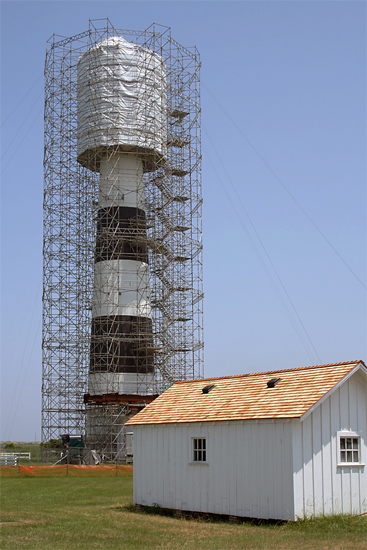
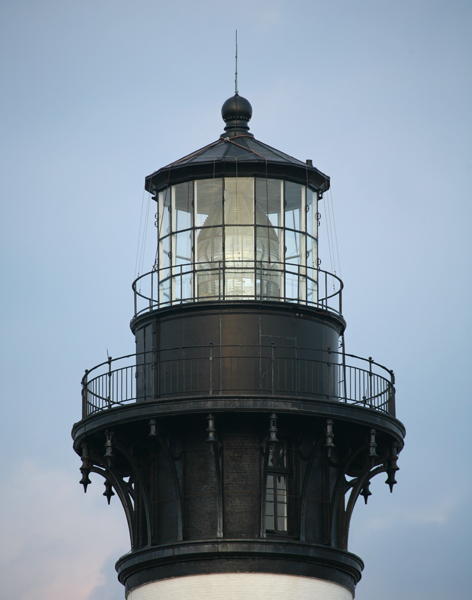
After funding for restoration of Bodie Island Lighthouse was removed from the federal budget in 2008, hopes for a timely repair of the tower began to fade as the economy slipped into recession, but ironically it is often in times of scarcity that some of the most ambitious projects are undertaken. Thus it was that $3 million was included in the 2009 Omnibus Budget Bill. This money was used for the repair and replacement of metalwork, the repair of masonry and stone, the rehabilitation of floors, windows and framing, and the upgrading of electrical systems. The work began in January 2010, and the lighthouse was encircled with scaffolding by late February, but the project hit a snag that August when “significant structural integrity issues” were found with the ornate struts that support the balcony. With insufficient funds to complete the restoration, the project was suspended and the exterior scaffolding was removed in March 2011.
Restoration of the rare first-order Fresnel lens, which had been removed before the project began, was covered by $100,000 provided earlier in 2009. After being refurbished, the lens was stored in a secure location until it could be returned to the tower.
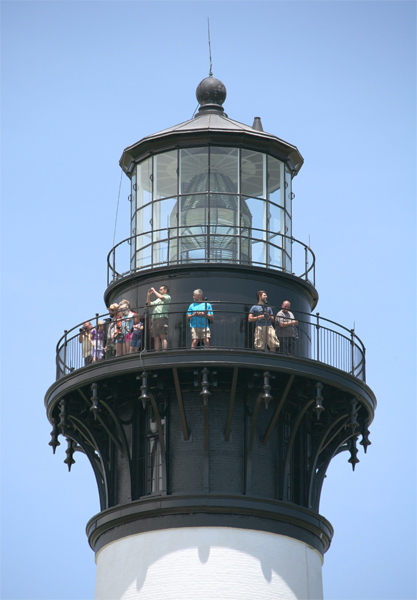
In January 2012, a $1.89 million contract was awarded to United Builders Group LLC, from New Bern, N.C., after funding was obtained with the help of Congressional representatives. Work resumed in late March 2012 and was concluded the following March with the installation of the Fresnel lens. The lens was reactivated on April 18, and the following day, much to the delight of lighthouse enthusiasts, the tower was opened for climbing.
In October 2013, the Outer Banks Lighthouse Society held a Keepers’ Descendants Homecoming at Bodie Island Lighthouse to honor the keepers who served at the station. The event attracted descendants from as far away as Alaska, and one attendee was recognized for having five Bodie Island keepers in her lineage. During the day-long event, a panel discussion was held, talks were presented, and tours of the tower and both floors of the keepers’ dwelling were given.
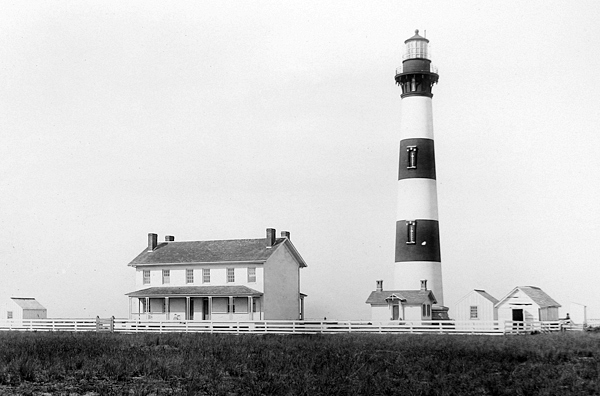
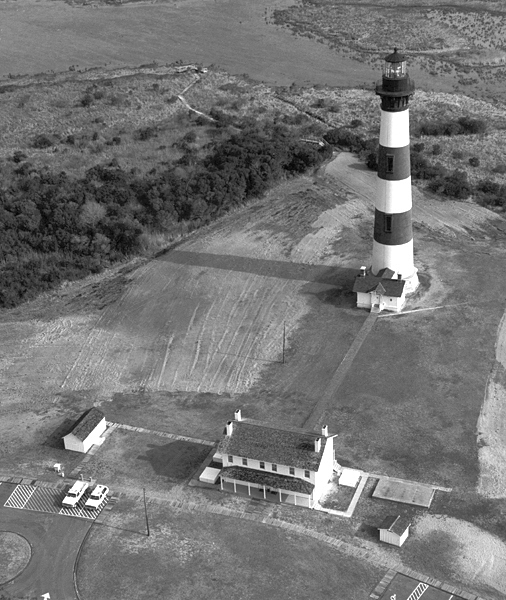
The keepers’ duplex now serves as a visitor center, housing a great bookstore and displays about the lighthouse.
Keepers:
References