Cape Hatteras, NC 





Select a photograph to view a photo gallery
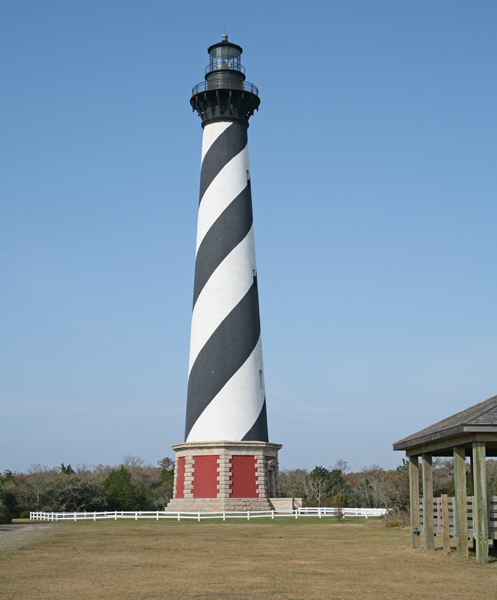
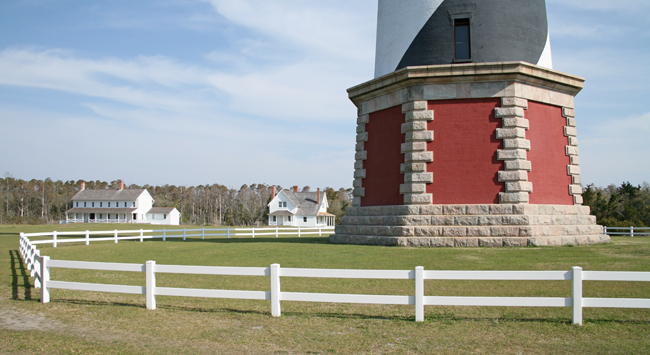
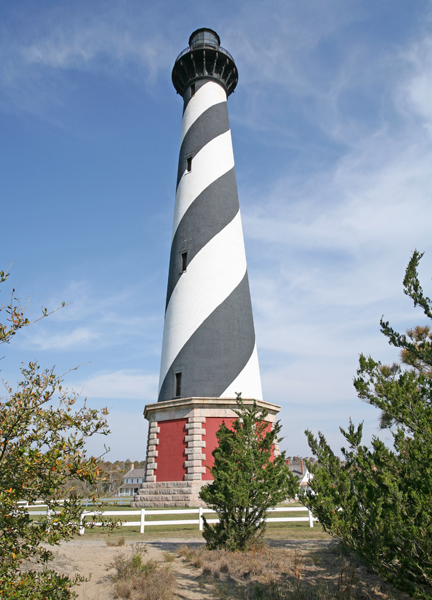
Photo Gallery
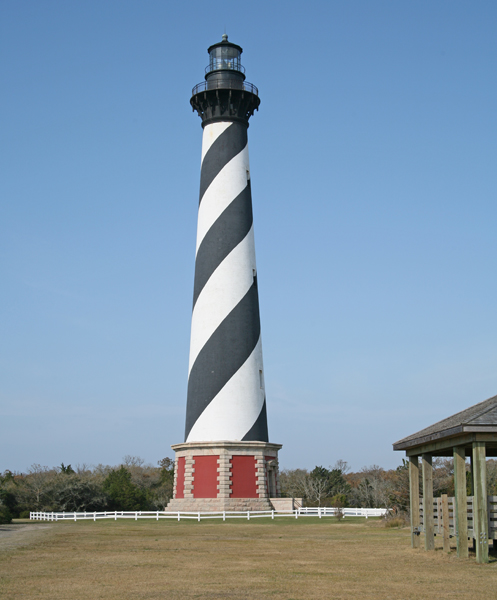
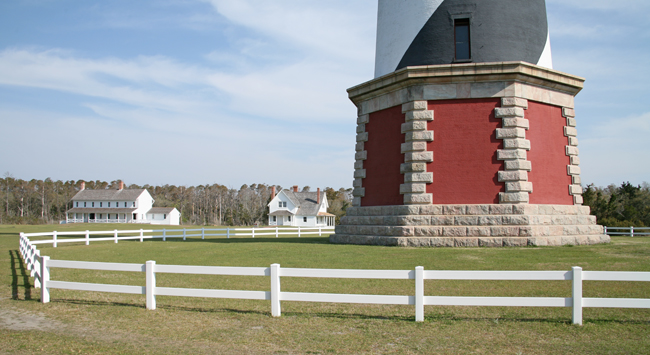
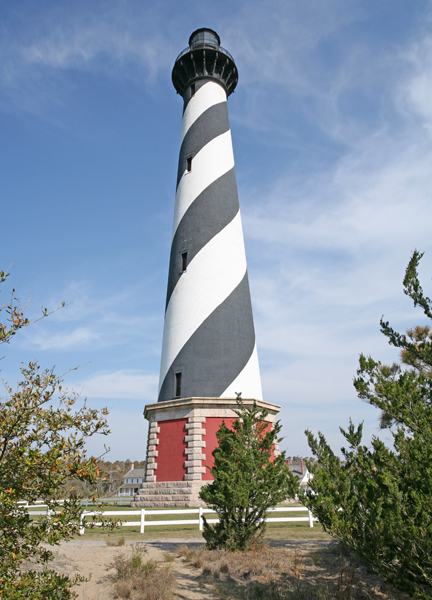
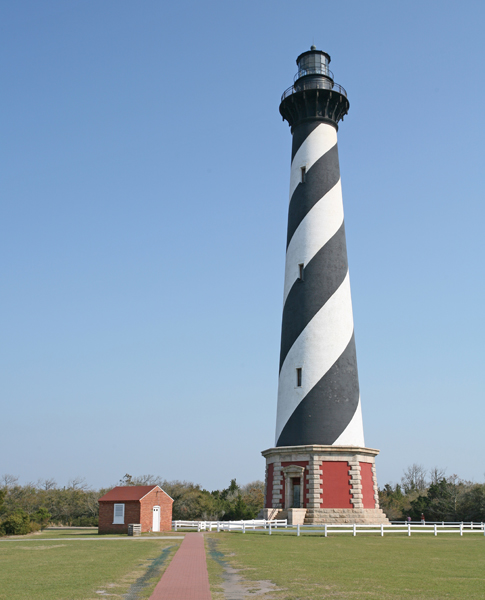
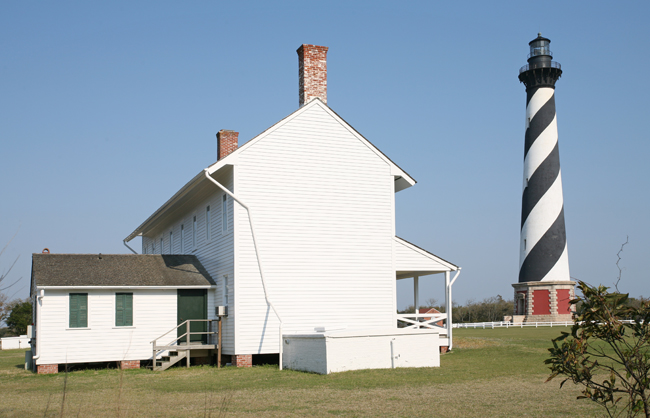
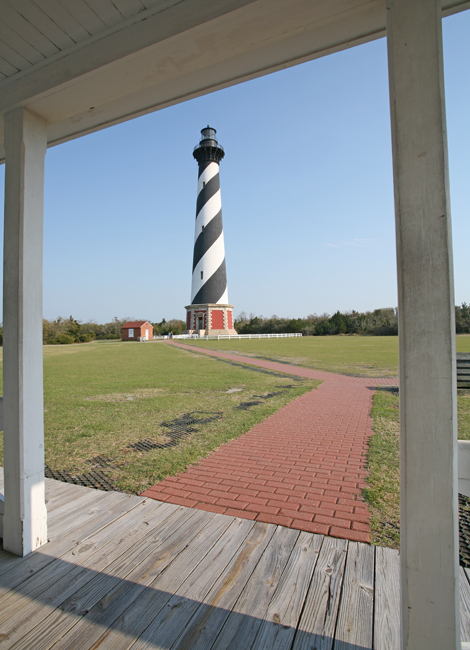
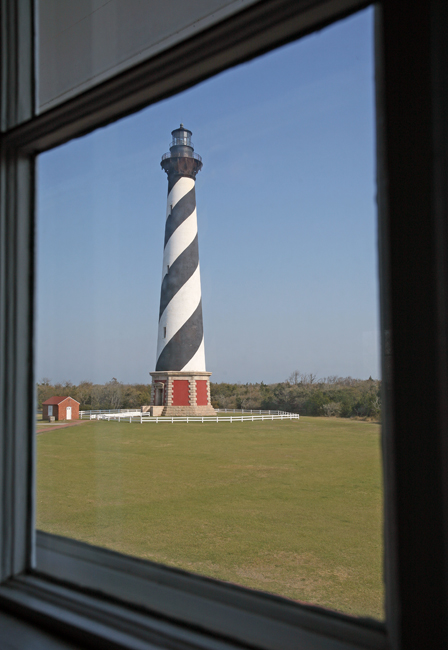
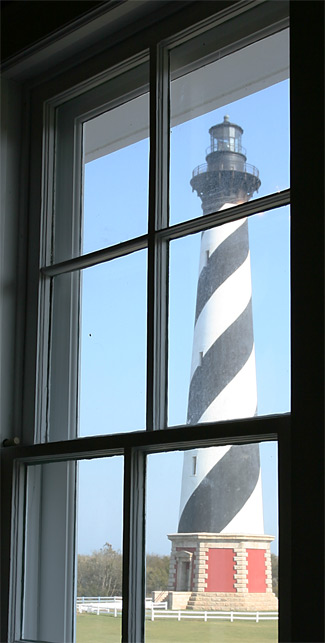
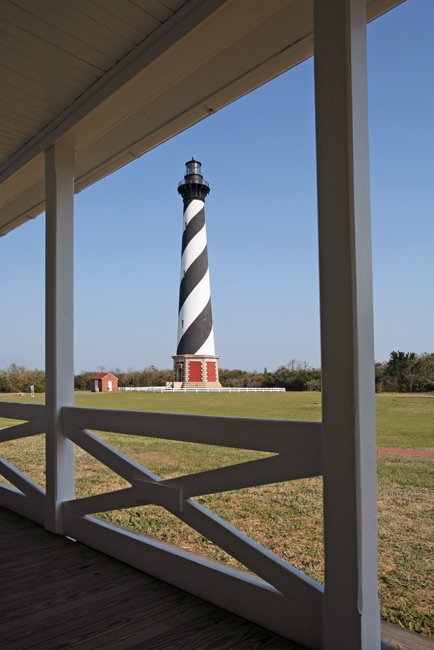
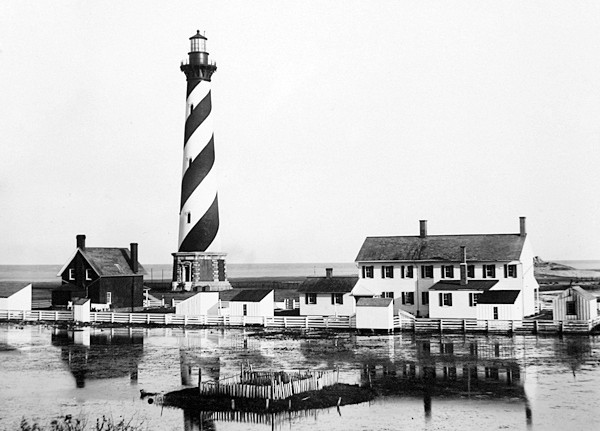
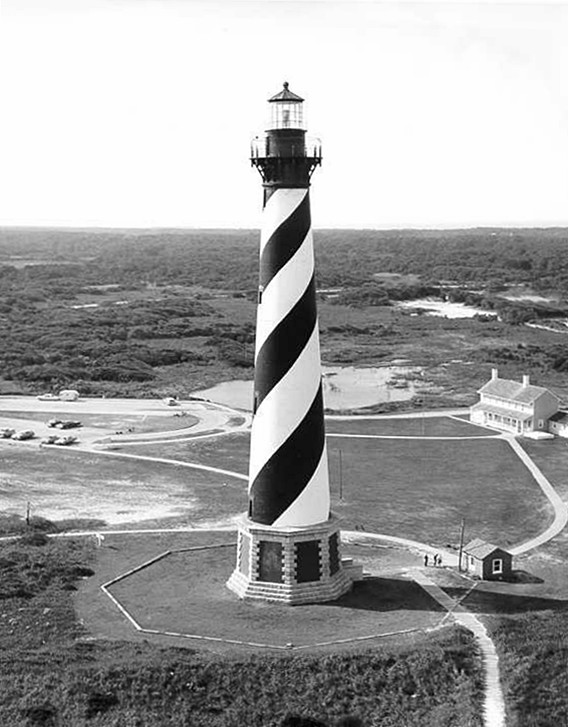
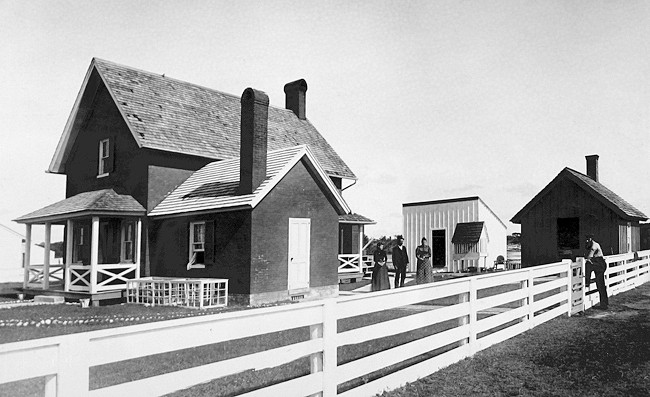
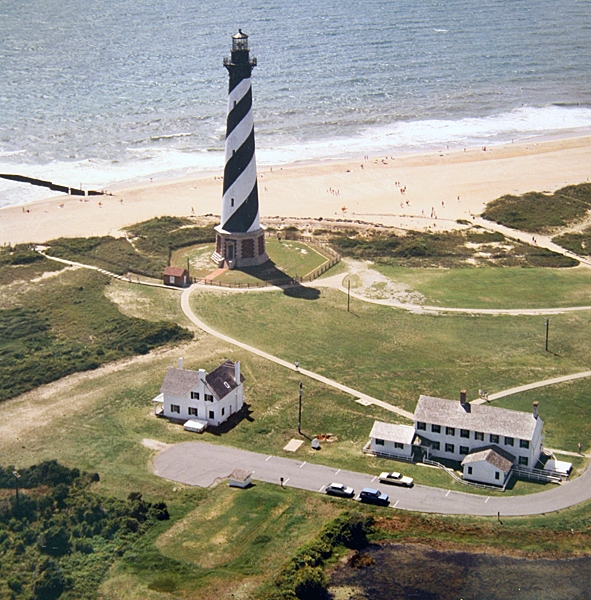
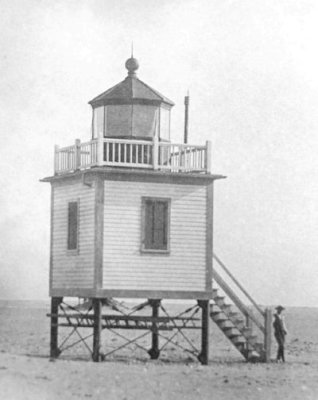
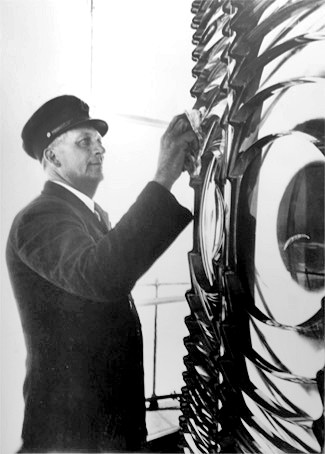
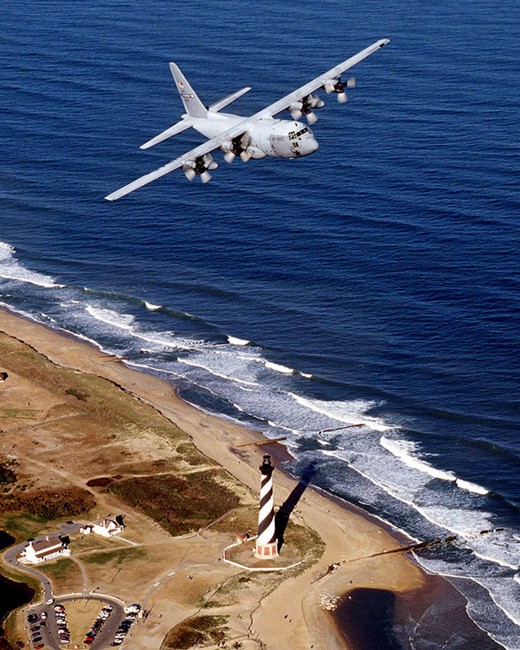
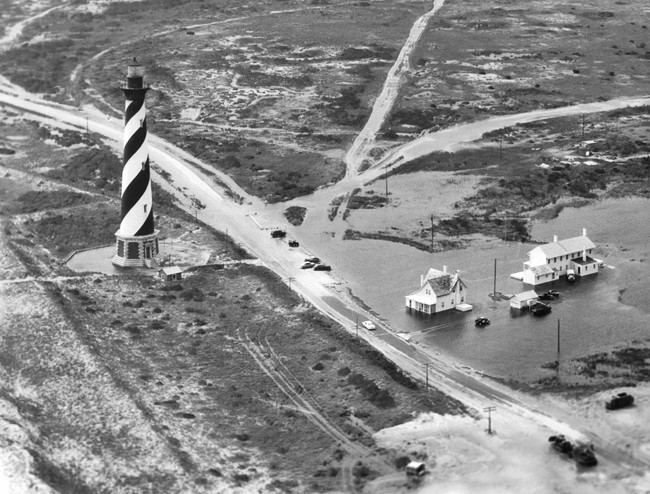
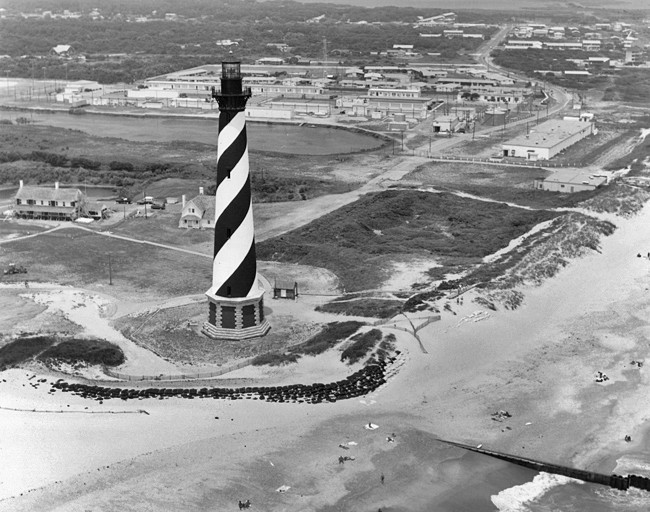
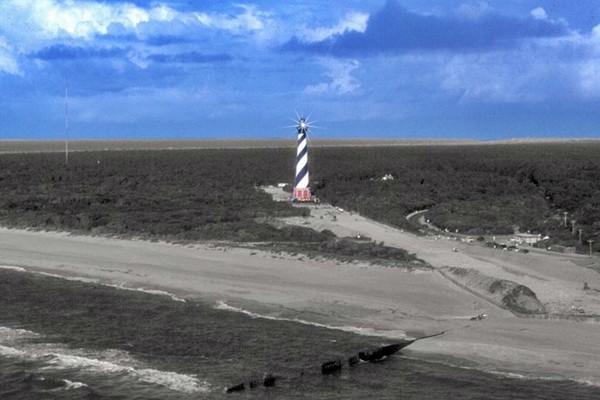
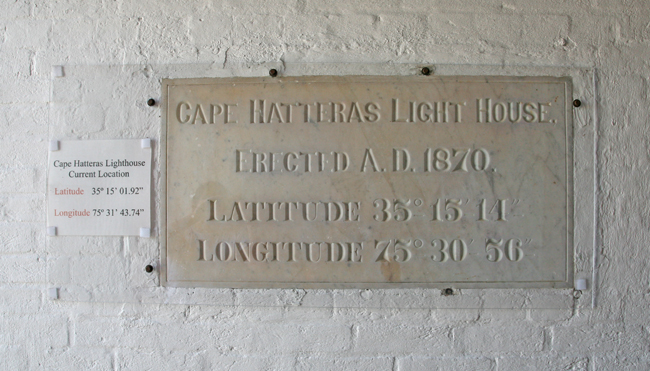
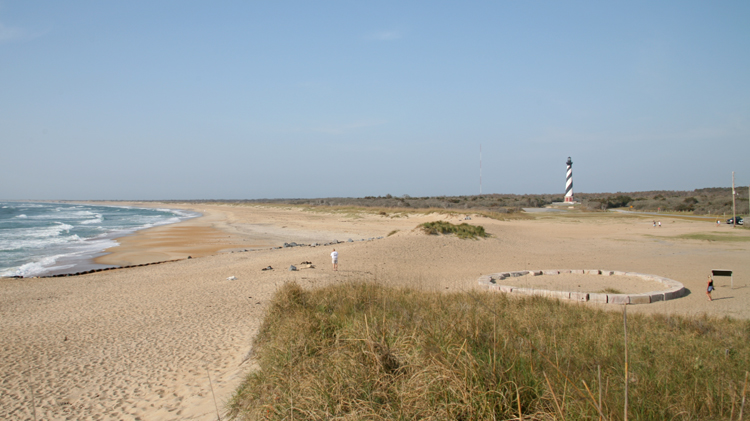
Photo Gallery
Photo Gallery
In 1903, on the high dunes of Kill Devil Hills, North Carolina, the Wright brothers launched their first successful foray into aviation. From their perspective, this location was ideal: high winds swept over miles of smooth sand that lined a shallow sea. However, for other forms of transportation, this coastline proved less accommodating.
For many miles off the coast, two opposing currents flow; close to shore the cold-water Virginia Coastal Drift flows south, and farther offshore the warm-water Gulf Stream flows north. At Cape Hatteras, the Gulf Stream veers into the Coastal Drift, forcing vessels into the dangerous waters around Diamond Shoals, where shifting sands extend more than ten miles from the Cape. Over two thousand ships have foundered and sunk in that treacherous stretch of water, known as “The Graveyard of the Atlantic.” Even when violent storms or hurricanes are not driving ships into the shallow waters, the flat coastline provides no visible landmarks, forcing navigators to sail close to the dangerous shore to get their bearings.
|
Although hundreds of vessels had followed the same fate as the first shipwreck recorded in 1526, no lighthouse was completed along those shores until late 1802, nearly ten years after Congress had first authorized its construction. Even then, the result was inadequate. The original Cape Hatteras Lighthouse, a ninety-foot-high sandstone tower, housed a collection of eighteen whale oil lamps set in fourteen-inch reflectors, but still it wasn’t visible beyond the shoals. To make matters worse, violent storms frequently broke through the lantern room windows and extinguished the light.
In 1798, Henry Dearborn was contracted to build Cape Hatteras Lighthouse along with a beacon on Shell Castle Island at Ocracoke Inlet, after other proposals were rejected. Dearborn had just finished his second term as a Congressmen from Massachusetts and built the wooden, octagonal lighthouse on Seguin Island in 1796. The keeper’s dwelling at Cape Hatteras was completed in 1799 on land acquired from the Jennett family. Work on the tower’s foundation began in early 1800, and by July the stone tower had risen to a height of twelve feet above the water table. Progress soon slowed as thirteen workmen had become seriously ill and one had perished before the end of July. Dearborn left the site, and not long thereafter his men were sent home “to recoup their health.”
Dearbon’s crew worked on the tower from the spring of 1801 until August, and then returned in 1802 with plans to complete the tower. Though the structures were substantially finished by the end of 1802, the “raising of the light,” as contemporaries termed the first lighting of a lighthouse, did not occur immediately. By late 1803, after oil had been obtained from Nantucket, both Shell Castle and Cape Hatteras were finally in operation, and in early 1804 mariners received formal notice that the lights were functioning.
Just one keeper was originally assigned to Cape Hatteras Lighthouse. In 1850, Joseph C. Jennett was in charge of the light and was living in a leaky dwelling. An inspector that year recommended that a much larger dwelling be built “so that seamen can be accommodated when wrecked about the cape.” The inadequacy of the lighthouse was noted the following year:
There is perhaps no light on the entire coast of the United States of greater value to the commerce and navigation of the country than this. …At present it is of very little use, in consequence of its limited range. Navigators do not, as a general rule, rely upon it sufficiently to warrant them in running for it….There is no single light on the coast believed to require renovation more than this does. An elevation of one hundred and fifty feet, and a first-class illuminating apparatus, are imperiously demanded, and without any unnecessary delay.
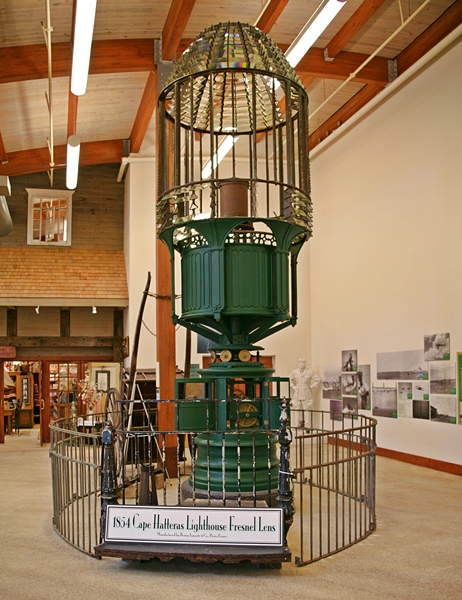
The Lighthouse Board, formed in 1852, had the tower raised to more than 150 feet and installed a first-order Fresnel lens, using a $15,000 appropriation made by Congress in 1853. After the Fresnel lens arrived from France, it was placed on display in the Crystal Palace at New York until its lantern room was ready. The Lighthouse Board was quite pleased with the lens: “This magnificent specimen of art, acknowledged to be the most perfect of its kind, it is believed, could not be more appropriately placed than in the position for which it is designed, to warn the mariner in approaching the dangerous shoals off Cape Hatteras, which have so long been the terror of seafaring men. One of the great difficulties in elevating light-house towers for the purpose of substituting improved illuminating apparatus, is that of keeping up the existing light while the work is going on; and at no point upon our coast will it be more important to prevent the extinguishment of the light for a single night than at Cape Hatteras; and Captain Woodbury will make the necessary arrangements to obviate this difficulty.”
|
The Civil War saw Cape Hatteras Lighthouse in the center of conflict. The Confederate army wanted to destroy the lighthouse to prevent Union ships benefiting from it, and naturally the Union forces wanted to protect the lighthouse. After several battles in 1861, defeated Confederate troops retreated with the lighthouse’s Fresnel lens.
In 1862, the tower was relit with a second-order Fresnel lens, and then upgraded the following year with a first-order lens. The tower was severely damaged in the war, and after peace was restored to the country, the Lighthouse Board determined it would be less costly to build a new lighthouse, 600 feet to the north, rather than repair and refit the existing one. After the construction of its replacement, the original Cape Hatteras Light was destroyed in a blast of dynamite, and the Fresnel lens it had most recently housed was shipped to California for use in Pigeon Point Lighthouse.
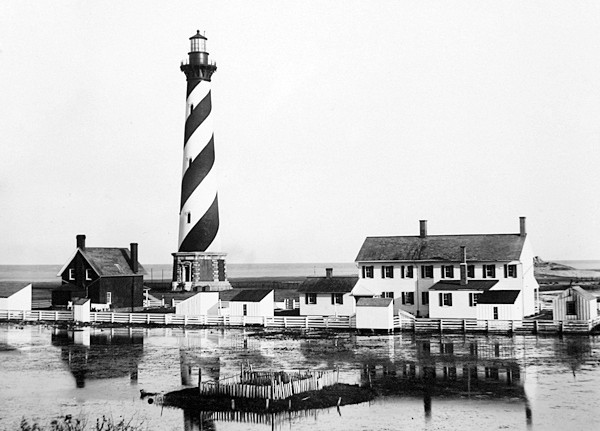
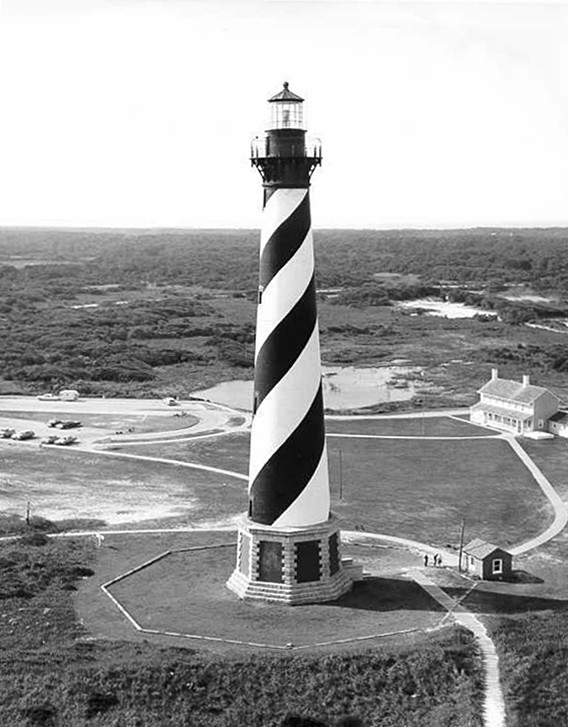
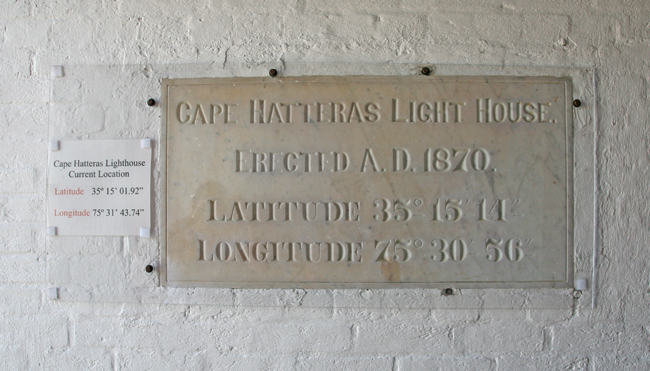
The present lighthouse was constructed in 1868-70 at a cost exceeding $150,000. The Lighthouse Board appointed Dexter Stetson as Superintendent of Construction, who then hired and trained nearly 100 local laborers for a daily wage of $1.50. Well over one million bricks were used to construct the 208-foot tower, which is the tallest in the United States. The lighthouse was set on a “floating foundation” (two layers of pine beams placed crossways below the water table topped by massive granite blocks), which remained perfectly preserved for well over a century. Atop the foundation, cut granite quoins and brick paneling were employed to form a twenty-five-foot-tall octagonal base for the tower. On December 16, 1870, the tower’s first-order Fresnel lens was activated for the first time by Keeper Benjamin C. Jennett and his assistants. A brick dwelling was built for the head keeper at the same time the new lighthouse was under construction.
In 2002, it was discovered that this “new” lens was actually the same lens used in the original tower before the Confederates absconded with it. The lens remained hidden throughout the Civil War, and when it was finally located, it was shipped to Paris for cleaning. Upon its return, the lens was placed in storage at the lighthouse depot on Staten Island until the new tower was ready to receive it.
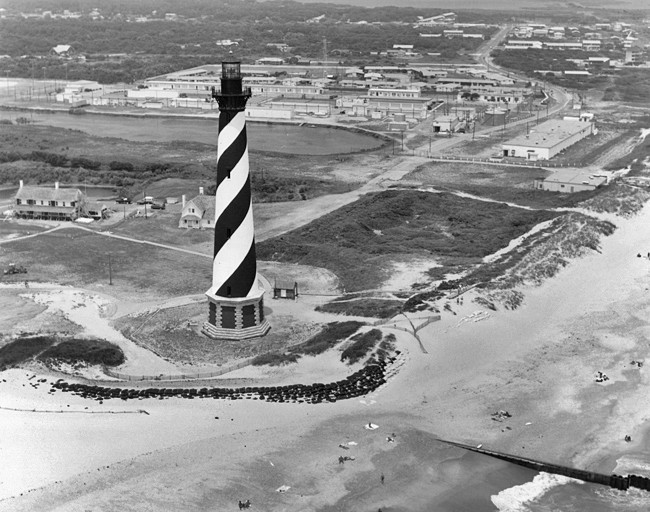
The Lighthouse Board boasted that the tower was “the most imposing and substantial brick light-house on this continent, if not in the world,” and that it was “so far removed from the water line as to render it safe from encroachments of the sea.” While Cape Hatteras remains the tallest brick lighthouse on the continent, it didn’t remain safe from the sea forever.
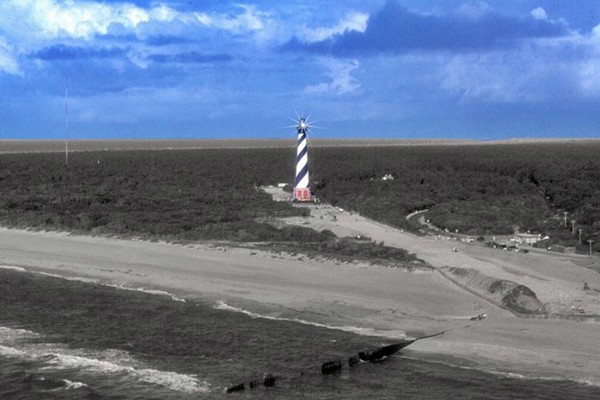
In 1873, the Lighthouse Board had the tower painted with striking black and white stripes to replace the former daymark of a red upper portion and white lower portion. The tower’s new daymark was formed by four bands, two black and two white, each of which make one-and-a-half revolutions about the tower. At last that treacherous stretch of coastline had a distinctive landmark.
|
Four shocks from the 1886 Charleston earthquake rattled Cape Hatteras Lighthouse. One keeper reported that he heard a rumbling noise ascending the tower, and then “the tower would tremble and sway backward and forward like a tree shaken by the wind. The shock was so strong that we could not keep our backs against the parapet wall. It would throw us right from it.” Damage was limited to the cracking of storm panes in the lantern room and the overturning of a few light objects.
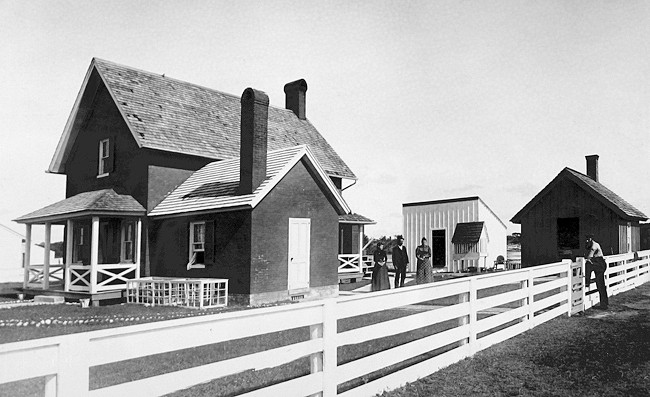
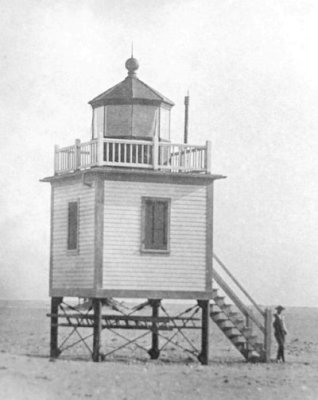
A third assistant keeper was assigned to Cape Hatteras to care for a beacon light, which was exhibited from a short tower located roughly a mile from the main lighthouse. In 1892, the assistant keepers’ dwelling at Cape Hatteras was enlarged to provide accommodations for the third assistant, whose previous living quarters “were scant.”
In 1914, the rotation speed of the lens atop Cape Hatteras Lighthouse was increased, changing the light’s characteristic from a white flash every ten seconds to a white flash every six seconds.
Unaka Jennette started his service in 1919 as principal keeper at Cape Hatteras, but his family had a much earlier connection with the lighthouse. Unaka’s sixth-generation ancestor, Christian Jennette, sold the government the four-acre tract on which the first Cape Hatteras Lighthouse was constructed. Before being assigned to Cape Hatteras, Unaka had twice served aboard the Diamond Shoals Lightship, established off Cape Hatteras in 1824 to help mark this dangerous section of the coast, once as quarter master and the second time as Captain. Unaka and his wife, Jennie, moved into the head keeper’s dwelling with two children, and over the years five more would be born in the residence.
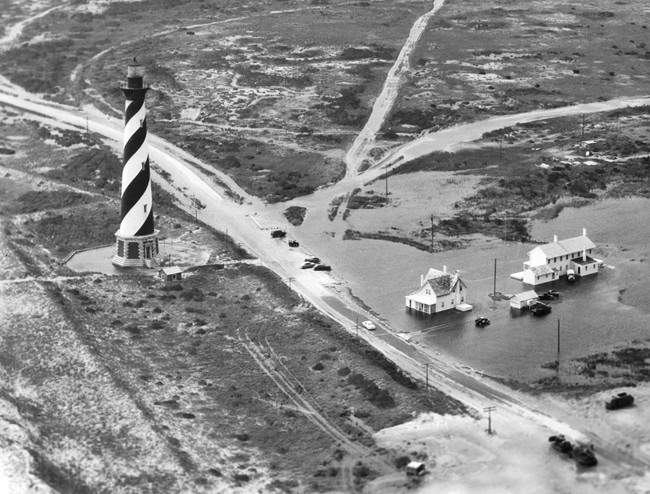
On August 22, 1933, a powerful hurricane struck Cape Hatteras. Unaka sent a report to his superiors a few days later saying:
I beg leave to submit herewith-detailed report of the damage done by the recent storm of the 22nd inst. I wired you hastily on the morning of the 23rd, but have heard nothing from the office since that time. This was by far the highest sea tide recorded since I have been at Cape Hatteras. Two store houses and garages were washed down. Three toilets washed down. Floor bursted up in one room of 2nd asst. quarters…. The entire reservation is completely submerged, and I have been forced to move my family away from the station. Respectfully, (signed) U.B. Jennette, Keeper
|
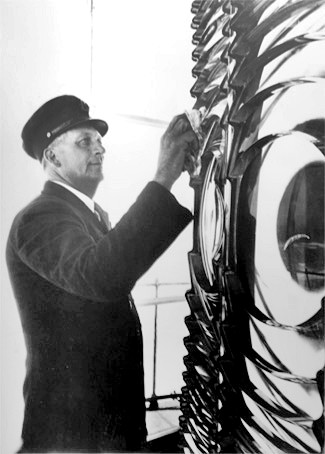
The defunct Cape Hatteras Lighthouse was transferred to the National Park Service in 1937, and through the efforts of the Civilian Conservation Corps and a helping hand from Mother Nature, the shoreline around the lighthouse built up. Over the next several years, souvenir hunters and vandals repeatedly entered the lighthouse and removed several pieces of the Fresnel lens. In 1950, with the tower now apparently safe from the ocean, the Coast Guard removed the pillaged lens and reactivated the lighthouse using a modern beacon. But by 1987, the lighthouse was only 120 feet from the shore, and the National Park Service determined it would not survive the onslaught of the sea another decade.
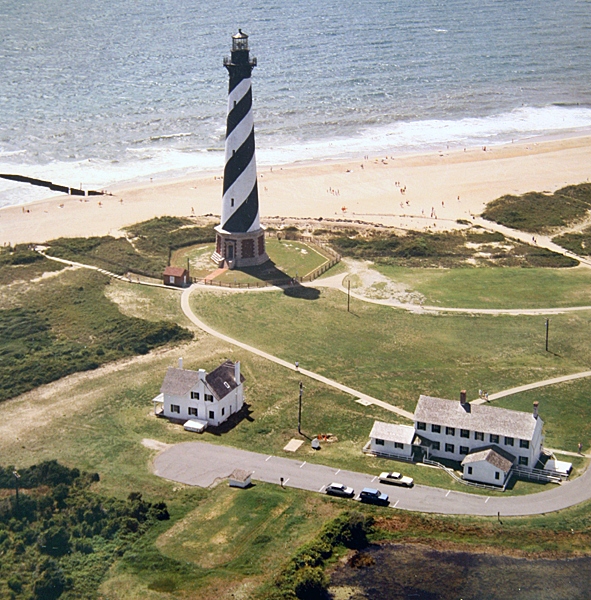
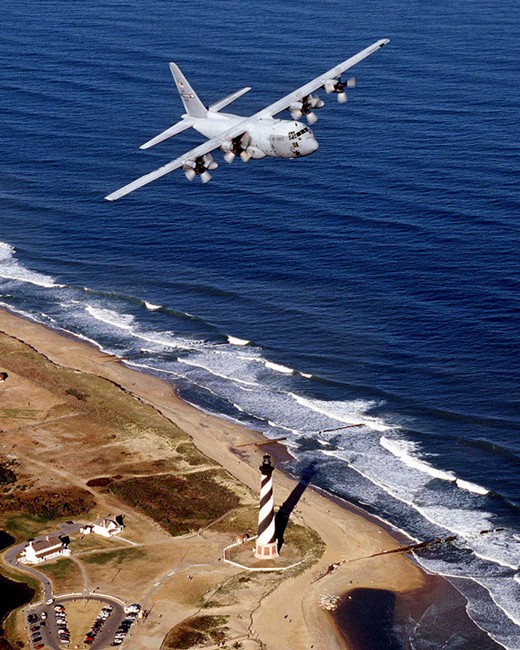
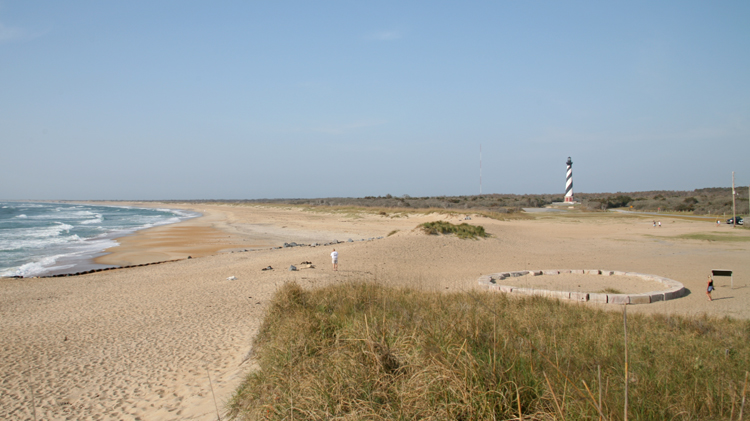
In what would be named the “2000 Outstanding Civil Engineering Achievement” by the American Society of Civil Engineers, Cape Hatteras Lighthouse and its two keeper’s quarters were moved a half-mile inland. Under the direction of a team of twenty-two experts, on June 17, 1999, the lighthouse was raised six feet off its base and then carefully moved, in five-foot increments, along a roadway constructed for that purpose. It arrived safely at its new location on July 9, 1999, and was relit a couple months later on November 13.
A ring of foundation stones was left to mark the former site of Cape Hatteras Lighthouse, and in 2001 the names of the eighty-three keepers who served at the lighthouse were engraved into the granite blocks. A “Hatteras Keepers Descendants Homecoming,” organized by the Outer Banks Lighthouse Society and attended by over 1,000 descendants, was held at the site in May 2001, shortly after the memorial was completed. Though the relocated Cape Hatteras Lighthouse itself receives most of a visitor’s attention, a stop by the foundation stones to remember the lives of the keepers and their families, the real soul of the lighthouse, is an often neglected but satisfying part of the Cape Hatteras Lighthouse experience. The ring of stones was buried by Hurricane Sandy in 2013, but in the spring of 2014, the stones were relocated to a more secure location, placed in a semicircle, and named the Keepers of the Light Amphitheater.
Keepers:
References