Bald Head, NC 





Select a photograph to view a photo gallery
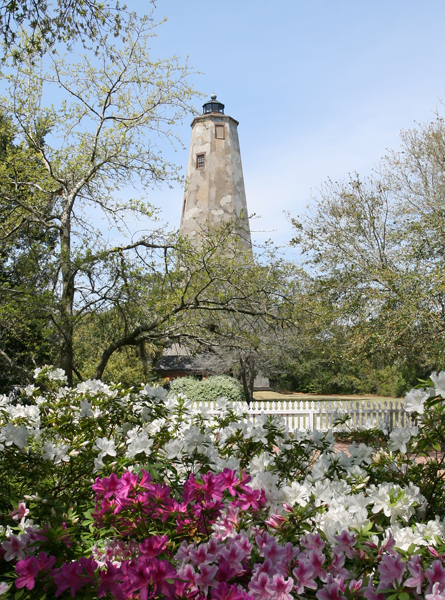
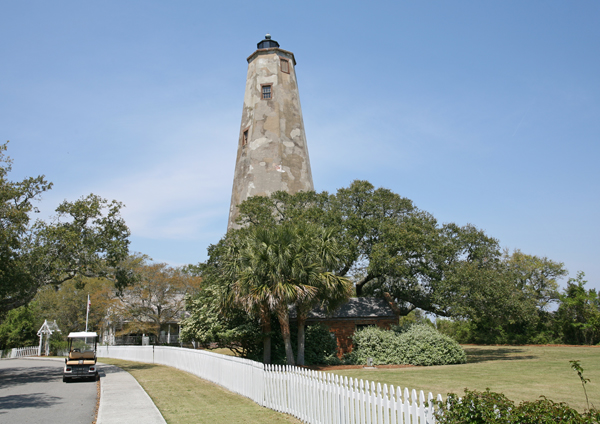
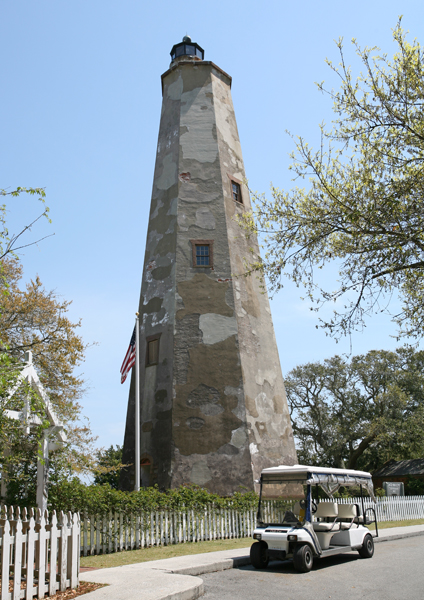
Photo Gallery
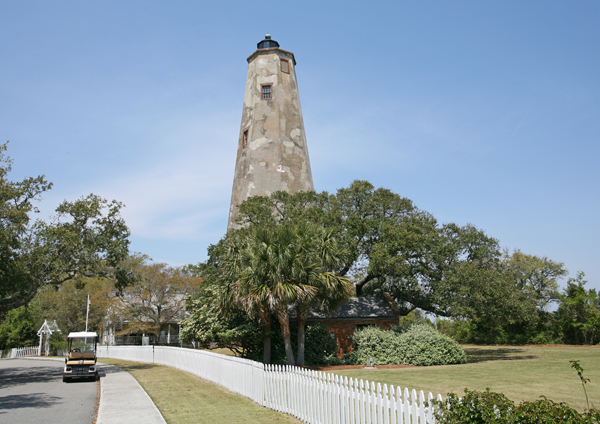
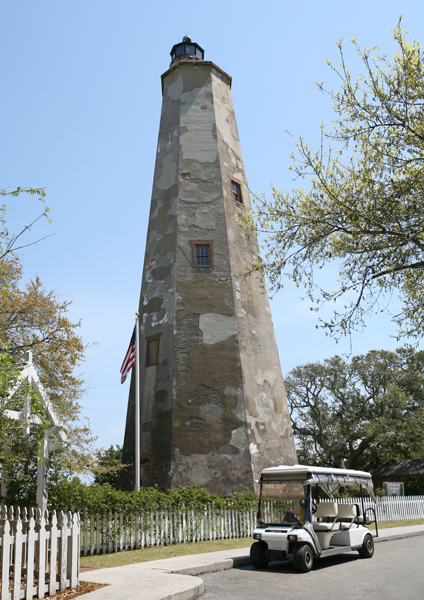
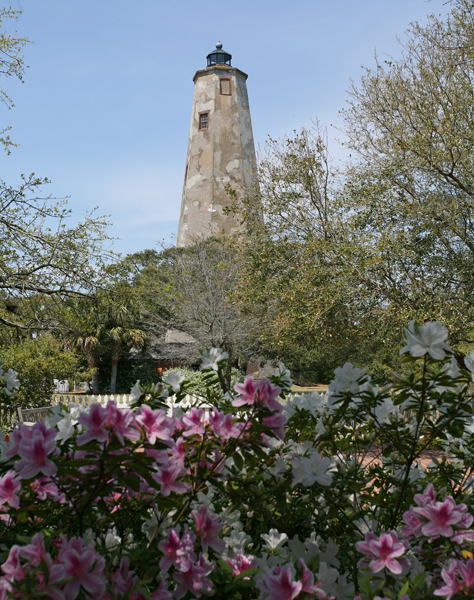
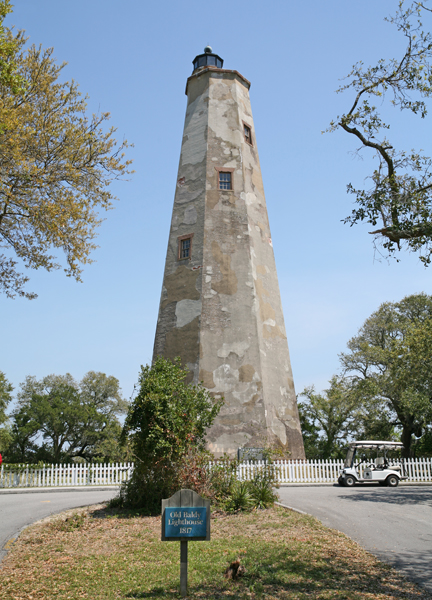
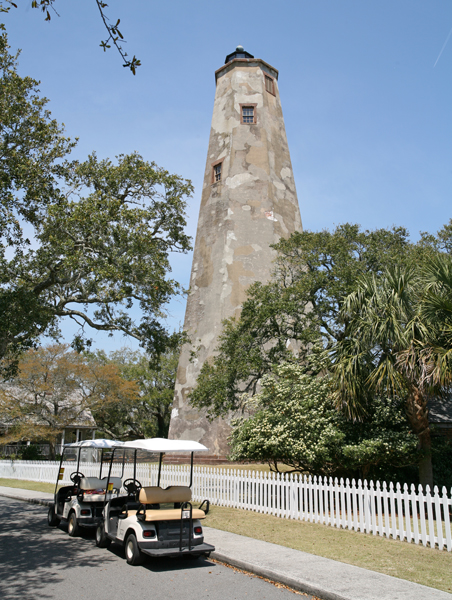
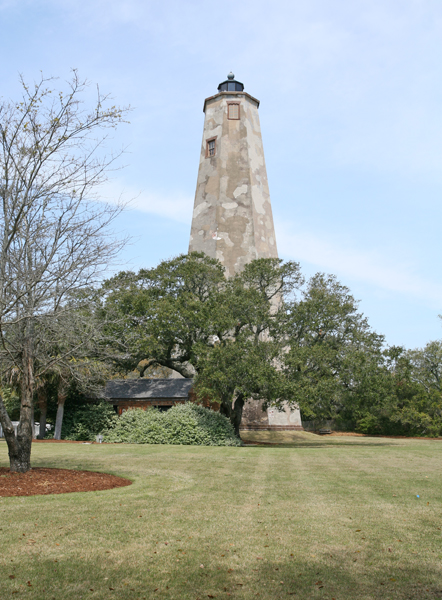
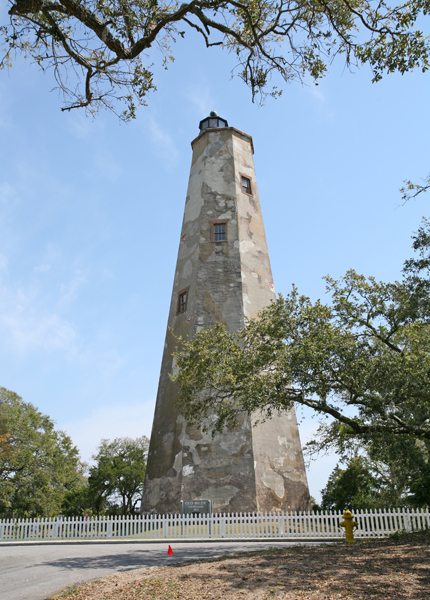
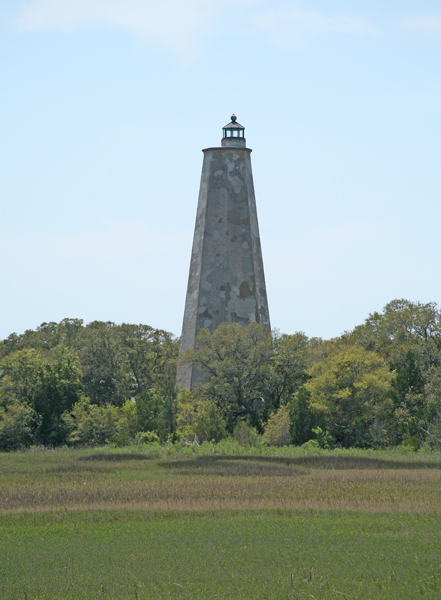
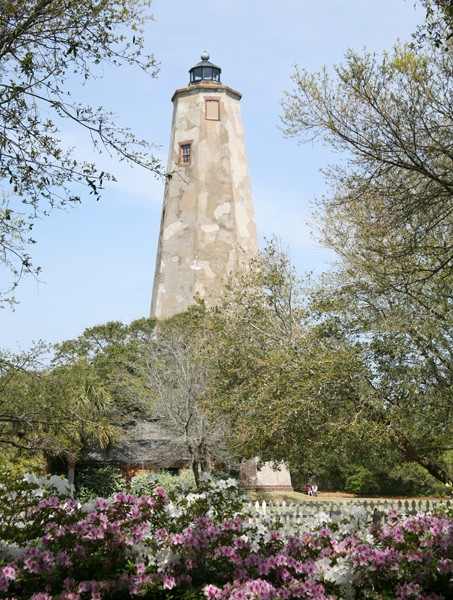
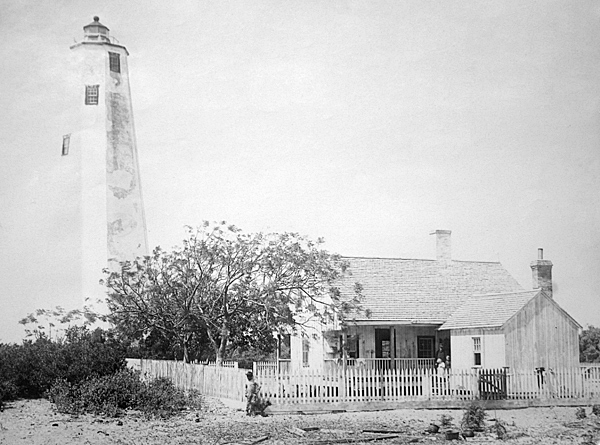
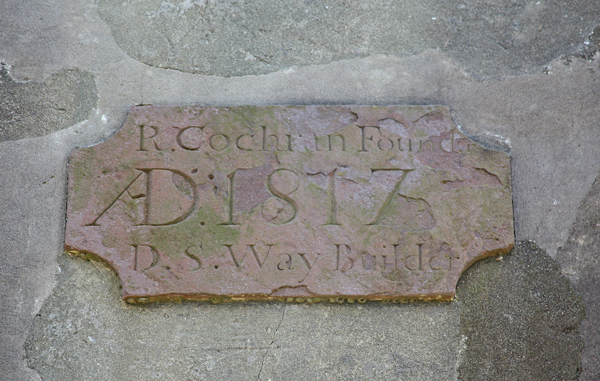
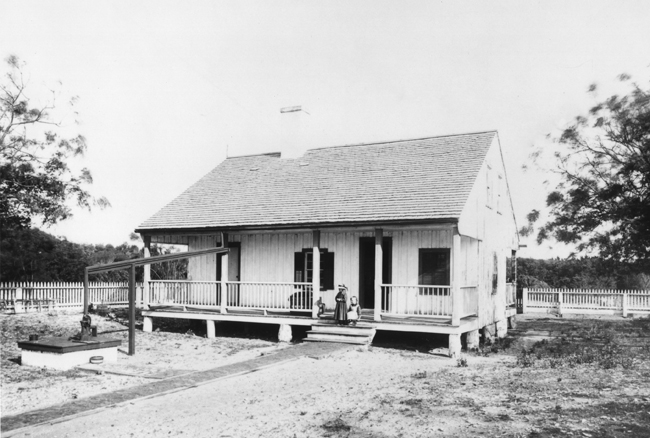
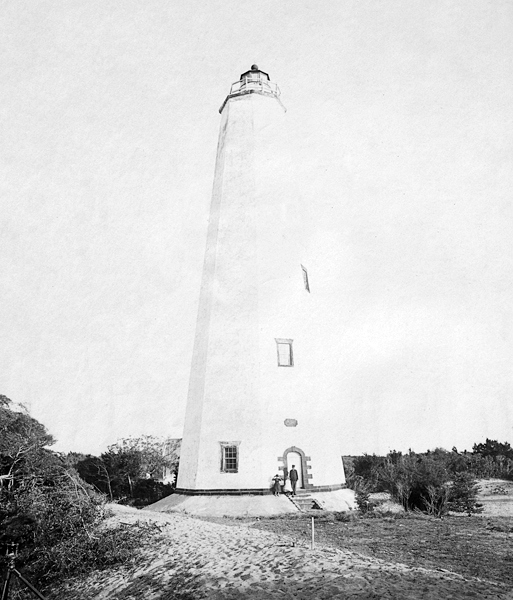
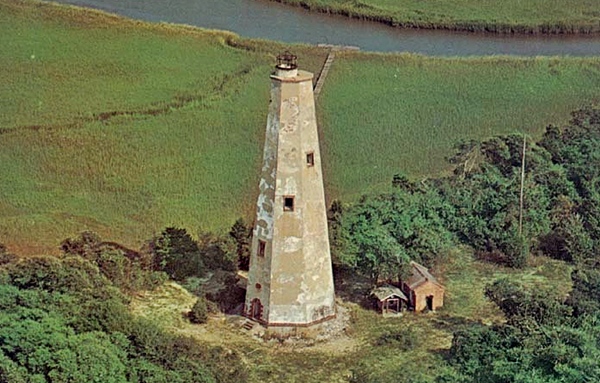
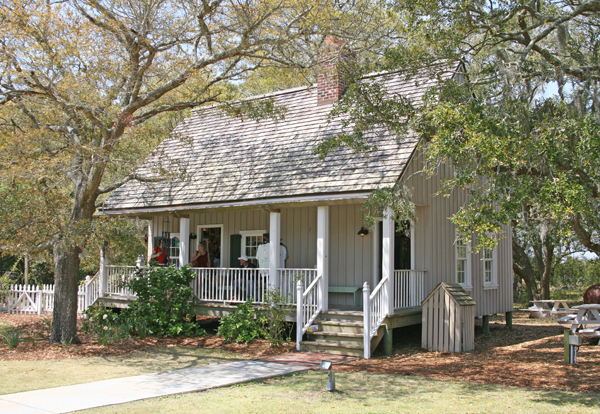
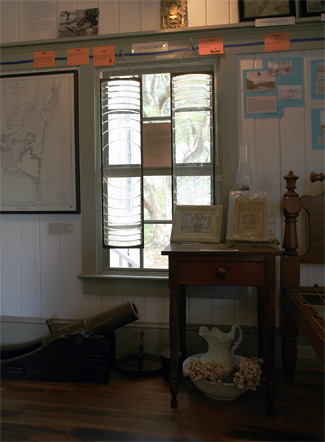
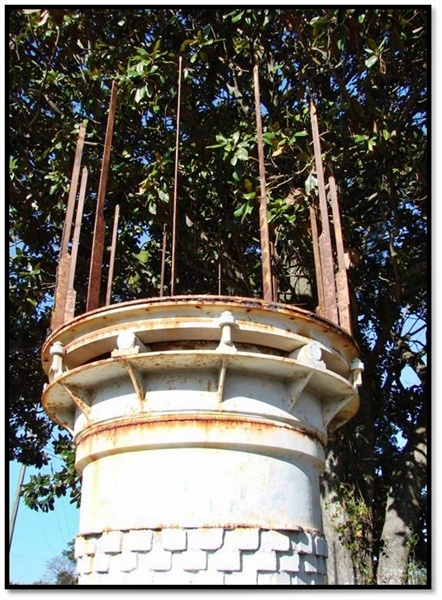
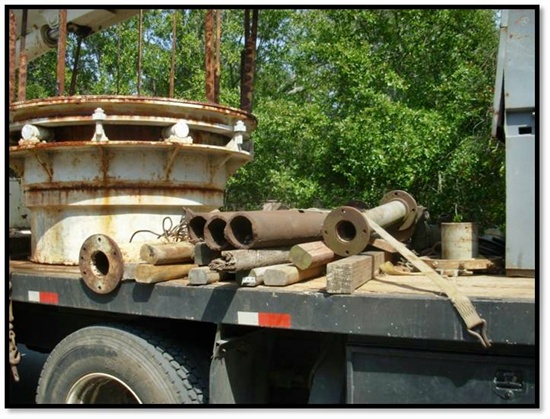
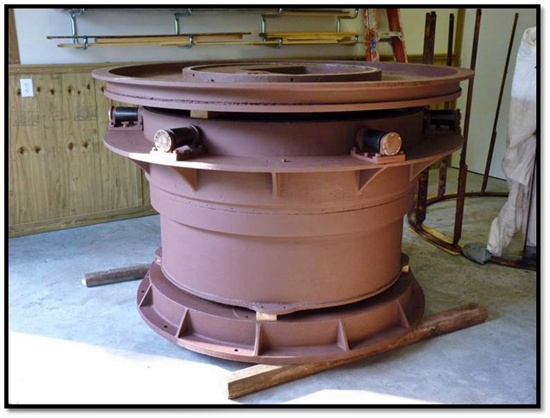
Photo Gallery
Photo Gallery
Bald Head Island is actually part of Smith Island, a cluster of islands crisscrossed by creeks and inlets, and received its name from the denuded dunes on its south beach, which resemble a bald head. Extending twenty-eight miles from the southeast end of the island are Frying Pan Shoals, a collection of shifting sandbars, obscured by a thin covering of water. Early sailors dubbed the area Cape Fear, no doubt a reference to the feeling evoked when navigating near the hazardous shoals.
|
Tench Coxe, Commissioner of Revenue for the Federal Treasury Department, distributed a five-page notice requesting bids for completing the lighthouse. This notice provides a description of the original tower:
It may be well that you should be further informed that the building is an octagon of 32 feet diameter … that it is on a foundation four feet deep, that it is four feet six inches thick for 20 feet 3 inches from the earth, to which height the walls are perpendicular, and that it then assumes the form of a Pyramid, which it will retain through its remaining height of about 64 feet to the place whereon the lantern will be laid.
The first lighthouse was similar in design to Charleston Lighthouse, which was destroyed during the Civil War.
The task of finishing the lighthouse on Bald Head Island was overseen by Abisha Woodward, who would later build two lighthouses in Connecticut: New London Harbor and Falkner’s Island. Samuel Wheeler, a blacksmith in Philadelphia, fabricated the lantern room for the lighthouse, while the necessary twelve-by-fourteen-inch glass panes for the lantern were made in Boston. Bald Head Island Lighthouse, which was first activated on December 23, 1794, directed traffic to the Cape Fear River and the growing port of Wilmington, located several miles upstream.
Henry Long was hired as the first keeper of the lighthouse and served until October 1806, when he was killed by his son-in-law in a hunting accident. Twelve residents of the area signed the following petition that was sent to President Thomas Jefferson on December 31, 1806, recommending the appointment of Sedgwick Springs as keeper:
We the subscribers resident Citizens in the District and town of Wilmington being informed that Sedgwick Springs wishes to become a Keeper of the Light House on Bald Head (provided it should be thought the widow of the late Henry Long, inadequate to the safe keeping thereof) beg leave Hereby to Recommend the said Sedgwick Springs as a fit and proper Person to take charge and keep up the said Light—He being an old Inhabitant of the town of Wilmington a Sober Industrious Citizen having been employed for these eight Years last past and now is an Inspector of the Revenue in which Office he has ever behaved himself as a dilligent and Carefull Officer and to our knowledge conducted himself as a truly honest man in all his dealings.
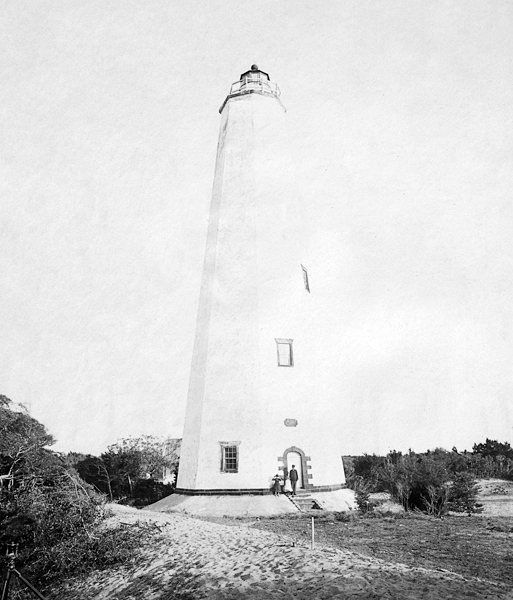
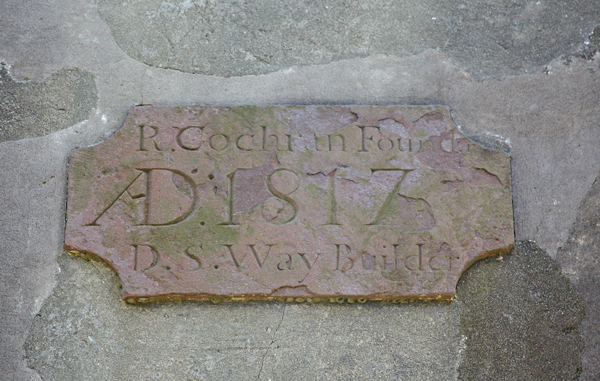
Due to severe erosion along the river, the demolition of the original lighthouse was ordered in 1813, and by 1817, the replacement lighthouse, “Old Baldy,” was built farther inland and lit, for just under $16,000. A stone plaque above the entrance identifies the builder as Daniel S. Way, and the foundry for the lantern room as R. Cochran. Still the oldest in North Carolina, the octagonal brick and plaster tower stands ninety feet tall and was originally equipped with an array of lamps and reflectors. In 1849, a new lantern room was installed atop the tower and the old lighting apparatus, consisting of eighteen lamps and sixteen-inch reflectors, was replaced with fifteen brass lamps and twenty-one-inch reflectors. The lantern room is offset from the center of the tower, and as technology improved, it received a third-order Fresnel lens in 1855. At its base, the tower is thirty-six feet wide and at its top fourteen-and-a-half feet wide, while the walls are five feet thick at the base and taper to two-and-a-half feet at the top. The rectangular stairway leading up the inside of the tower is made of Carolina yellow pine.
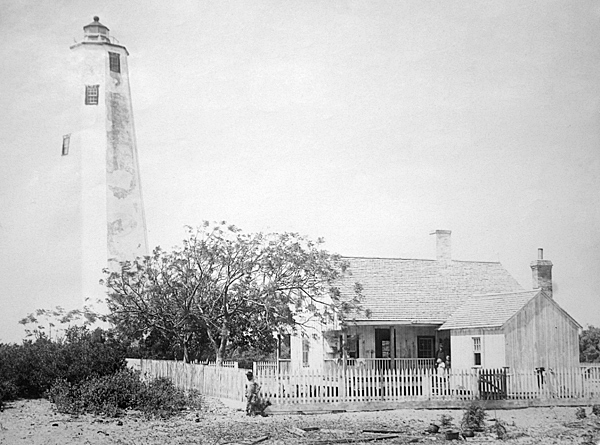
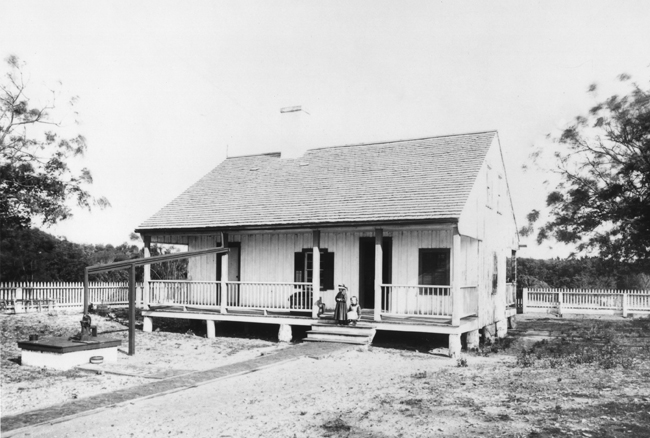
The original keeper’s dwelling, built on the west side of Old Baldy, was eventually lost to erosion. The replacement was a one-and-a-half-story cottage, erected in the 1850s on the east side of the lighthouse. When this structure was destroyed by fire, a larger two-story dwelling was constructed on the same site. In 1931, this larger dwelling, which was being used as an office for the “Palmetto Island” development, was also lost to fire.
|
Some problems with Bald Head Lighthouse included its location and illumination. Positioned some four miles from the eastern end of the island and equipped with a minor light, the lighthouse was unsuccessful in guiding ships safely past Frying Pan Shoals. The deficiency of the light was noted in 1851:
This light, in its present position and with its present apparatus, &c., is comparatively useless.A lightship was placed on the shoals in 1854, and a total of nine different vessels served at the station through 1964, when a four-legged tower replaced the last lightship.The apparatus, 15 lamps and 21-inch reflectors, is inadequate to the requirements of the service of an ordinary seacoast light, while this is one of the special cases requiring extraordinary means to insure any amount of good. The tower is nearly four miles from the pitch of the cape, and twenty nautical miles from ten fathoms water, in a direct line on the end of the “Frying Pan shoals,” which extend continuously from the pitch of the cape. The assumed elevation of the light is 110 feet, which, with good illuminating apparatus would give a range, under the most favorable circumstances, of 17 to 17 1/2 nautical miles. Careful observation has, however, shown that it is very seldom seen twelve miles; and then only resembling a star of the fifth or sixth magnitude. This light is Considered by the pilots as of very little, if indeed of any use at all, for the local purposes of the harbor; while it is perfectly clear that it is of no value to the navigator in guiding him around and clear of these shoals, which, in the opinion of navigators, are only exceeded in importance by those off Nantucket.
This light should either be reduced to a mere harbor light or removed to the pitch of the cape, and given an elevation sufficient to insure a first order light being seen, under ordinary circumstances, outside of the, shoals.
This light as a first class seacoast light, and a first-class light-vessel placed on the shoals, would tend greatly towards increasing the safety of navigation.
Bald Head Light was discontinued in 1866 when the screwpile Federal Point Lighthouse was built eight miles upstream, near the present Fort Fisher ferry landing. After Federal Point Lighthouse was deactivated in 1879 upon the closure of New Inlet Channel by the Engineer Department, Old Baldy was returned to service along with a beacon on the nearby beach, which formed a range to help mariners safely enter the river.
On March 3, 1883, the characteristic of Bald Head Lighthouse was changed from fixed white to a red flash every thirty seconds through the installation of a new fourth-order lens. Later that year, a 150-foot-long stone jetty was built to protect the tower from erosion, and this work likely saved the tower from being toppled by a hurricane that struck in September 1883. Since the closure of New Inlet Channel, the augmented flow of water in the channel near the lighthouse was rapidly washing away the shore.
Keeper James H. Dosher reported that an earthquake shook the tower for ten seconds at 9:50 p.m. on August 31, 1886, breaking the glass chimney in the lamp. The shaking was accompanied by a hissing and rumbling noise in the earth.
|
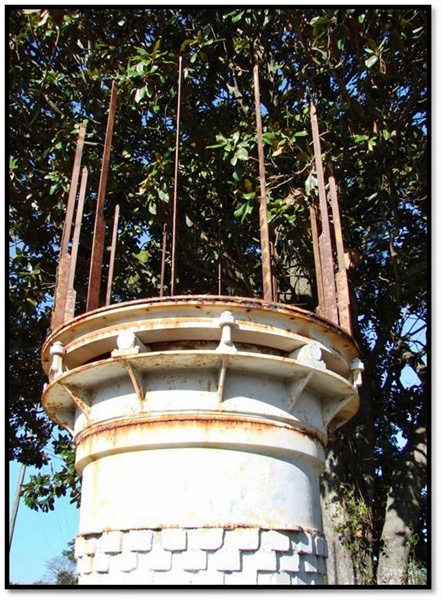
In 1898, Congress authorized the construction of a 159-foot, skeleton tower, named Cape Fear Lighthouse, on the southeastern end of Bald Head Island, where its first-order light could help mark Frying Pan Shoals. Cape Fear Lighthouse served from 1903 to 1958, when Oak Island Lighthouse, located on the mainland, became operational.
After the completion of the new Cape Fear Lighthouse in 1903, Old Baldy was changed to a fourth-order fixed light and its name was officially changed from Cape Fear Lighthouse to Bald Head Lighthouse. The light atop Old Baldy was changed from oil to acetylene in November 1913, and seventy-year-old James Dosher was out of a job, after having been in charge of the light for over thirty years. The Fresnel lens was removed from the tower after the light was decommissioned in 1935, and from 1941 to 1958 the tower housed a radio beacon. The lighthouse was sold to a private owner in 1963. After another change of hands, the lighthouse was donated to the Old Baldy Foundation, organized to restore North Carolina’s eldest treasure.
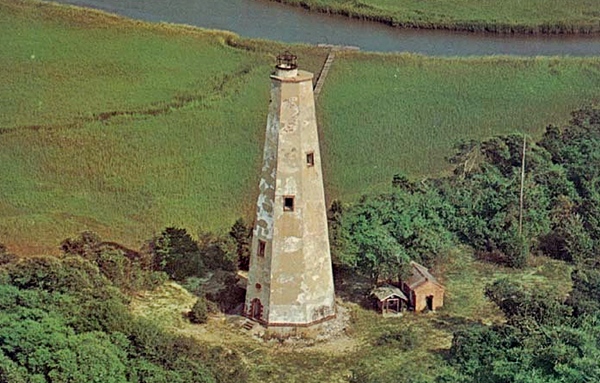
Restoration of Bald Head Lighthouse included placing a new cooper roof on the off-center lantern room and patching up the layer of stucco that covers the brick tower. Over the years, patchwork repairs have led to the unique mottled look of the lighthouse. Visitors can now scale the 112 restored wooden stairs to reach the top of the tower and take in the beautiful island setting. The lighthouse was relit as an unofficial aid to navigation in 1985.
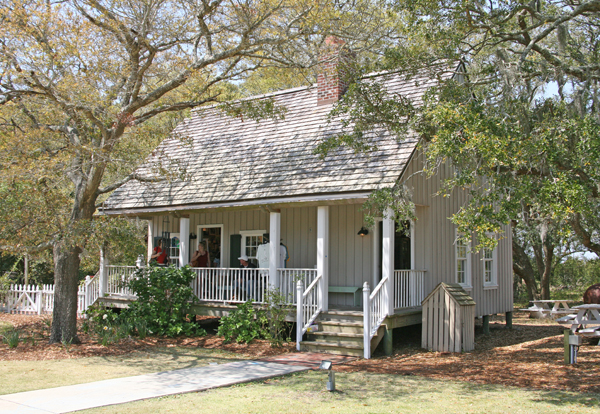
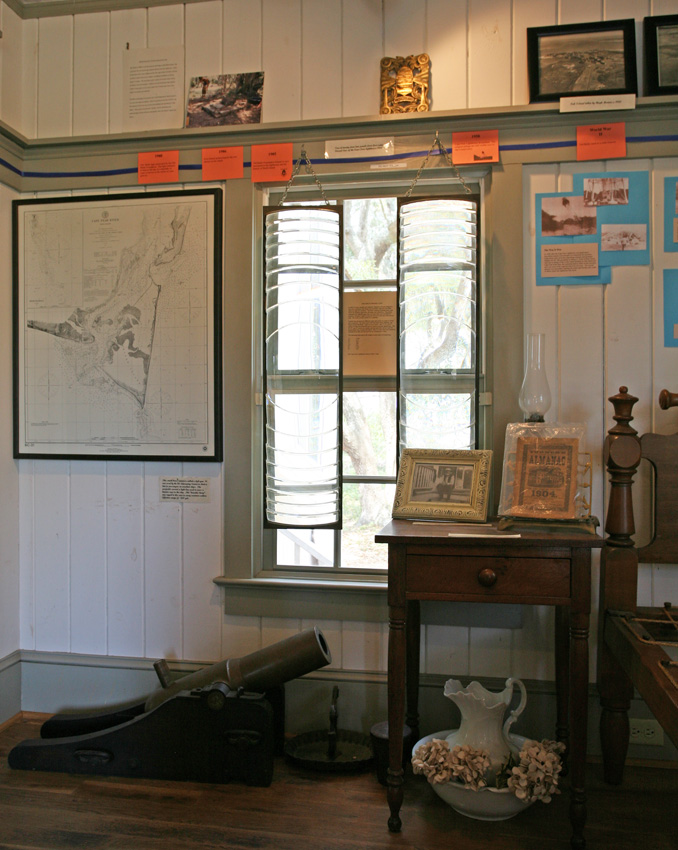
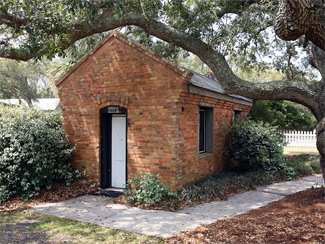
A replica of the 1850s keepers cottage was finished in 2000 adjacent to the lighthouse and houses the Smith Island Museum, providing a permanent home for over 400 years’ worth of the region’s maritime history, including a 1908 keeper’s uniform and two lens panels from Cape Fear Lighthouse.
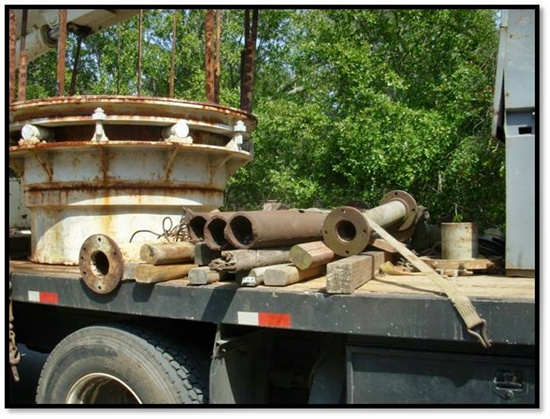
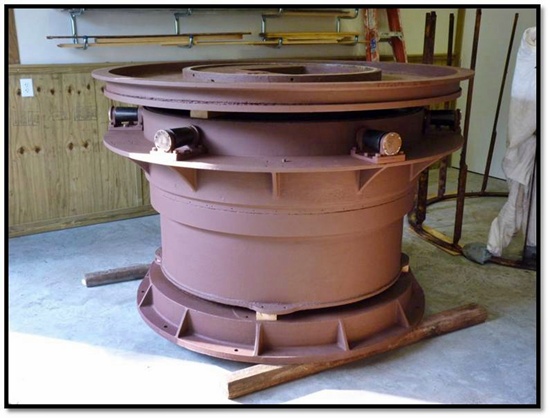
In 2009, the Old Baldy Foundation purchased remnants of Cape Fear’s first-order Fresnel lens that had been on display outside an antique dealer in Wilmington, North Carolina. The lens was crated up, transported to the island, and placed in storage. The foundation now owns the entire lens framework, the base on which the lens turned, and about thirty percent of the lens prisms, including seven bull’s-eye panels, and is looking to acquire any other pieces that are privately owned. In 2010, the lens pedestal was dismantled and cleaned, and future plans call for the construction of an exhibit building near Old Baldy so the historic lens can be displayed.
Head Keepers: Henry Long (1795 – 1806), Sedgwick (Shadrack) Springs (1807 – 1837), Bryan Morse (1837 – 1848), Francis Morse (1848 – 1853), William R. Sellers (1853 – 1857), James R. Flowers (1857 – 1859), Thomas M. Thompson, Sr. (1859 – at least 1860), M. L. Stransbury (1865), John Bell (1865 – 1866), James S. Sanders (1866), Joseph A. Bell (1879 – 1881), John R. Newton (1881 – 1882), Asa Ross (1882), James Henry Dosher (1882 – 1913).
References