Cape Romain, SC 
Select a photograph to view a photo gallery
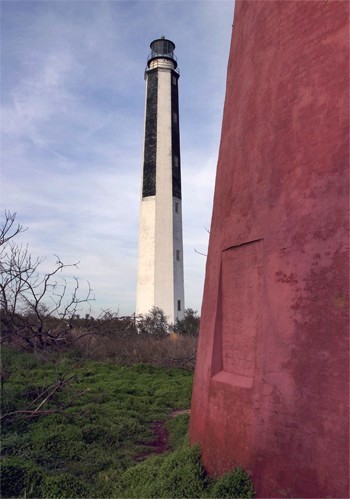
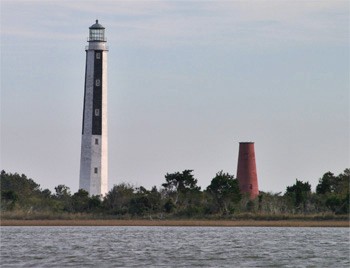
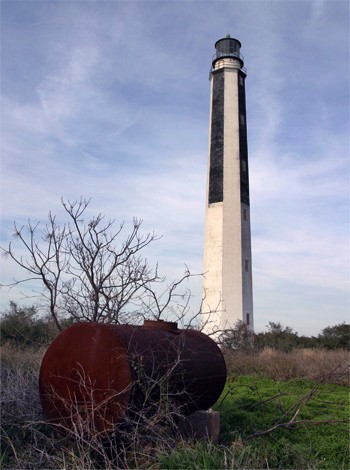
Photo Gallery
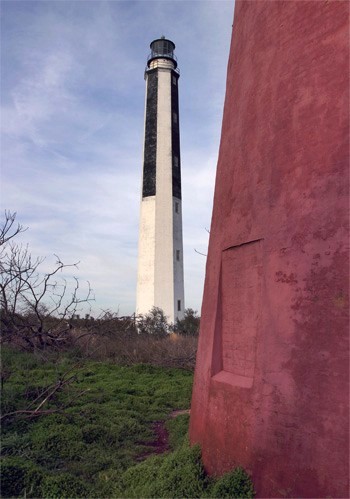
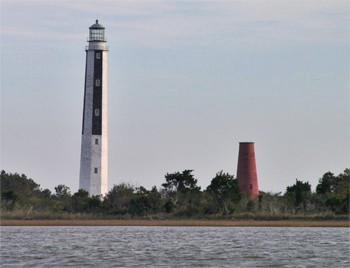
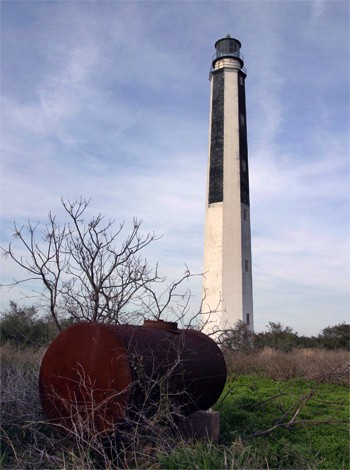
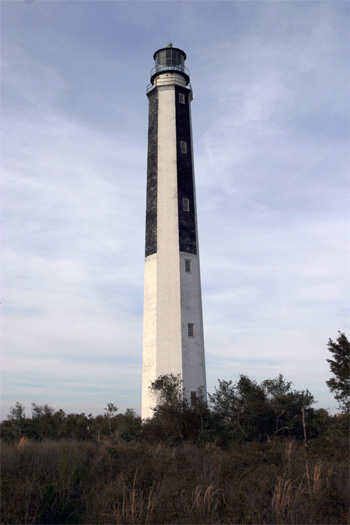
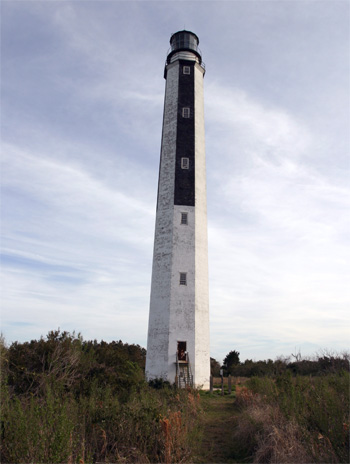
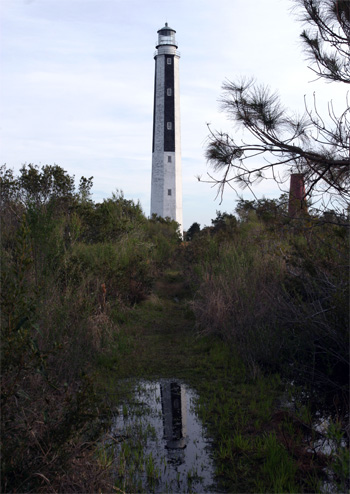
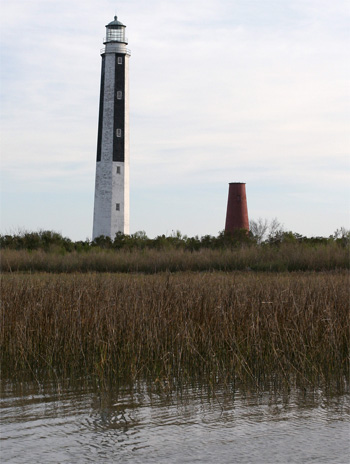
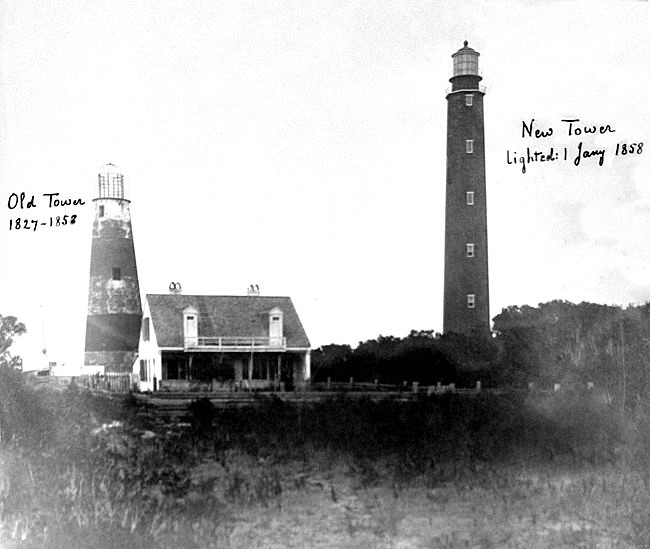
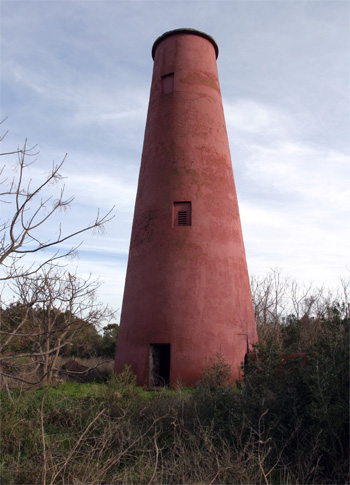

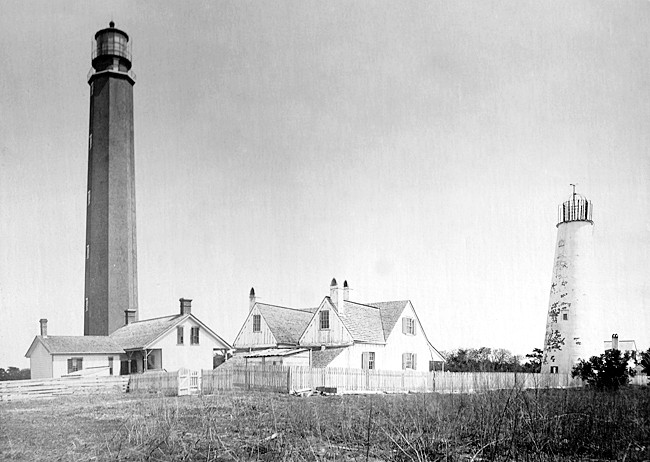
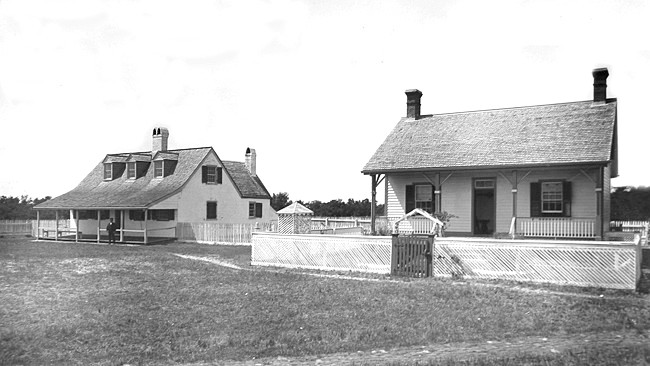
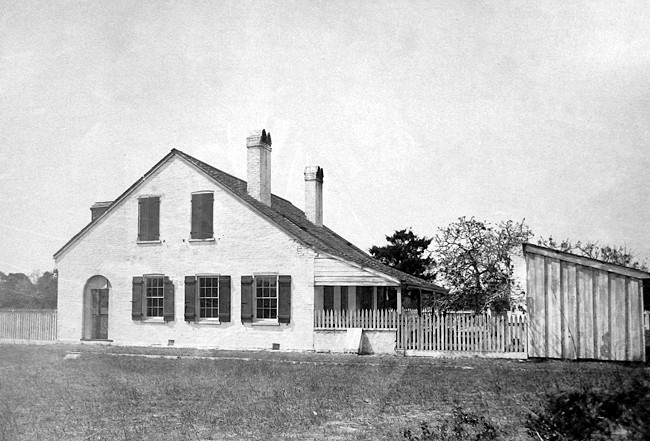
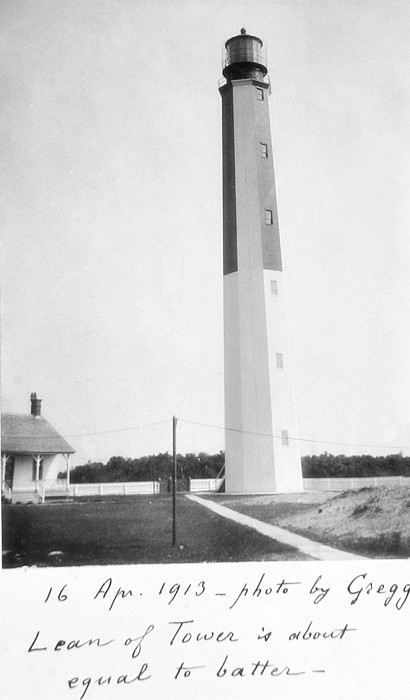
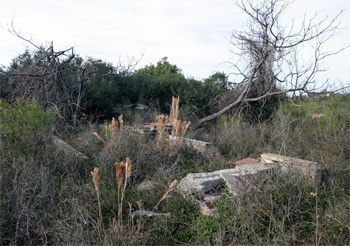

Photo Gallery
Photo Gallery
|
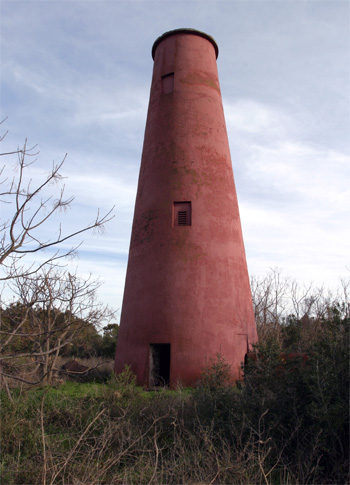
A traditional brick, conical tower, with a height of sixty-five feet, was finally erected in 1827 under the direction of Winslow Lewis, who outfitted the tower with a lamp and reflector lighting apparatus of his own invention. The total cost for the lighthouse was $12,001.
Thomas Skrine was recommended to serve as the first keeper of Cape Romain Lighthouse by his member of the U.S. House of Representatives from a pool of eleven candidates. Stephen Pleasonton, the fifth auditor of the treasury and the person responsible for the country’s lighthouses, submitted the appointment of Skrine at an annual salary of $400 for approval on June 1, 1827, and President John Q. Adams gave his endorsement three days later.
Cape Romain Lighthouse was constructed on Raccoon Key, now known as Lighthouse Island, which is located six miles offshore from McClellanville. As no major ports are located in the immediate vicinity, the light’s main function was to alert mariners of a treacherous shoal nine miles southeast of the beacon.
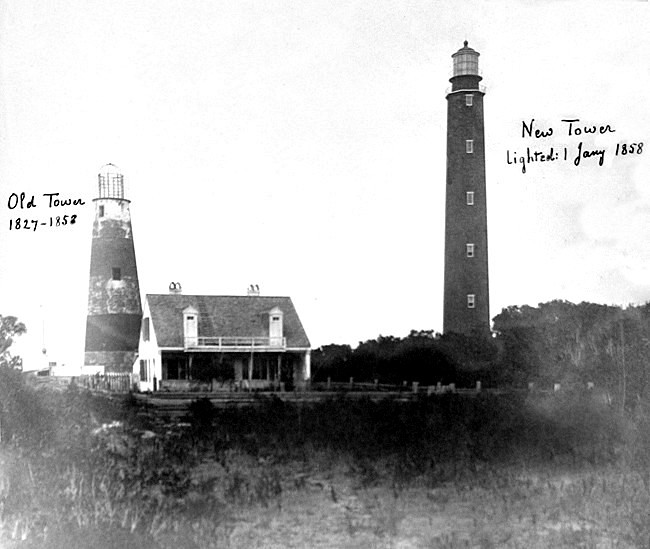
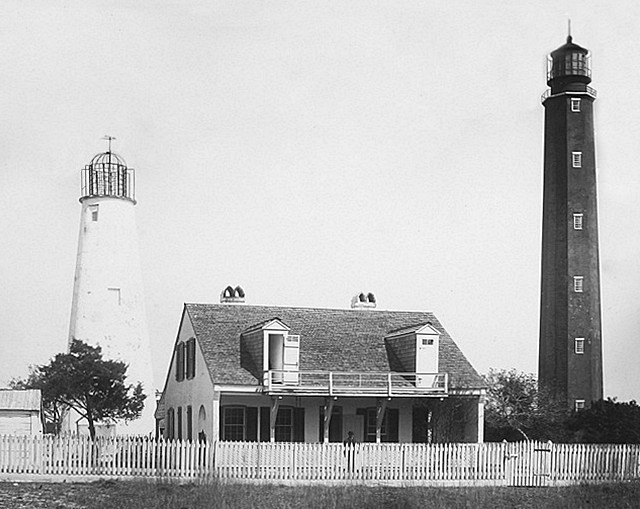
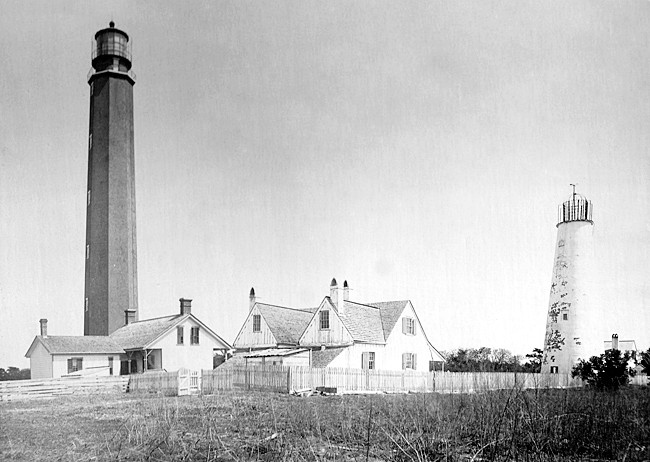
Unfortunately, due to the lighthouse’s weak signal, it failed at its primary role. The lighting apparatus was upgraded in 1847, but the improved beacon was still not satisfactory. Drastic measures were deemed necessary to remedy the situation, and in 1852, the newly formed Lighthouse Board requested $20,000 for replacing the “present small and useless light at Cape Romain” with a first-class seacoast light. Congress appropriated $20,000 on March 3, 1853 and another $30,000 on August 3, 1854 for the project. A new, 150-foot-tall tower, equipped with a first-order Fresnel lens, was built near the original tower using slave labor, and the powerful beacon was put into service on January 1, 1858. As the new light, which revolved to produce a bright flash every minute, required more work than the former fixed light, two assistants were hired to help the head keeper. Mariners could easily distinguish the station during daylight by its two towers. The old circular tower was painted with red and white horizontal bands, and the new octagonal tower was reddish-grey, the natural color of the brick used in its construction.
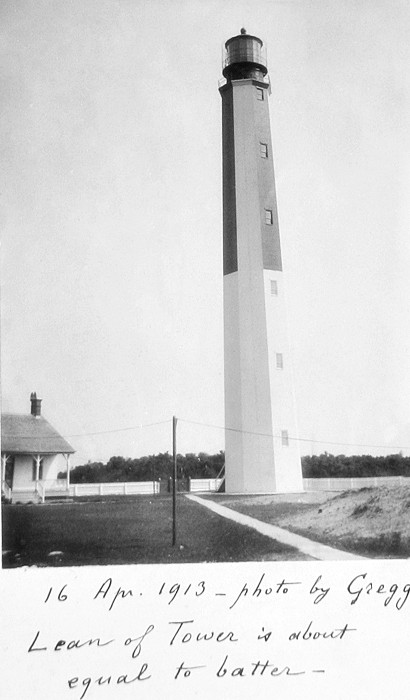
Three years after the new light commenced operation, the first shots of the war that would free the slaves who worked on the tower were fired at Fort Sumter, just a few miles south of Cape Romain. Confederate forces extinguished the light shortly after the war started and even went to the extent of destroying the lens and lantern room to prevent the lighthouse from being used by the Yankees. Following the war, the lighthouse was reequipped and returned to service in 1866. The tower did have one problem, however, that could not be easily rectified – it had developed a conspicuous lean as its foundation settled. In 1873, the tower was found to have a lean of 23 ½ inches, and the following year the deviation from vertical had grown to 27 ¼ inches. Measurements taken in subsequent years indicated that the tower had stabilized.
|
After being relieved by Keeper Lee at 9 p.m., Keeper Johnson returned to his home, only to exit a few minutes later shouting that his wife had killed herself. Mrs. Johnson’s blood-covered body was found in the center of her bedroom with a gun and a razor nearby. Clothing and other items belonging to Mrs. Johnson were strewn about the room, and her valuable jewelry and $1,400 she had withdrawn from the bank just ten days earlier were missing. Though many at the time believed Mrs. Johnson committed suicide, the missing money and jewelry convinced others that someone at the station or an outsider was responsible for the death. This mysterious tragedy, now told around many a campfire, continues to invite speculation about who was responsible for the demise of Mrs. Johnson.
In 1886, the old tower was fitted with a concrete floor, a fire-proof door, and shelving so it could serve as an oil house capable of storing 450 cans of oil. On August 31 of that year, a magnitude 7.3 earthquake struck Charleston. The earthquake was the largest to ever strike South Carolina and was definitely felt at Cape Romain Lighthouse, thirty-six miles from Charleston. At the time, the head keeper was sick in bed with malarial fever, but the assistant keepers and their families still sought refuge in the head keeper’s dwelling, as their homes were closer to the tower and more likely to be destroyed if the tower fell. The human occupants of the island weren’t alone in being startled by the tremors as about 1,000 cranes, which nested on Raccoon Key, took to flight making a fearful noise, and the station’s cattle and poultry ran about in fright.
The following account of the earthquake was included in the Annual Report of the Lighthouse Board.
At 9.50 p.m. a low rumbling noise was heard in a west-southwest direction. The noise grew louder and louder, sounding something like a battery of artillery or a troop of cavalry crossing a long bridge. In less than a minute came the shocks, the first one lasting about two minutes, the next one about as long, with about two minutes interval. Shocks only a little less severe than the first two were felt at intervals during the night. The shocks did the tower no injury, but its vibration was great. Everything on the shelves was thrown down, the doors of the machinery-case were burst open, and a trap-door that leaned back at an angle of nearly 45 degrees was thrown down. The revolving machinery stopped only during the two heavy shocks, but went regularly afterwards. Nothing happened to the tower or the lantern to prevent a proper illumination of the station. All of the shocks seemed to be of a quick rotary motion. The clocks were all stopped in both tower and dwellings. Everything, such as vases and crockery, was thrown down and broken. It seemed a miracle that the tower and dwellings are now standing with little or no damage done to either, with the exception of a chimney thrown down and others cracked. The plastering in the dwellings is more or less cracked, and that is all the damage that has been done.
In 1916, the Lighthouse Service Bulletin recognized the aid rendered by the head keeper of Cape Romain Lighthouse:
A noteworthy example of assistance rendered by employees of the Lighthouse Service to persons in distress is that of keeper August F. Wichmann, of the Cape Romain Lighthouse, S.C., to the captain and members of the crew of the schooner barge, Northwest, which broke adrift from its tow and was wrecked in the vicinity of the light station. On July 16 two men from the schooner came to the station and reported that they had floated ashore about 6 miles from the station on wreckage from their vessel, and that they had left the captain and two other men on the beach in too weak a condition to reach the station. The station motor boat having been damaged by the storm, the keeper went to the rescue of the men in a rowboat. On the way back he carried the captain of the barge part of the way on his back to the point where it had become necessary to leave his boat, and, it having become dark, experienced considerable difficulty in making progress along the beach and was in danger of being drowned. He brought the men safely back to the light station after having been absent 14 hours.
|
Keeper Wichmann lost his first wife and child during childbirth, and his second wife died of a heart attack after twenty-eight years of marriage. During a church picnic held at Cape Romain Lighthouse, Wichmann met his third wife, forty years his junior, and the two wed in 1928. When Wichmann’s third wife was expecting a child, a doctor came out to the island along with a black midwife, Mammie Hessie. After waiting all night for the child to arrive, Keeper Wichmann went out fishing about daybreak. On returning home, Wichmann proudly held up a twenty-five-pound bass to show it off to Hessie, who was standing at a window, and said “Hessie, see what I caught?” Hessie opened the window, held up Wichmann’s new son, and said, “Captain, see what I caught?” Keeper Wichman retired in 1934, after twenty-one years at Cape Romain, when his son was four years old. Wichmann’s third wife committed suicide three years later, but the keeper lived to be eighty-eight and to see his young son grow to adulthood.
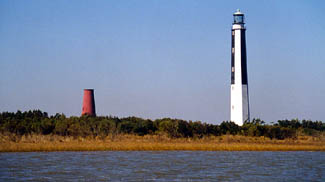
The towers at Cape Romain have been painted various colors over the years. At one time, the old tower was white while the newer tower was a dark color. Later, the bottom portion of the new tower was painted white, while the eight sides of its upper portion were alternately painted black and white. The resulting daymark, which is still in place today, is unique and striking. The old, abandoned tower was painted red to set it off from the newer tower.
Cape Romain Light Station was modernized in 1931 through the installation of two gasoline electric generators in a new combination power and store house. Replacing the incandescent oil vapor lamp with a 500-watt electric bulb increased the light’s candlepower from 280,000 to 430,000. The tower’s Fresnel lens, which was equipped with eight flash panels, had previously been revolved by a clockwork mechanism at the rate of once every eight minutes to produce a single flash each minute. A panel on opposite sides of the lens was blocked off and an electric motor, capable of revolving the lens eight times faster, was installed to produce a new signature of a group of three flashes every thirty seconds.
These improvements allowed the station to be automated in 1937. Lemuel G. Owens, the final head keeper of the lighthouse, was involved in an accident at the station on April 6, 1937. As he was pouring a fresh supply of acid into and old bottle, an explosion occurred that threw acid onto his face and into his eyes. Owens was taken to a hospital where he received treatment for his burns. He was in the hospital for many months, and his right eye had to be removed. Later in his career, his right had had to be amputated due to a tumorous mass.
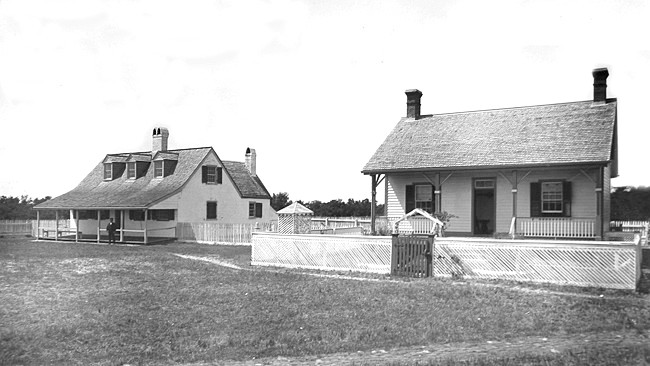
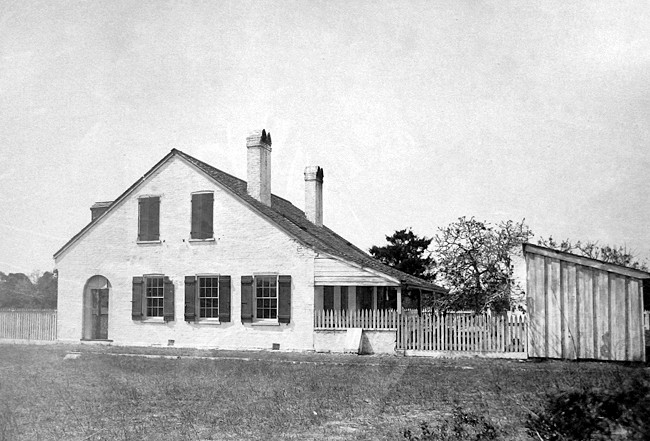
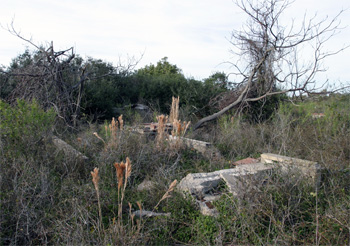
Cape Romain Light was discontinued in 1947, and lighted buoys were placed offshore to mark the shoals. After the departure of the keepers, the island’s sole residents were a herd of wild goats, and numerous snakes and insects, but the goats have since been removed from the island. Only the foundations of the dwellings remain today.
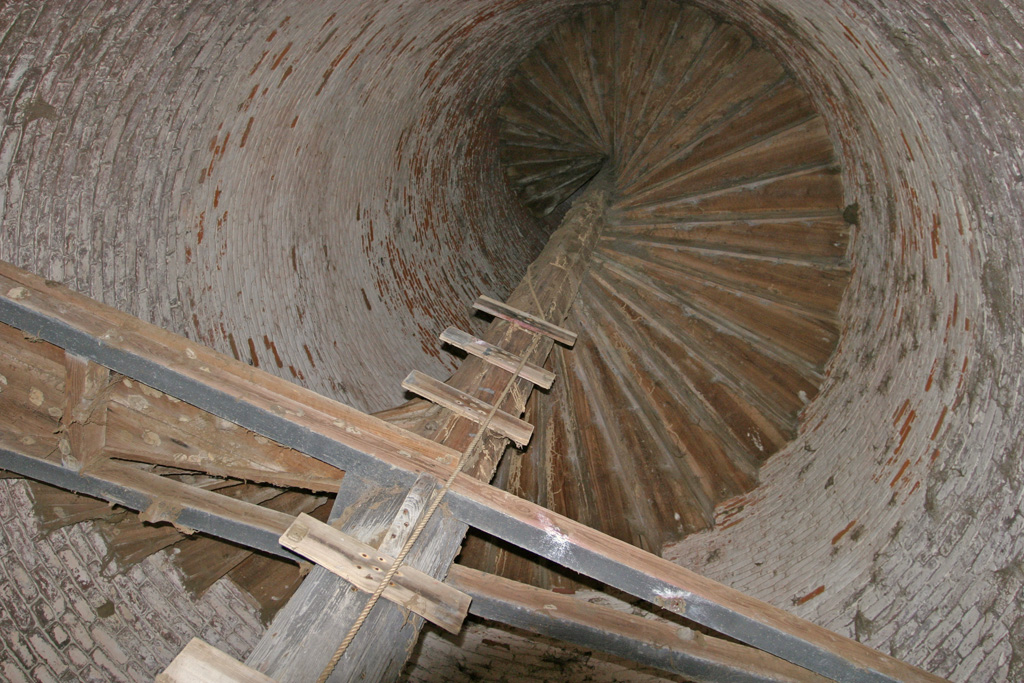
The two towers continue to stand up to the elements, including even the furry unleashed by an occasional hurricane. The bottom portion of the original tower remains, but much of its wooden staircase is gone. The newer tower is in remarkably good condition, though the 212-step spiral staircase leading to the lantern room is a bit rickety. Around 2010, new doors were installed on both lighthouses. In 2011, Tommy Graham, a contractor in McClellanville, made some emergency repairs to secure the lantern room atop the 1857 tower.
Keepers:
References