Charleston (Sullivan’s Island), SC 
Select a photograph to view a photo gallery
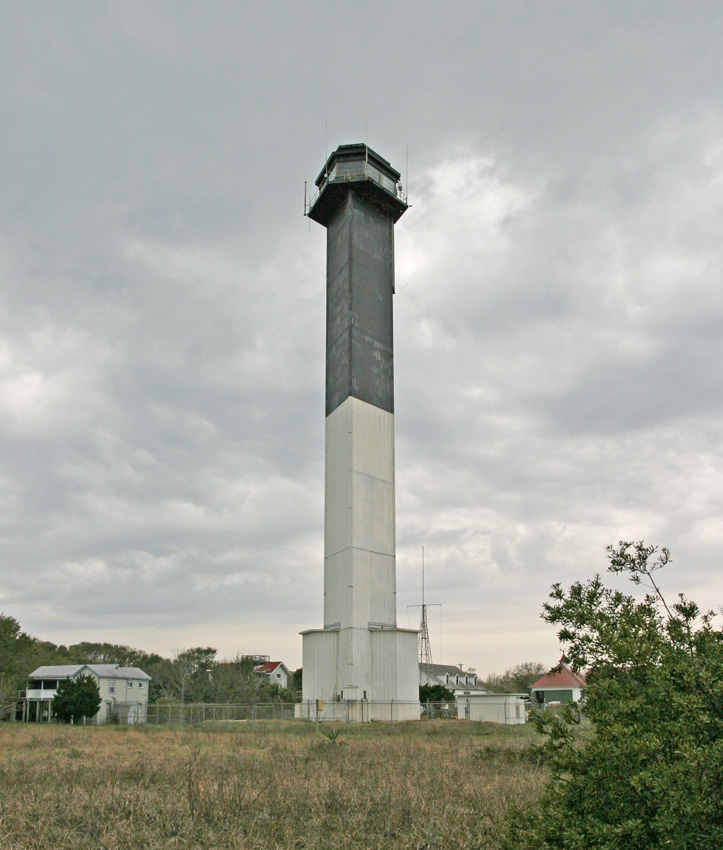

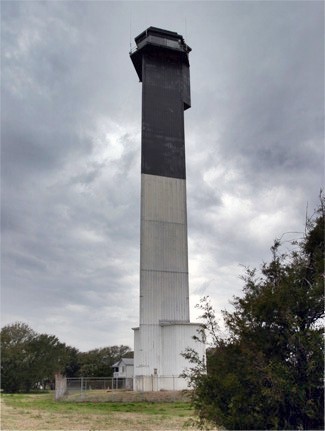
Photo Gallery
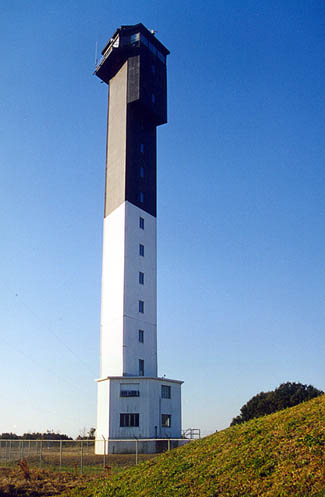
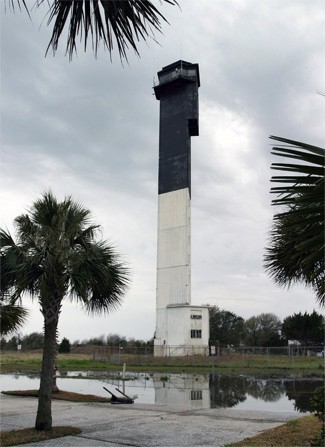
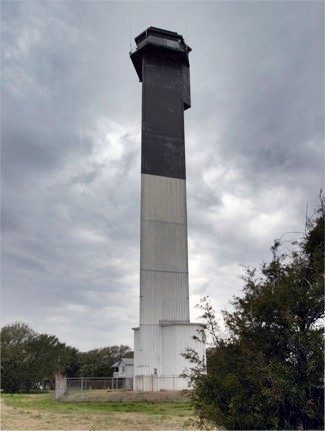
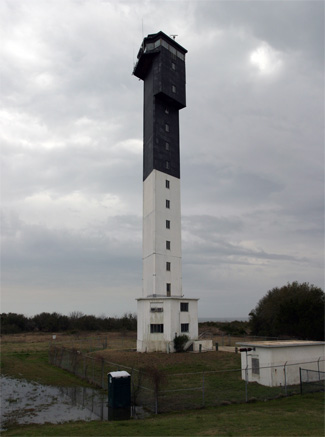
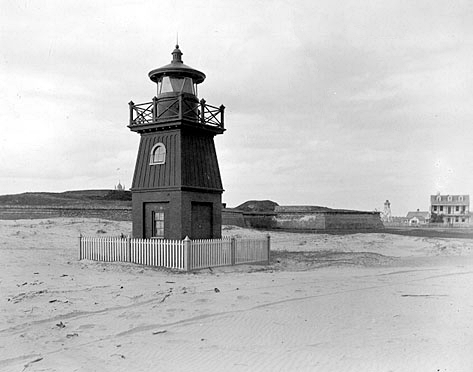
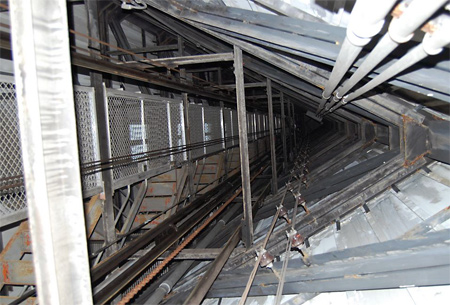
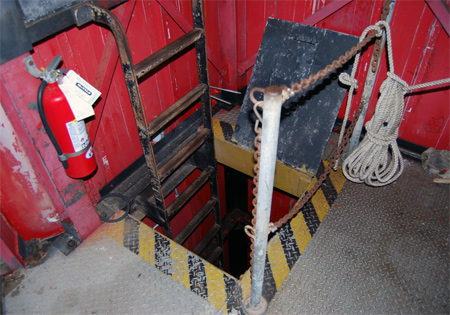
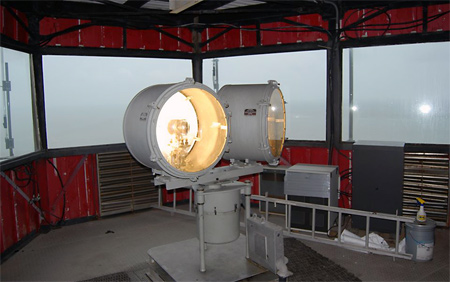
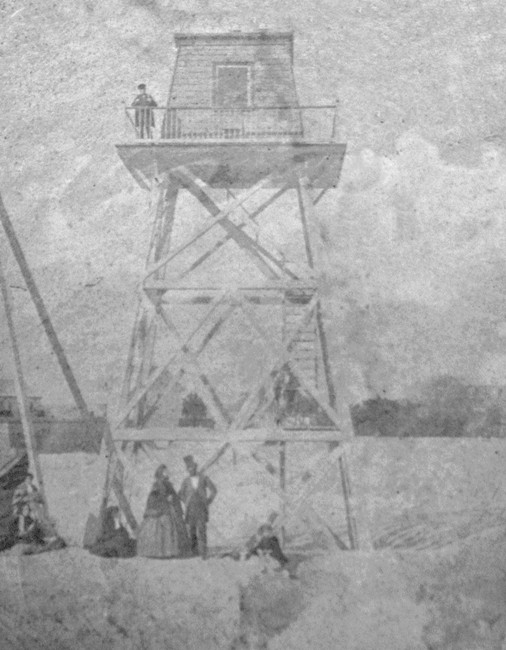
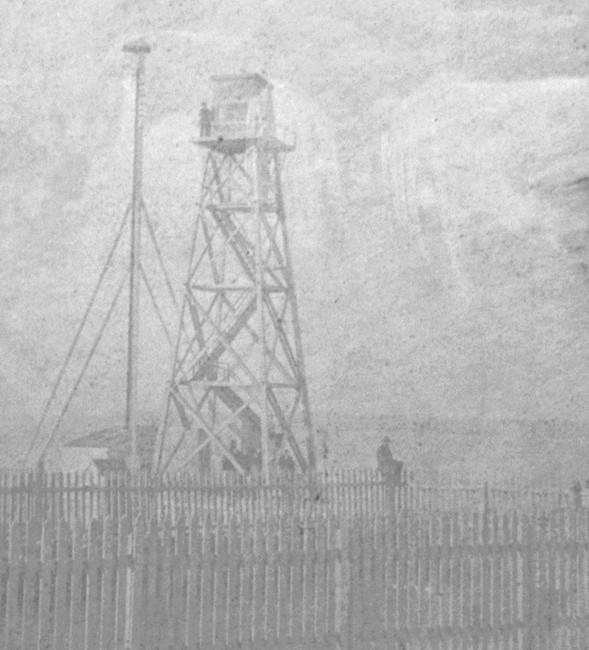
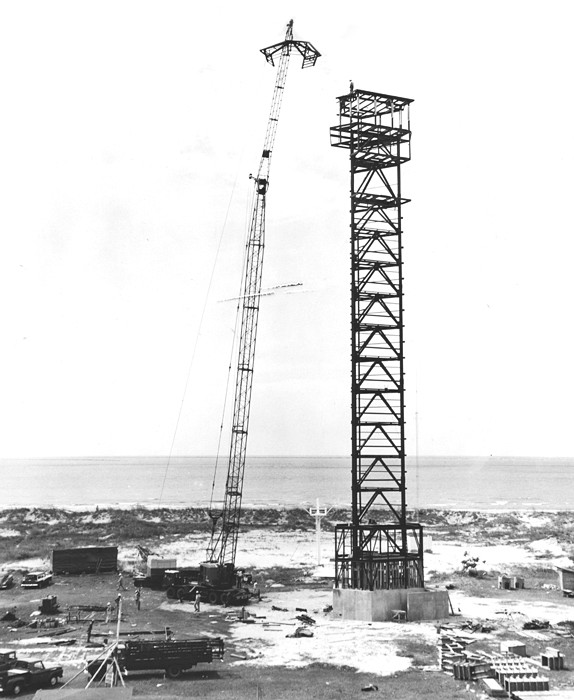
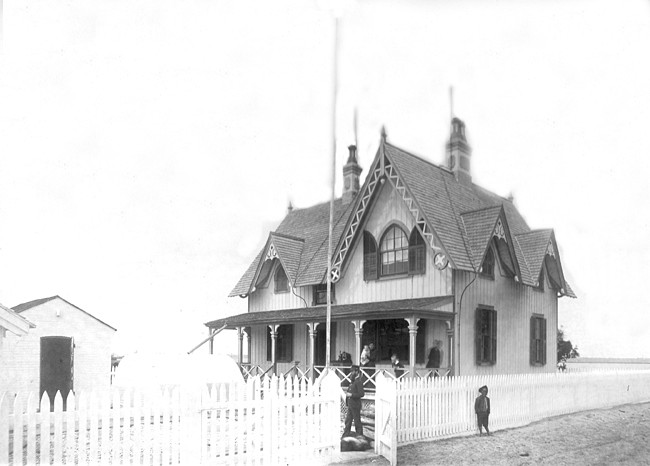
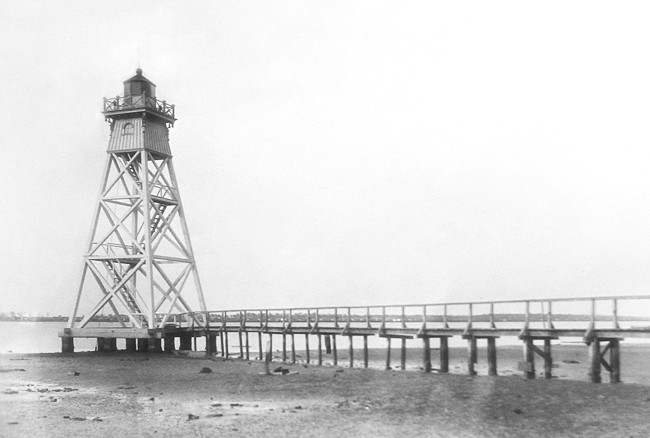
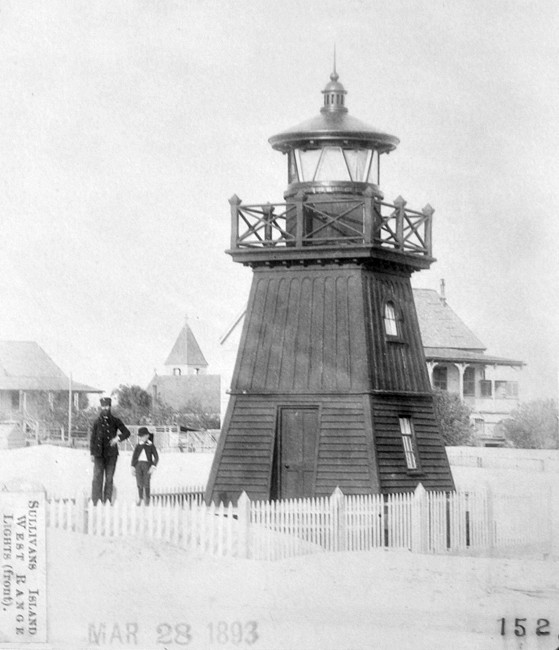
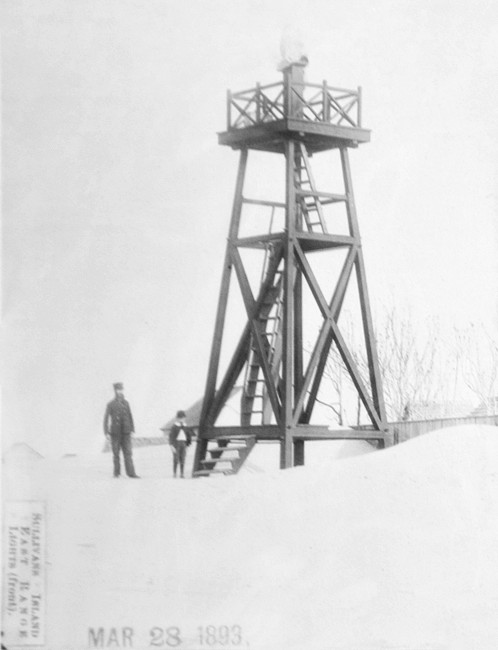
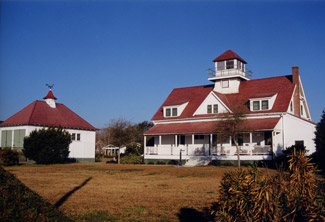
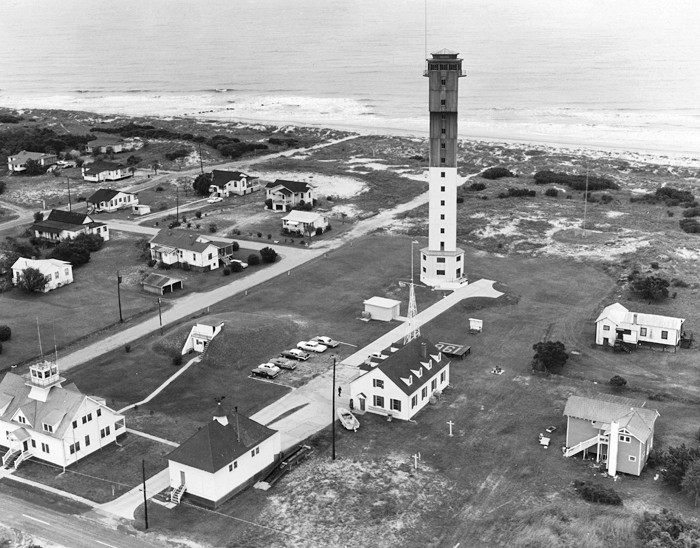
Photo Gallery
Photo Gallery
|
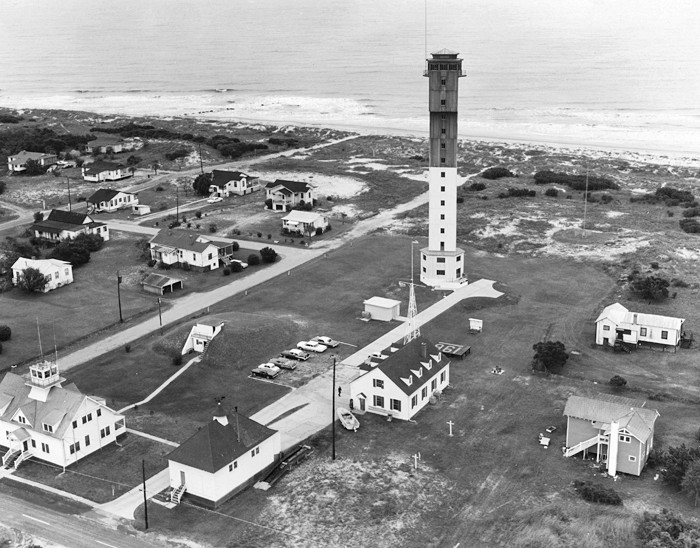
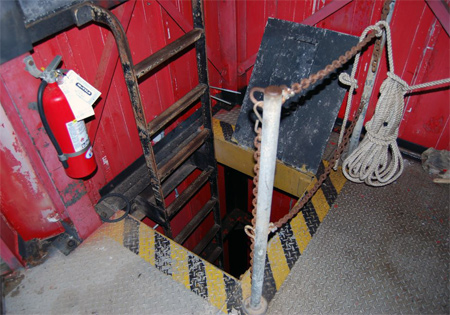
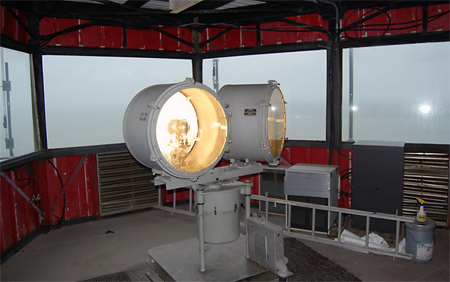
When first activated on June 15, 1962, the lighthouse featured an amazing twenty-eight million candlepower light, produced by carbon arc lamps costing $900 apiece, that was the second brightest in the western hemisphere. This powerful beam proved dangerous to its keepers and bothersome to its neighbors. In order to access the lantern room when the powerful lamps were lit, keepers were required to don an asbestos welding suit. To pacify neighbors, plate steel was installed in the landward side of the lantern room. The beacon was downgraded a decade later to a light of just over a million candlepower. Visible from twenty-six miles, the light now has a unique flashing characteristic consisting of a 0.2-second flash, a 4.8-second eclipse, another 0.2-second flash, and a 24.8-second eclipse.
Charleston Lighthouse was originally painted white and red-orange, but the coloring proved so unpopular that the tower’s daymark was soon changed to the current black-top, white-bottom paint scheme.
The high-tech Charleston Lighthouse overlooks one of the South’s oldest and most historic cities. Just down the street from the lighthouse is Fort Moultrie, named after William Moultrie a Revolutionary hero responsible for building an earlier fort on the same site. Moultrie and his men repelled a British armada on June 28, 1776, supplying momentum to the quest for independence that would be officially declared just six days later. Fort Sumter is located just offshore from Fort Moultrie. In April 1860, Confederate forces in Fort Moultrie fired on the Federal soldiers in Fort Sumter, marking the beginning of the Civil War.
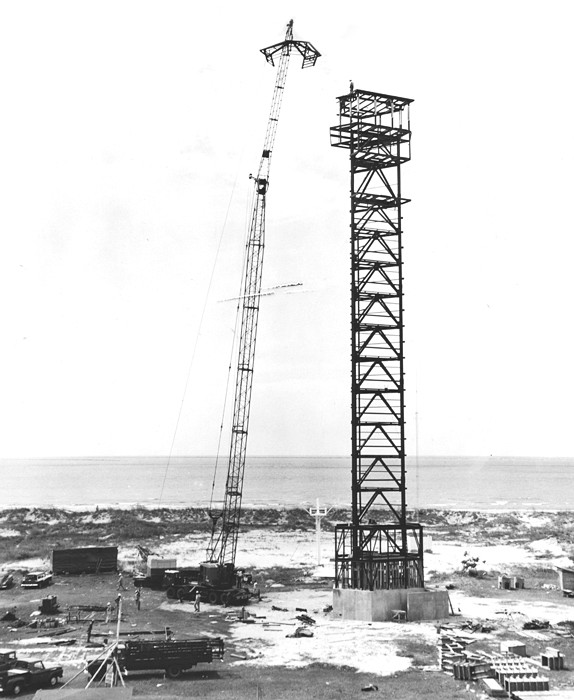
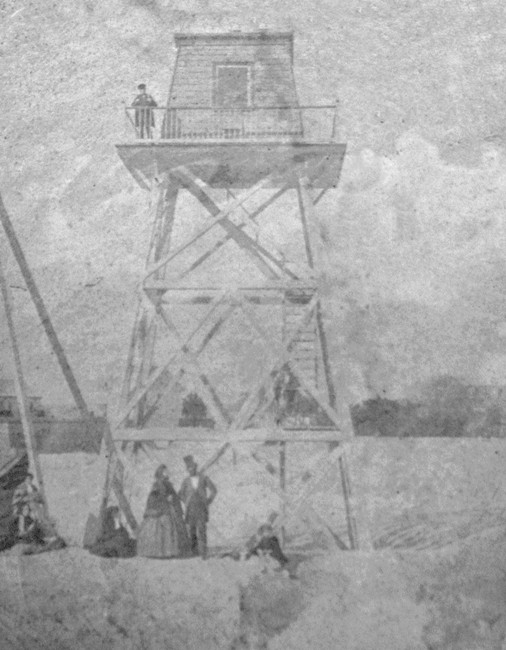
The 163-foot-tall triangular lighthouse is not the first to be built on Sullivan’s Island. Records indicate two “pole-beacon lights,” that were raised each evening and lowered the following morning, were placed near the southern end of the island near Fort Moultrie in 1848 to guide mariners over Charleston Bar. After being rebuilt in 1855, each of the beacon lights, which together were known as Sullivan’s Island Beacons, consisted of two lamps and stationary reflectors exhibited from enclosed lanterns set atop open wooden frames. In 1857, the rear beacon was consumed by fire and promptly rebuilt.
|
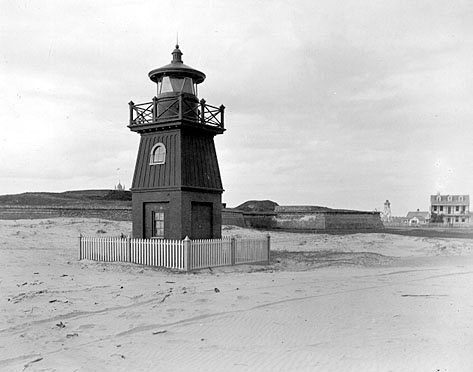
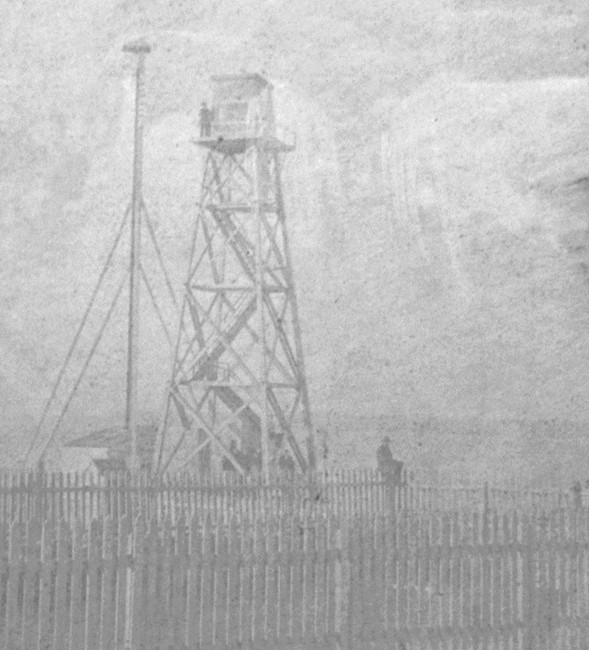
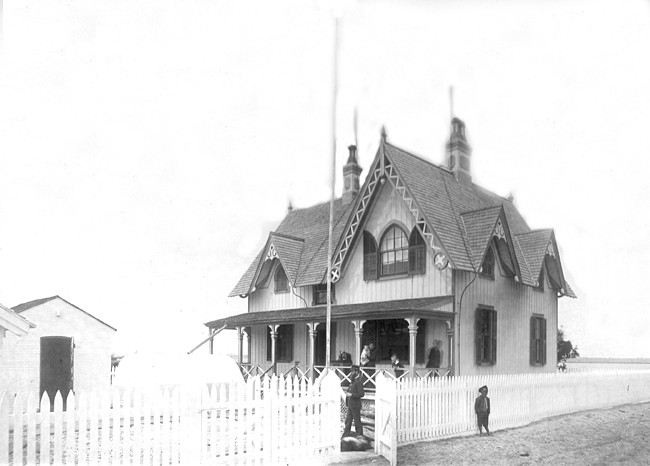
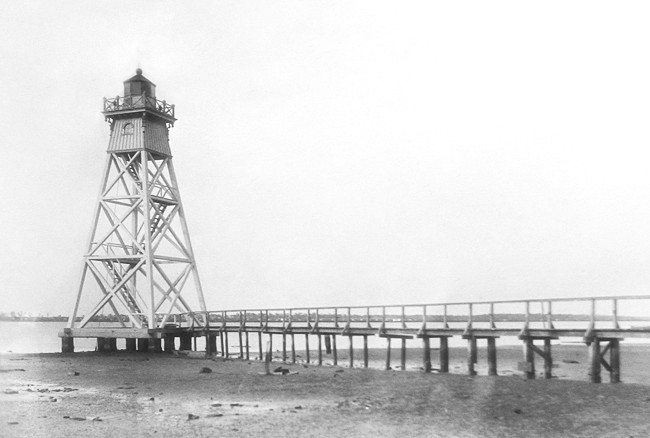
After Congress appropriated $10,000 on March 3, 1871, formal range lights were established on July 15, 1872 with the front light being displayed from a wooden tower set atop the northeast angle of Fort Moultrie and the rear light from a square, open-framework tower located several hundred feet to the north. An ornate dwelling with a pitched roof was built for the keeper of the range lights who had to use a 250-foot-long bridge to reach the nearby rear beacon.
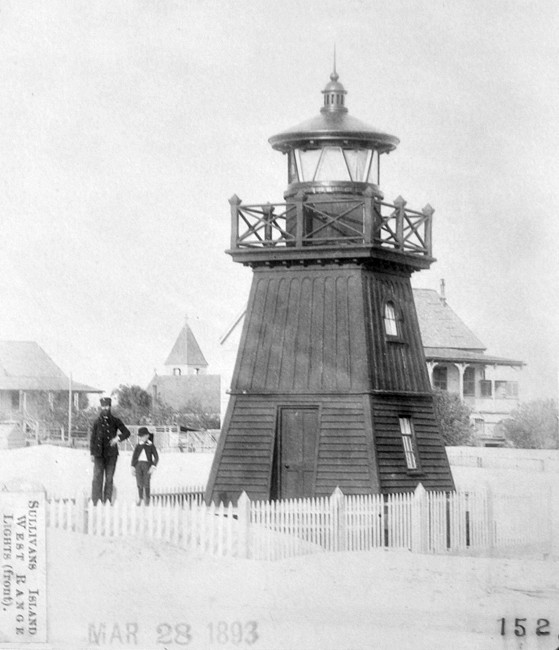
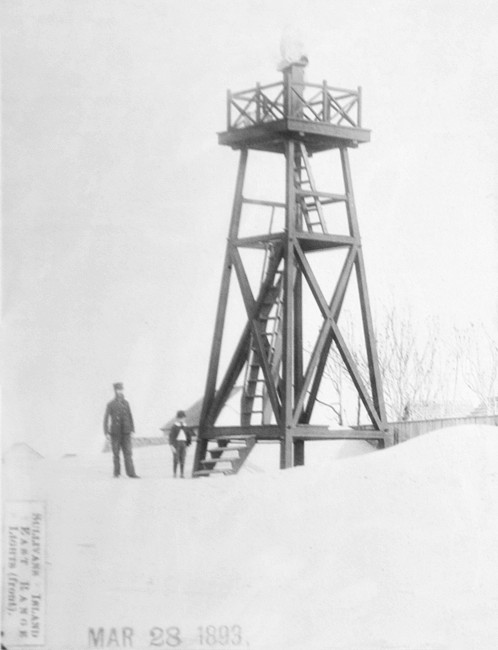
The front range light was moved from the fort’s parapet to a point east of the fort in 1878, and the following year, the wooden tower was placed atop a brick basement that functioned as an oil room. The front tower was painted red in 1883, matching the color of the lights displayed along the range. To track changes in the shipping channel, the front light was moved twelve feet westward in 1886 and placed atop a wooden tramway. In 1888, the front beacon was moved fifty-five feet farther west and a second front beacon was established to guide vessels through an opening left in the south jetty, which was under construction at the time. To enter the harbor, mariners would first use one of the Morris Island Ranges, then Sullivan’s Island West Range (the range established in 1872), then the range formed by the front lights of the Morris Island North and South Ranges, and then finally the Sullivan’s Island East Range (established in 1888), which led through the breakwater.
The rear beacon of the Sullivan’s Island Ranges was discontinued in 1899, but the two front beacons continued to be used for several years as a range to lead from Mount Pleasant Range through the South Channel to Charleston.
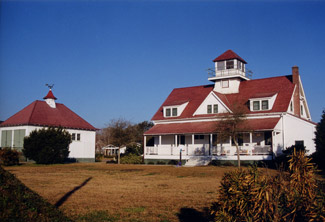
In 1898, a lifesaving station was built on Sullivan’s Island. The station’s dwelling and boathouse still survive next to Sullivan’s Island Lighthouse, and were used by the coastguardsmen manning the light.
Mike Sejman served at the lighthouse in the 1970s, when the station was staffed by a 1st class petty officer serving as the Commanding Officer, a 2nd class petty officer, and two non-rated crew members. Speaking to a reporter from The Charleston Observer in 1976, Sejman mused, “It’s a little sad sometimes to think that pretty soon they are going to automate the light here and they won’t need us anymore. I guess all the romance is about gone out of lighthouse keeping. I’m sorry too. I like it.”
|
In 1986, the National Park Service took over the lifesaving station property, excluding the lighthouse, and started to use the historic buildings as offices, maintenance shops, and housing for seasonal rangers.
On May 29, 2008, Charleston Lighthouse was also transferred from the Coast Guard to the National Park Service, which is committed to protecting the historic nature of the property and to prevent commercial development on the site. The Coast Guard will continue to maintain the light, but the Park Service will be responsible for the upkeep of the tower.
On the official transfer day for the lighthouse, Bob Dodson, superintendent of Fort Sumter National Monument, met with Chief Boatswain’s Mate Andrew White, the Coast Guard’s local officer in charge of aids to navigation, to obtain the keys and security code for the tower and to discuss maintenance and access issues. “You are relieving me of a big burden by taking over the lighthouse,” White said, noting that his crew of ten was responsible for monitoring and maintaining about 600 navigational aids along the South Carolina coast. Due to the difficulty of accessing its lantern room and viewing platform, Charleston Lighthouse will not be open to the public on a regular basis, but the Park Service has not ruled out an annual or semi-annual open house.
A celebration for the earlier transfer was held at the lighthouse on November 9, 2008. At that time, the grounds, lifesaving quarters, boathouse, and the base of the tower were open to the public. A symbolic key transfer was held, with local officials participating.
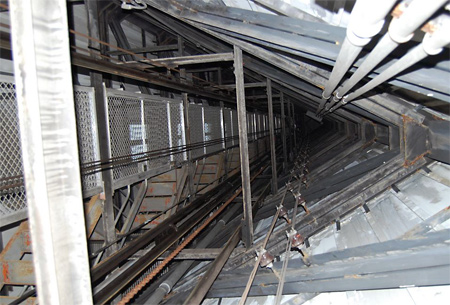
On January 7, 2009, Jack Graham, accompanied by his wife Martha, stopped by Sullivan’s Island Lighthouse, as making it to the top of the tower that her husband designed was on Martha’s “bucket list.” Jack Graham completed his architectural training at the University of Pennsylvania in 1957 under the tutelage of Louis Kahn, who was obsessed with triangles. A year after graduating, Graham learned he would be drafted, so he signed up with the Coast Guard and was stationed at Coast Guard Headquarters in Washington, D.C. In 1959, he was asked to come up with a design for a lighthouse, and given his background, he based it on a triangle, the strongest structural shape. Graham also persuaded the Coast Guard to install the elevator in the lighthouse because of the numerous reported accidents that occurred on lighthouse steps.
Keepers:
References