Cockspur Island, GA 

Select a photograph to view a photo gallery
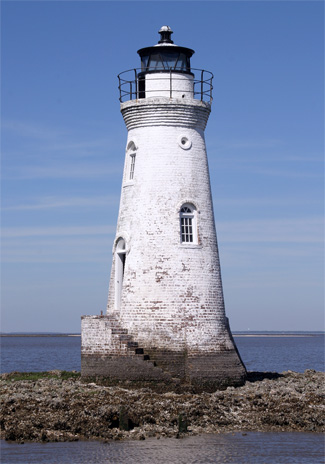
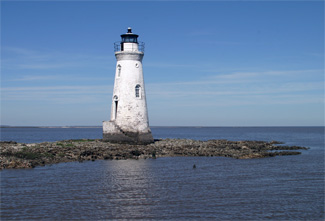
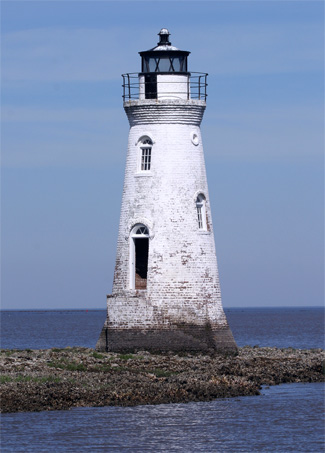
Photo Gallery
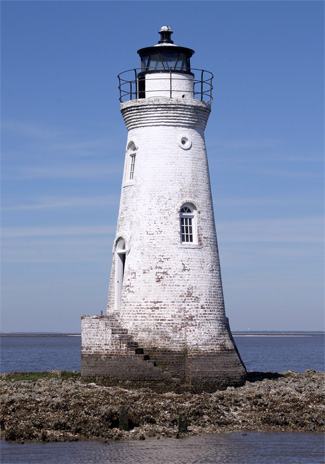
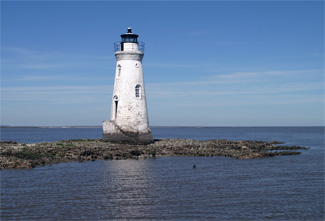
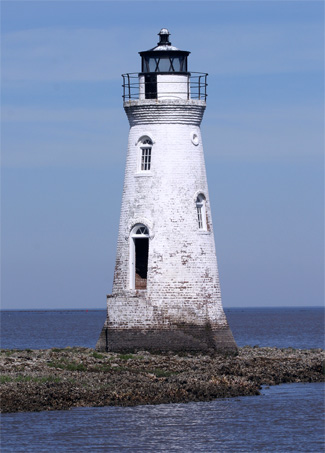
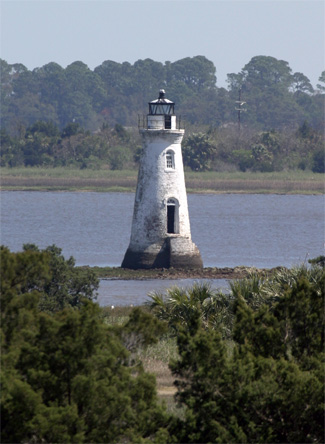
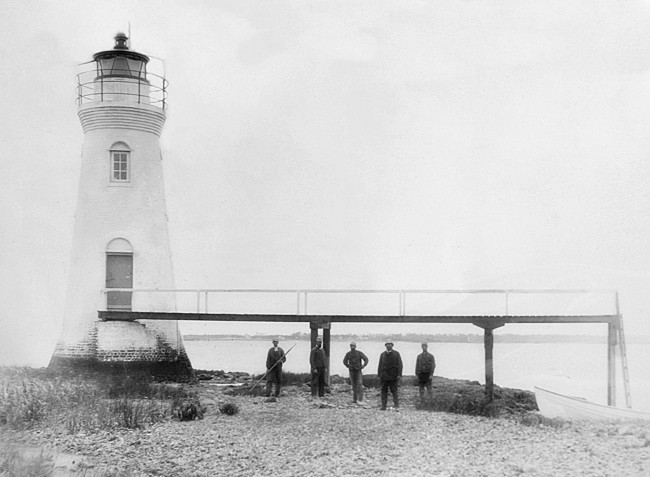
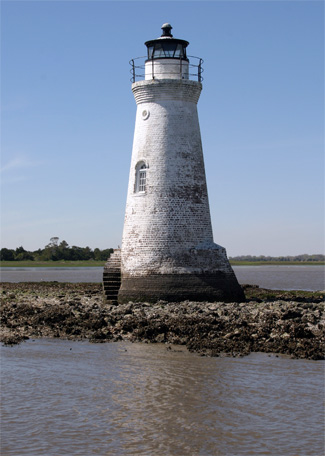
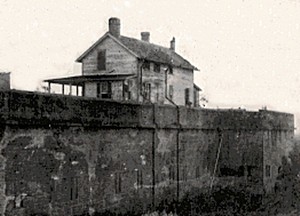
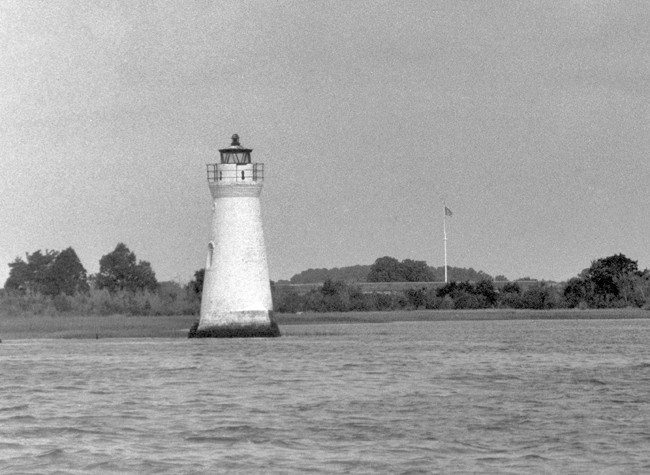
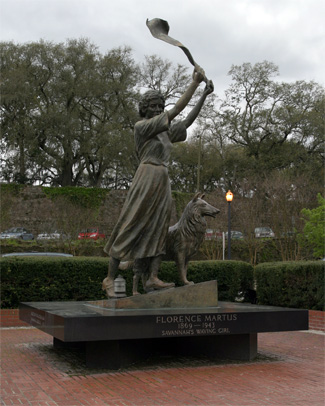
Photo Gallery
Photo Gallery
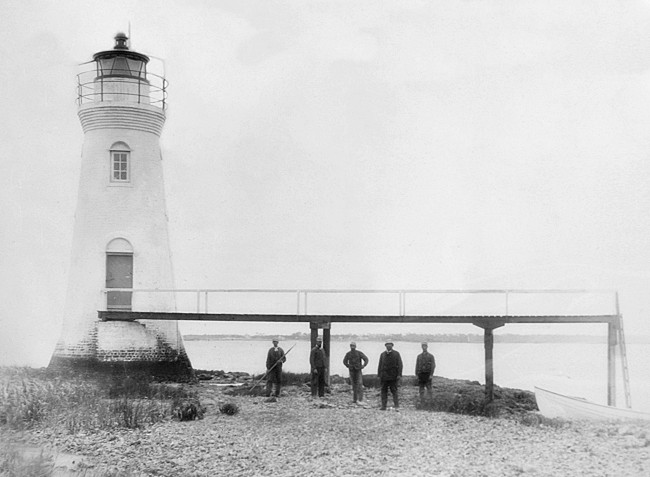
Congress appropriated $3,000 on March 3, 1832 for an unlit beacon on the “White Oyster Beds” near the mouth of the Savannah River, and then sixteen years later, provided another $2,000 for “placing a lantern, lamps, and reflectors upon the beacon already erected” and for a small house for the keeper. Noted New York architect John Norris, who designed the U.S. Customs House and Hugh-Mercer house in Savannah, was hired to “repair, alter, and put lanterns and lights on Cockspur Island...and to erect a suitable keeper’s house.” As a result of this work, two lights, known as Oyster Beds Beacon and Cockspur Island Beacon, were established off Cockspur Island in 1849 to mark the entrance to the south channel of the Savannah River. Each of these beacons displayed a light at a focal plane of twenty-five feet using three lamps and fourteen-inch reflectors. Cockspur Island Lighthouse displayed a fixed white light, and Oyster Beds Lighthouse a fixed red light.
|
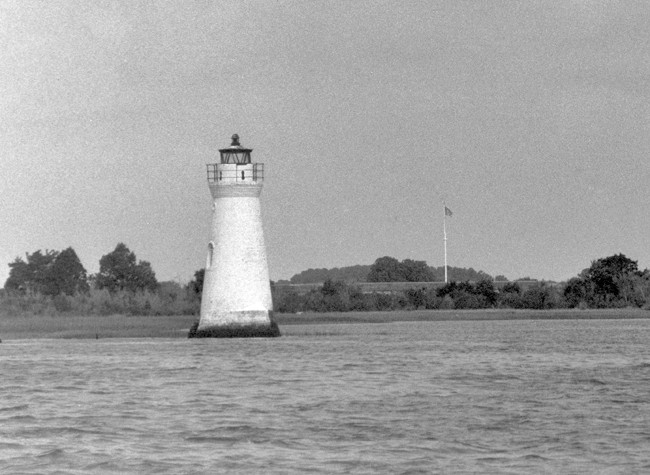
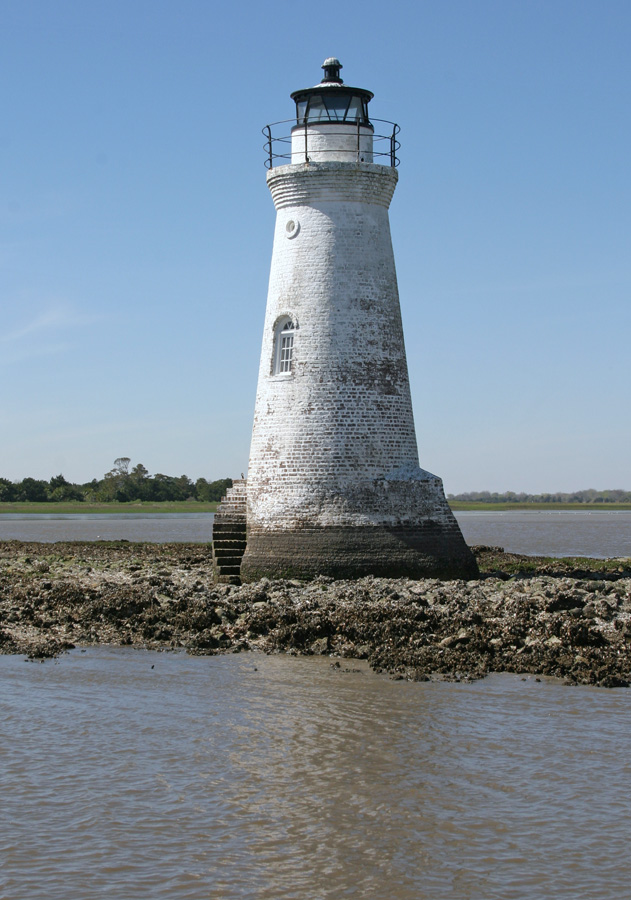
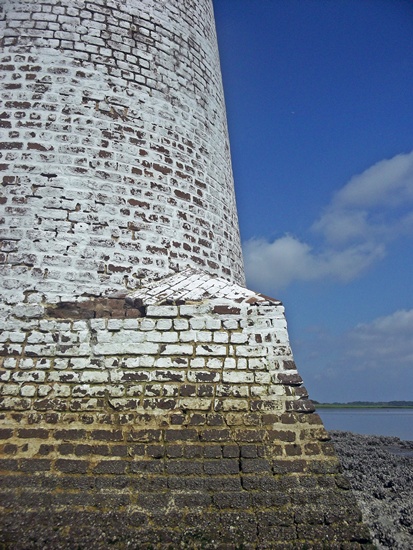
After an 1854 hurricane destroyed the keeper’s dwelling and Cockspur Island Lighthouse, the tower was rebuilt in 1856 and outfitted with a fifth-order Fresnel lens. This brick tower, which remains standing today, has a unique feature – its eastern side is shaped like the prow of a ship to better withstand the force of high seas.
When Union forces entered the area in 1861, they took control of Tybee Island and constructed batteries on the island’s western shore. The Confederates had retreated to Fort Pulaski, thinking that they would be safe within the fort’s seven-foot-thick walls that were constructed using twenty-five million bricks. On April 11, 1862, Union soldiers opened fire on the fort using a new weapon, rifled Parrot guns. These powerful guns were reportedly able to drive their thirty-six-pound shot roughly a mile to the fort and then nearly two feet into the fort’s walls. After more than 5,000 such shots had been fired, the fort was severely damaged, and the occupants decided it was wise to surrender before a shot penetrated their powder magazine. The battle lasted just thirty hours, and amazingly, Cockspur Island Lighthouse, which stood in the direct line of fire between Tybee Island and the fort, suffered no damage.
The lights at Oyster Bed and Cockspur Island resumed operation in 1866, after some “considerable rebuilding” was performed to re-establish lights that had been “destroyed by the rebels” during the Civil War. In 1876, the Lighthouse Board noted the following regarding the residence on Cockspur Island for the keepers of Oyster Beds and Cockspur Beacons: “The keeper’s dwelling, a small one-story frame building, built on a wooden foundation, is more than twenty years old, and so decayed that further repairs are unadvisable. It is also so near the ground that during severe gales the water rises above the floor.” The dilapidated dwelling was struck by lightning in April 1880, and then destroyed the following year by a hurricane that temporarily raised the water level twenty-three feet above normal.
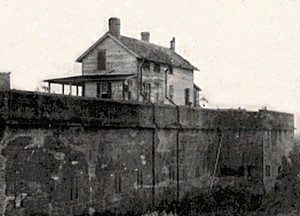
Temporary accommodations were arranged for the keepers of the two lights at Fort Pulaski, and then in 1893, six casemates at the fort were fitted up with doors, partitions, windows, and closets to accommodate the head keeper and assistant. In 1902, Congress was petitioned for $4,000 for a keeper’s dwelling to be erected atop the parapet at Fort Pulaski to replace the casemate accommodations which were “damp, unsanitary, and unsuited to residential purposes.” In 1906, the War Department finally granted the keepers permission to occupy the former Ordnance Sergeant’s residence, and in 1907, this dwelling atop the fort was enlarged to better accommodate the two keepers.
In August 1871, Keeper Patrick Egan set out to service Cockspur Lighthouse during a heavy storm with two of his sons, Michael and Thomas. En route to the lighthouse, the trio’s boat capsized. Patrick and Michael managed to cling to the overturned boat, but Thomas drowned and his body was never recovered.
|
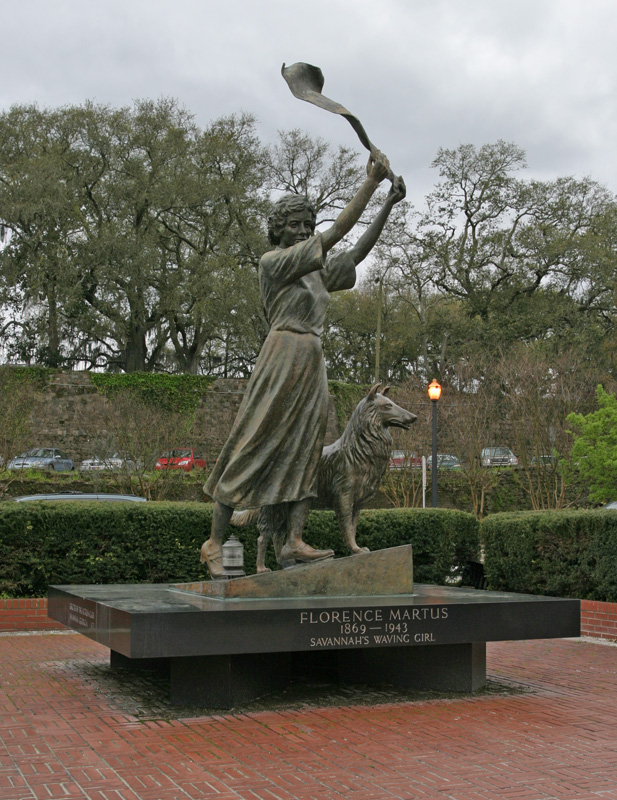
It is not really known what started her tradition of waving at the passing ships, though several legends suggest a reason. The most popular story is that her sweetheart left on a ship from Savannah and promised to come back for her one day. She vowed to wave at every ship until his return – but he never came back. Her friendliness is memorialized by a statue located near the waterfront in Savannah. The statue was sculpted by Felix de Weldon, creator of “Raising the Flag on Iwo Jima,” and shows Florence waving a handkerchief with a lantern and her pet collie by her feet. A celebration was held at Fort Pulaski in 1938 to honor Florence on her seventieth birthday, and a historical sign telling her story has since been placed at Fort Pulaski near the visitor center. Florence passed away in 1943, and a Liberty ship, completed in Savannah that year, was christened with her name.
Carrying on Florence’s tradition at Elba Island was not an easy assignment. Billie Burn’s husband Lance was assigned relief duty on Elba Island for one month in 1939. Billie started enthusiastically waving a white towel by day, and a lantern by night, but after a few nights of getting up to greet each ship, she grew tired and just left the lantern in the window. To acknowledge the lantern’s greeting, the ships would sound three blasts of their horns, which Billie says about blew them out of bed. After thirty miserable days, Billie was eager to wave goodbye to Elba Island.
In 1909, the deep draft ships calling at Savannah started to use the North Channel exclusively, and Cockspur Lighthouse was deactivated. The Lighthouse Service Bulletin noted in 1934 that a pair of bald eagles had nested in the old Cockspur Island Light tower and that the birds were frequently seen perching on the balcony railing. At this time, the abandoned, unlit tower was known as Cockspur Island Beacon and was of interest to many visitors stopping at Fort Pulaski National Monument.
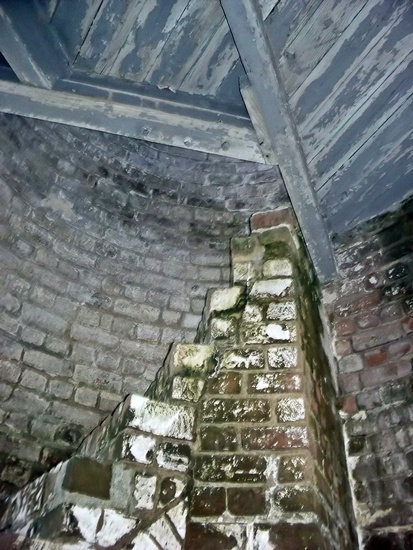
The Coast Guard abandoned the lighthouse as a daymark in 1949, but fortunately the Park Service assumed control of the light in 1958 by presidential proclamation. The tower was repaired in a two-stage restoration effort that lasted from 1995 to 2000. A new lantern room was put in place atop the tower, brickwork was repaired and repointed, and the lighthouse received two coats of whitewash during the project. Cockspur Island Lighthouse, which was relit on March 18, 2007 using a solar-powered beacon, is now part of Fort Pulaski National Monument.
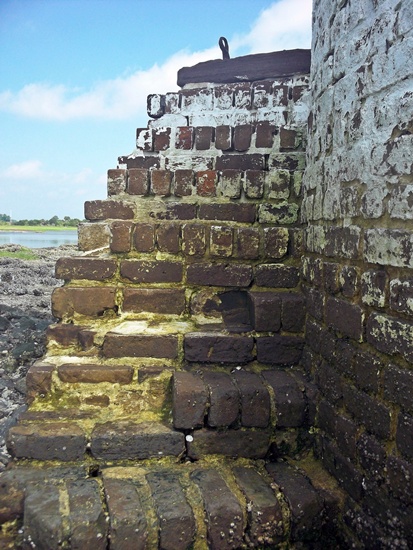
In 2007, it was discovered that shipworms had bored into the lighthouse’s wooden support timbers that had been exposed by erosion. The worms, coupled with wave action and tidal erosion, threatened the tower’s stability. Recognizing the tenuous state of the tower, the Georgia Trust for Historic Preservation put Cockspur Lighthouse on its 2008 list of ten “Places in Peril.” The Park Service, joined by Friends of Cockspur Island Lighthouse, petitioned U.S. Representative Jack Kingston to request $1.4 million in federal funds for a thorough restoration. The money took several years to come, but allowed the Army Corps of Engineers to take measures to preserve the land surrounding the lighthouse.
During the summer of 2021, a Fort Pulaski preservation team worked to stabilize the masonry in the lighthouse and replaced the entrance door and windows using funds provided by Tybee Historical Society and Friends of Cockspur Island Lighthouse. Failing mortar was removed and replaced with a more compatible mixture.
Keepers:
References