Tybee Island, GA 






Select a photograph to view a photo gallery
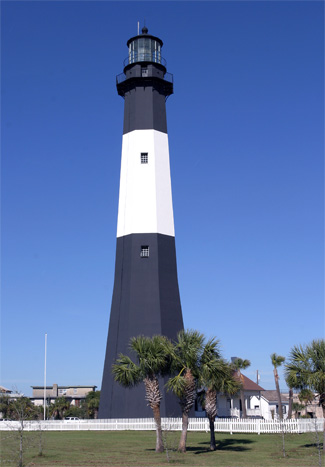
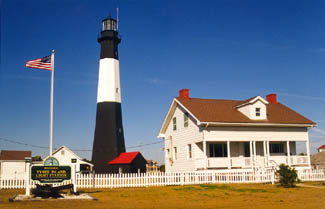
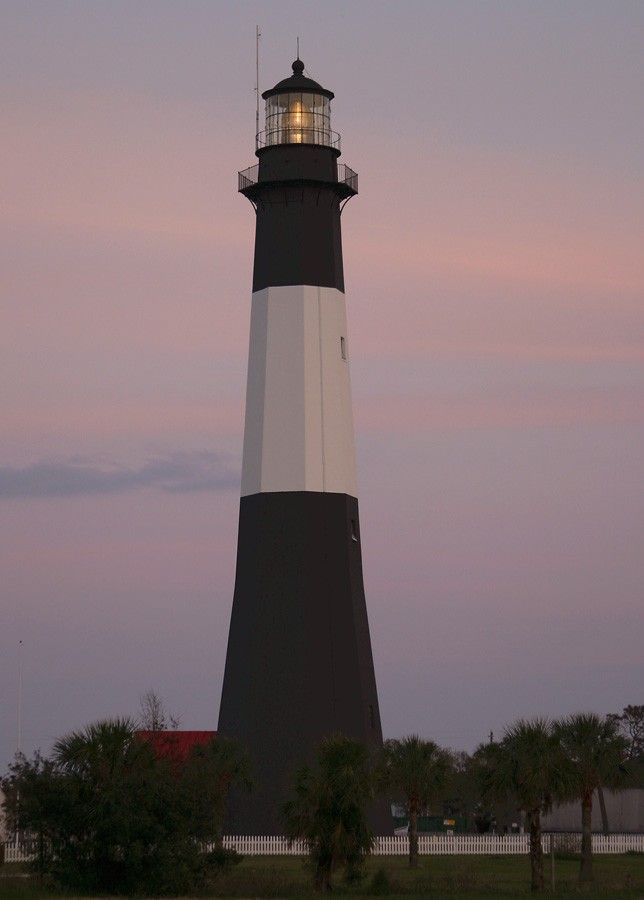
Photo Gallery
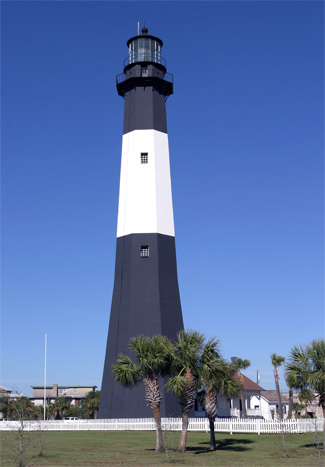
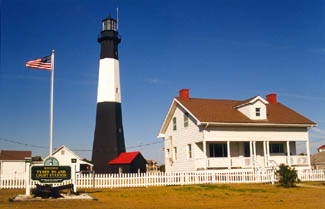
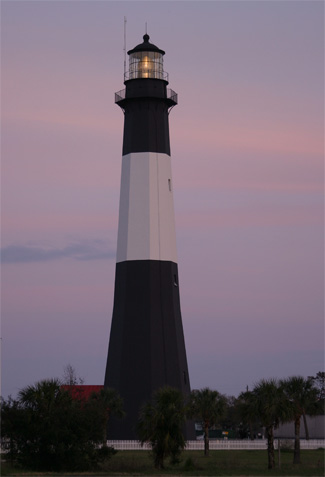
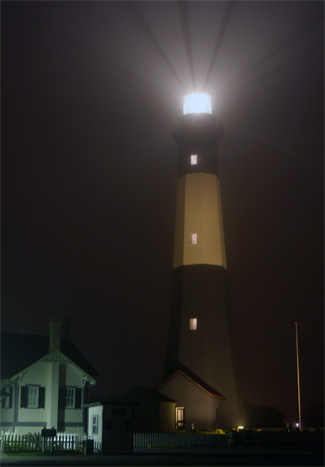
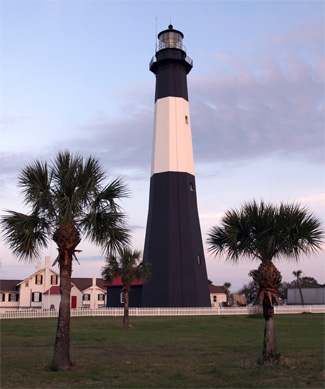
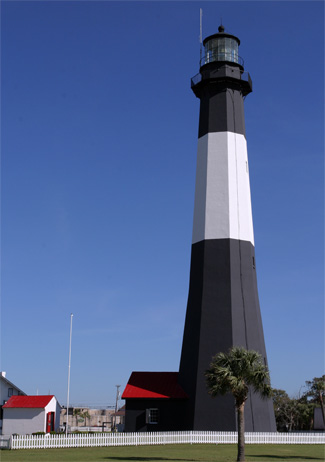
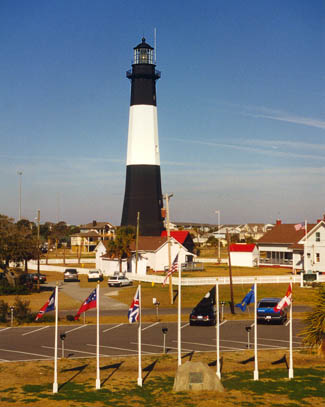
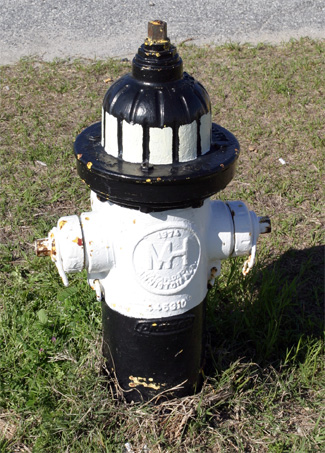
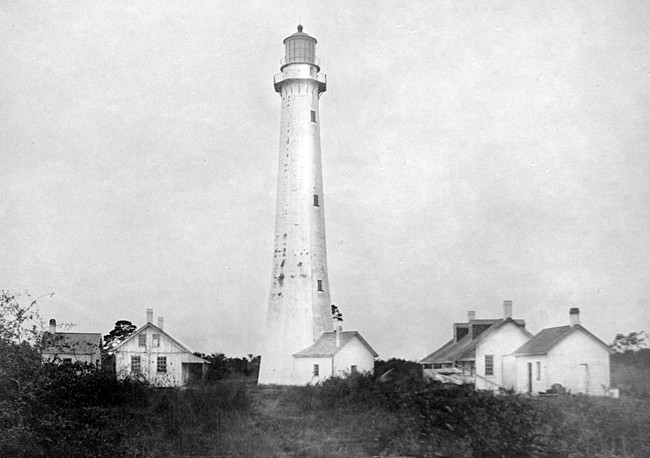
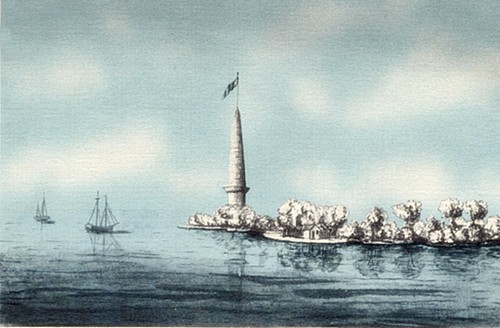
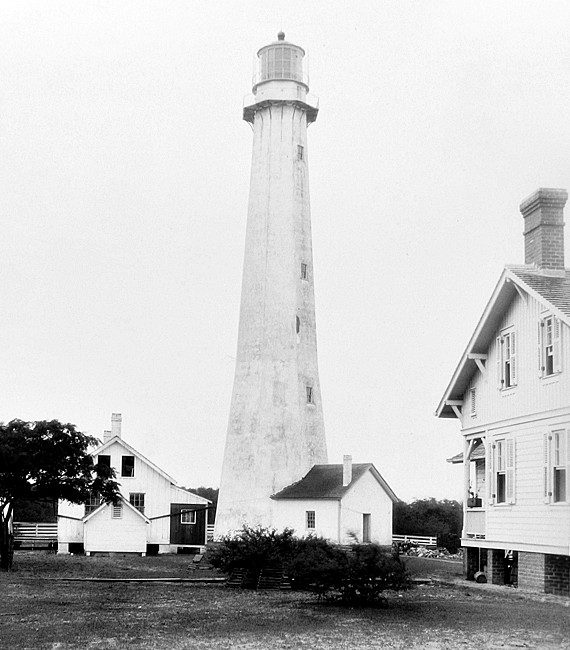
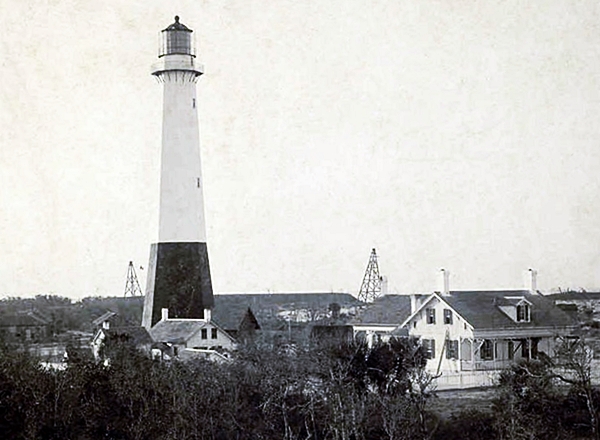
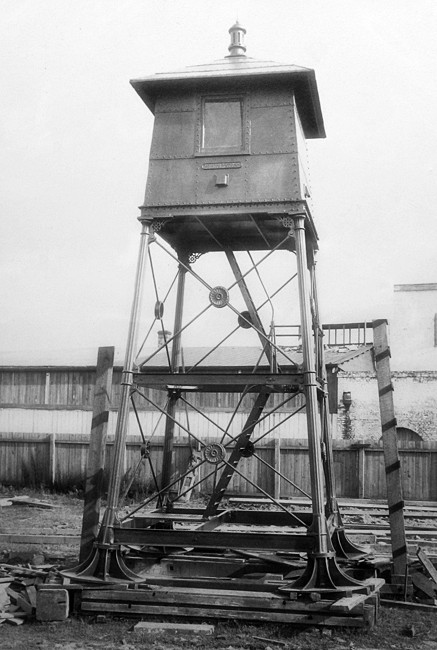
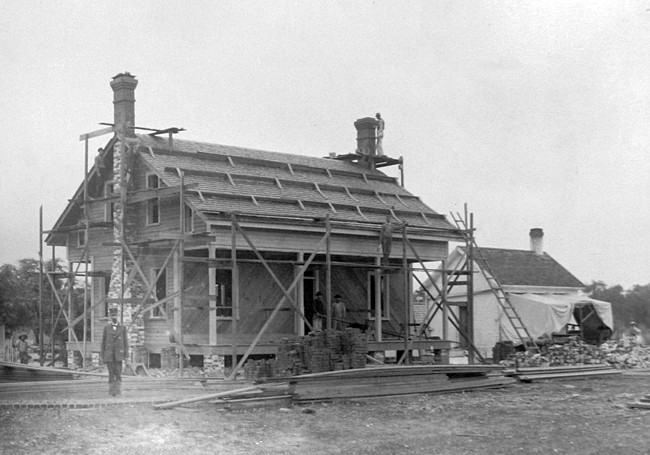
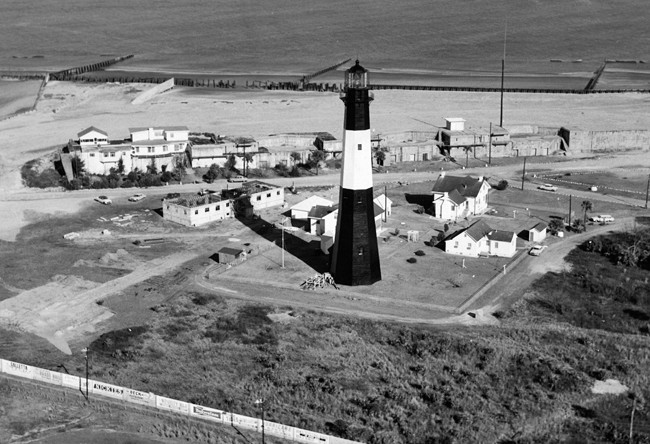
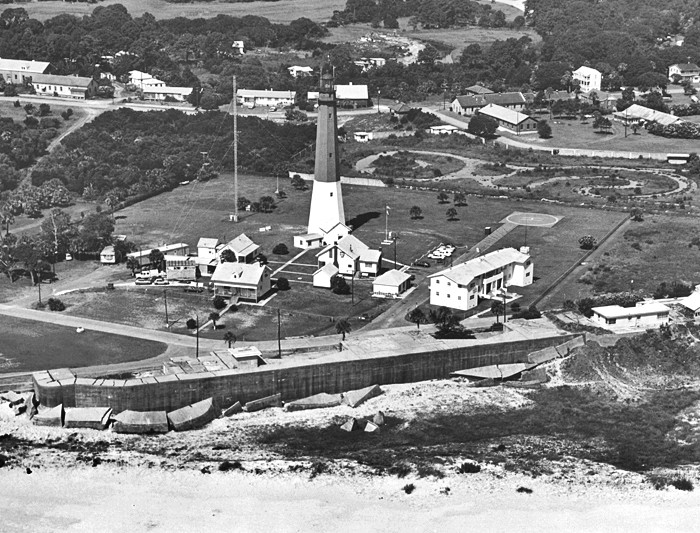
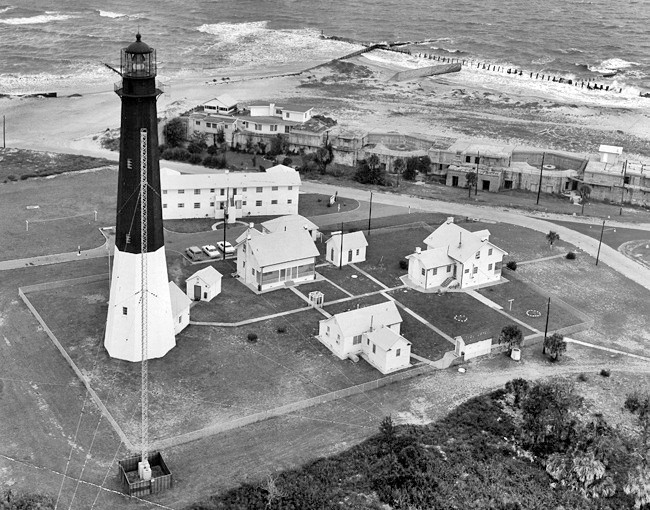
Photo Gallery
Photo Gallery
|
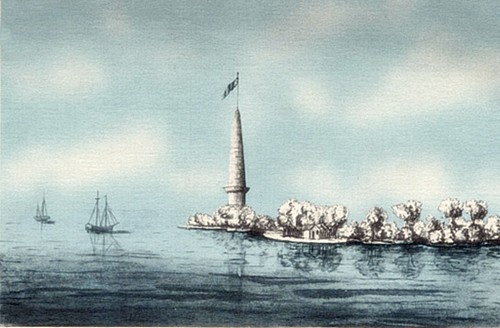
The third tower rose to a height of 100 feet, was constructed of brick with wooden stairs and landings, and makes up the bottom section of the current Tybee Island Lighthouse. After Georgia ratified the Constitution in 1790, the tower was ceded to the federal government. On November 8, 1792, a fire heavily damaged the upper portion of the lighthouse and lantern room. Jesse Tay, a customs inspector, was at the lighthouse when the fire occurred and wrote the following account in a letter the next day:
On the 8th about two o’clock in the morning, the Negro that trimmed the lites went up to trim them and he discovered the lanthorn in flames. He cried out the lighthouse was on fire. I jumped up and run up the stairs into the lanthorn and saw that it was all on fire.
President George Washington directed that a “plain stair case” be used in repairing the tower rather than a more expensive “hanging stair case.” John Armour was hired to do the necessary masonry work and Adrianus Van Deune the carpentry work. Samuel Wheeler, a blacksmith in Philadelphia, fabricated a new lantern room, with a diameter of ten feet, for the lighthouse. Candles with reflectors were first used atop the tower before being replaced with whale oil lamps.
A fifty-foot tower was built seaward of the lighthouse in 1822, and an array of lamps in the shorter tower paired with those in the main tower functioned as a range light. As American lighthouses adopted the use of Fresnel lenses, Tybee Lighthouse received a second-order lens in 1857, while the front light was given a fourth-order lens. Now, instead of having to tend multiple lamps, the keepers were responsible for just a single lamp in each tower. The efficient Fresnel lens, with the single lamp at its center, greatly increased the range of the lights.
In 1861, during the War Between the States, Confederate forces abandoned Tybee Island for the safer confines of Fort Pulaski on Cockspur Island, roughly two miles upriver. Before retreating, the troops removed the lens and set fire to the lighthouse, burning the wooden stairs and landings. Union soldiers occupied Tybee Island and bombarded Fort Pulaski with newly developed rifled Parrot guns, prompting the surrender of the fort in just thirty hours.
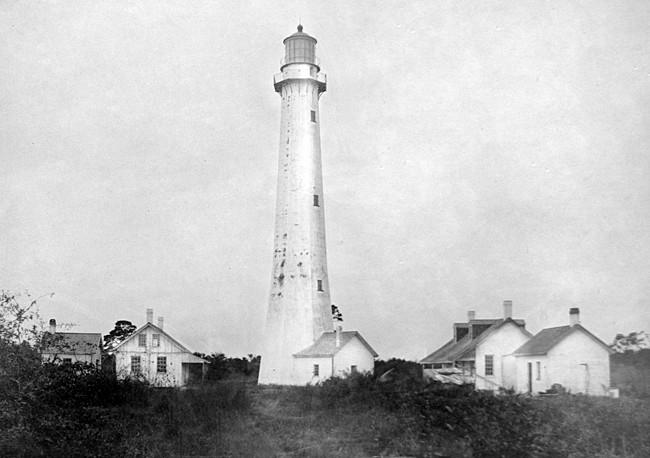
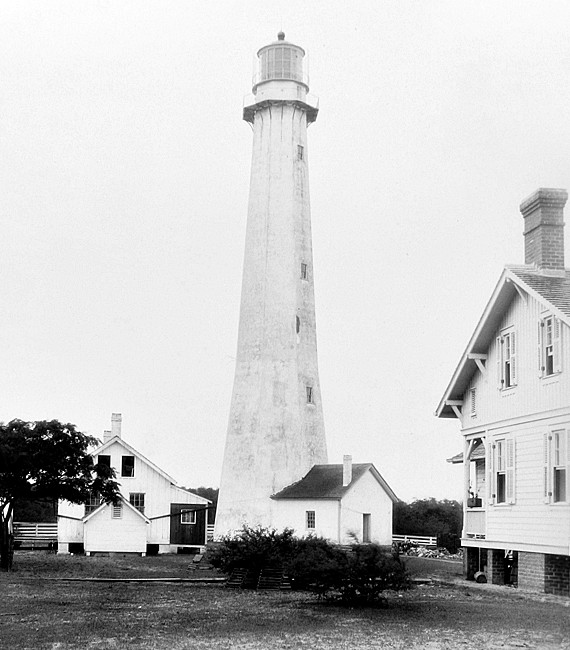
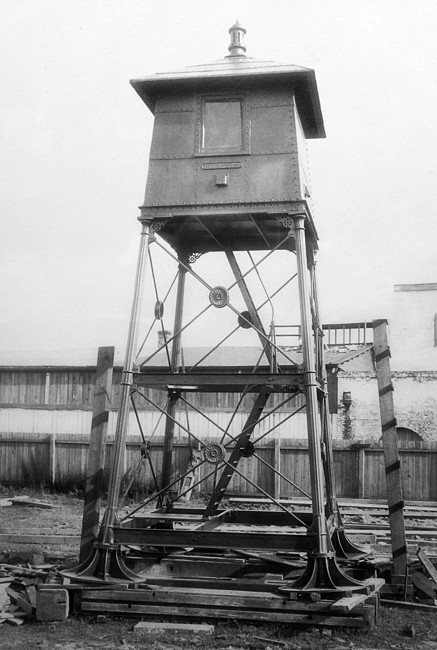
In 1866, after the end of the war, a reconstruction crew began work on the lighthouse, using $20,000 appropriated by Congress on April 7, 1866 and another $34,443 provided the following year. Work was progressing well until federal troops arrived on the island bringing with them cholera. The foreman and four workers died from the disease, prompting the remaining workers to flee the site. A replacement crew was brought in to complete the work. Only the bottom sixty feet of the 1773 tower was salvageable, and on this base an additional ninety-four feet of tower was added, bringing the total height to 154 feet. A new, fireproof cast-iron staircase with 178 treads formed the spine of the lighthouse, and a first-order Fresnel lens was placed in the lantern room. The all-white structure, flanked by new keeper’s dwellings, displayed its fixed white light for the first time on October 1, 1867, along with a new fourth-order beacon light displayed from atop a fifty-foot skeletal tower.
|
In 1886, an earthquake, a rare occurrence for the east coast, struck the area. The Annual Report of the Lighthouse Board for 1887 summarized the damage to Tybee Island Lighthouse:
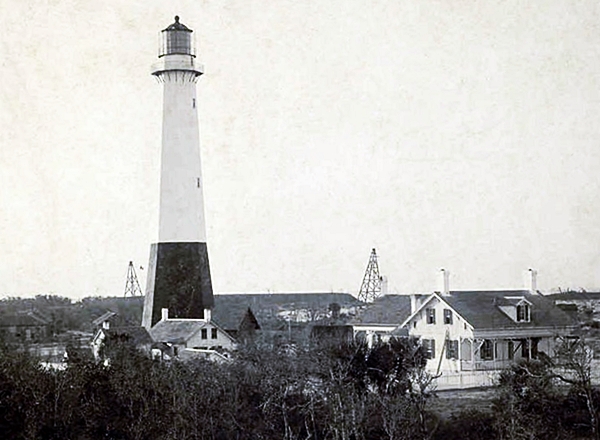
The earthquake of last August extended the cracks that have been observed in this tower for several years and made some new ones, but not to any dangerous extent. The lens was displaced and the attachments to its upper ring were broken. The damage was repaired without delay. The entrance for which these lights made a range … is gradually moving to the southward and in January last it became necessary to move the front beacon 98 feet in that direction. At the same time the base of the tower, which was previously whitewashed, was made black to afford a better background for the white front beacon. The front of the latter was, in addition, filled in with corrugated sheet-iron to increase its size.
Battery Garland, a part of Fort Screven, was built east of the between 1898 and 1899, and in 1901, the Lighthouse Board noted that the firing of heavy guns at the battery was bringing down the plastering in the principal keeper’s dwelling. Ceiling boards, finished in hard oil, were installed in the dwelling instead of the plaster.
Frederick H. Bruggeman began his lightkeeping career as an assistant at Little Cumberland Island in 1901. After five years there, he was promoted to head keeper of the Hilton Head Range Lights, and in 1913, he was transferred to Hunting Island Lighthouse. Not long after Bruggeman started his service at Hunting Island, he and Franz Traugott, head keeper at Tybee Island, began talking about swapping stations. Permission for the exchange was granted in early 1914, on the condition that the two keepers cover their own moving expenses.
|
As part of their Oath of Office, lighthouse keepers swore to “support and defend the Constitution of the United States against all enemies, foreign and domestic,” but during times of war, it is easy to question a person’s allegiances. The local lighthouse inspector conceded that Bruggeman’s parents and wife had been born in Germany, but felt that the keeper could be trusted due to his years of faithful service and favorable reputation. Just two weeks earlier, on March 23, 1917, the district superintendent had “sounded the keeper in regard to his attitude in the present crisis” and came away convinced that he was a loyal citizen. The Lighthouse Service agreed to transfer Bruggeman to another station if the commander of Fort Screven so desired, but noted that the move would require a lighthouse tender, which could be assigned to duty with the Navy and War Department at any time.
Though the two assistants had made statements questioning the Bruggemans’ loyalty, Keeper Bruggeman retained his position as head keeper of Tybee Island Lighthouse. A military guard was stationed in the lighthouse at all times during the war as a precautionary measure. Keeper Bruggeman retired in 1931 at the mandatory retirement age of seventy, after seventeen years at Tybee Island and nearly thirty in the Lighthouse Service. When Frederick Bruggeman passed away in 1938, Daniel Roper, Secretary of Commerce, sent a letter to William Bruggeman stating that his father’s “long and honorable service” should be a source of comfort to the family.
Electricity reached Tybee Island Lighthouse in 1933, replacing kerosene as the light source, and the staff at the lighthouse was reduced to just one keeper, George Jackson, who served until his death in 1948. The Coast Guard, who took control of the tower in 1939, occupied the station buildings until 1987, when they moved to a modern facility on Cockspur Island.
Otho O. Brown became officer- in-charge of Tybee Island Lighthouse in 1960, and after four years at the station, he was paid a visit by Admiral Stephens, who had come to make an unannounced inspection. During Brown’s time at the lighthouse, he had put the station in sparkling condition. The masonry tower was completely scraped and repainted, inside and out, and Brown had participated in the development of a new prototype Light Attendant Station boat. Admiral Stephens commented to Brown, “your leadership, initiative and enterprise are considered of the highest degree and your performance of duty is considered ideal.” That was the first time the Admiral had used the word “ideal” to describe a man’s performance of duty.
|
Following the renovation of the lighthouse in 1998-99, the head keeper’s house was restored in 2000-01, the first assistant’s dwelling was renovated in 2003-04, and from 2005-08 attention was placed on the second assistant'’s house, which was converted into a lecture hall, art gallery and audio-visual space.
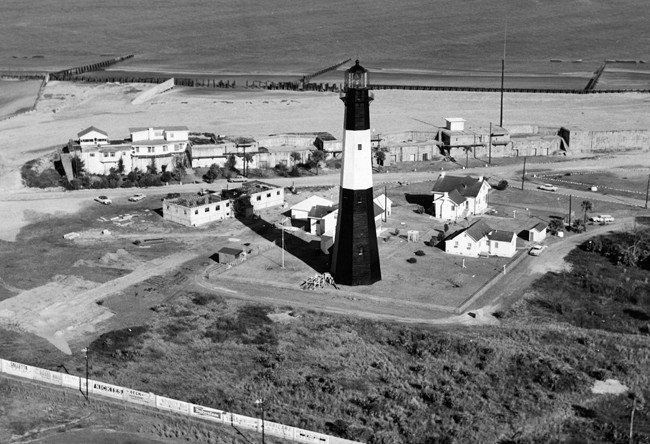
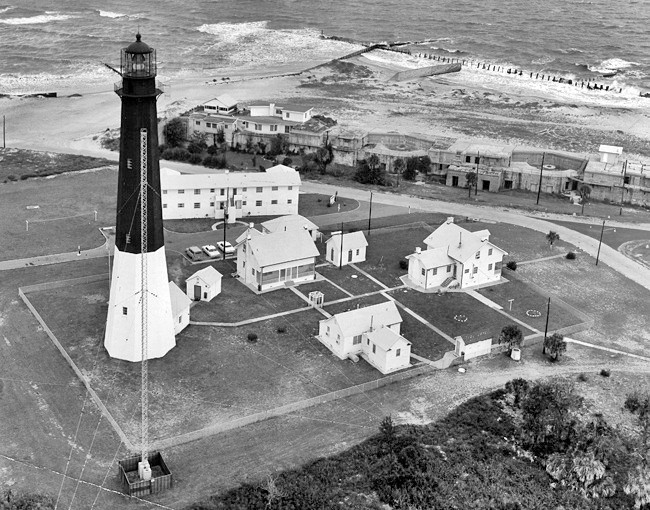
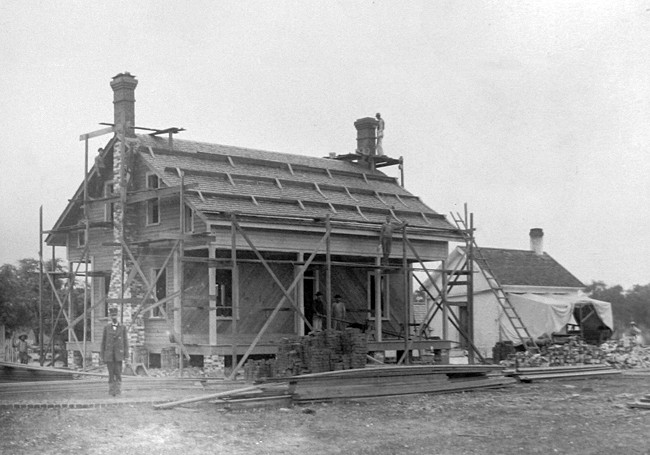
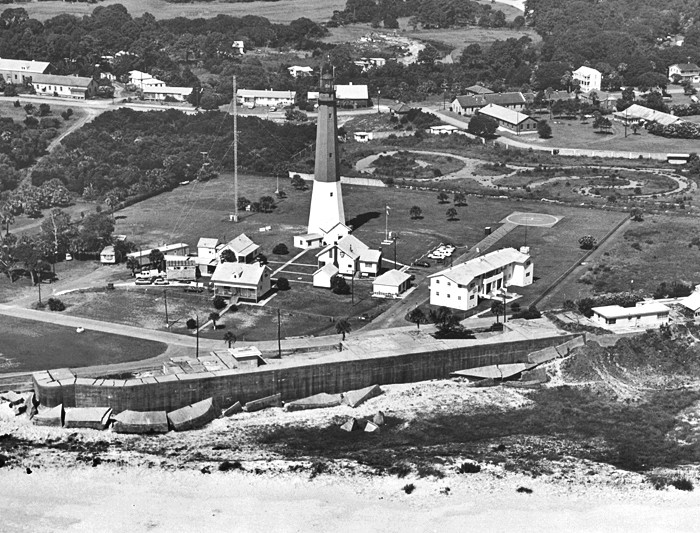
The tireless efforts of Tybee Island Historical Society were rewarded in 2002 when they received ownership of the station under the National Historic Lighthouse Preservation Act. The lighthouse was appropriately one of the first to be transferred under the act. Visitors to Tybee Island Lighthouse today are treated to one of America’s most complete and well-maintained light stations. The five-acre site is home to the lighthouse, a head keeper’s house built in 1881, a first assistant’s house built in 1885, a second assistant’s house built in 1861, a summer kitchen built in 1812, an oil house built in 1890 to house the volatile kerosene fuel, and a garage built in the 1930s.
A routine assessment made during the winter of 2023 found that the tower’s masonry and lantern room needed urgent repairs. ICC Commonwealth was hired to carry out $1.9 million in repairwork over a ten-month period that started in November 2023 and wrapped up in August 2024.
The lighthouse is still active, illuminating the skies above Tybee Island nightly with its first-order lens.
Keepers:
References