Fairport Harbor, OH 





Select a photograph to view a photo gallery
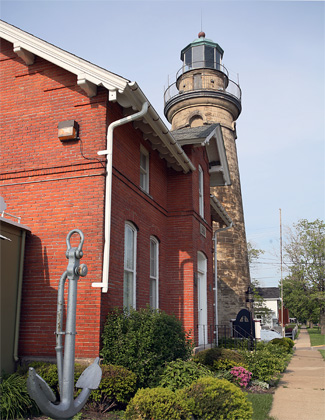
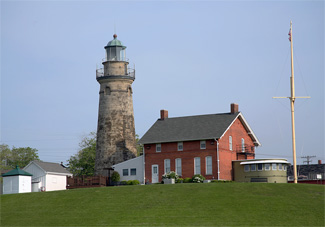
Photo Gallery
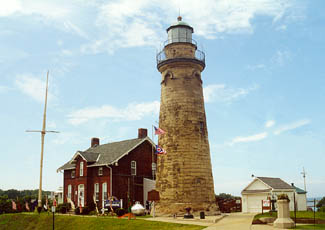
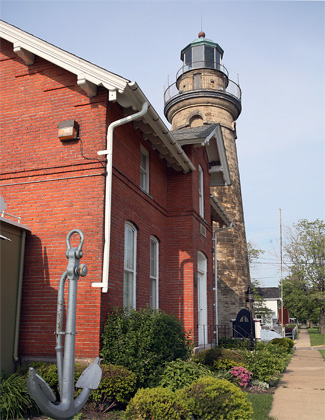
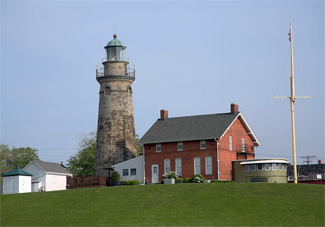
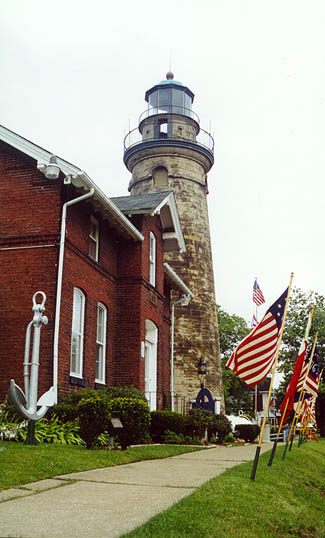
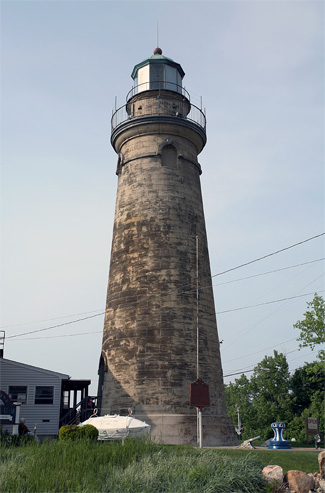
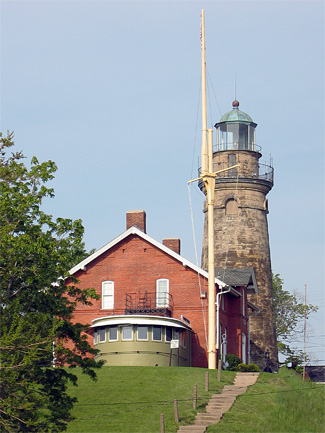
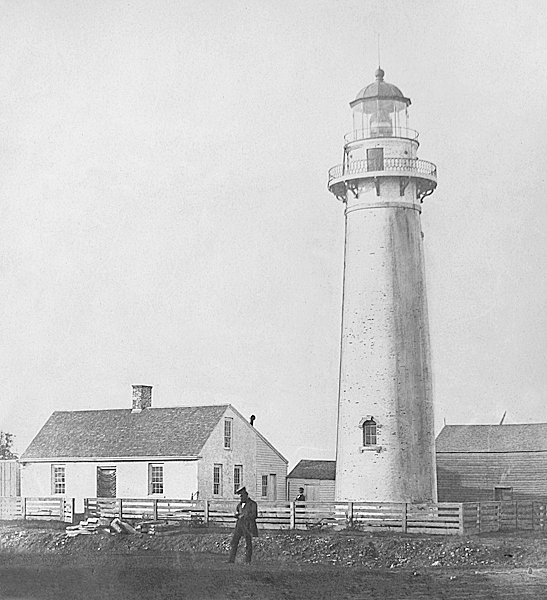
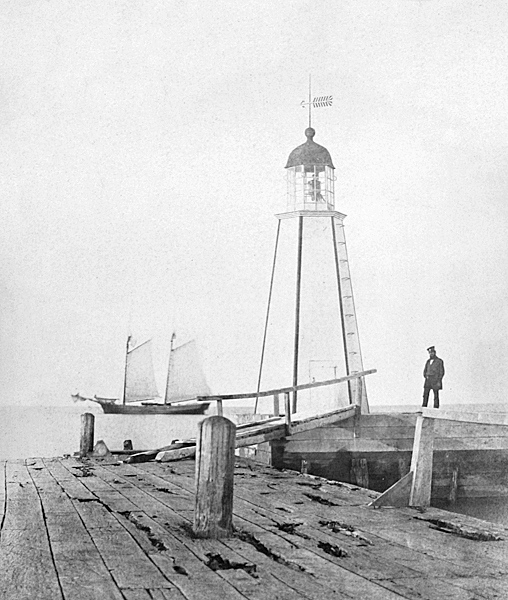
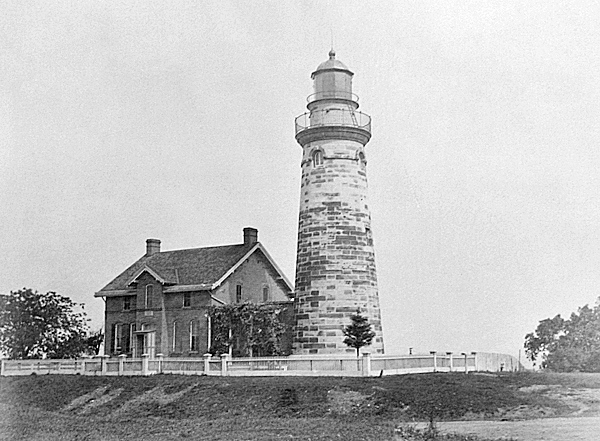
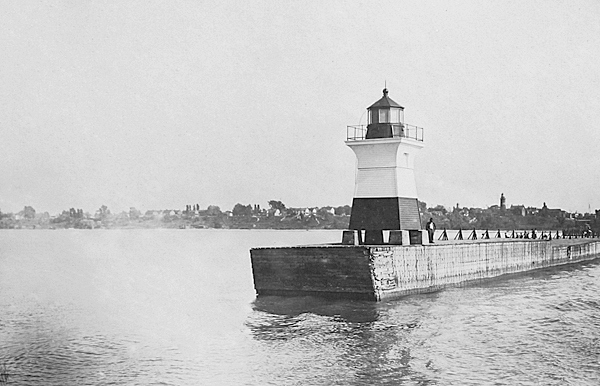
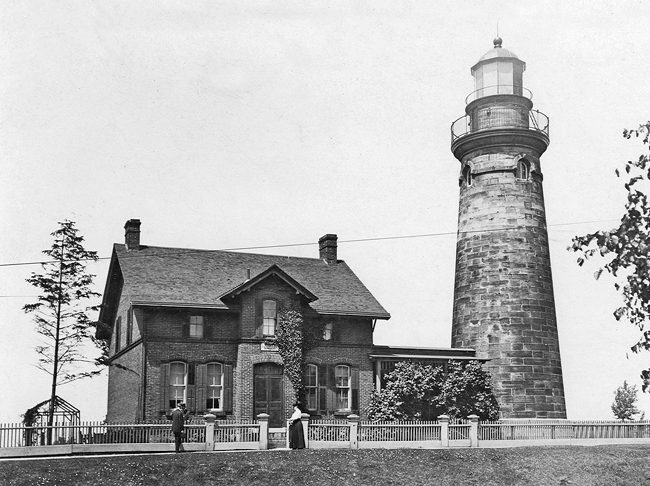
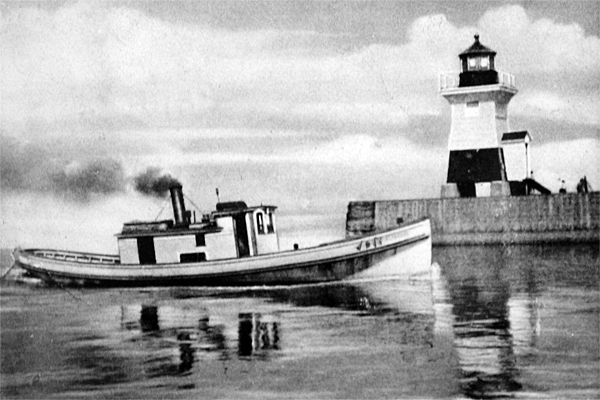
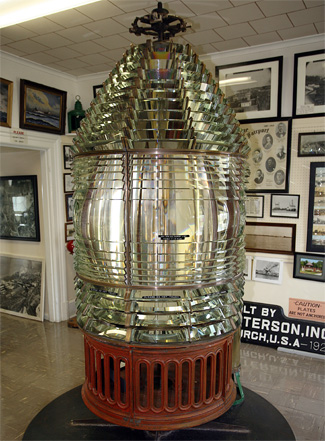
Photo Gallery
Photo Gallery
|
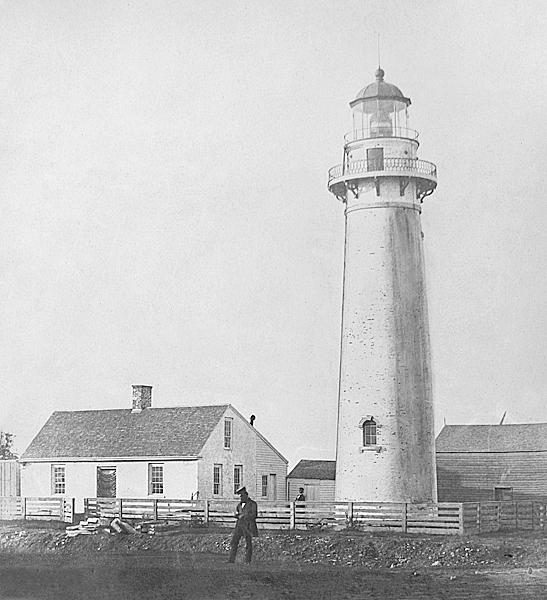
Lake Erie is the shallowest of the Great Lakes, and storms can quickly produce mountainous waves on the once glassy surface of the lake. Early in the port’s history, the townspeople knew a lighthouse was needed, and in 1825, when the town’s population had grown to 300, a notice appeared in the Painesville Telegraph requesting bids for a lighthouse and keeper’s dwelling. This proposal, signed by A. Walworth, Collector of Customs for the District of Cuyahoga, left little to the potential builder’s imagination. Walworth specified the materials to be used, the depth of the foundation, the height, the diameter of the soapstone deck, and even the size, number, and shape of the windows. His specifications for the keeper’s house were every bit as exact. Among other directives, it would be a two-story structure measuring 34 x 20 feet, with three windows in each room, a 12 x 14 foot attached kitchen, and a cellar under “the whole of the house.”
Hiram Wood and noted builder Jonathan Goldsmith contracted to build the dwelling and lighthouse for $2,900. Construction proceeded smoothly until it became apparent that there was a miscommunication about the cellar, which Goldsmith had not included in his original calculations. A somewhat aggrieved Walworth eventually contracted Goldsmith to build the cellar for an additional $174.30. As an interesting side note, in 1841 Jonathan Goldsmith applied to be keeper of the lighthouse he had built, but the appointment was given to someone else.
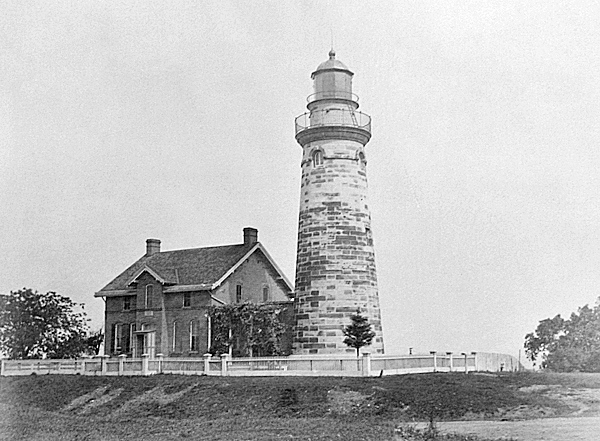
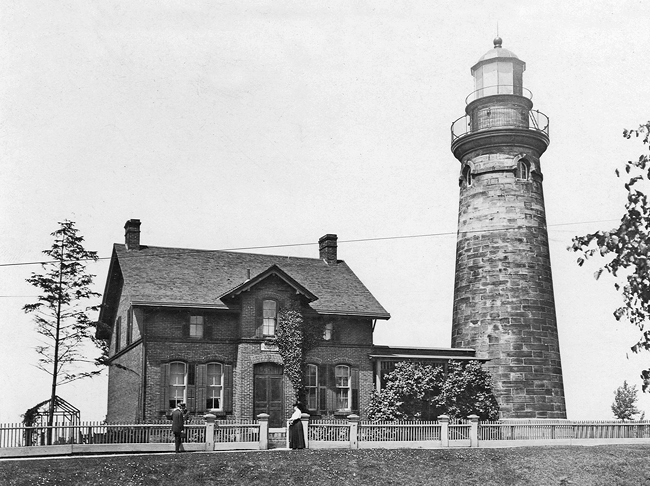
In the fall of 1825, the fifty-five-foot-tall lighthouse and dwelling were completed and the fixed white light, fueled by whale oil, was exhibited for the first time. As one of only eight lighthouses on the Great Lakes, Fairport Lighthouse attracted a growing number of vessels to its port, and soon Fairport was known as a “sailor’s town,” rivaling the port of Cleveland.
|
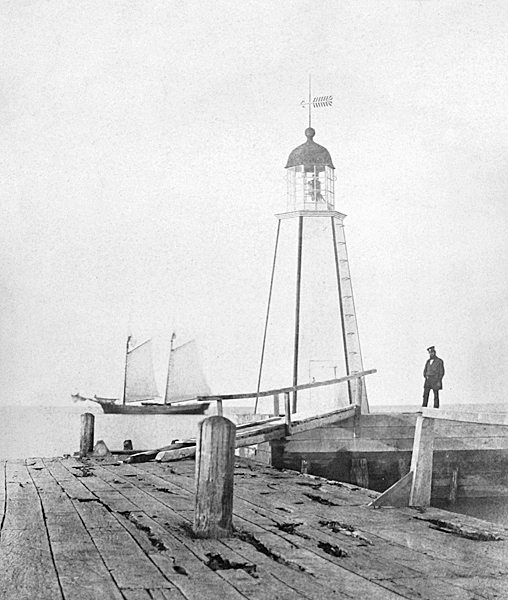
In an 1838 report to the Secretary of the Treasury, Lieutenant Charles T. Platt noted how mariners could use the pierhead beacon. “The beacon, on the east pier forming the harbor, is lighted with four lamps, and is in perfect order. This pier extends six hundred feet into the lake; the west pier nine hundred feet. By bringing the light-house and beacon in range, in coming from the west, there is no difficulty in entering the harbor.”
Fairport wasn’t only a hub of commerce and a gateway to the Western Reserve; it soon became a final stop on the Underground Railroad. Not by accident did the lighthouse act as a beacon of freedom to escaped slaves—the townsfolk actively made it one. The sentiment among the citizens was firmly anti-slavery, and the Fugitive Slave Law proved particularly onerous. In 1850, tavern owner Samuel Butler became chairman of a citizens’ group that sought to repeal the law, and soon his Eagle Tavern was a haven for escaping slaves and the headquarters for those willing to help. Anti-slavery captains, seamen, townsfolk, and lighthouse keepers colluded to hide the runaway slaves and smuggle them aboard ships bound for Canada. The slaves were frequently hidden in the lighthouse, as Kentucky slave masters canvassed the streets below making vain inquiries.
Unfortunately, only a few years after its construction, Fairport Harbor Lighthouse began to show signs of wear and tear, and after ten years the foundation had settled so much it required a complete replacement. Within thirty years, the lighthouse had to be encircled with wire hoops to keep it from toppling over.
During the years of its service, Fairport Lighthouse had illuminated one of the major gateways to the West. In 1847 alone, 2,987 vessels carrying countless passengers and cargo valued at almost one million dollars passed through its harbor. It would be inconceivable to lose the lighthouse that not only had added so much to the town’s prosperity, but had also become a landmark for thousands beyond the region’s borders.
On March 3, 1869, Congress appropriated $30,000 for a new tower and keeper’s dwelling. A light was exhibited from a temporary tower on December 10, 1869, allowing the old tower to be taken down. Not wanting to repeat the original builders’ mistake, the new contractors hired engineers to determine the best possible foundation. This resulted in piles being driven into the ground and their heads capped with a foot-thick concrete slab. On top of that was placed a grillage of two courses of twelve-inch timbers followed by a limestone foundation that extended from ten feet below the ground to four feet above ground level. An act passed July 12, 1870 forced the suspension of the work and transferred the balance of the appropriation, roughly $9,000, to the treasury. At this time, twenty-nine courses of Brea sandstone had been set in the tower.
|
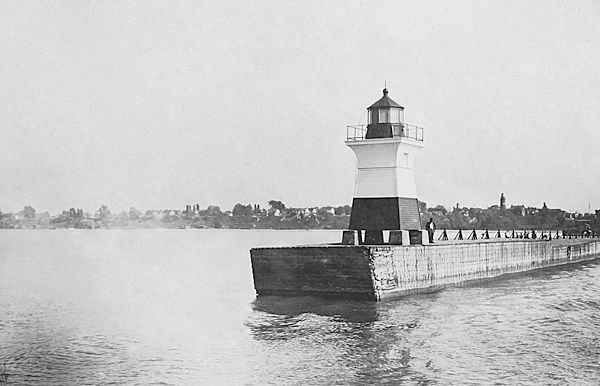
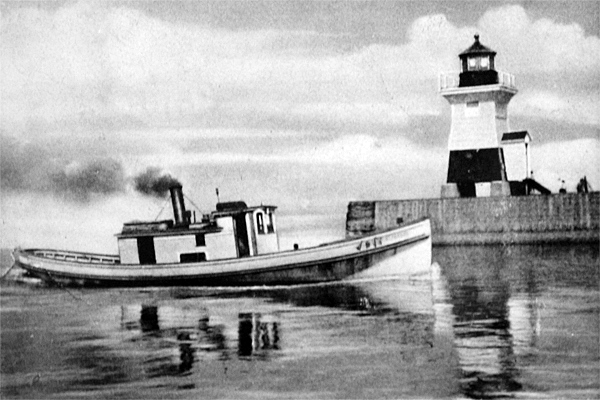
Using a $4,000 appropriation made June 23, 1874, a new beacon light was built for the extended east pier. The bottom half of this square, pyramidal tower was painted black and the upper half white, and its sixth-order, fixed white light was placed in operation at the opening of navigation in 1875. Three years later, an elevated walk, 989 feet long, was built to help the keeper access the tower when the pier was awash. Over the years, the parallel piers were extended lakeward several times forcing the beacon light to be repeatedly moved. In 1891, an iron skeletal tower was erected on the east pier, 968 feet south of the pierhead, to form, with the beacon light, a pair of range lights. Due to lack of funds, the tower was not fitted with the apparatus for raising and lowering its lights until 1893. The tower displayed three lens lanterns, suspended in a vertical line, the middle one being red, and the other two white. A vessel struck and toppled the iron tower on September 13, 1898, forcing the erection of a wooden skeletal tower that displayed a fixed red light.
Captain George L. Riker, who had served as head keeper at Fairport Harbor Lighthouse for nineteen years after two years as an assistant, died of a heart attack on August 27, 1900. The profusion of flowers at the funeral, held two days later, was evidence of the high esteem in which the keeper was held by all that knew him. Joseph Babcock, who had served as head keeper from 1871 to 1881 and then as an assistant keeper under Riker, took over again as head keeper, though Mrs. Riker continued to live in the keeper’s dwelling until January 23, 1901. Joseph Babcock retired in 1919, at the age of seventy-six, and was replaced by Daniel Babcock, his son and assistant, who served until 1926.
|
Part of the funds appropriated for Fairport Harbor Breakwater Lighthouse were to pay for the demolition of the stone lighthouse, but the citizens of Fairport rallied to save their old lighthouse. The Secretary of Commerce received letters of protestation from groups as diverse as the Daughters of the American Revolution, the Kasvi Temperance Society, the Council of Willoughby, Ohio, and the Painesville Kiwanis club. The barrage of appeals was successful, and the Secretary of Commerce consented to leave the now-obsolete lighthouse standing.
The next twenty years saw the slow deterioration of the defunct lighthouse. Near the end of World War II, town officials began a discussion of needed improvements to Fairport, and the suggestion was made to raze the dilapidated lighthouse. The response to this was as swift and strong as a November storm. The old tower might be an eyesore, but it had played a vital part in the town’s history and symbolized the area’s role in the expansion of commerce and freedom.
Once more the town rallied, this time founding the Fairport Harbor Historical Society, whose mission was to preserve and celebrate the town’s nautical heritage. The Society sought and received permission from the government to turn the lighthouse and keeper’s dwelling into a Marine Museum. Once news of the endeavor spread, donations from retired sailors and landlubbers alike soon came pouring in – old logbooks, sextants, photographs, pieces of historical vessels, compasses, and steering wheels. The museum, the country’s first lighthouse marine museum, opened in 1945. Visitors can now walk through the same space where runaway slaves once hid, gaze on historic photographs of the men who cared for the beacon, and read the logbooks of ships that were guided to safety by Fairport’s light.
Keepers:
References