Cleveland Harbor Main Entrance, OH 
Select a photograph to view a photo gallery
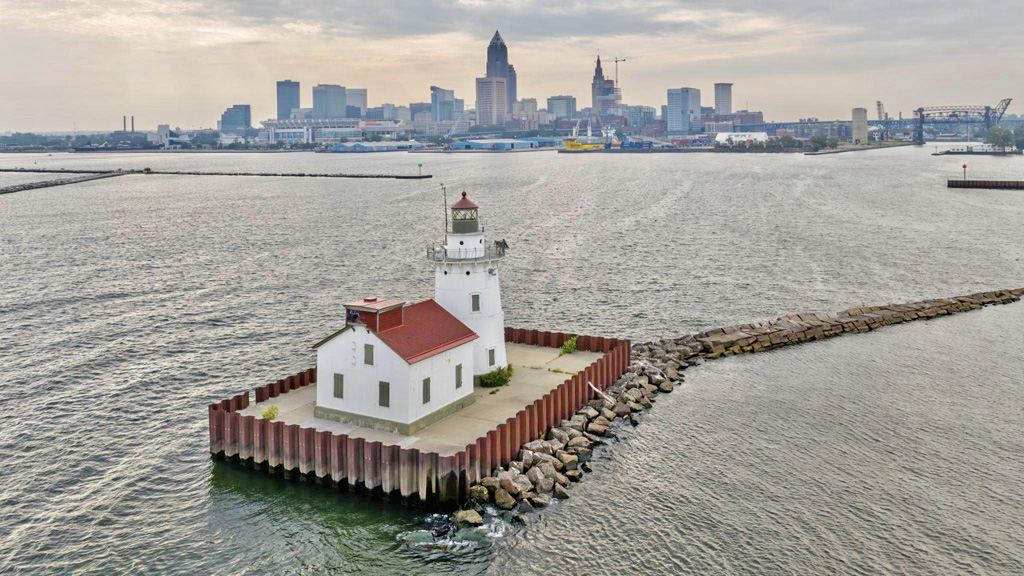
Photo Gallery
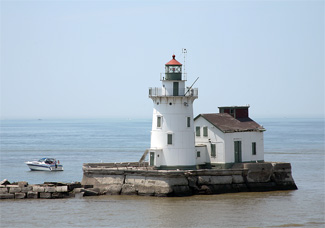
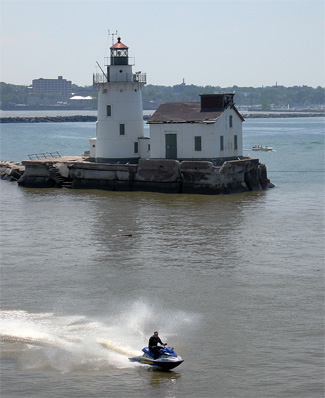
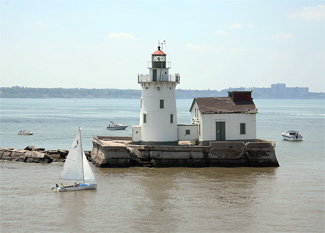
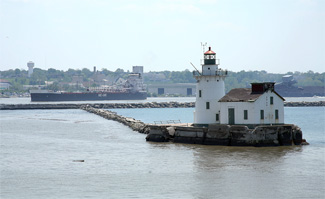
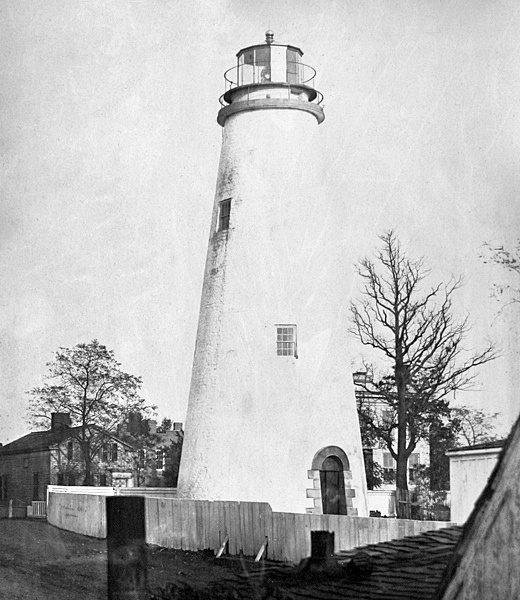
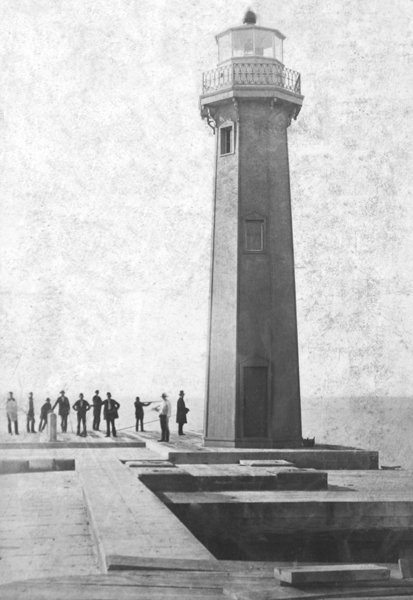
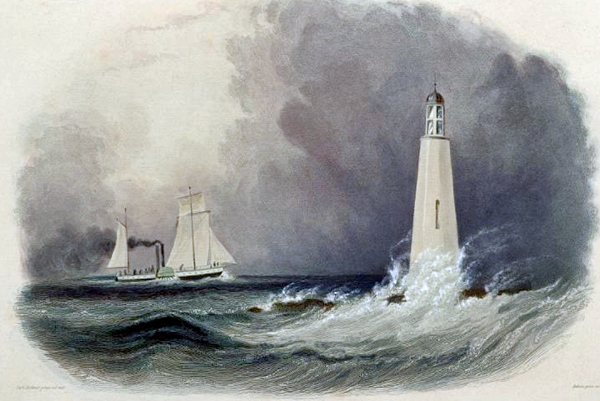
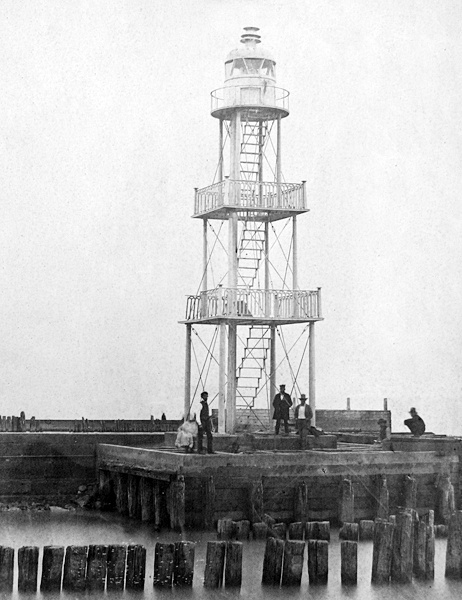
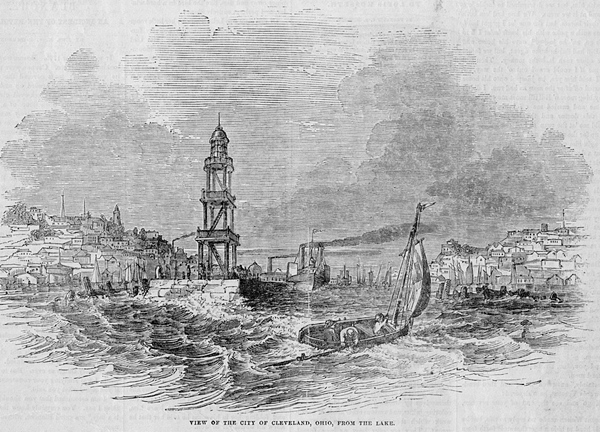
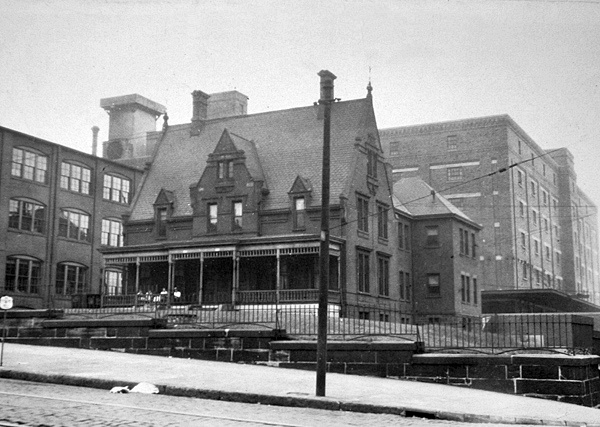
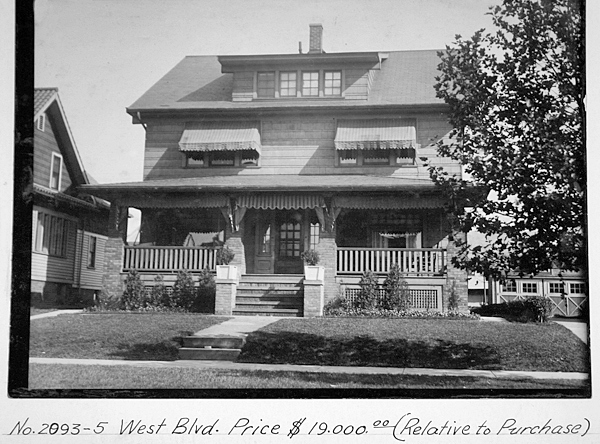
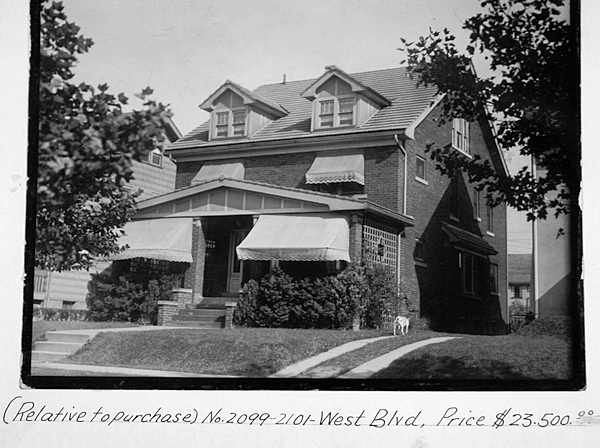
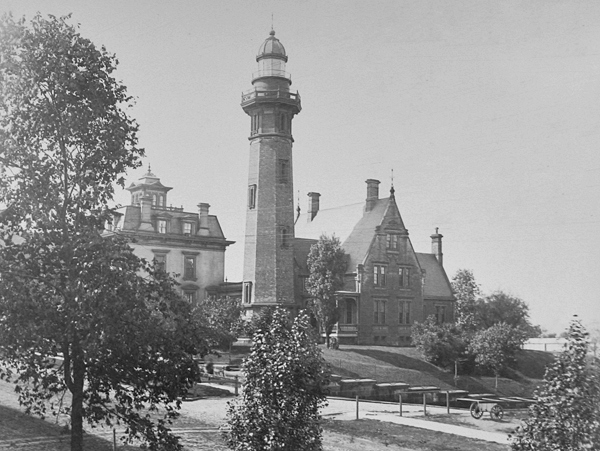
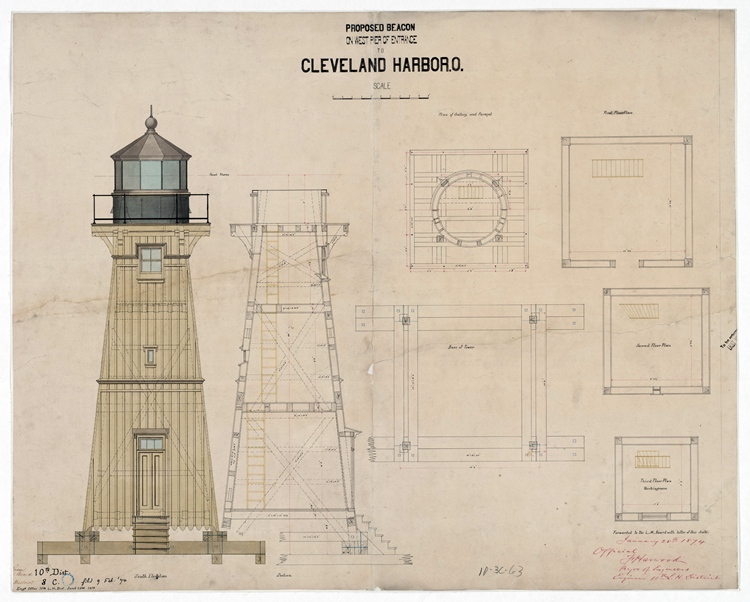
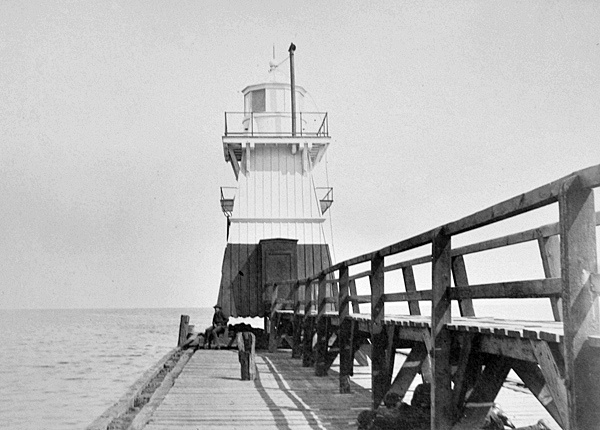
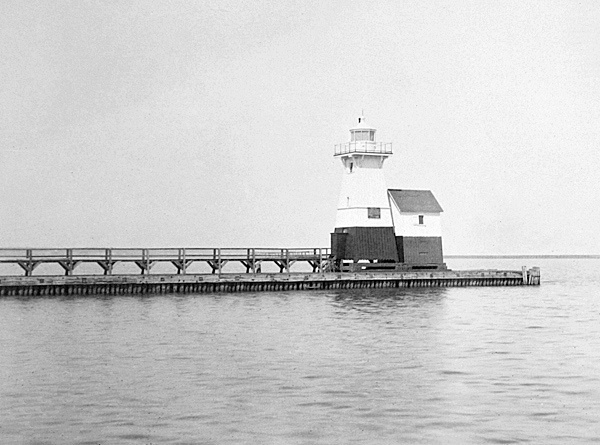
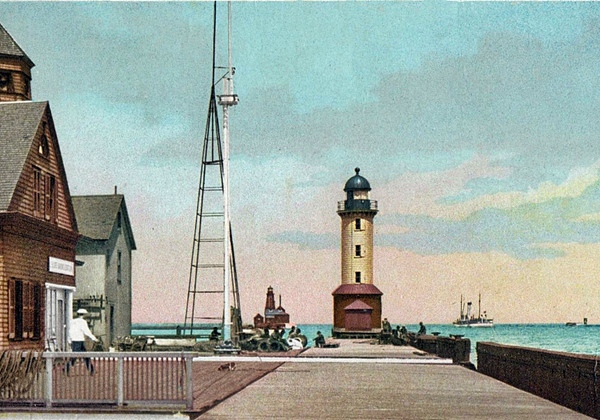
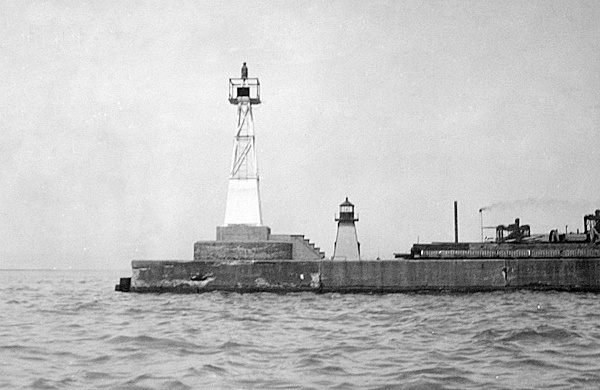
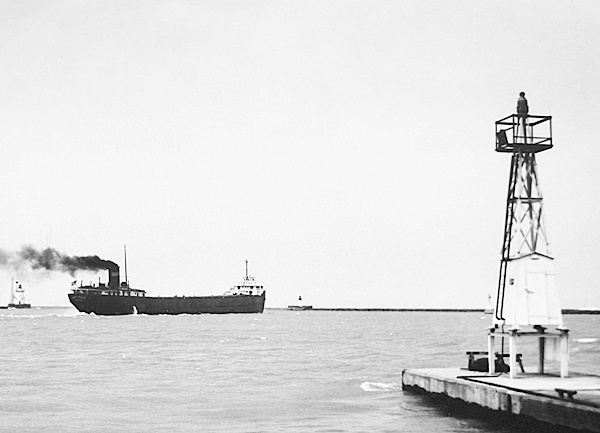
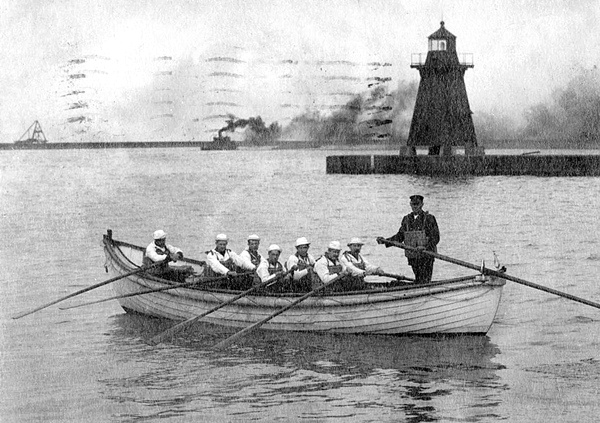
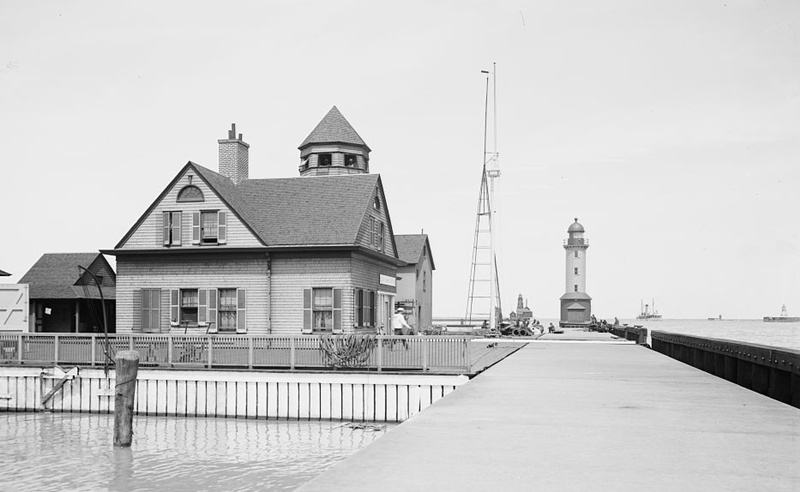
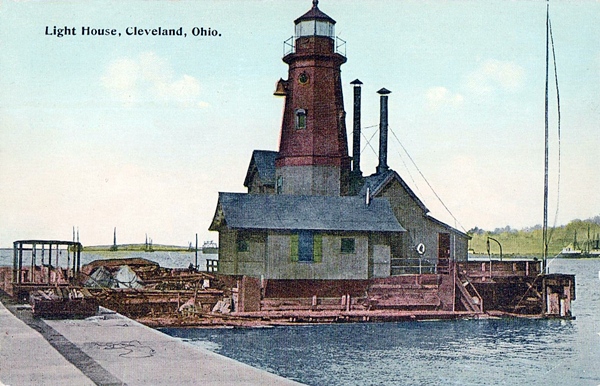
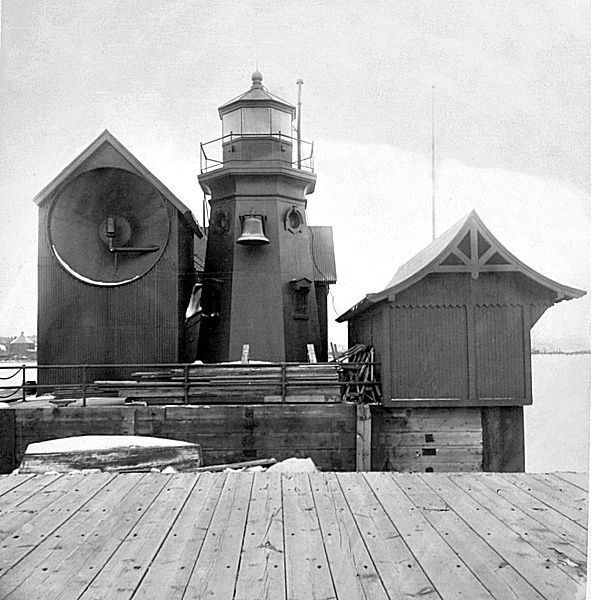
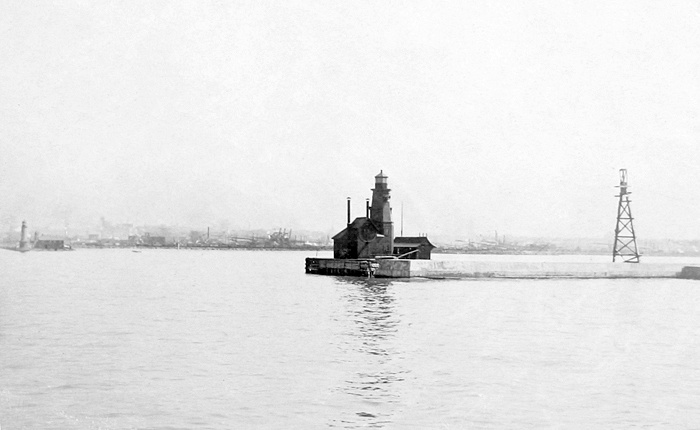
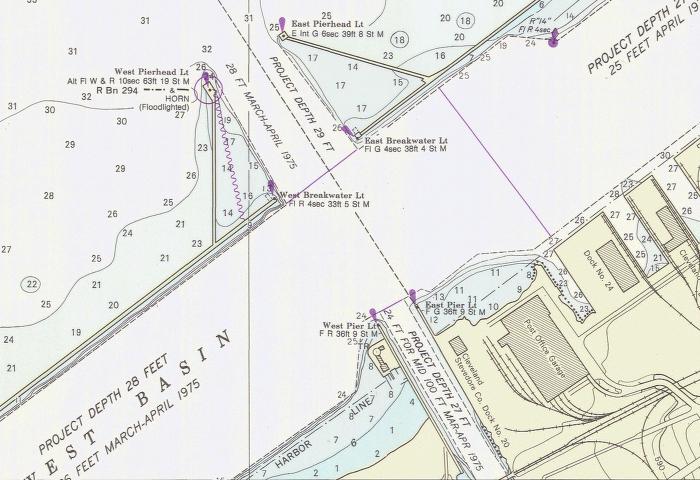
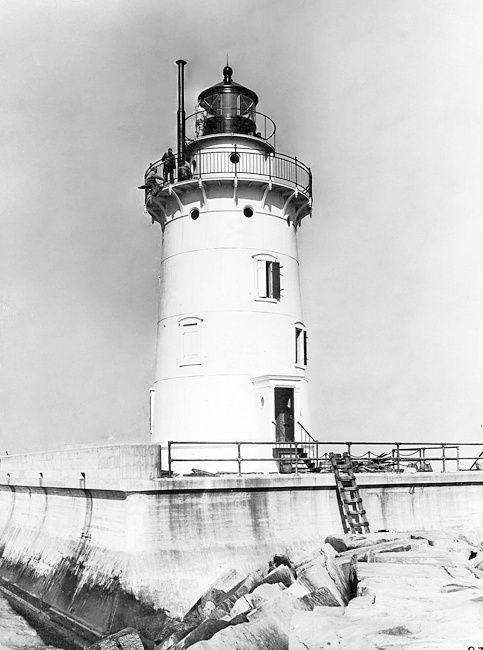
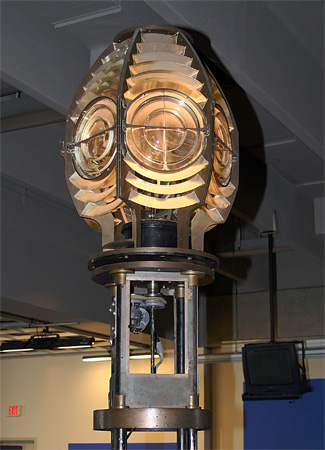
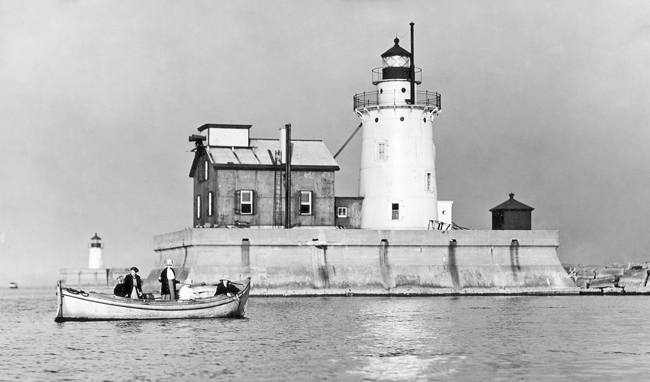
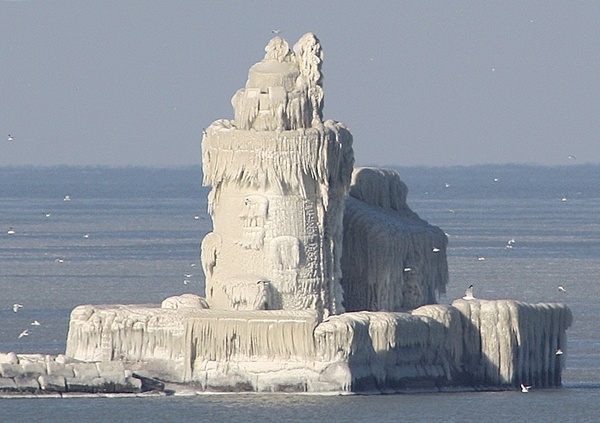
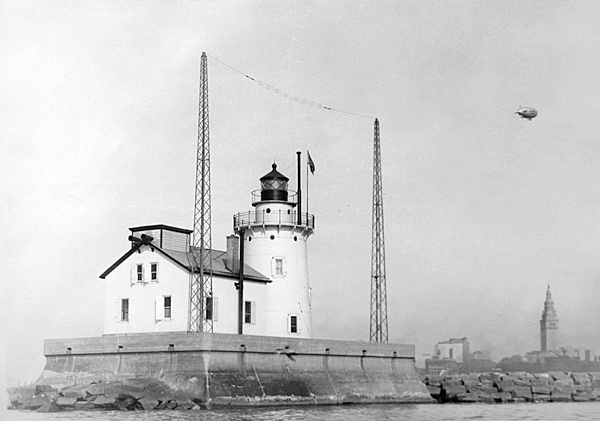
Photo Gallery
Photo Gallery
|
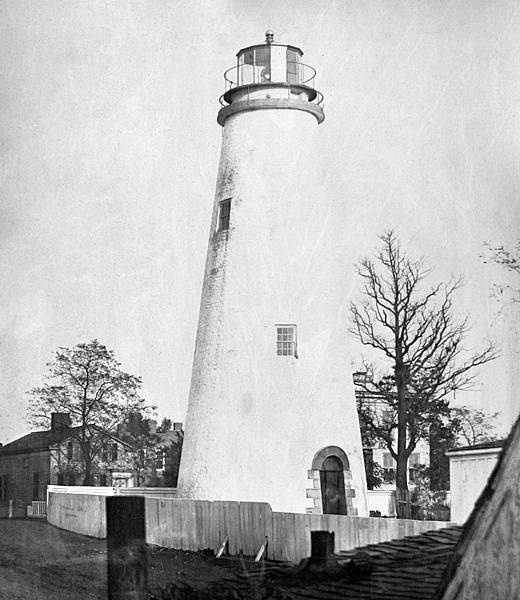
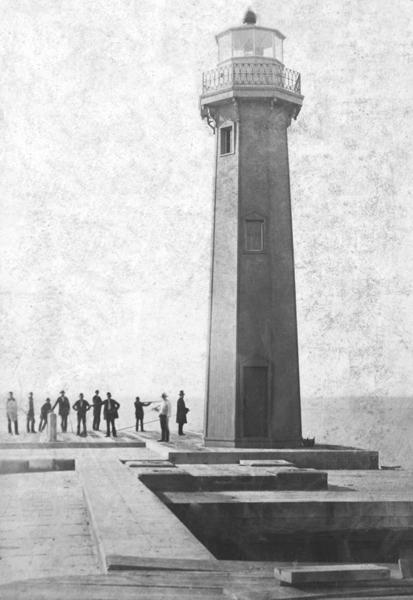
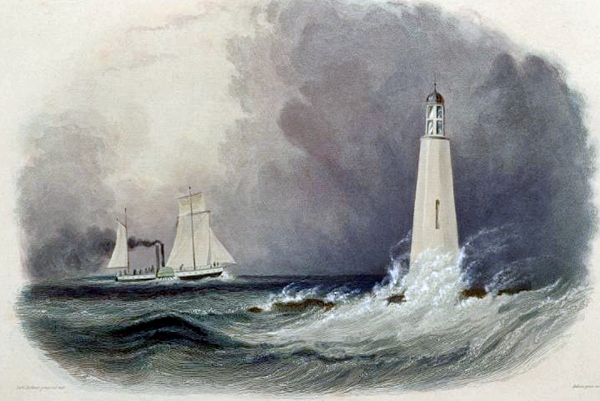
In 1829, Levi Johnson built the first Cleveland Lighthouse on a bluff at the north end of Water (9th) Street for the cost of eight thousand dollars. This stone tower stood fifty-five feet tall and exhibited a fixed white light at a focal plane of 140 feet using eleven lamps and fourteen-inch reflectors. Just two years later, in 1831, a beacon light was established on the 600-foot-long pier on the east side of the entrance to the Cuyahoga River. This photograph is likely of the first Cleveland beacon, which employed four lamps in its lantern room. The beacon was depicted in a painting by Karl Bodmer in the book Travels in the Interior of North America, 1832–1834.
While surveying the lights on Lake Erie in 1838, Lieutenant Charles T. Platt recommended the lighthouse on the bluff be discontinued.“It is true that the light-house could be seen to a greater distance than the beacon," Platt noted, “but the height of the adjacent coast, and the entire want of shoals or hidden rocks near by [sic], entirely obviate the necessity of a light conspicuous farther than the beacon.”
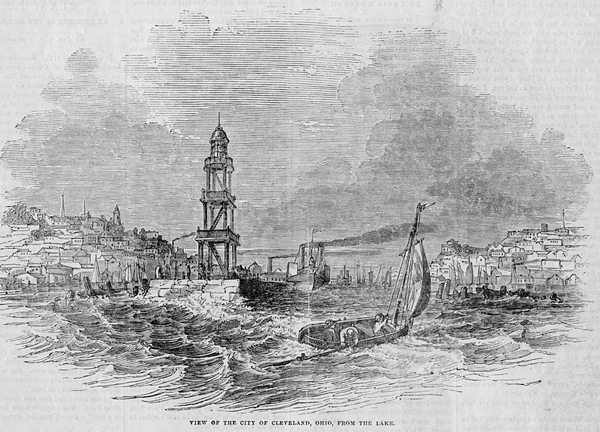
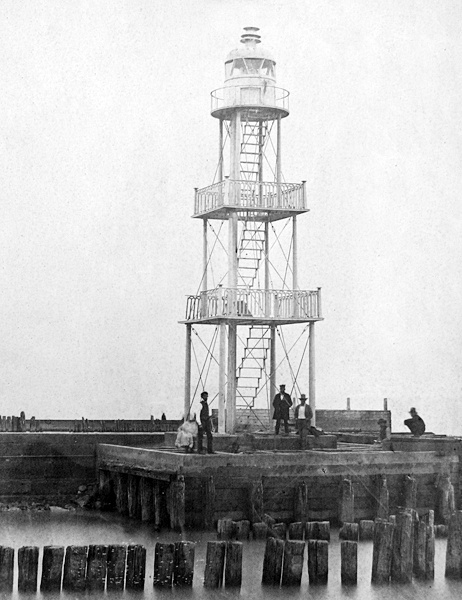
By 1850, the beacon light needed rebuilding, and in 1851, a unique, open-frame, cast-iron tower, shown here in 1859, was built on the east pier. Thought it originally displayed a fixed light from multiple lamps, a fourth-order Fresnel lens was installed in its lantern room in 1854, changing its characteristic to fixed white punctuated every seventy seconds by a bright flash. With this improvement, the pierhead beacon fulfilled “all the wants of navigation” at Cleveland, and the hill-top light was discontinued in 1856. This action proved temporary for in 1859 the Lighthouse Board noted: “In conformity to act of Congress, the hill-light at Cleveland has been renovated and relighted.”
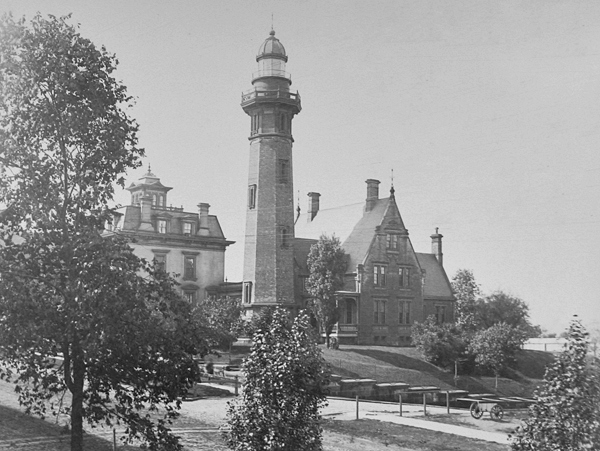
Even though many questioned the usefulness of the lighthouse on the bluff for years, on March 3, 1869, Congress appropriated $45,000 for building a new lighthouse and keeper’s dwelling at that location. A light was established on a temporary structure on August 9, 1870, so the old stone tower could be removed and the new structures built. Work was suspended shortly thereafter, as the funds had reverted to the treasury, but a new appropriation was provided on March 3, 1871. Completion of the brick tower and dwelling were further delayed due to the unavailability of brick caused by the Great Chicago Fire in October 1871.
|
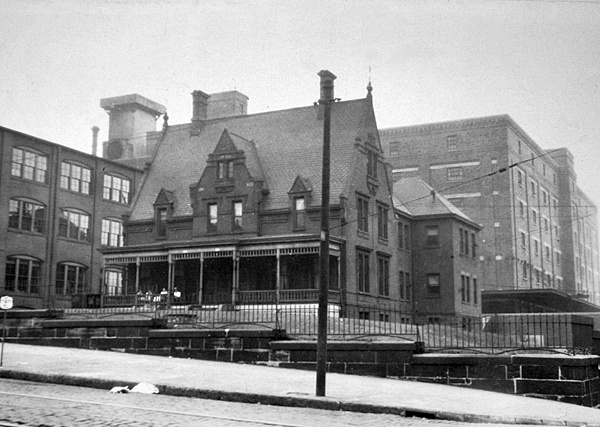
A fire broke out near the dwelling in December 1894, and the excessive heat cracked seven panes of glass in the lantern room and killed the lawn, trees, and shrubbery on the lot. The lantern room, finished stone of the upper part of the tower, iron stairway, and lens were removed from the tower in 1895 and used in construction of Braddock Point Lighthouse on Lake Ontario. The remainder of the tower was torn down in 1901, and the material was used to construct an addition on the west side of the dwelling. The enlarged dwelling now had forty-three rooms and could house four keepers and their families.
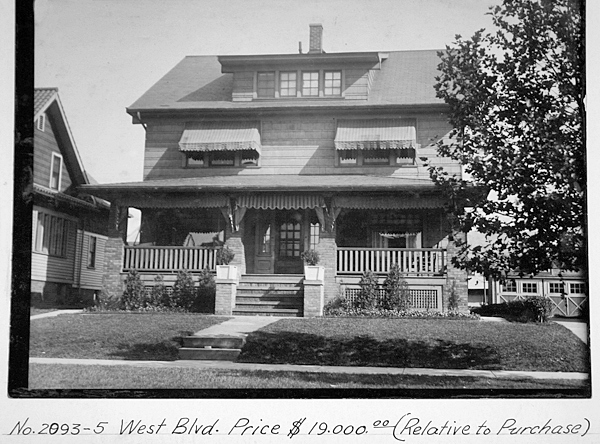
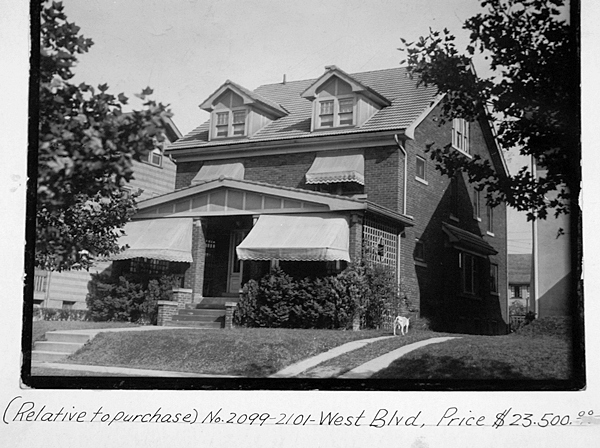
An act of Congress on May 22, 1926 authorized the Secretary of the Commerce to auction off the keepers’ dwelling at Cleveland, and later that year, $50,000 was appropriated for the purchase of two new dwellings, 1 and 2, on West Boulevard. To make way for the construction of the Maine Avenue High Level Bridge, the keepers’dwelling was demolished in 1937. “In its removal,” the Lake Carriers’ Association noted,”there disappeared the last vestige of the imposing structures of architectural beauty that characterized Cleveland’s Main Light for many years.” Interestingly, a twin to Cleveland Main Lighthouse is Gdansk Lighthouse in Poland. A delegation from Gdansk visited Cleveland Lighthouse while attending the 1893 World Exposition in Chicago and had a similar tower constructed in Poland the following year.
|
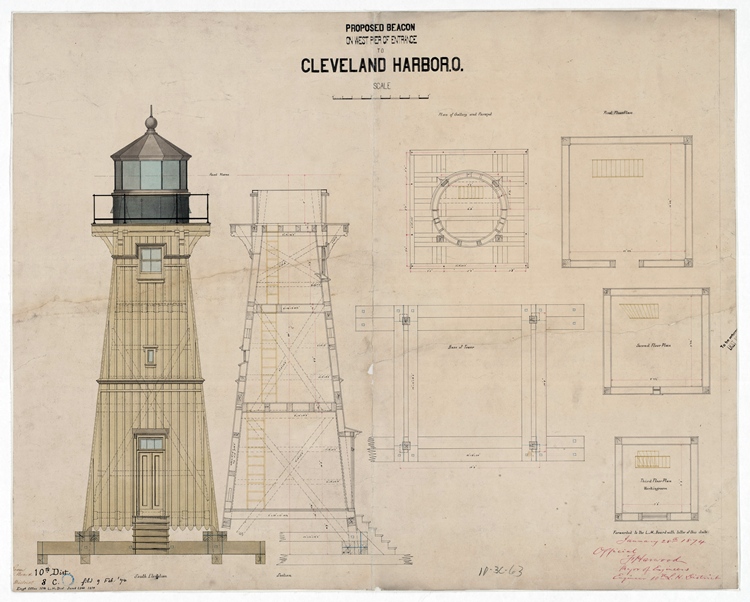
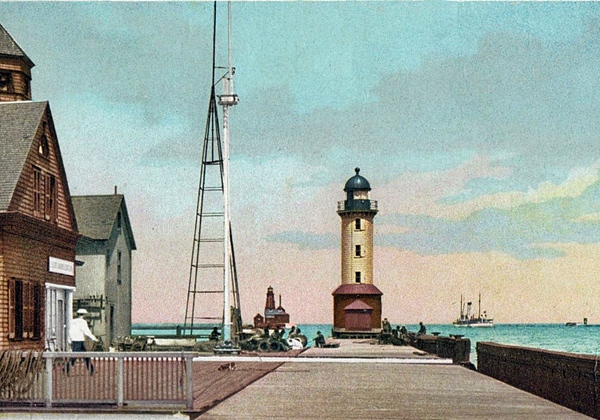
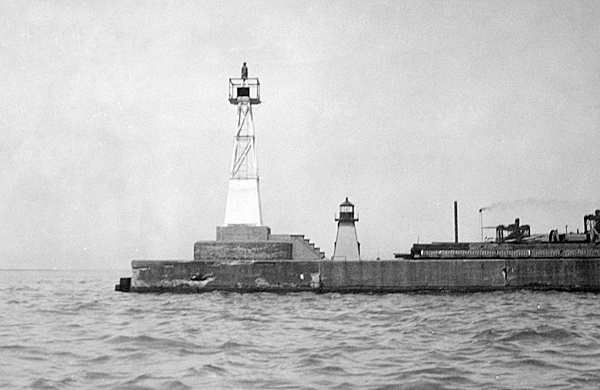
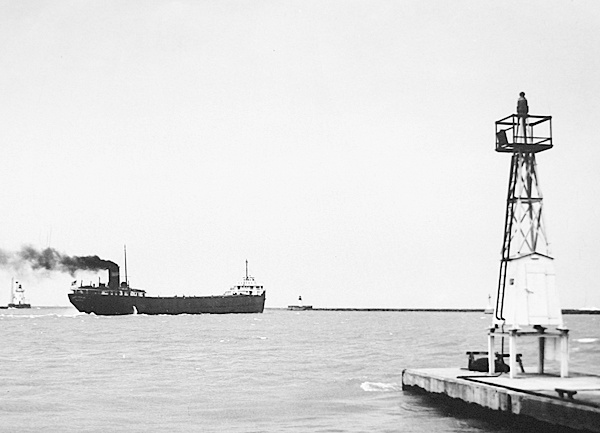
In 1900, a new tower was erected on the recently completed west pier, which had been rebuilt using concrete. This unique wooden tower stood nearly fifty-three feet tall and consisted of a cylinder above a cylinder of greater diameter. The bottom cylinder was covered in corrugated iron and painted red, while the upper cylinder was shingled and painted buff. On June 7, 1917, the steamer J. C. Morse struck and destroyed the cylindrical tower on the west pier while being towed by two tugs. The owners of the tugs paid for a new steel, skeletal tower mounted atop a concrete base. A steel, skeletal tower also replaced the wooden tower on the east pier in 1936.
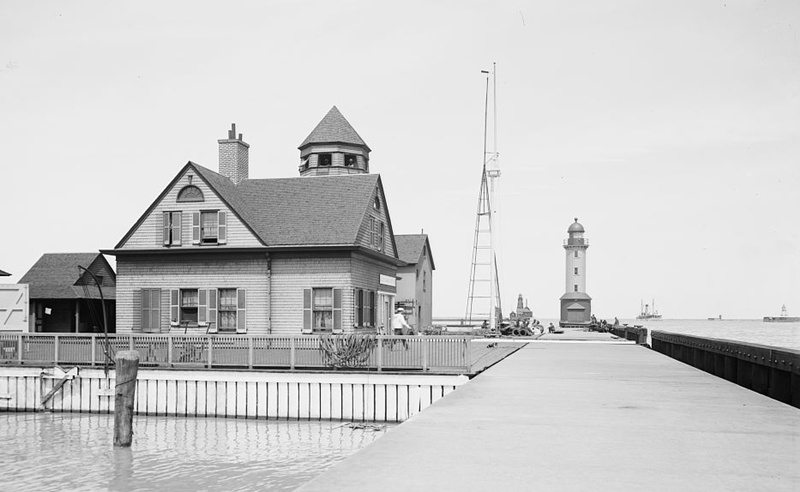
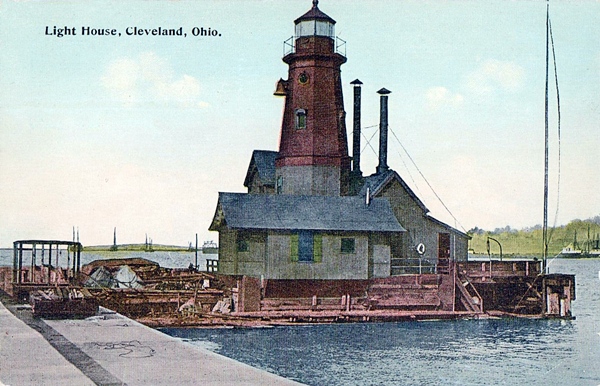
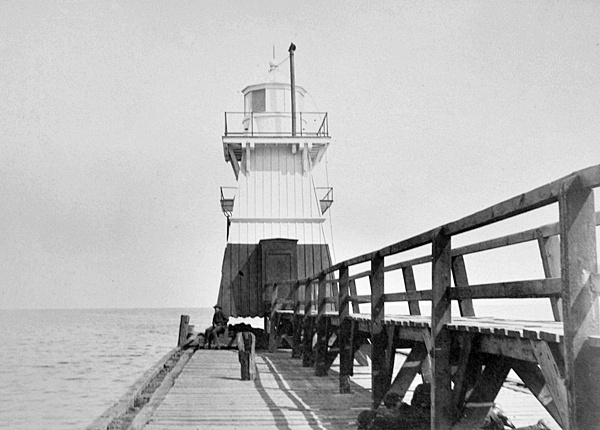
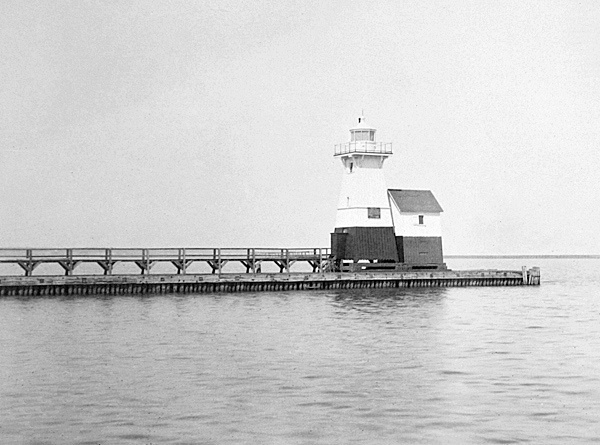
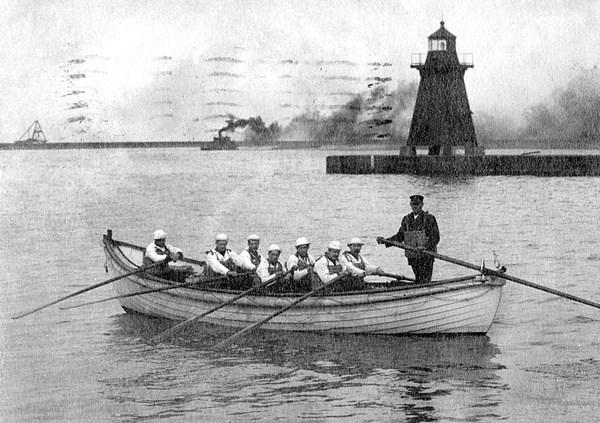
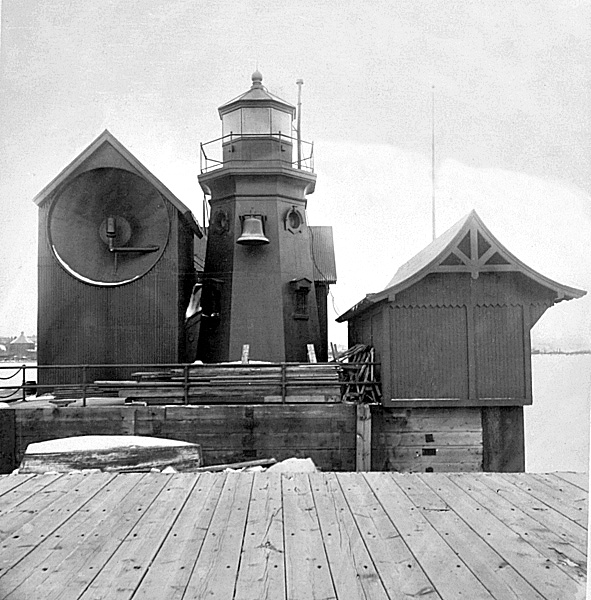
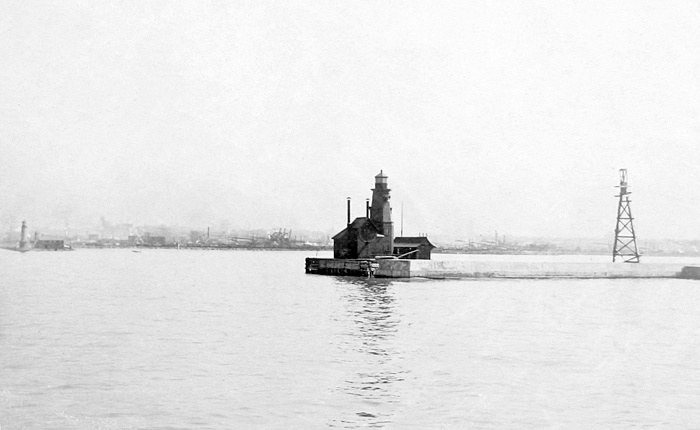
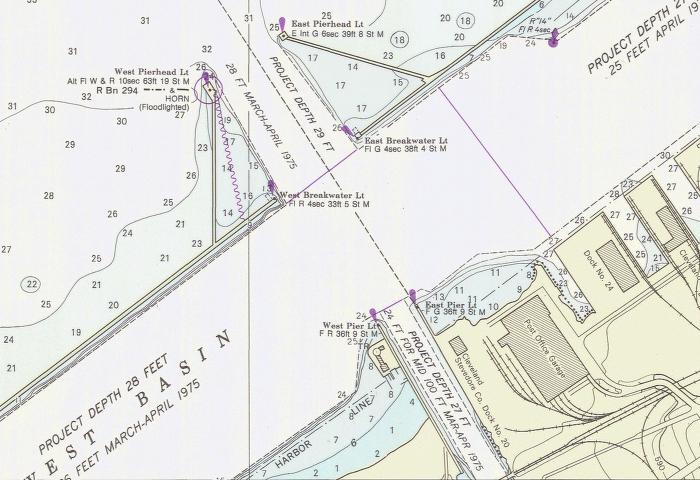
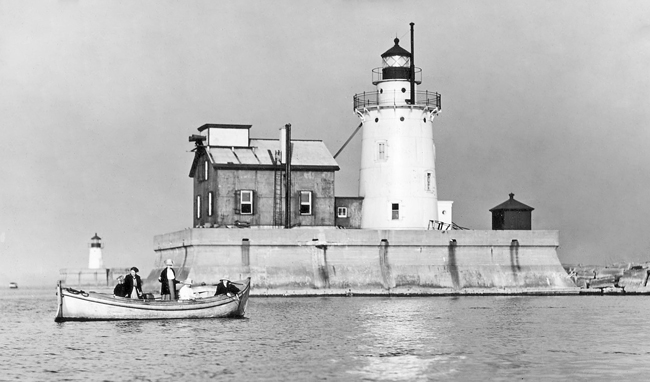
Breakwaters were eventually added parallel to Cleveland’s waterfront to provide a large protected outer harbor, and a gap between the western and eastern breakwater permitted vessels to easily access the Cuyahoga River. The western breakwater was built between 1876 and 1883, while the eastern breakwater was under construction from 1888 to 1893. A forty-foot-square pierhead was constructed at the eastern end of the west breakwater in 1884, and the following year an octagonal iron tower, transferred from the west pier at Charlotte-Genesee, was placed atop the pierhead. The tower was painted brown and first displayed its flashing red and white light on October 20, 1885, using a Barbier & Fenestre, fourth-order Fresnel lens manufactured in 1884. The fog bell formerly used on the nearby west pier was suspended from a bracket on the north side of the breakwater tower. A boathouse was built on the western side of the pierhead, and a cupboard and bunk were placed inside the tower in case the keeper became stranded at the breakwater.
|
Eight people were on board, including Captain Hazen and his wife Catherine, who was serving as cook. As the barge began to break apart, most of the crew tried to jump onto the breakwater. Three men, aided by Captain Hatch, were able to scramble one hundred feet along the breakwater and reach the safe confines of the lighthouse. Captain Hatch then leaped into a small wooden rowboat to attempt the rescue of those still stranded on the sinking barge, however, by the time he reached the battered vessel, only Catherine Hazen remained unclaimed by the water.
Just as he approached the barge, waves swept around Mrs. Hazen. Hatch quickly leaned out, grabbed her, and dragged her into his boat before she could sink out of sight. As he started back to the lighthouse, a huge wave swamped his boat, tossing its two occupants into the lake. Wisely, Hatch had secured one end of a line to the cribwork near the lighthouse before setting off in his boat. With one arm around Mrs. Hazen, Hatch pulled himself along the line back to the breakwater.
|
Congress appropriated $5,200 on March 2, 1889 for a steam fog signal to replace the fog bell on the breakwater, and the resulting ten-inch steam whistle was established on October 30, 1890. As smoke from the industry in Cleveland frequently shrouded the breakwater light, the fog signal was a welcome addition to the harbor entrance.
The fog signal was evidently quite audible as Clevelanders soon became annoyed by the blasts of the whistles. To appease the city’s residents, the characteristic of the fog signal was changed to just one three-second blast per minute instead of two, and a reflector was placed around the whistle to direct the sound seaward. In 1903, a twenty-foot-tall, wooden, octagonal substructure was placed beneath the iron tower on the west breakwater to raise its focal plane.
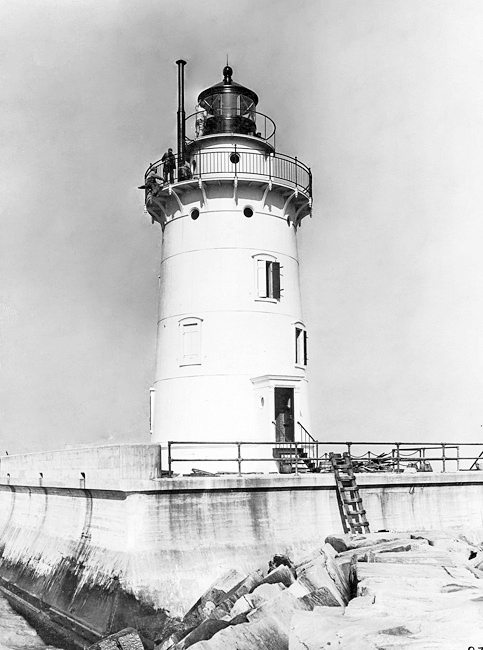
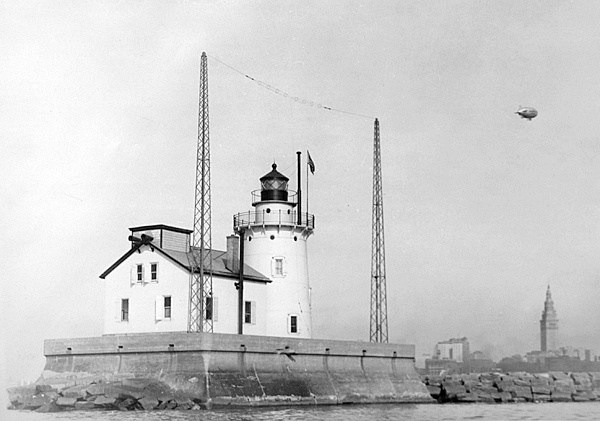
Noting that spurs were being extended into the lake from the east and west breakwaters, effectively extending the entrance to the harbor farther out into Lake Erie, the Lighthouse Board requested $45,000 in 1907 for lighthouses to mark these structures. Congress appropriated the requested amount on May 27, 1908, and Cleveland Harbor West Pierhead Lighthouse, the large structure that remains standing today, commenced operation at the eastern end of the extended western breakwater on March 25, 1911. The conical, cast-iron tower incorporated keeper’s quarters and was fitted with the fourth-order Fresnel lens from the octagonal iron tower, which was equipped instead with a sixth-order light. A twenty-five-foot-tall iron tower with a fifth-order light was placed at the end of the east breakwater spur.
On October 22, 1913, Congress appropriated $17,600 to establish a modern compressed air fog signal adjacent to the new light on the west breakwater spur. Work on the fog signal building, measuring twenty-nine by thirty feet and connected to the tower by a passageway, began in 1915, and the type “F” diaphone fog signal was commissioned on August 18, 1916, the same date the steam whistle was discontinued at the old west breakwater station. The fog signal was affectionately known as the “cow” because of the deep mooing sound it made. In spite of its whimsical name, the whistle was a valuable asset to sailors, as its penetrating signal could be heard for up to twelve miles.
|
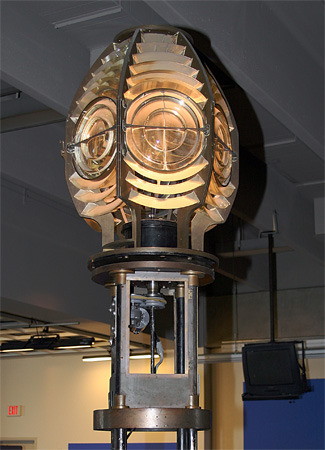
The main lighthouse was automated in 1965, and thirty years later, its Fresnel lens was removed and donated to the Great Lakes Science Center, where it is on display. While most of its companion lights have been replaced with modern structures, the 1911 Cleveland Main Entrance Lighthouse still welcomes vessels to Cleveland.
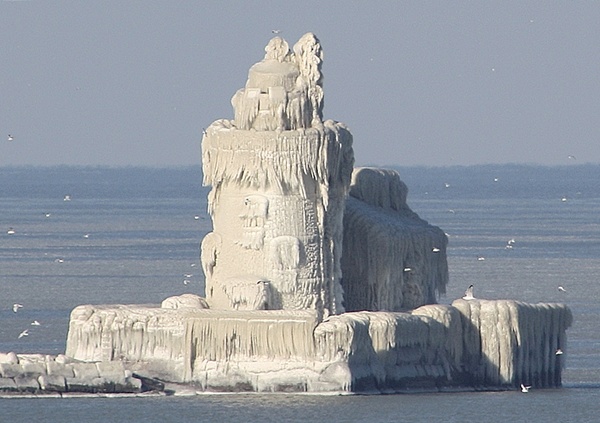
The lighthouse made national and international news in December 2010, when wind-whipped waves and freezing temperatures combined to encase the structure in a thick coating of ice.
Under the provisions of the National Historic Lighthouse Preservation Act of 2000, Cleveland Main Entrance Lighthouse was made available at no cost in 2007 to eligible entities defined as Federal agencies, state and local agencies, non-profit corporations, educational agencies, or community development organizations for educational, park, recreational, cultural or historic preservation purposes. After no applications were received, a second Notice of Availability, dated June 28, 2010, was released. Qualifying organizations were given sixty days to submit a letter of interest.
On August 1, 2023, the General Services Administration initiated an auction for Cleveland Harbor West Pierhead Light. Nine bidders participated in the auction, which ended on September 6 with a high bid of $425,000. The winners of the auction were two Clevelanders, Heather Moore, a designer of personalized luxury jewelry, and Jim Brown, the owner of Classic Auto Group.
Keepers (Cleveland Main):
Keepers (Cleveland Breakwater):
References