Vermilion, OH 

Select a photograph to view a photo gallery
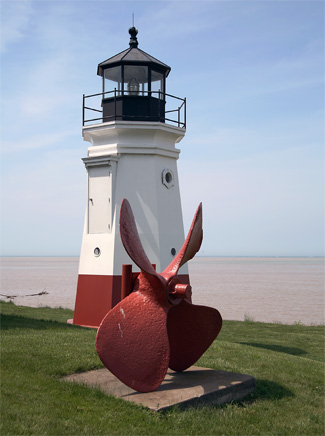
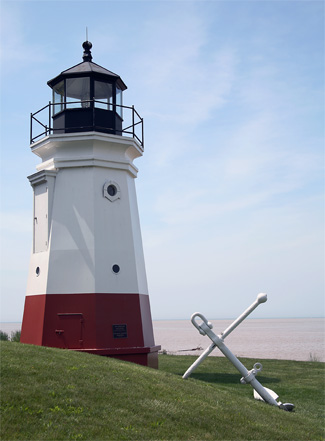
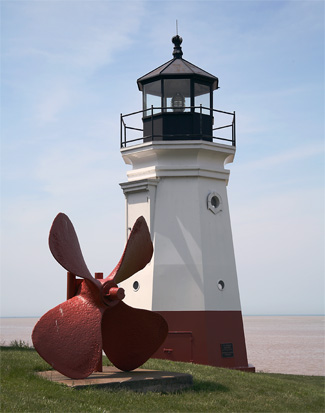
Photo Gallery
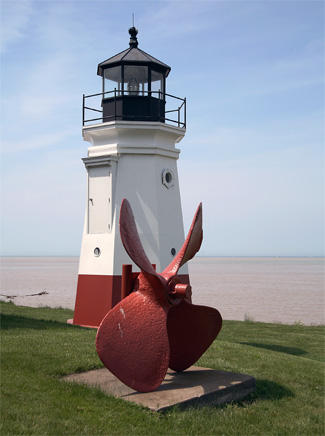
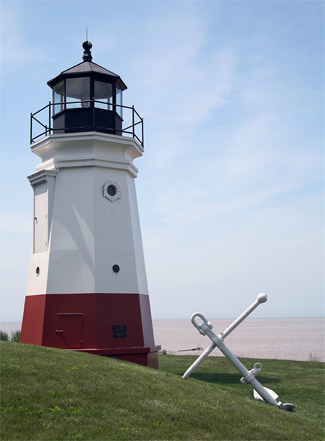
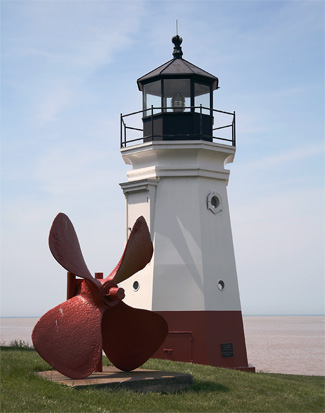
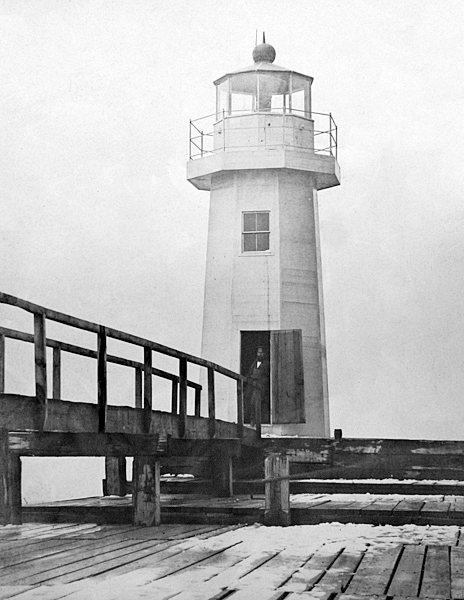
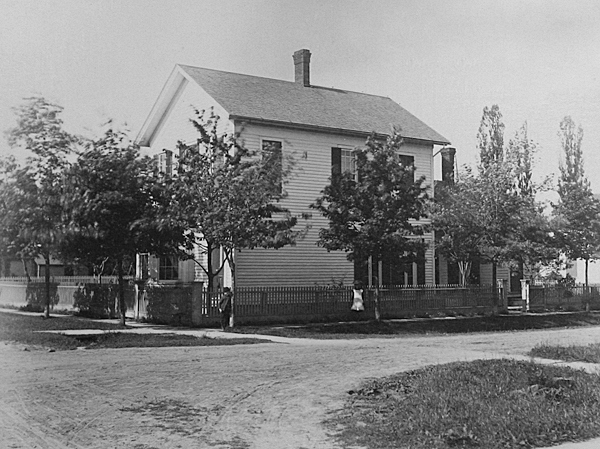
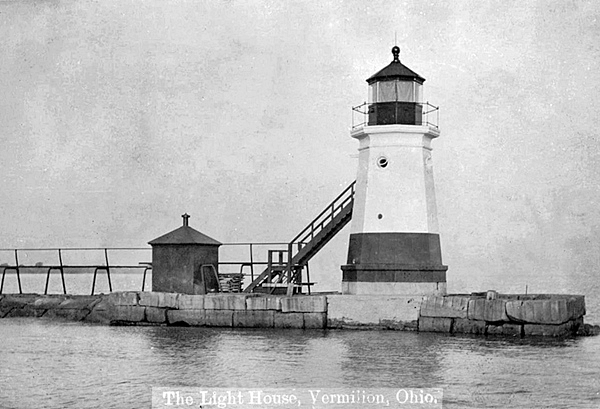
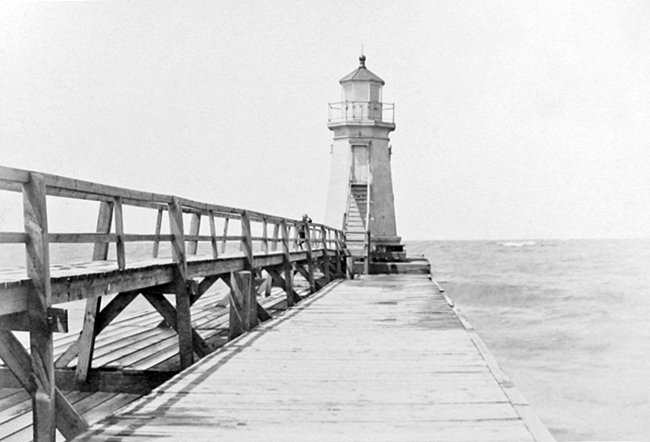
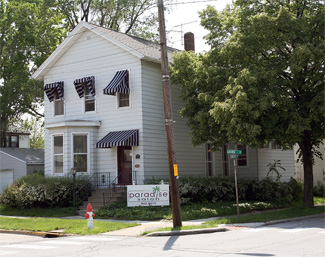
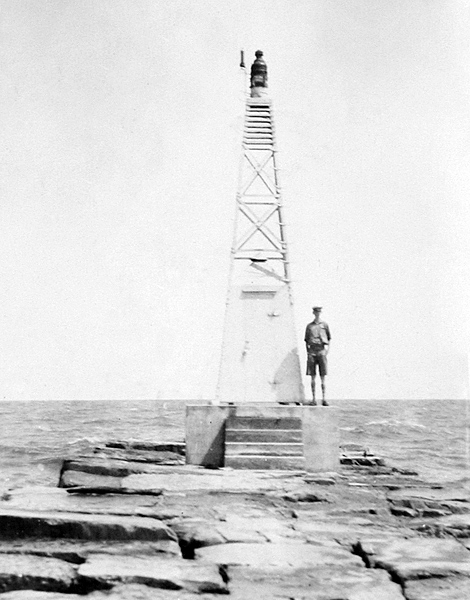
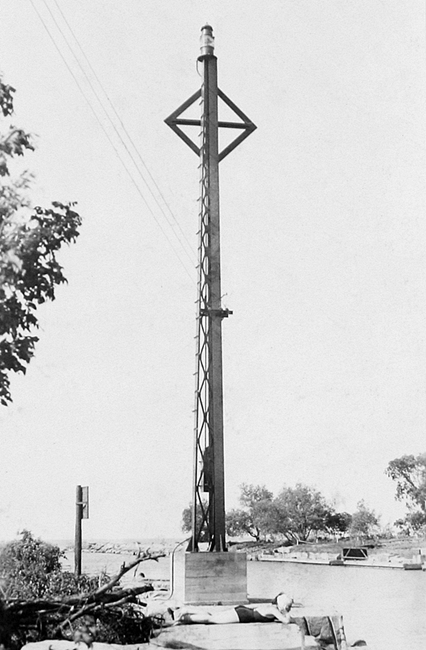
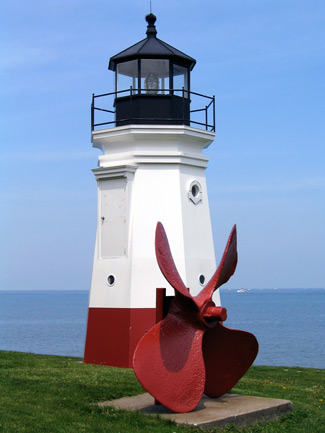
Photo Gallery
Photo Gallery
|
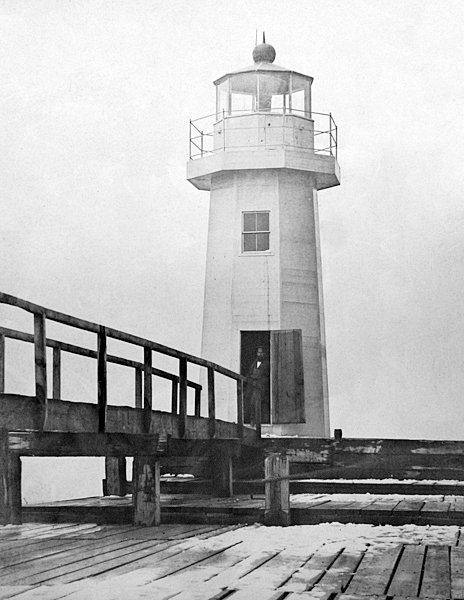
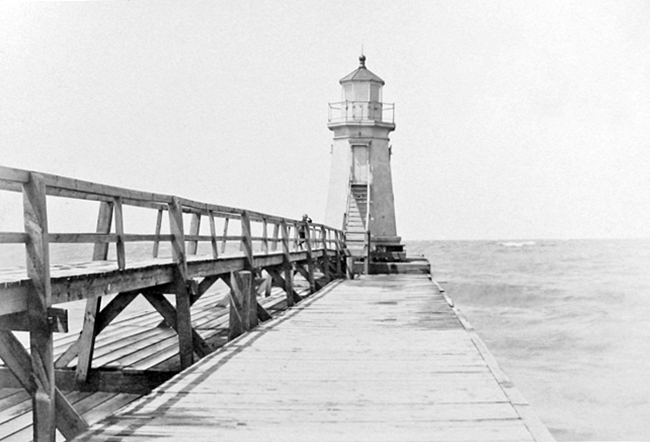
By 1852, the pier was in need of repair, a project that cost $3,000. An inspection report filled out in 1858 describes the light at Vermilion as “a gallows frame standing on a completely wrecked pier.” In 1859, the beacon light and pier were rebuilt at a cost of $5,000. The new lighthouse, shown in the picture at right, was made of wood and topped with a whale oil lamp. With the help of a sixth-order lens, the lamp’s flame produced a sheet of light that was visible from several miles out in Lake Erie.
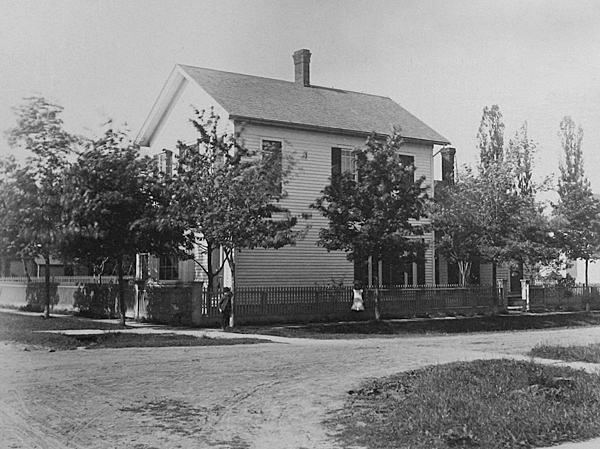
In 1870, the Lighthouse Board requested $4,000 to purchase a lot and build a keeper’s dwelling at Vermilion. Since a vacant lot easily accessible from the piers and from which the beacon light could be seen was not available, a lot was purchased with a house already on it. The dwelling was altered to accommodate the storage of oil, and a stone sidewalk and cellar were added.
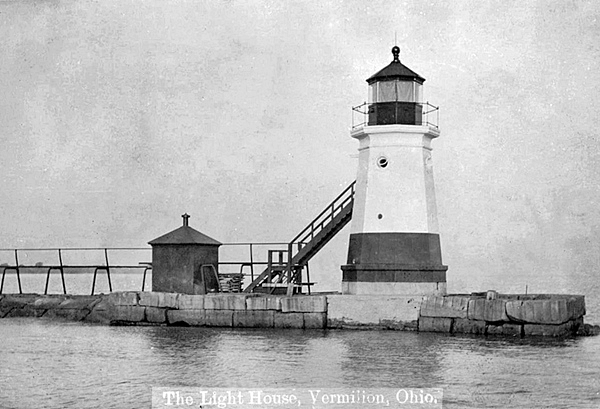
The Lighthouse Board noted in 1877 that as the old wooden tower was decayed and in danger of falling down a new iron tower had been ordered. To cast the lighthouse, ironworkers used sand molds of three tapering rings, with an octagonal cross-section. The iron they used was from unpurchased Columbia smoothbore cannons, obsolete after the Battle of Fort Sumter. As noted by Vermilion native Ernest Wakefield, “The iron, therefore, of the 1877 Vermilion lighthouse echoed and resonated with the terrible trauma of the War Between the States.”
Once the ironworkers in Buffalo had completed the casting of the lighthouse and ensured that all parts fit together correctly, the pieces of the lighthouse were loaded onto barges in the nearby Erie Canal. Hauled by mules, the barges reached Oswego, New York, in two weeks. From there, the lighthouse was transferred to the lighthouse tender Haze, a steam-powered propeller vessel, which departed Oswego on September 1, 1877 and headed west for the Welland Canal, where a series of twenty-seven locks raised the boat to the water level of Port Colborne and onto Lake Erie. One must wonder why this circuitous route was taken when Buffalo, where the tower was cast, sits right on Lake Erie.
|
One day later, the Haze arrived in Vermilion. It took several days to prepare the foundation, and once it was in place, the crew used the derrick on the Haze to lift the bottom ring of cast iron and place it on the foundation. After the ring was bolted down, the successive tapering rings were put in place and bolted to each other. Then the pediment and lantern were added. The Fresnel lens and oil lantern were installed later. A spiral, iron stairway led from the first floor to the second floor of the tower, from where an iron ship’s ladder led to the lantern room.
Once assembled, the tower measured thirty-four feet high and stood at the end of the pier with a 400-foot-long catwalk connecting it to shore. This allowed the lighthouse keeper to travel between the light and the mainland when large waves crested over the pier. One such lightkeeper was Captain John H. Burns, who lived in the dwelling purchased by the government in 1871. From this home on the corner of Liberty and Grand Street, he would walk to the pier each night to light the lantern inside Vermilion’s lens.
The characteristic of the light was changed at the opening of navigation in 1880 from fixed white to fixed red. On April 27, 1893, the lighthouse was struck by the schooner M. S. Bacon, which was being towed from the harbor by the steam tug J. P. Devney. Two angle-iron plates in the tower were so damaged that they had to be replaced. A repair bill of $161.61 was sent to the owners of the Devney, and when they refused to pay, the matter was turned over to the justice department.
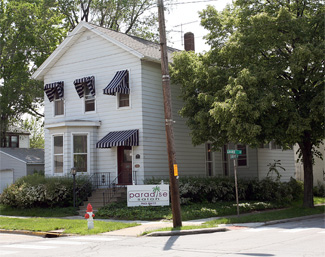
In 1906, an oil shed, capable of accommodating 540 gallons, was erected just south of the lighthouse, and a 500-foot-long elevated iron walkway was built on the pier. The lamp was converted to acetylene on September 2, 1919, changing the light’s characteristic to a white flash every three seconds and eliminating the need for daily maintenance. The light was put under the care of the keepers of Lorain Lighthouse, and in the early 1920s, the Vermilion keeper’s home was sold to the local Masonic Lodge.
|
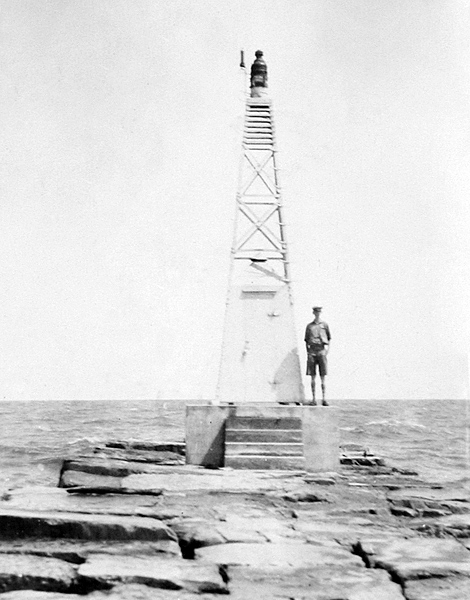
In early 1929, teenagers Theodore and Ernest Wakefield noticed that Vermilion Lighthouse was leaning toward the river after the lighthouse pier was undermined in an icy storm. The Wakefield boys reported what they had seen to their father, Commodore Frederick William Wakefield, who contacted the Lighthouse Service in Cleveland. The U.S. Corps of Engineers came to Vermilion and determined that the light was indeed unstable. Within a week, the lighthouse had been dismantled – it was removed in March – and a ten-foot skeletal steel tower was erected to mark the pier. The skeletal tower was moved to a new foundation near the outer end of the west pier on October 5, 1929.
Commodore Wakefield offered to purchase the old lighthouse and move it to his property, Harbor View, but his request was denied. Instead, the cast-iron pieces were loaded up and hauled away. Residents of Vermilion were sad to see their beloved lighthouse go, and its fate would remain a mystery until many years later.
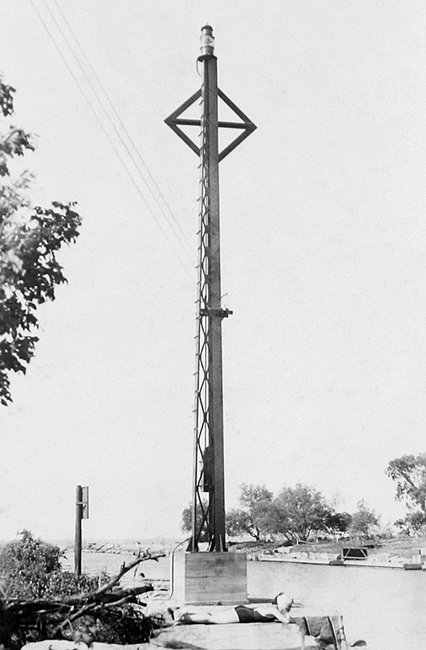
In 1934, a pair of range lights was established on the pier using the skeletal tower as the front light and a steel pole, 880 feet from the front light, to display the rear light. The range lights were electric and their characteristic was fixed red.
Ted Wakefield, one of the young men who had noticed the lighthouse leaning in 1929, had very fond memories of Vermilion’s past and its lighthouse, and as an adult, put his efforts into encouraging downtown Vermilion to maintain its historical nineteenth century appearance. His childhood home, built in 1909 using gravel from Lake Erie and known as Harbor View, was donated to Bowling Green State University and later sold to the Great Lakes Historical Society, who opened it as the Inland Seas Maritime Museum.
|
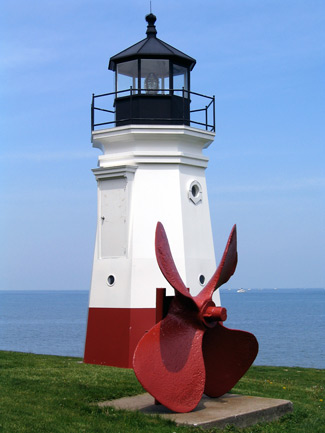
Mayor Alex Angney broke ground for the new lighthouse on July 24, 1991. The 25,000-pound base of the replica lighthouse, measuring fifteen feet in diameter, was brought to Vermilion on a flatbed truck, and cranes were used to place it onto the foundation. According to rumors, before the base was attached to the foundation, an 1877 gold piece was placed under the vertex of the octahedron that points true north. It seems only fitting that a piece of 1877 be part of the new lighthouse’s foundation.
The tower was raised in less than three hours on October 23, 1991, and the following day, the lantern room was put in place and a fifth-order Fresnel lens owned by the museum was mounted inside. The new Vermilion Lighthouse was dedicated on June 6, 1992 and designated a Coast-Guard-sanctioned private navigational aid.
For years, Vermilionites did not know the fate of the 1877 lighthouse. Most thought it had ended up on the scrap heap, but the real answer was revealed when Olin M. Stevens of Columbus, Ohio visited the Inland Seas Maritime Museum. Stevens came seeking additional information on his grandfather, Olin W. Stevens, who was a third-generation lighthouse keeper, and when he learned the museum was trying to determine the fate of the 1877 tower, he realized he had just recently found the answer. While searching for information on his ancestors to give to his grandchildren, Stevens opened an old trunk and discovered a newspaper article that told about his grandfather’s service at Tibbetts Point Lighthouse. A portion of the article read, “Altho this is his first duty on Lake Ontario, Charity Shoal light, visible from the Tibbett’s Point headland, is an old friend. The tower upholding the gas lamp on Charity formerly was under Keeper Stevens’ charge at Vermilion, near Lorain. Victim of an ice shove, it was salvaged and taken to Buffalo, where it was assigned to Charity.” The mystery had been solved. (Olin W. Stevens was responsible for the automated Vermilion Lighthouse while he was serving as keeper at Lorain from 1920 to 1937. His next assignment was to Tibbetts Point.)
Once the lighthouse had been dismantled in 1929, it was transported to Buffalo, New York, where it was renovated. Six years later, in 1935, the lighthouse was given a new home and a new charge — on Lake Ontario. Sitting on a cement crib off Cape Vincent at the entrance to the Saint Lawrence River, Vermilion Lighthouse was fitted with a fifth-order Fresnel lens and renamed East Charity Shoal Lighthouse.
Due to a lack of exhibit space and declining attendance, the Great Lakes Historical Society decided to close the Inland Seas Maritime Museum in September 2011 and open the larger National Great Lakes Maritime Museum in Toledo in 2013. Realizing the replica lighthouse belonged in Vermilion, the society deeded it to the city. In 2014, the former museum and its 2.3-acre parcel were transferred to the City of Vermilion, after it had scraped together $1.65 million using grants and donations. In its 2016 Light List, the Coast Guard still listed the replica lighthouse as “Museum Lighthouse,” displaying a fixed red light, but the lighthouse has not been active for about ten years and the Great Lakes Historical Society removed the Fresnel lens from the tower’s lantern room when it left.
In 2014, Main Street Vermilion, a non-profit organization, formed a Lighthouse Preservation Committee with a mission to preserve the lighthouse and raise $40,500 to have a replica fifth-order Fresnel lens fabricated for the lighthouse. A re-lighting ceremony was held at the lighthouse on September 15, 2016. This amazing video shows the replica lens being manufactured by Artworks Florida, and this video shows Dan Spinella installing the lens on September 11, 2016.
Keepers:
References