Green Island, OH 
Select a photograph to view a photo gallery
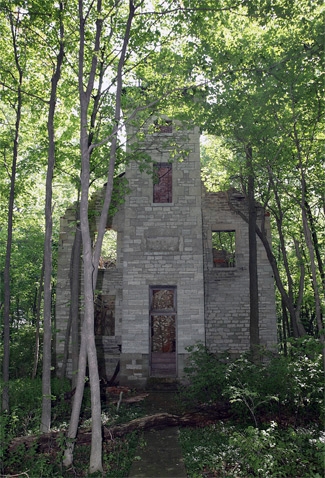
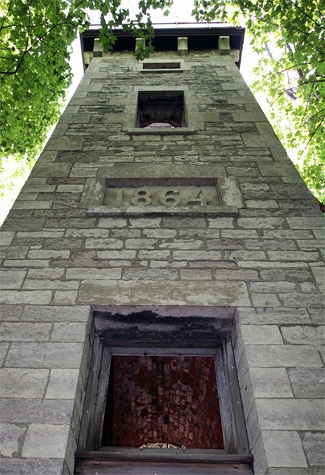
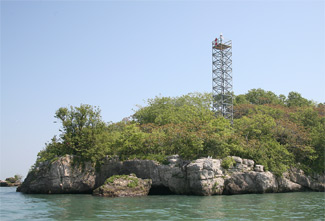
Photo Gallery
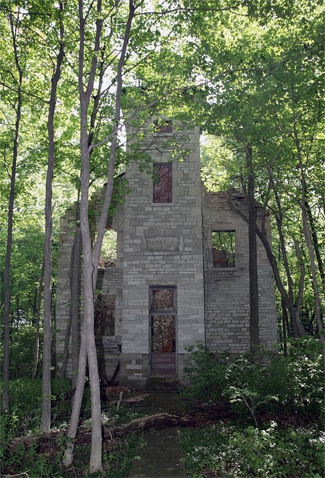
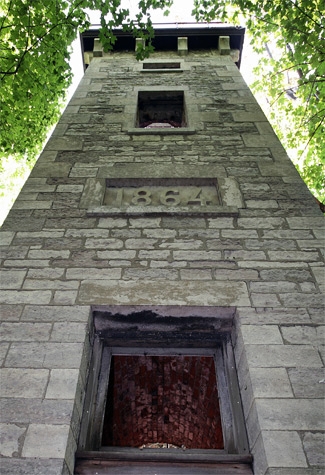
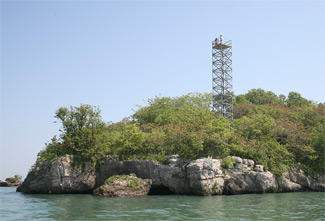
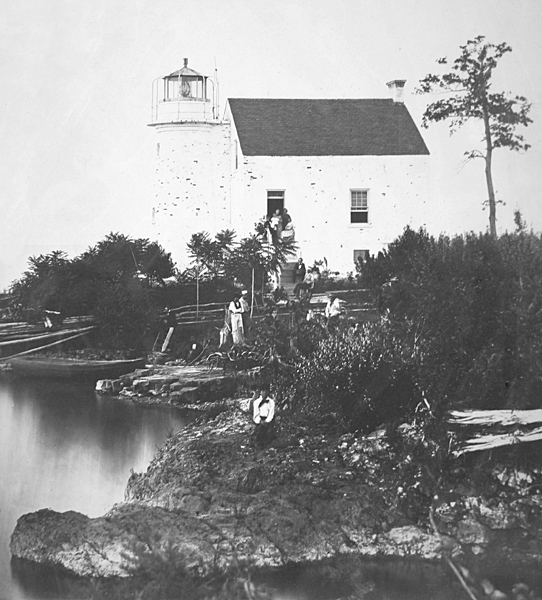
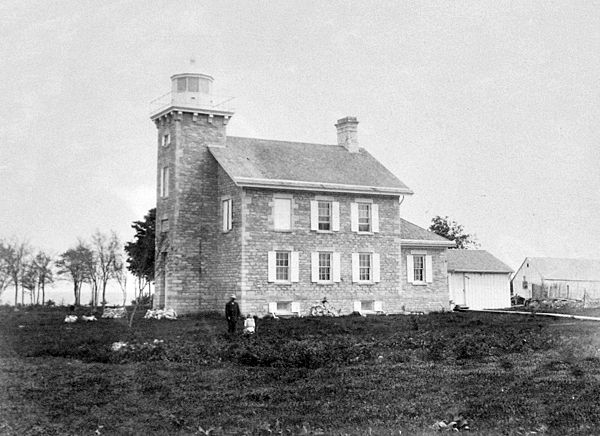
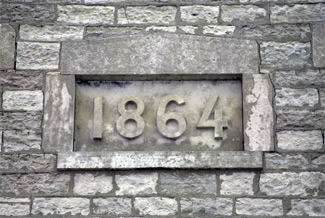
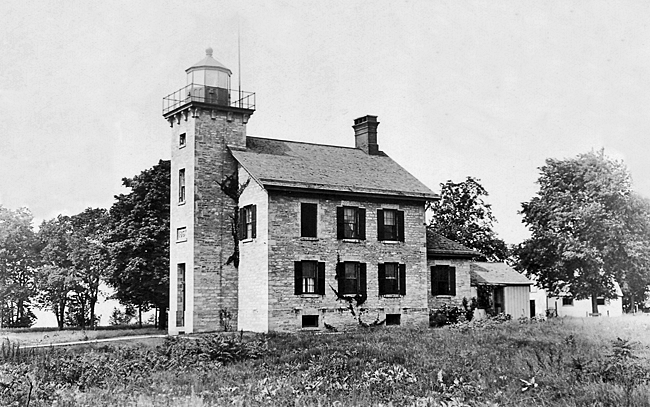
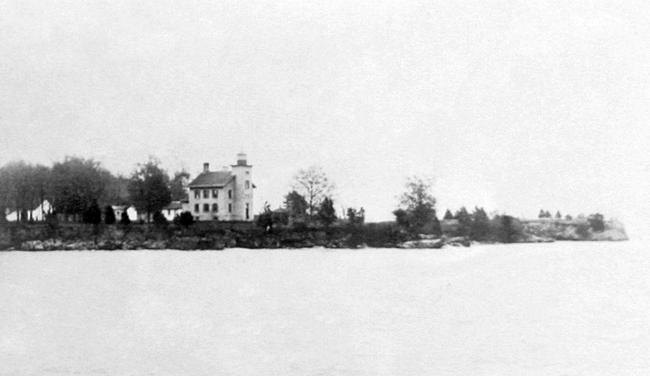
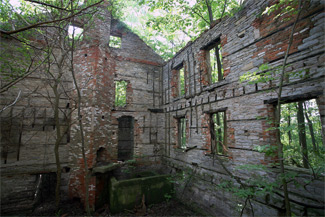
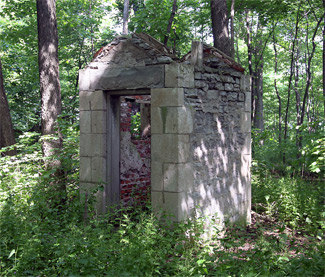
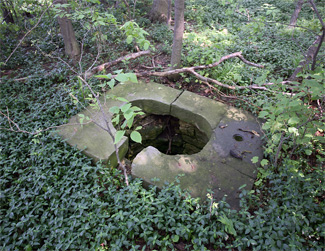
Photo Gallery
Photo Gallery
|
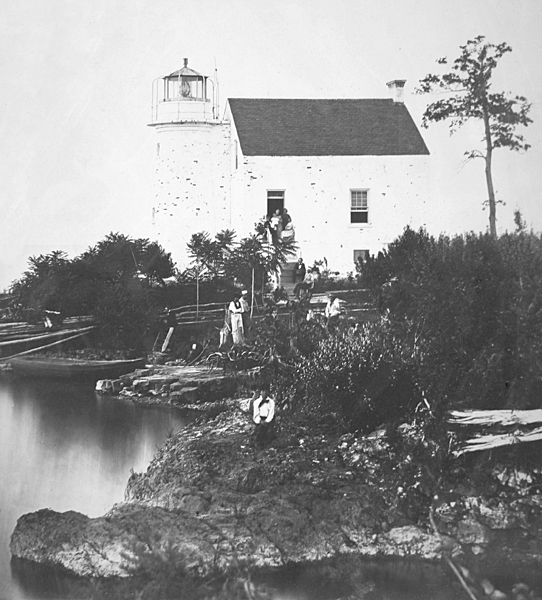
Built of brick, the lighthouse consisted of a cylindrical tower with a diameter of six feet, three inches that was attached to one end of a one-and-a-half-story keeper’s dwelling. The tower was topped by an octagonal lantern room from which a fixed white light, varied every 150 seconds by a bright flash, was shown at a focal plane of forty-three feet.
The most famous keeper of Green Island Lighthouse was Colonel Charles F. Drake, the light’s first keeper, who was living on the small island with his wife and children when the lighthouse went up in flames on New Year’s Day in 1864. The evening is remembered as the coldest ever in the area, with temperatures dipping down to twenty-five degrees below zero. Heavy rain had fallen throughout the day and was followed by a strong gale from the northwest as night rushed in. Sometime during the evening, Green Island’s lighthouse caught fire. With the wind howling fiercely outside, Colonel Drake and his family did not notice that their home was on fire until they heard flames crackling loudly above them. Soon the entire upper story of the structure was afire.
Colonel Drake took a moment to get dressed in a coat and hat and then grabbed a ladder. He attempted to douse the roaring flames as his daughter and wife filled pails with lake water and passed them to him, but after emptying more than thirty pails of water, the family realized that their efforts were in vain and there was nothing they could do to save their home or their valuables. They promptly turned their attention to saving themselves, realizing that they could not survive the night outside without protection from the bitter cold. The lake could not be navigated in such weather, and no one from the mainland would be able to come to their rescue until the storm subsided.
Colonel Drake braved the burning house and was able to save two ticks and a comforter. Wrapping these around themselves and seeking shelter in the outhouse, the little family huddled together and tried to stay warm. Colonel Drake’s son Pitt had gone to Put-in-Bay to attend a party and watched in horror as the flames from Green Island lit up the stormy sky. Though he was only two miles from the island, his friends would not let him try to cross the churning lake to his family. The storm had grown so violent that the surf reached thirty feet high and froze as it fell onto the shore. What a spectacle it must have been with ice forming on the shore as flames consumed the lighthouse and illuminated the night sky.
|
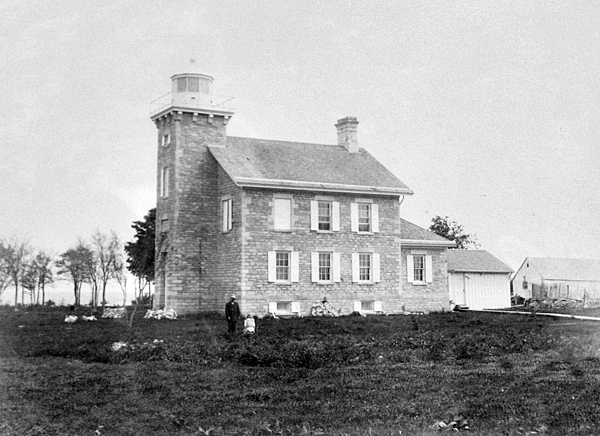
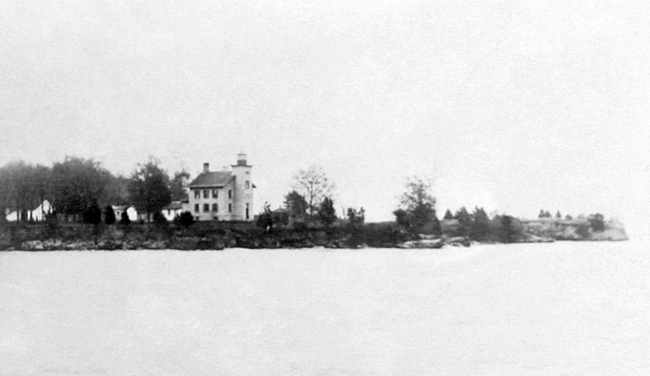
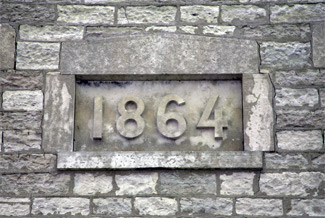
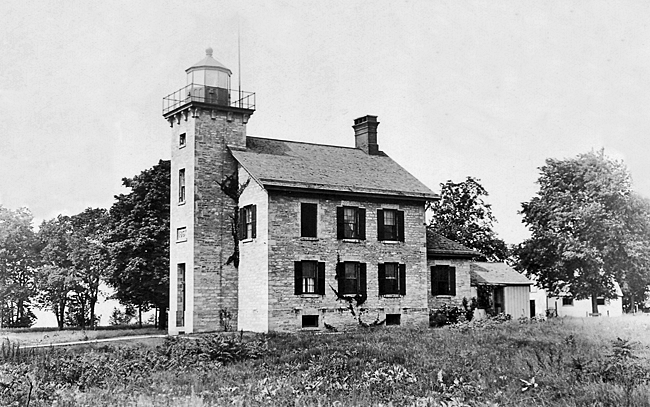
Work on a new lighthouse began in 1864 using the general fund for repairs, and a new, two-story lighthouse went into operation on July 1, 1865. This time, limestone was used to build a nine-foot-square tower with an adjoining keeper’s house. Charles Drake continued as keeper of the new lighthouse until leaving Green Island in 1871.
In 1886, a well was sunk through granite to obtain water at a depth of fifty-five feet. The following year, the light’s characteristic was changed from fixed white varied every two minutes by a white flash to fixed white varied by a red flash every minute. In 1889, a boathouse was built on the east end of the island with boatways extending into the water to a depth of five-and-a-half feet. A protection crib was built for the ways, and an iron winch was provided for launching and retrieving the station’s boat. A brick-lined, iron oil house was added to the station in 1902.
An article in an 1898 edition of The Sandusky Star noted that the mother of Joseph Gibeaut, keeper of Green Island Lighthouse, was taken to jail by Marshall Weidgates. Mrs. Gibeaut was believed to be demented and an inquest into her sanity was to be held.
A 1901 newspaper story recorded that then keeper of Green Island Lighthouse, John Safe, had a beautiful team of Italian greyhounds that he used to pull a sled across the frozen lake to take his children to and from school at Put-in-Bay. The fleet-footed canines could reportedly cover the distance in just five minutes.
In 1905, Keeper George Ferguson was transferred from Lorain Lighthouse to Green Island, where he lived alone with his wife Bertha. When her husband started suffering from much ill health, Bertha thought nothing of jumping in a boat and rowing to Put-in-Bay for a doctor. Later, a system of flag signals was used to communicate with the keeper on South Bass Island during the day, and at night, flashes of lights were employed instead of flags.
William L. Gordon, who served as the final keeper on Green Island, built a radio set that helped keep him in touch with the world. He expressed the enjoyment he received from the set in the following letter that appeared in the Lighthouse Service Bulletin in 1922:I thought you might be interested to know that I have a small homemade radio set from which I receive, through WWJ, wireless broadcasting station of the Detroit News, the latest world news, the time, reports of sporting events, etc., musical concerts, and a talk every morning by the household editor, giving recipes for each day’s dinner, also on the care of flowers and the home. From WCX, of the Detroit Free Press station, we hear concerts, speeches, and the news. On Sunday morning and evenings we hear the services of the St. Pauls Cathedral of Detroit, Mich., through the broadcasting of WWJ. As we do not get ashore very often we enjoy all this very much. I think a radio receiving set is a wonderful thing for isolated stations.
In 1926, the Lighthouse Service automated Green Island Lighthouse and transferred Keeper Gordon to nearby South Bass Island Lighthouse, where his responsibilities also included the automated lights on Green Island and Ballast Island. The light atop Green Island Lighthouse was active until 1939, when the Coast Guard replaced it with an automated light on top of an eighty-foot, steel, skeletal tower, located 960 feet southwest of the old lighthouse.
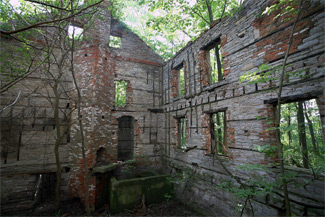
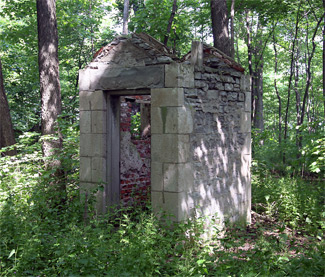
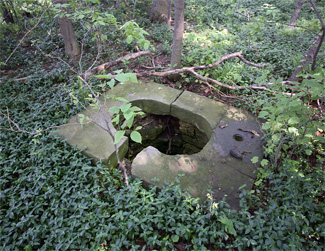
In 1961, the federal government transferred the lighthouse property to the State of Ohio, and the entire island eventually became a wildlife refuge, managed by the Department of Natural Resources. In April 1974, two fishermen landed on Green Island and started a small fire that soon got out of control. A forty-foot utility boat was launched from Marblehead Coast Guard Station, but lack of docking facilities made it hard to land men on the island. The fire raged for a full day leaving behind only a shell of the old limestone lighthouse, which is now surrounded by thick vegetation. The remains of the old oil house still stand behind the lighthouse, and what looks like a well is located in front of the lighthouse.
A fourth-order Fresnel lens used on Green Island is located at the National Museum of the Great Lakes in Toledo, Ohio.
Though Green Island is no longer famous for its strontium, and its lighthouse is on the Lighthouse Digest’s Doomsday List, the island is still a unique part of Ohio’s history, for no one in the area will ever forget the story of Colonel Drake and the night that Green Island Lighthouse lit up the entire sky.
Keepers:
References