Cape Mendocino, CA 

Select a photograph to view a photo gallery
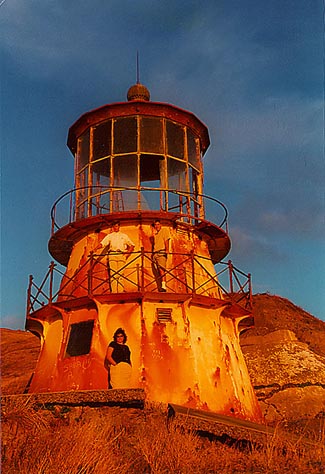
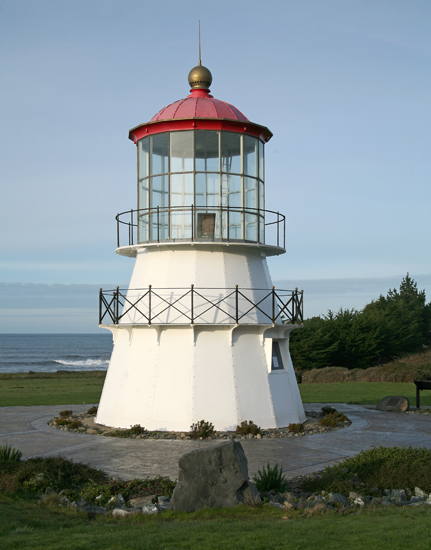
Photo Gallery
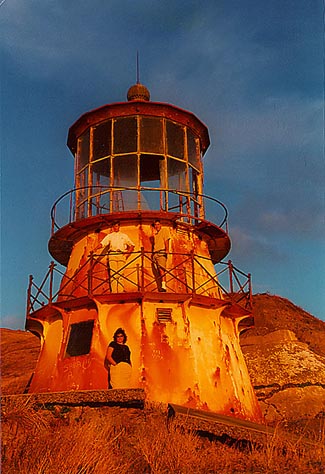
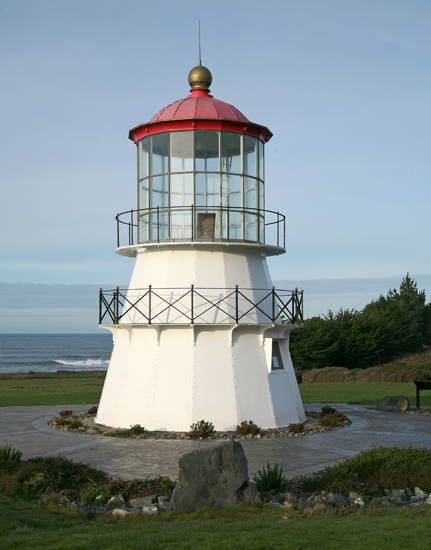
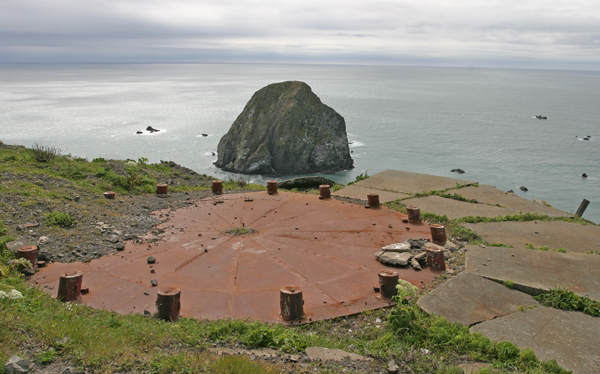
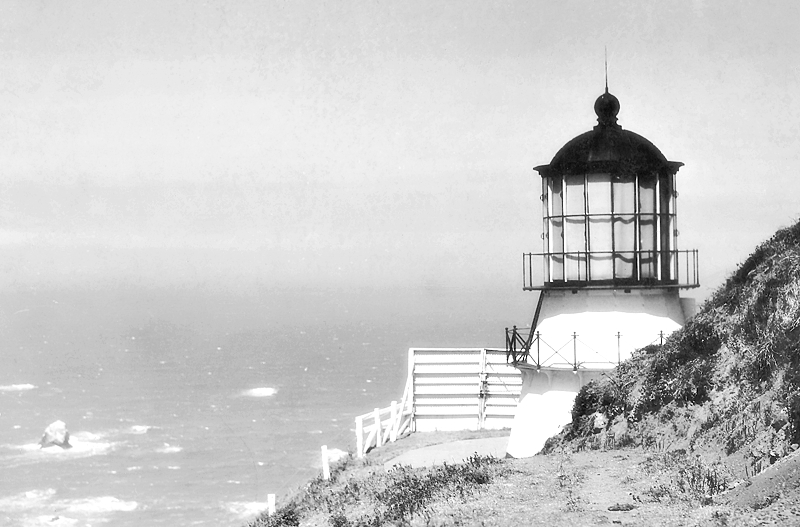
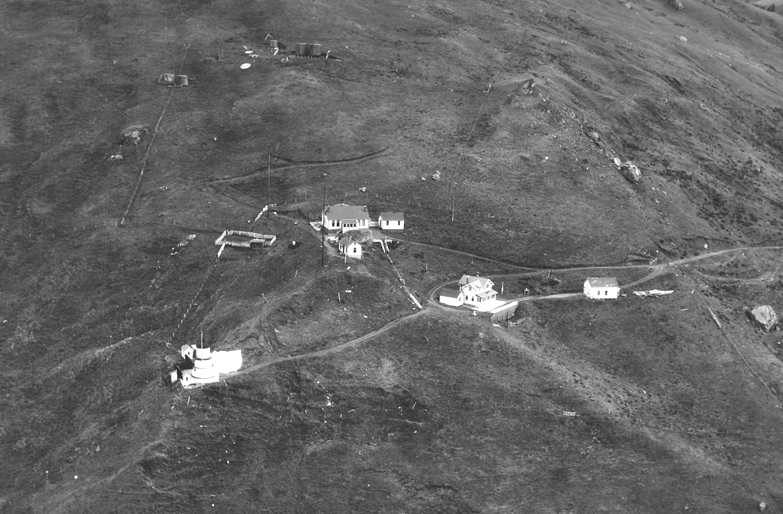
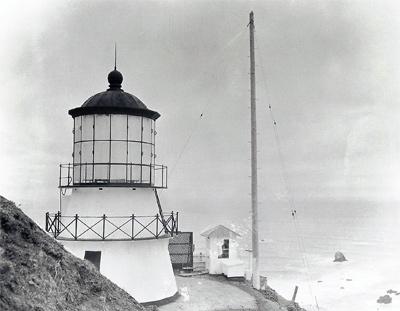
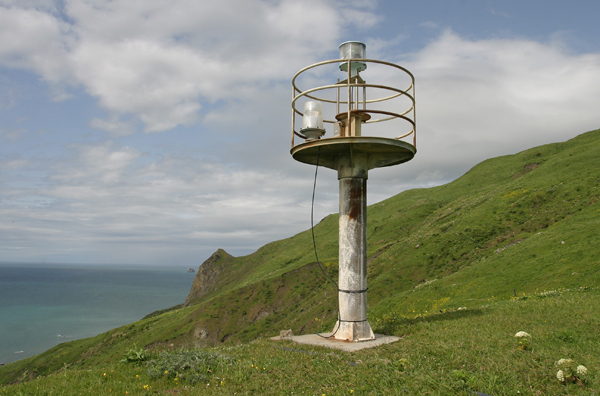
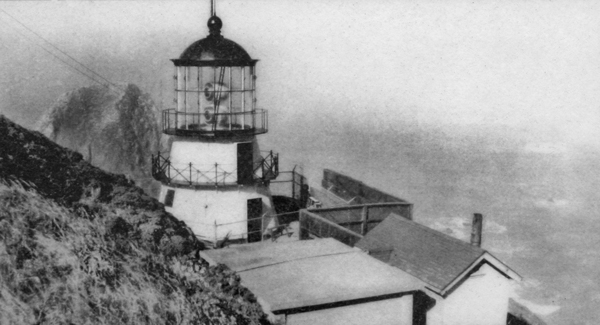
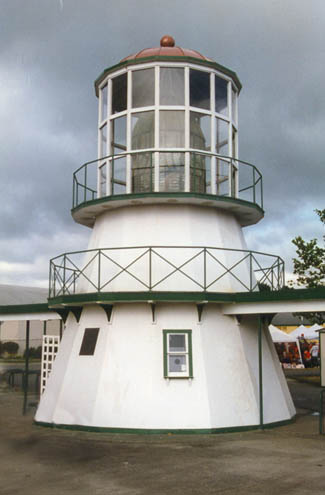
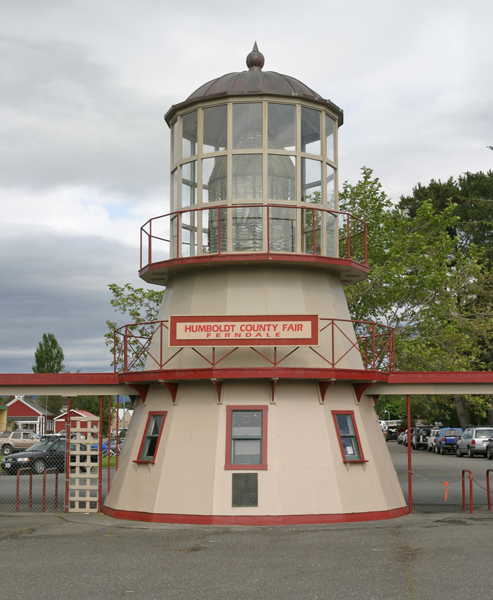
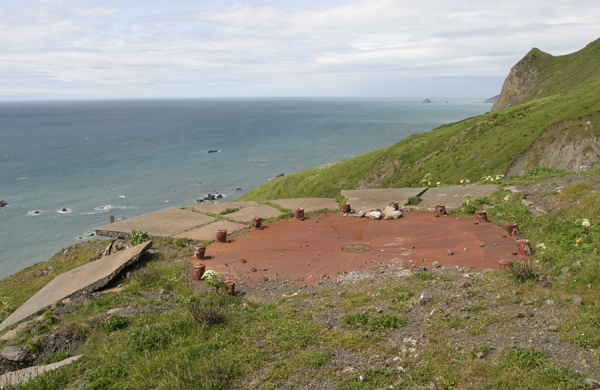
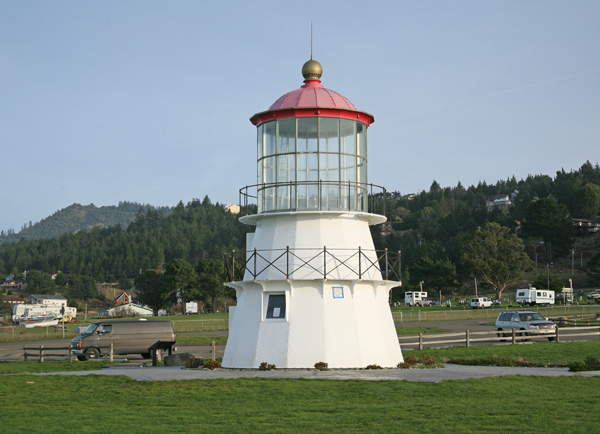
Photo Gallery
Photo Gallery
|
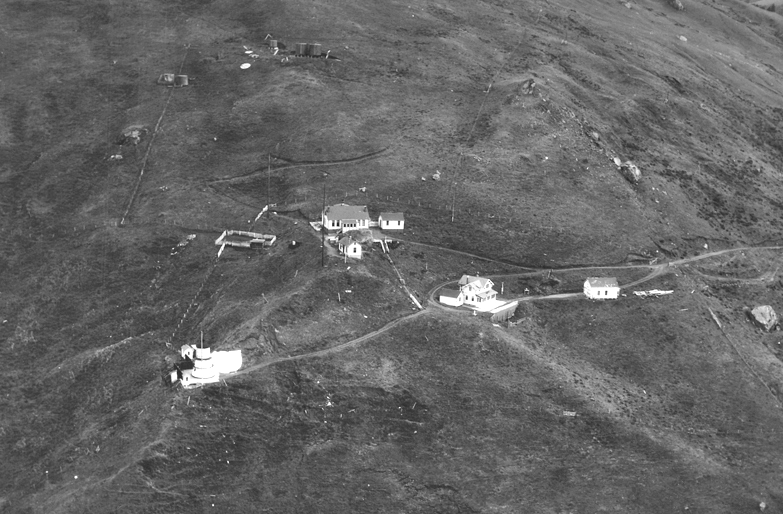
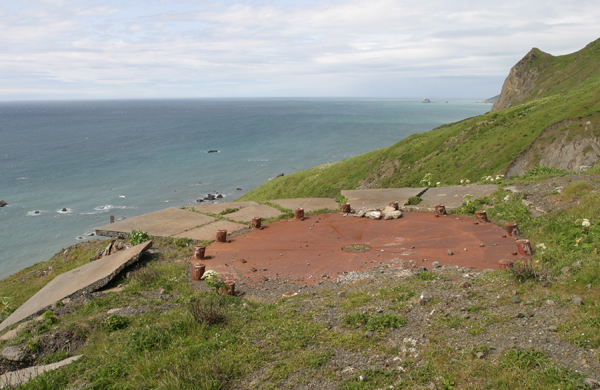
As the headland slopes steeply towards the ocean, level plateaus had to be carved out of the hill to provide suitable construction sites. Within a year, a two-story brick duplex, a carpenter shop, and a barn were completed. After the lantern room and Fresnel lens arrived in San Francisco, they along with the material for the iron lighthouse that was fabricated in San Francisco were shipped to Eureka during the summer of 1868. To avoid a dangerous landing through the surf, the items were transported the forty miles from Eureka to the cape by wagons
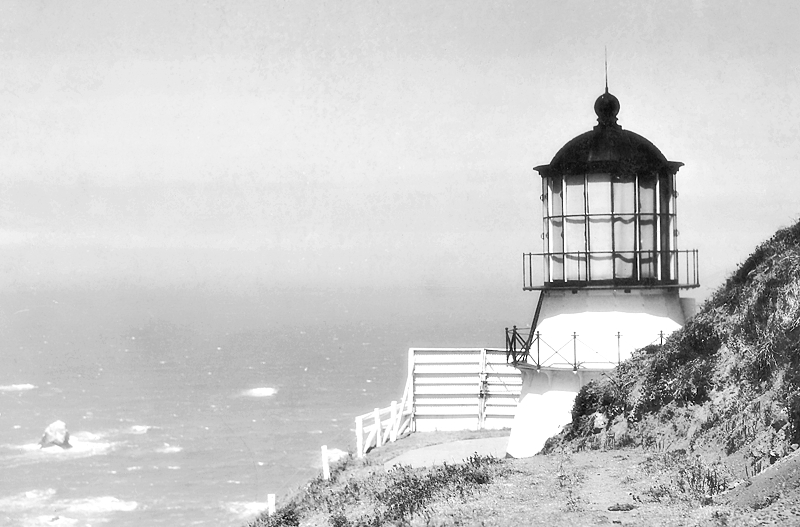
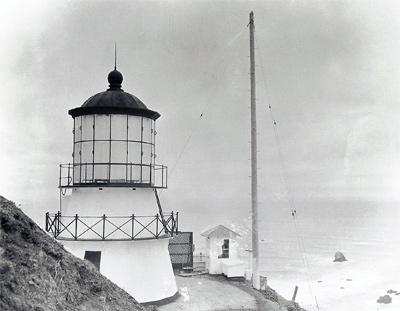
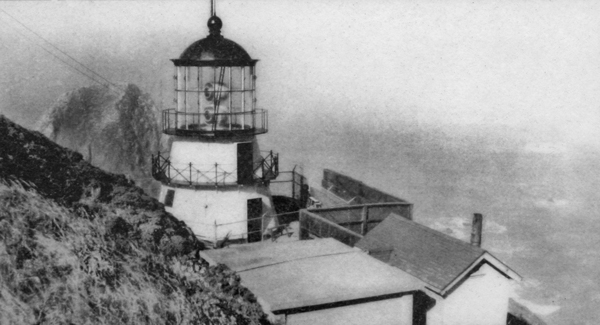
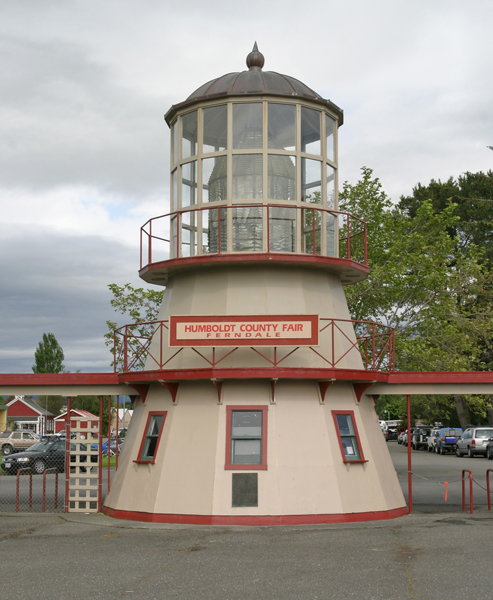
The sixteen-sided, double-balconied Cape Mendocino Lighthouse was bolted to a concrete pad at a height of 422 feet above the sea, making it one of the highest lighthouses in the United States. In fact, after the original Point Loma Lighthouse was discontinued in 1891, Cape Mendocino became the highest lighthouse in the country. The forty-three-foot iron tower is the older twin of the tower at Point Reyes, which would be built two years later. The main difference between the two towers is the shape of the lantern room’s roof. Cape Mendocino’s roof is rounded like an umbrella, while Point Reyes’ resembles a Chinaman’s hat. The first-order Fresnel lens, manufactured in Paris by L. Sautter, featured sixteen flash panels and started sending out its characteristic signal of one white flash every thirty seconds on December 1, 1868.
Alfred May was hired as the first head keeper at an annual salary of $1,000, while his wife and two men were paid $625 to serve as his assistants. The position of third assistant was eliminated in 1873, as without a fog signal to care for, the station didn’t merit four keepers. Water for the keepers and their families was stored in brick-lined cisterns and wooden tanks after being captured from the dwelling’s roof or piped in from a spring. Both sources of water proved scarce during the dry season, so water use had to be restricted.
Living conditions on the exposed hillside were most difficult. Violent windstorms would break windows, and earthquakes frequently rattled the station causing significant damage to the structures. In just over forty years, housing for the keepers had to be completely rebuilt three times. The original brick duplex didn’t survive two years, being rendered uninhabitable by an earthquake in March 1871. The keepers were forced to live in a shanty until a new wooden duplex, built using the same plans as the original dwelling at Cape Blanco, was finished in November. In 1875, the duplex was braced with external twelve-inch-square timbers to protect the structure from the heavy winds on the cape that made it impossible at times for anyone to cross the 300 feet from the dwelling to the lighthouse.
|
Due to the steep terrain surrounding the station, the land frequently settled and slid during the wet season. As a result, floors warped and ceilings cracked. The dilapidated two-story duplex was torn down in 1895 and rebuilt as a one-and-a-half-story dwelling using as much of the old material as possible. As the new dwelling was smaller than its predecessor, one of the assistant keepers was forced to live in an old oil house until the government provided the requested $5,500 for an additional one-story cottage. Although the Lighthouse Board described the oil house as “almost uninhabitable on account of its bad and unsanitary conditions” and attributed “recent illness and death in the keeper’s family” to it, the wooden shed continued to be used as housing until it was destroyed by the 1906 earthquake that caused so much damage in San Francisco. It is interesting that Congress provided $1,000 in 1900 for a fireproof oil house at Cape Mendocino, but couldn’t come up with funds for a new dwelling until after the earthquake. An act approved on June 30, 1906 provided $5,400 for a new dwelling at Cape Mendocino, and this structure was completed in 1907.
In 1870, Haus Buhne filed suit against Head Keeper Seth Chism, claiming that he owned the land on which the light station was built and demanding that the keepers be ejected. The case was tried in the district court in June of that year and resulted in a “nonsuit,” but Buhne appealed the decision to the California Supreme Court. The suit was decided on October 10, 1872 in favor of the government.
Sleeping quarters with a stove and two bunks were erected adjacent to the lighthouse in 1883 for the keepers as it was often dangerous for them to go between the dwelling and tower on dark and stormy nights. Previously, they had to occasionally stand watch in the tower’s unheated watchroom in wet clothing which led to them contracting lung disease and suffering from rheumatism.
|
In 1905, the Cape Mendocino station received neighbors when Blunts Reef Lightship was stationed offshore to more clearly mark that deadly hazard. The lightship would take on an unexpected role in 1916 when the passenger steamer Bear ran aground nearby. Initially, the vessel’s lifeboats were used to row passengers ashore, however, after five people drowned in the surf, it was deemed safer to row toward the lightship. Somehow, 150 survivors managed to squeeze aboard the lightship until they could be safely transported ashore.
Cape Mendocino Lighthouse burned lard oil up until 1888 when mineral oil lamps were supplied. In 1911, the intensity of the light was raised from 71,000 candlepower to 340,000 candlepower by changing the illuminant from oil vapor to incandescent oil vapor.
The Cape Mendocino Lighthouse Station was quite large, comprising 172 acres. Although much of the terrain was steep, the pastoral hills did provide good feed, and several keepers grazed cows at the station. An industrious assistant keeper named Paschal Hunter decided to raise ponies on the station for the stage line that ran past the lighthouse on its run between Ferndale and Petrolia. Given the undulating nature of the landscape near Cape Mendocino, a change of horses needed to be made just four miles northeast of the lighthouse in Capetown. Hunter provided horses for the stage until a gasoline vehicle was introduced on that line. Shortly after his supplemental income dried up, Hunter transferred to Punta Gorda to be closer to his hometown.
The elevated station proved an ideal lookout for vessel traffic. On an October day in 1926, Keeper Morton M. Palmer observed that a passing steam schooner, the Everett, was afire. Using the station’s telephone, Palmer called for assistance, and when a rescue vessel arrived at the burning vessel, it was discovered that the crew had been overcome by the fire’s fumes. The observant Keeper Palmer was credited with saving the lives of those aboard the Everett.
|
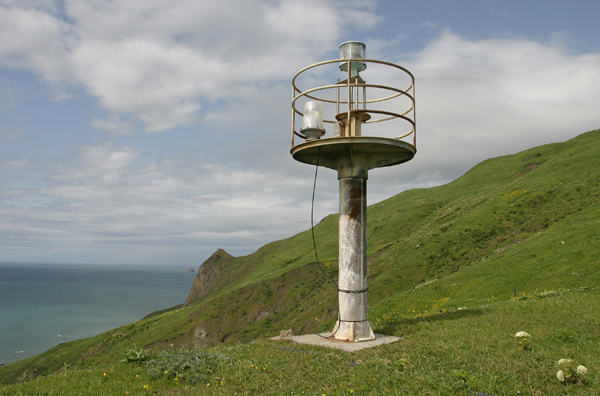
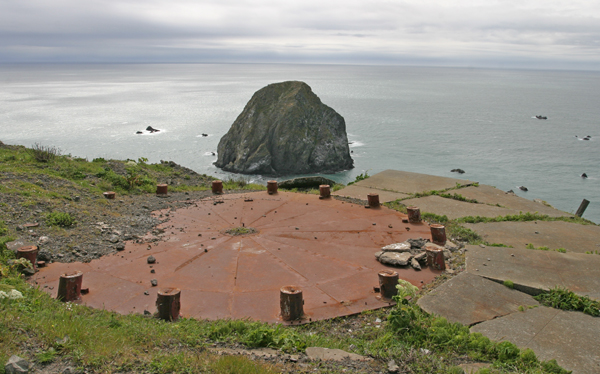
In 1951, the light was trasnferred from the lantern room of the tower to a nearby pole, and Roy M. Crockett, the final head keeper at Cape Mendocino, was transferred to Mile Rocks. In July 1960, the two wooden keeper’s dwellings along with the power house, oil house, and store house at Cape Mendocino were put up for sale to the highest bidder with the stipulation that they be removed from the station. When no takers came forward, the wooden structures were burned in January 1962 and the remains were pushed over the cliff. The rotating beacon was removed from the tower and placed on a pole farther up the hill in 1971, the same year that Blunts Reef Lightship was withdrawn and replaced by a large navigational buoy.
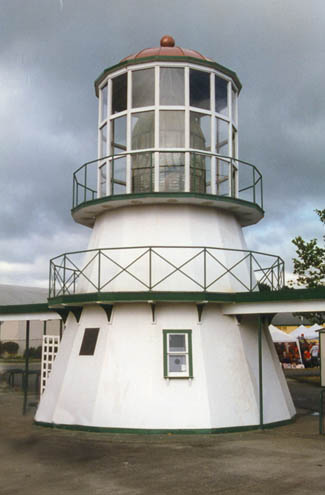
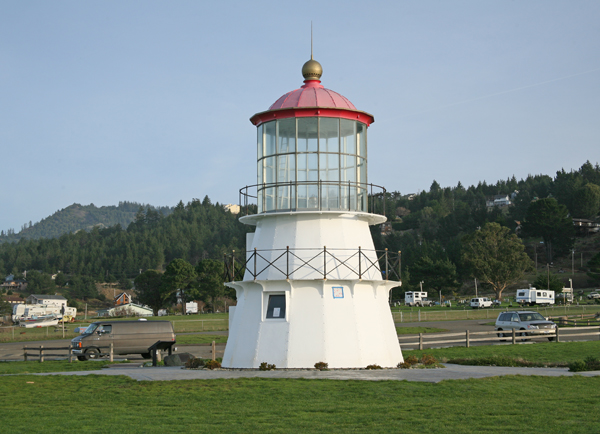
The abandoned lighthouse was slowly inching down the hillside and gradually succumbing to rust until a movement was initiated to save the tower and relocate it thirty-five miles south to Shelter Cove. During the first week of November 1998, a helicopter from the Army National Guard lifted the lantern room off the tower at its old home and carried it south to Shelter Cove. The remaining pieces of the lighthouse were numbered, dismantled, and trucked to a construction yard for renovation. In the summer of 1999, the lighthouse, restored, painted, and fitted with new glass by the Cape Mendocino Lighthouse Preservation Society, was reassembled at its new home at Point Delgada in Mel Coombs Park. The lighthouse was dedicated in September 2000 and opened to the public on Memorial Day 2001.
The modern light marking Cape Mendocino was discontinued on May 29, 2013 and removed, bringing to an end the roughly 145-year-long era of a light on the remote cape.
Keepers:
References