Bolivar Point, TX 



Select a photograph to view a photo gallery
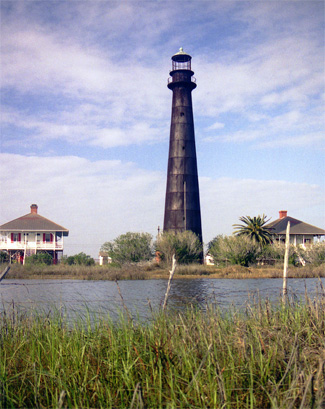
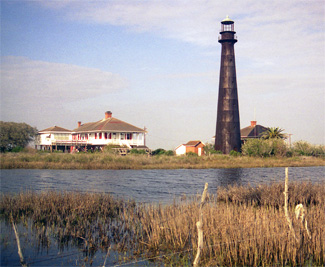
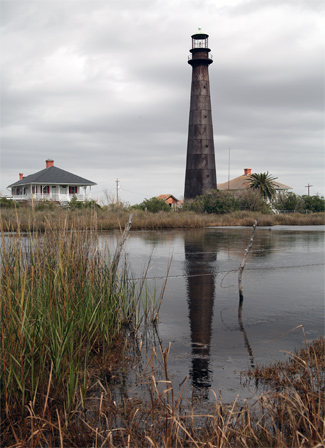
Photo Gallery
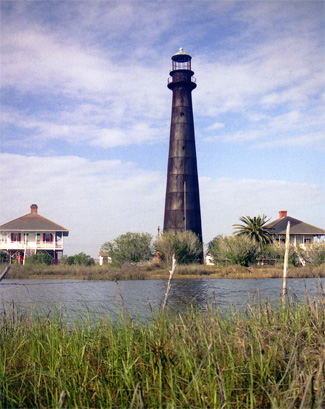
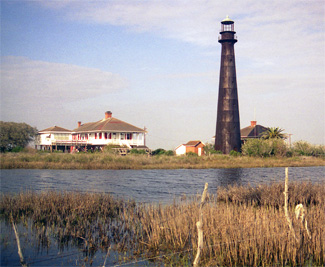
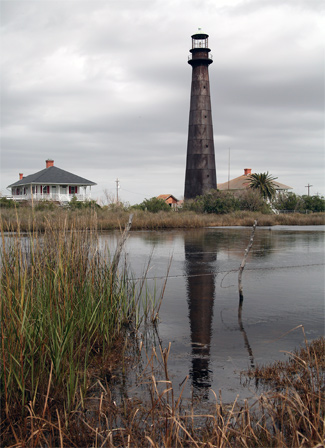
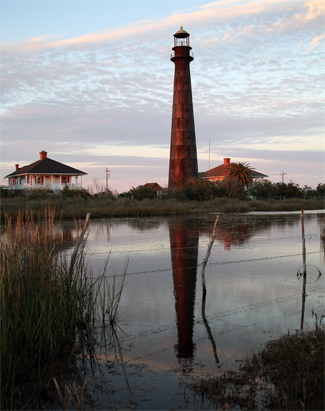
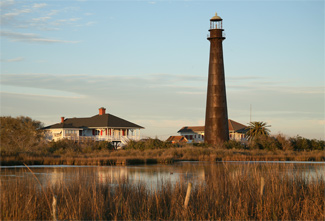
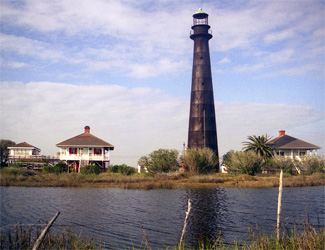
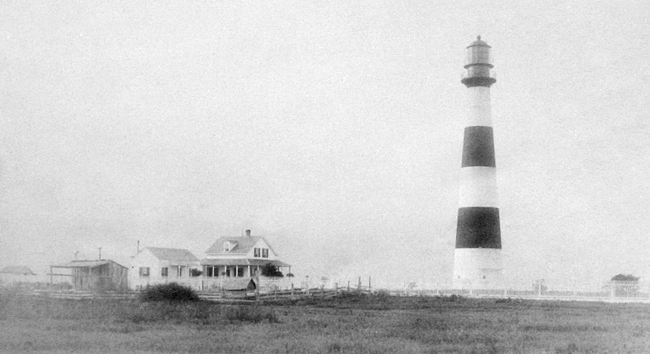
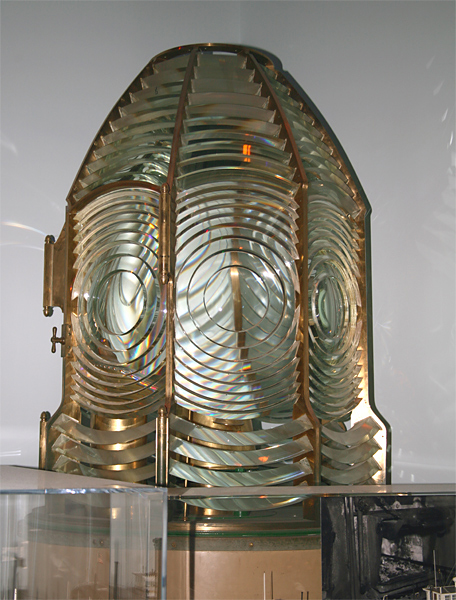
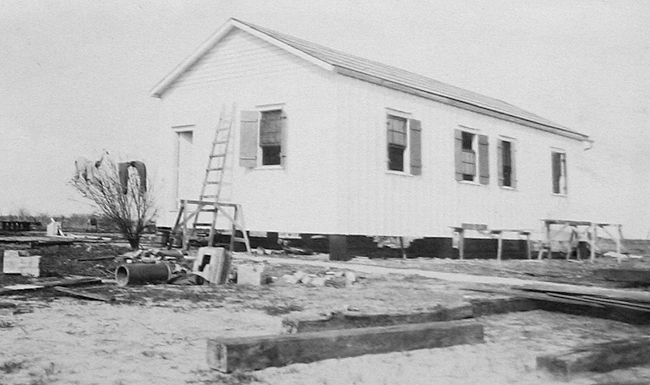
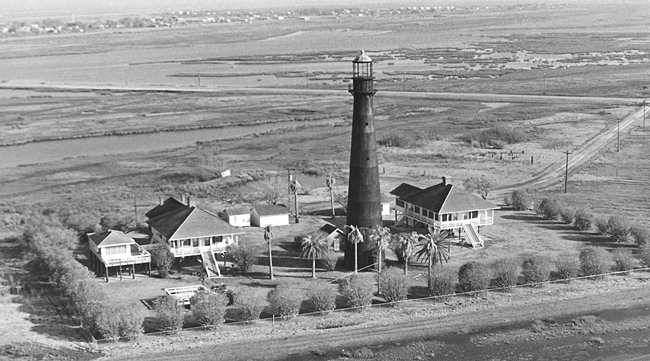
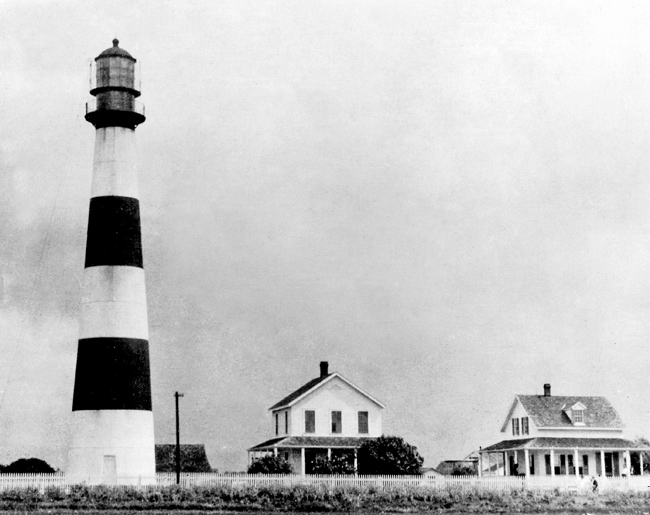
Photo Gallery
Photo Gallery
|
The iron sections for the sixty-five-foot tower were cast in Baltimore by Murray and Hazlehurst, shipped west, and then erected at Bolivar Point. The keeper’s dwelling was completed in April 1852, but work continued on the tower, which was painted red, until October. Eighteen lamps, backed by twenty-one inch reflectors, were installed in the tower by Christmas Day, and the light commenced operation shortly thereafter with Aaron Burns earning an annual salary of $600 as its keeper.
During the light’s first year of service, the district lighthouse engineer petitioned for a brighter light and additional iron sections to elevate the light. Complaints were also voiced by harbor pilots, prompting the Lighthouse Board to supply a third-order Fresnel lens and an additional twenty-four feet of sections for the tower. These modifications to the tower were completed by the summer of 1858.
Just three years later, Texas joined the other southern states in seceding from the Union. Most of the southern lighthouses were darkened during the Civil War, but Bolivar Point Lighthouse was completely dismantled. Given the dramatic cost increase for iron during the war and the fact that no piece of the original tower has ever been discovered, it is assumed that the iron sections were used as armor plating for ships or were melted down to produce military armaments.
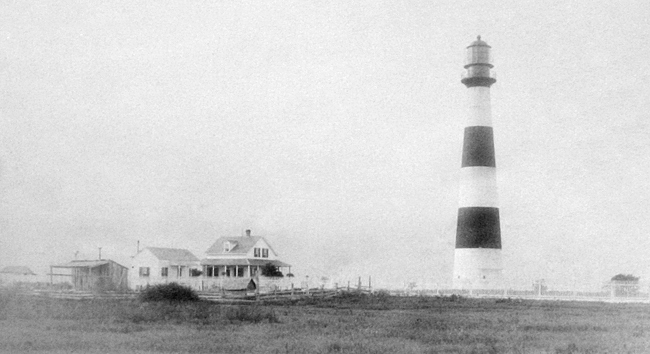
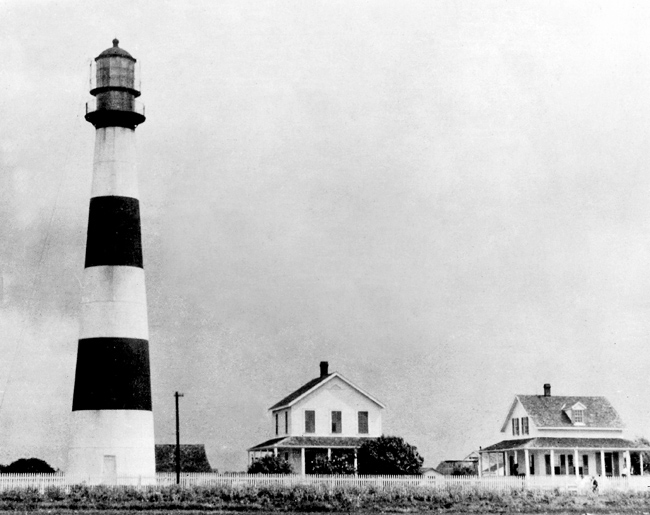
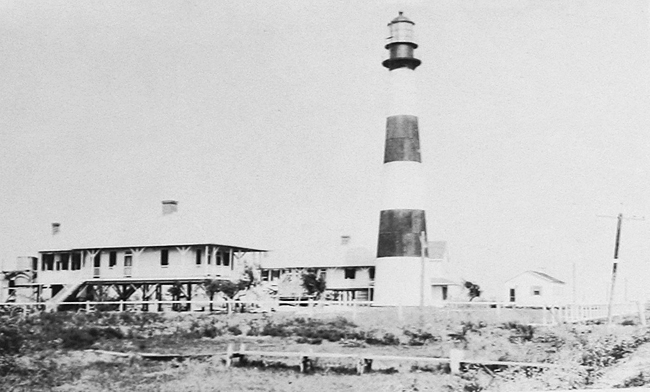
After the war, a temporary thirty-four-foot, wooden tower was hastily established near the site of the original lighthouse, and the light from a fourth-order Fresnel lens was activated on August 5, 1865. On July 15, 1870, Congress appropriated $40,000 for the construction of a second iron tower on the point. The Lighthouse Board decided to pattern the new station after the one at Louisiana’s Pass a l’Outre, which consisted of a 117-foot iron tower and a wooden keeper’s dwelling. The new tower was provided by Bailey and Debevoise of New York City for the sum of $25,850, while William F. Crow and Company of Galveston were contracted to construct the dwelling. The lamp in the station’s third-order Fresnel lens was first lit for mariners on November 19, 1872. The new tower was painted with black and white horizontal bands to provide a distinctive daymark.
|
The effectiveness of the tower’s light wasn’t the only problem at the station, as the keeper and his assistant were accusing each other of negligence and impropriety. Assistant Keeper Edson C. Brace complained that Keeper Horace W. Crockett was “an irascible, drunken, partly-demented man,” who had threatened physical violence, while Crockett charged Brace of failing to maintain a proper light and exposing himself to a passing train. The district inspector arrived to investigate the situation, and shortly thereafter Brace resigned and Crockett retired to operate a store he owned in Port Bolivar.
Harry C. Claiborne, known as the best keeper in the district, was appointed keeper at Bolivar Point to replace the problematic pair of keepers. Claiborne began his twenty-four years of service at Bolivar Point Lighthouse on December 15, 1894, transferring from the lighthouse’s twin at Pass a l’Outre. As a sign of appreciation for his faithful service, Keeper Claiborne was sent to Atlanta for a month during the fall of 1895 to take charge of a lighthouse exhibit that was part of the Cotton States and International Exposition. The exhibit included two Fresnel lenses, a fog bell, and models and photographs of various lighthouses.
Describing the couple’s existence at the station, Virginia Claiborne, wife of Keeper Claiborne, remarked: “Life at the lighthouse was very lonely and friendless. There is very little visiting because travel is nonexistent from the point to Galveston. We pass most of our time by reading books.” While her description surely applied to most of their stay at the lighthouse, it certainly wasn’t the case when hurricanes struck Galveston in 1900 and 1915.
The Great Hurricane of 1900 inundated Galveston Island with five feet of water, destroying much of the city and killing nearly 6,000 people. At the height of the storm, which occurred during the evening of September 8, over 120 people sought protection in the iron lighthouse. Seated by twos on the tower’s spiral staircase, the refugees huddled together as 120-mile-per-hour winds rocked the tower. A bucket was used outside the top of the lighthouse to catch rainwater to quench the thirst of those in the tower, but amazingly the water was found to be salty, meaning that spray from the gulf was mingling with the rain at a height of 130 feet. After the floodwater receded from the base of the tower, the occupants exited the lighthouse to discover the bodies of a dozen people, who were unable to reach the safety of the tower. The Claibornes fed the hungry crowd until their lighthouse rations were depleted.
|
The following account of the storm is from the Galveston Daily News:
At 9.15 o’clock Monday night the mechanism which rotates the lantern was put out of commission by the furious swaying of the tower, and from that time until 10 o’clock Mr. Brooks turned the big lamp by hand, clinging to the crank and working away as best he could while the wind rose higher and higher, and the tower ever swayed wider and wider in its teeth.At 10 o’clock the vibration was so great that it became impossible to keep the lamp rotating at all. Mr. Books accordingly trimmed the mantles of the lantern and left it burning. Descending to the foot of the tower he found another hazardous task awaiting him. The water had risen until it was neck deep over the tower floor and the big iron door which gives entrance at the base had been dashed open by the wind. It became necessary to get this door closed to protect the tower from the wash of the current and Mr. Brooks, armed with a rope, essayed to make fast the barrier. He was badly battered and bruised by the wind and waves before the task was accomplished, but it was done at last.
The damage inflicted on the station by this storm was more severe than that of 1900. The assistant keeper’s dwelling, all fences, the oil house, and all outbuildings were destroyed, while the keeper’s dwelling was washed off its foundation into a hole and its rear portion was swept away. After exhausting the supply of oil kept in the tower, the light went dark for two nights, until a new shipment of oil reached the station.
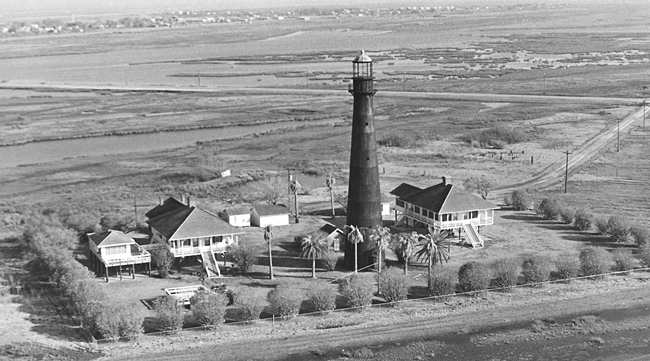
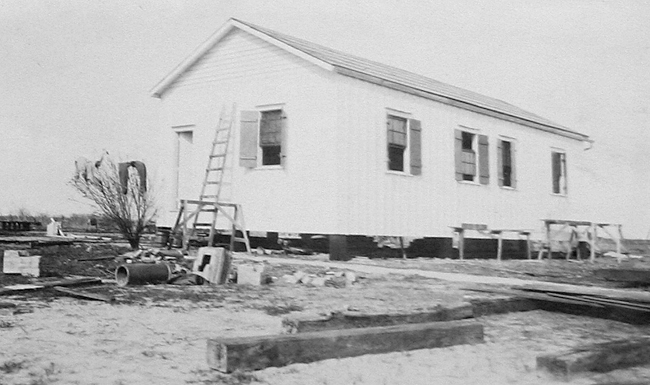
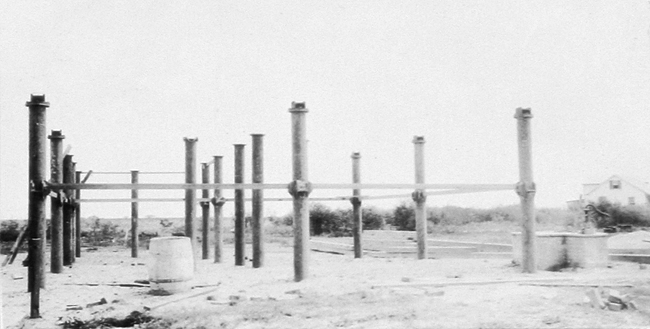
A temporary structure was erected to house the keepers. When the station’s two new dwellings were built, they were wisely placed on iron pilings to keep them above any future storm surge.
Through some miscalculation, Bolivar Point Lighthouse was bombarded in dense fog on November 15, 1917 by the three-inch guns at Fort San Jacinto during two hours of target practice. One projectile tore a hole through the tower at a height of about twenty-five feet above the base, while another struck just outside the front yard gate of the assistant keeper’s dwelling.
|
When the candlepower of Galveston Jetty Lighthouse was increased in 1930, the Lighthouse Commissioner recommended discontinuing Bolivar Point Lighthouse. Public outcry prolonged the life of the lighthouse, but a few years later, with the Lighthouse Service feeling the effects of the depression, the iron tower went dark on May 29, 1933.
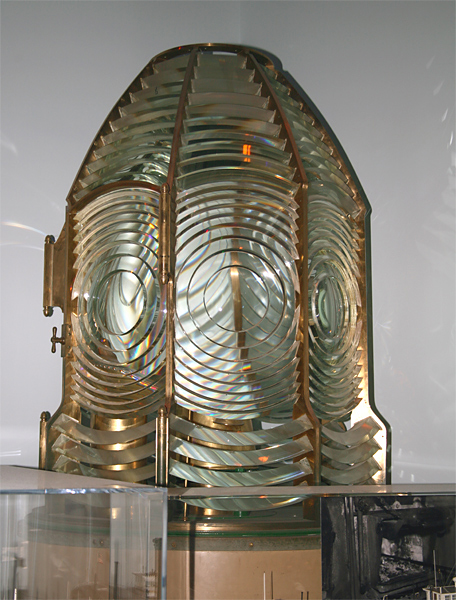
The lighthouse was transferred to the war department in 1935, and in 1947 the war assets administration sold the property for $5,500 to rancher Elmer V. Boyt, whose family still owns the lighthouse. Though the tower is off-limits to the public, the tower’s third-order Fresnel lens can be seen at the Smithsonian’s National Museum of American History in Washington D.C.
In 2000, a century after Keeper Claiborne helped over 100 people take refuge inside Bolivar Point Lighthouse, the Coast Guard named one of its 175-foot buoy tenders the Harry Claiborne to honor the keeper’s many years of faithful service. Appropriately, the buoy tender is stationed in Galveston.
In 2015, Mark Boyt and Michael Maxwell, descendants of the first private owners of Bolivar Point Lighthouse, established the Bolivar Point Lighthouse Foundation to work towards the restoration and preservation of the lighthouse. The foundation contracted a condition assessment of the lighthouse in 2018 that determined $2.5 million would be needed to restore the lighthouse. The top priority was to replace the lantern room, which is in danger of toppling in high winds.
The U.S. Lighthouse Society awarded a $7,500 grant to the foundation in 2022 to be used along with over $20,000 the foundation had raised to prevent water intrustion at the gallery level of the lighthouse. On May 15, 2023, a crane removed the lantern room from Bolivar Point Lighthouse. A team from Architexas cataloged all the removed material for future reuse and replication.
In late 2024, a ribbon cutting ceremony was held to celebrate the 152nd anniversay of the lighthouse as well as the newly installed entry door and the freshly painted black and white daymark.
Keepers:
References