Cape Elizabeth West, ME 
Select a photograph to view a photo gallery
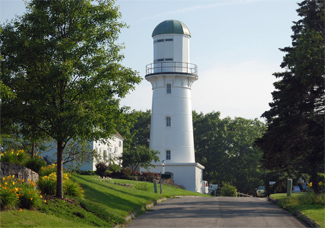
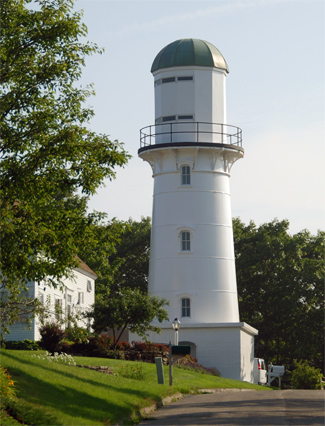
Photo Gallery
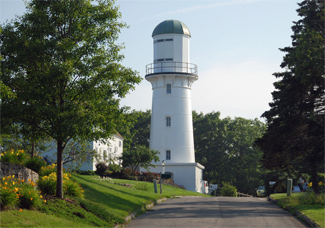
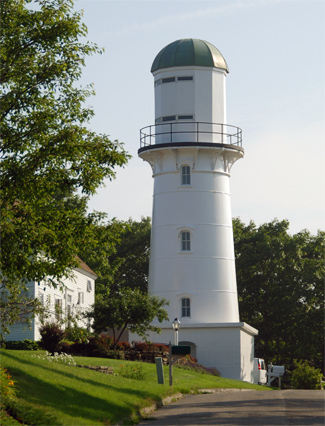
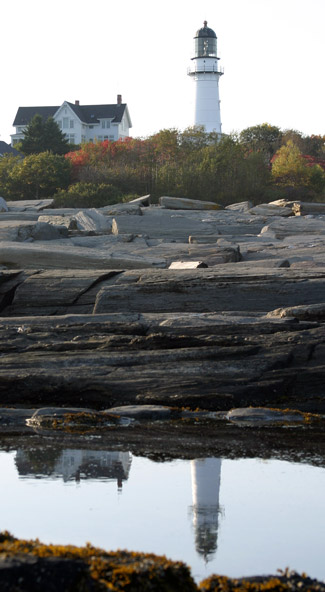
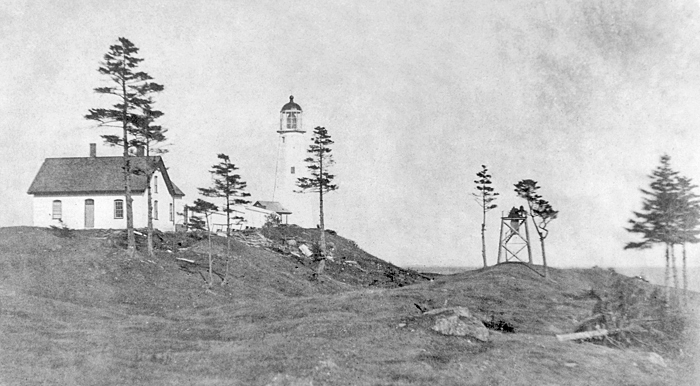
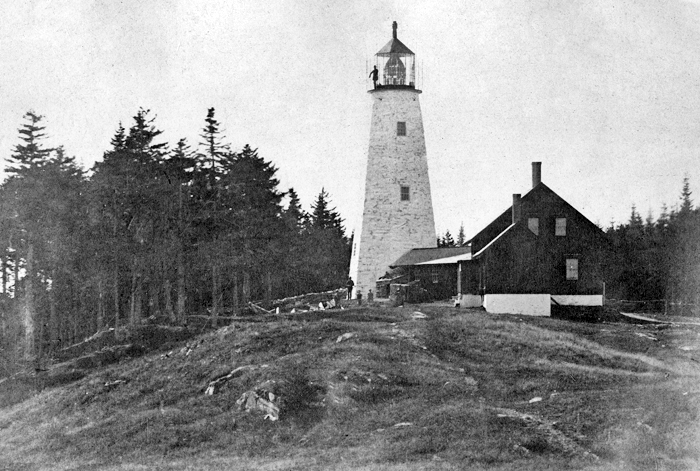
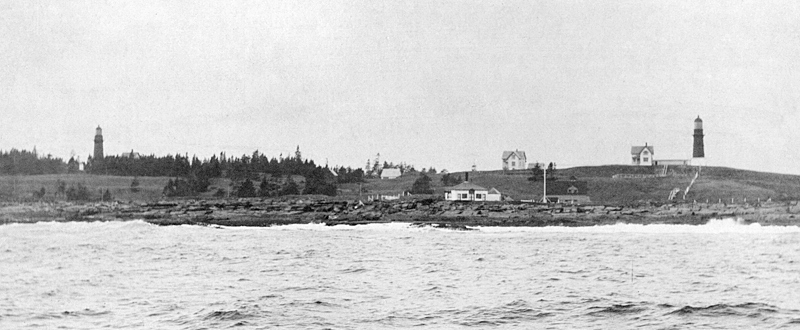
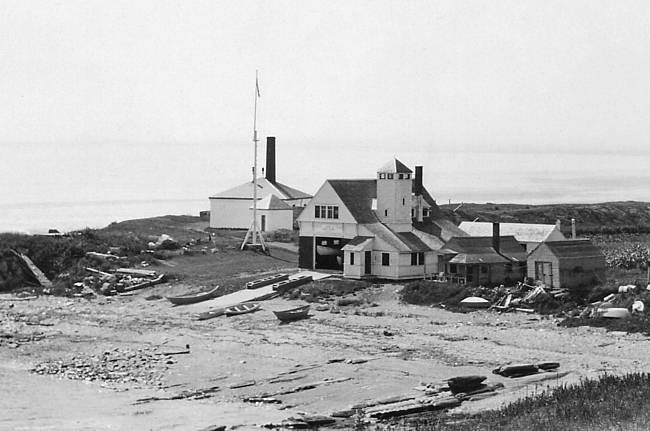
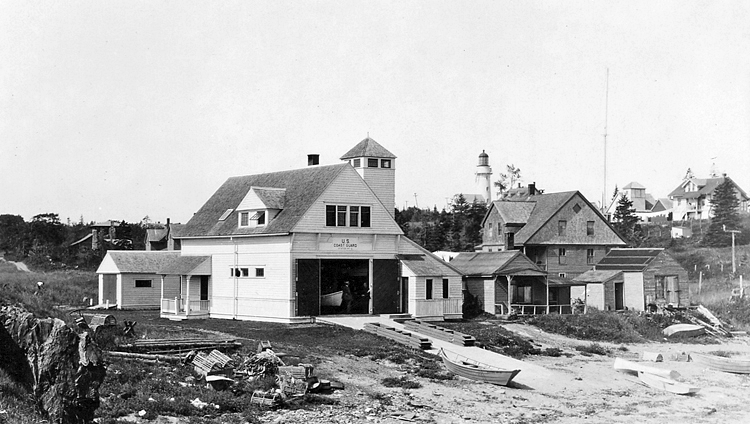
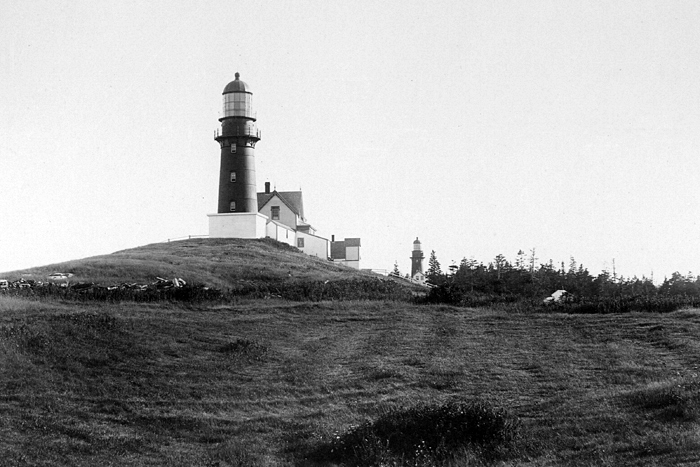
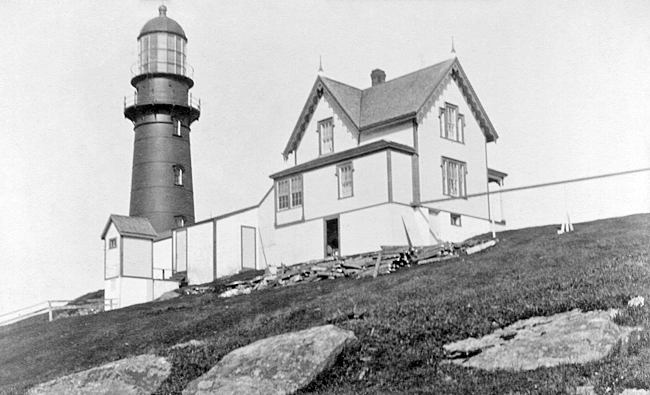
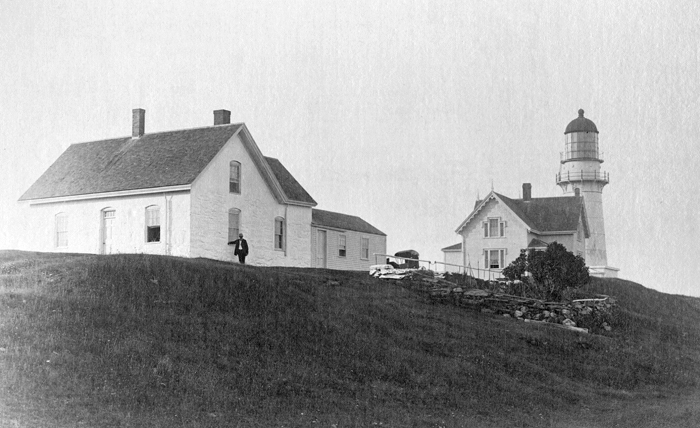
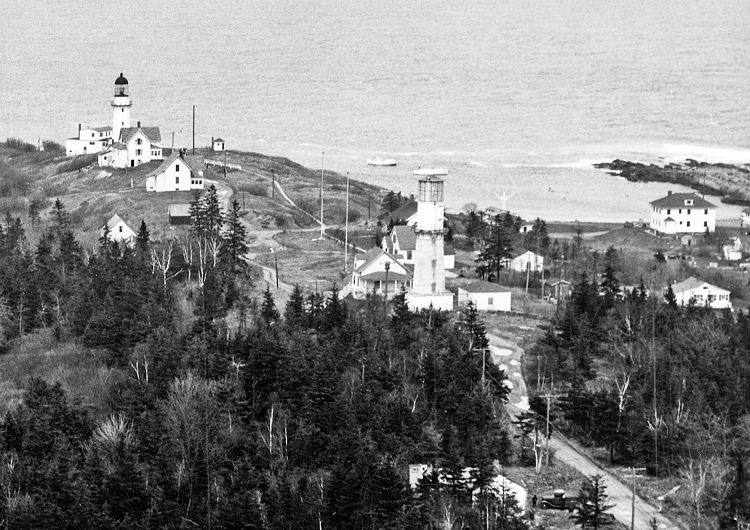
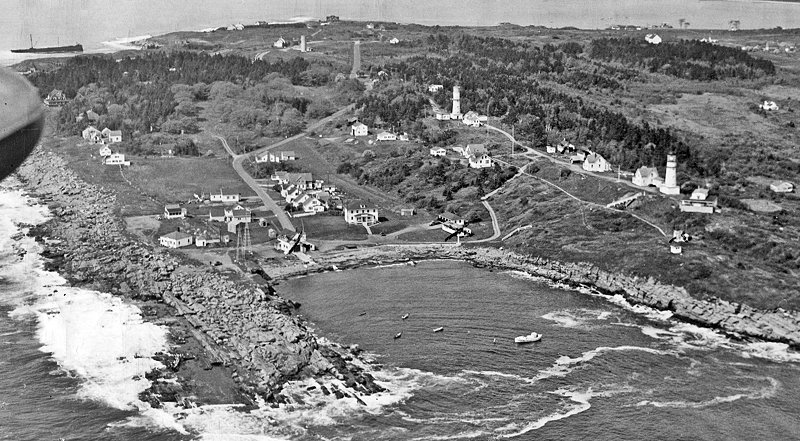
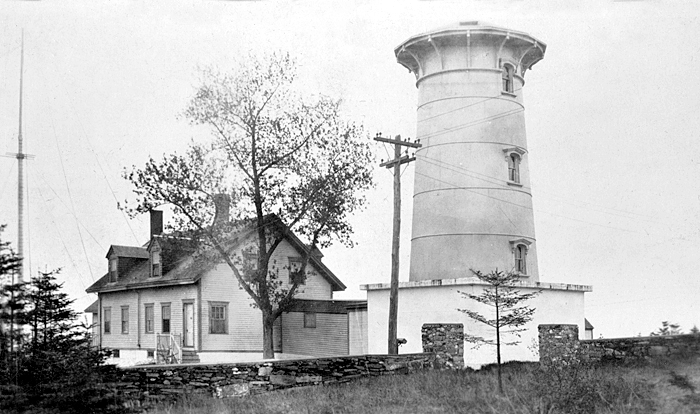
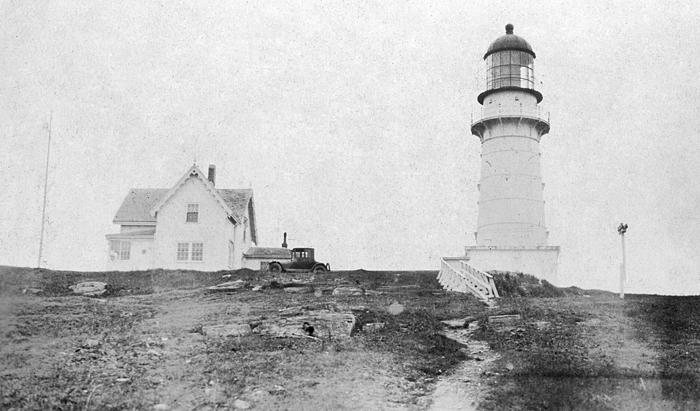
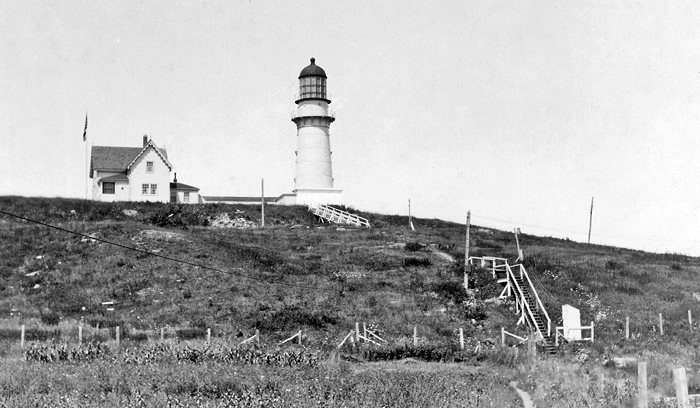
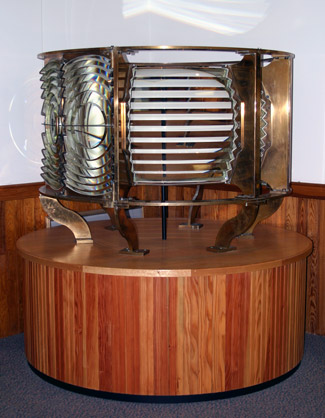
Photo Gallery
Photo Gallery
|
On January 28, 1885, Hanna, suffering from a bad cold, finished his fog signal shift during what he described as “one of the coldest and most violent storms of snow, wind and vapor…that I have ever witnessed,” and was relieved Hiram Staples, one of his assistants. Hanna was so weak that he had to crawl home through snowdrifts in the minus-ten-degree weather. Shortly after falling asleep, he was awakened by his wife’s cries. While putting out the lights in the towers, his wife Louise, who served as the station’s third assistant keeper, spied a wrecked schooner.
Waves poured over the Australia in a perfect deluge, dragging cargo and the captain into the sea and drenching the two crewmen, who took to the rigging. Soon they were nearly frozen. It was impossible to launch a boat, so Hanna climbed over the icy rocks knowing that falling would mean his death. He tied a wrench for weight to a stout rope and futilely tried to toss a lifeline to the men. Hanna said, “I felt a terrible responsibility thrust upon me, and I resolved to attempt the rescue at any hazard.” Meanwhile, Mrs. Hanna set off to find help, and locating a fifteen-year-old boy, she sent him to summon the neighbors.
To increase the chances of getting the rope to the desperate crewmen, Hanna waded into the pounding surf. Irving Pierce was finally able to catch the lifeline. With it securely about him, Pierce jumped into the frigid water, and Hanna dragged him to shore over the ledges. As the ship began to break up, Hanna managed a successful throw to the remaining sailor, Bill Kellar. Just as Hanna was nearing collapse, Assistant Keeper Staples and two neighbors appeared and helped haul Kellar to shore. After the weather cleared a few days later, Pierce and Kellar were taken to a Portland hospital where they recovered. Hanna received a Gold Life Saving medal in 1885, and ten years later, a Congressional Medal of Honor for his earlier Civil War bravery, making him the only person to receive both accolades.
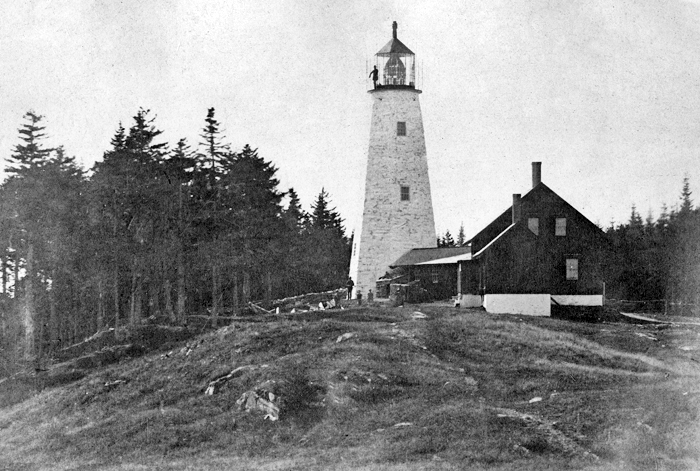
The story of Cape Elizabeth’s Two Lights begins in 1614, when Captain John Smith, who sailed along New England’s shores, gave the appellation to the cape in honor of Princess Elizabeth, King Charles’ sister. After the American Revolution, Portland Harbor became an important port, and a fifty-foot-tall, octagonal, rubblestone day beacon, painted black on the top and white on the bottom, was built on Cape Elizabeth in 1811. Marine traffic continued to increase in Casco Bay. On July 14, 1825, it was possible to see “with the naked eye forty-two sail vessels” and with a telescope atop an observatory over 100 ships, according to a local newspaper.
|
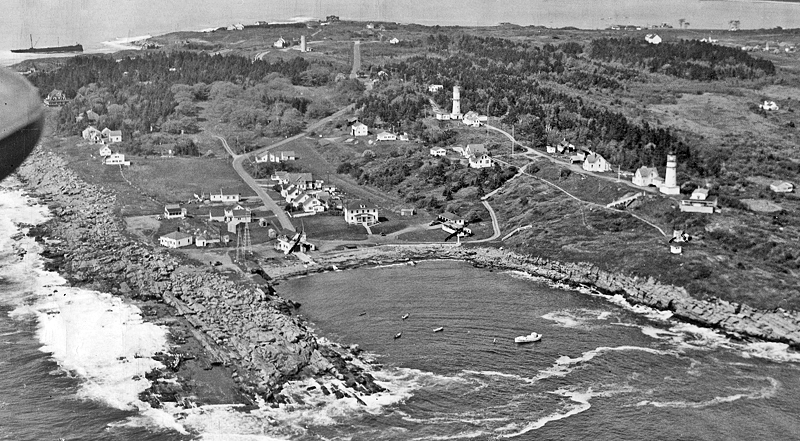
The decision was made to use two lights, a fixed light in the east tower and a revolving light in the west one, so the station would not be confused with the lights at nearby Portland Head or Wood Island. Mason Jeremiah Berry built the twin lighthouses on twelve acres of land purchased for fifty dollars. The towers, spaced by 895 feet and topped by octagonal wrought-iron lanterns housing lamps and reflectors, first shone their lights in October 1828. Problems were noted only one year later when John Chandler, the local lighthouse superintendent, wrote to Pleasanton, “The Light Houses…were built so late in the season that the mortar froze, and whenever rain came, it ran amongst the stone and kept it continually wet.”
President John Quincy Adams selected Elisha Jordan as the first keeper from eighteen men vying for the position. Jordan had to “reside at the station and make it a habit to be home,” for which he received $425 annually over the next six years. His wife was his assistant. Politics cost Jordan his job in 1834. Charles Staples, one who sold his land for the light, came next, but died of cancer in 1835. When the first fog bell was added in 1834, Staples’ salary was increased by fifty dollars.
The deteriorating towers and dwellings were noted by civil engineer I.W.P. Lewis in 1843. He reported bad mortar, leaky roofs and walls, that the buildings were laid on bare rock, the woodwork was rotting, there was no fresh water well, the west tower’s rotating light mechanism was defective, and the fog bell could not be heard above the surf without the aid of an offshore wind. Keeper George Fickett, confirmed all this, adding that he didn’t have a boat and the distance between the towers made his work tough, especially when snow filled the valley between them.
Pleasonton may have pressured Fickett to recant his report of conditions at the station, as Fickett wrote that upon seeing his printed statement, he noticed “several important errors”: There were no leaks, the woodwork was in good order, and he’d always had a big boat. Keepers elsewhere also retracted negative statements. However, when the Lighthouse Board ad hoc committee conducted an inspection and found many lights in dire straits, including Cape Elizabeth’s Two Lights, the U.S. Lighthouse Board was given responsibility for all lights.
Keeper William Jordan complained in 1852, “I have to hire a boy during the summer season, and a man during the winter months, and, if I did not do so, could not faithfully keep things in order.” His yearly salary was $500, and he requested a raise of $100 to cover the help. After being appointed keeper in 1853, Nathan Davis gained an assistant the following year, and a second one was added a few years later. In 1854, a new fog bell was installed at Cape Elizabeth, and its old bell was relocated to Portland Head. The following year, the eastern tower was lined with bricks and received a cast-iron staircase and new lantern.
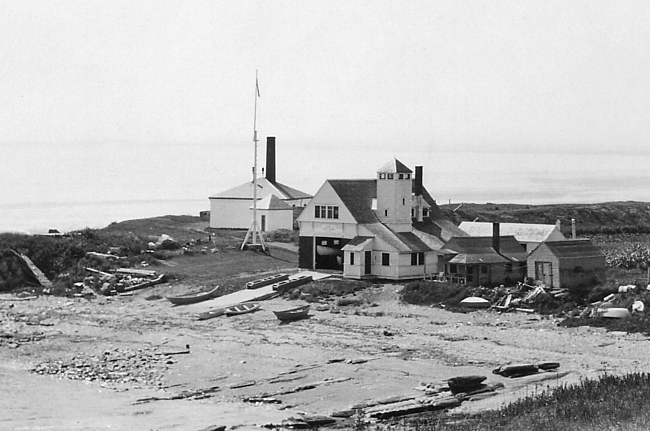
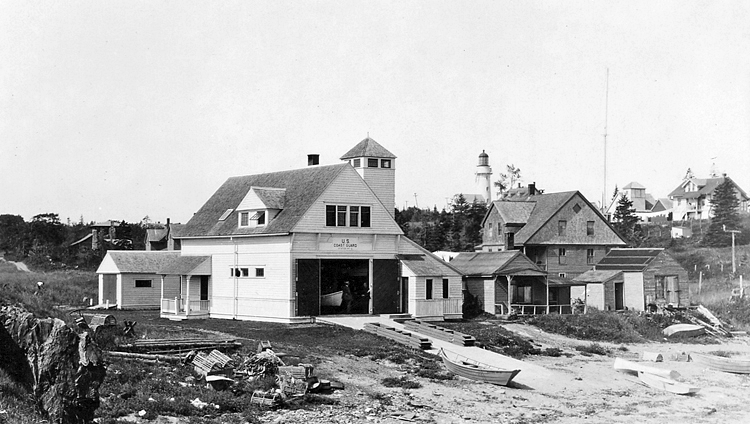
For economy and visibility, the station’s appearance changed several times, sometimes in color and sometimes by lighting only one light. In 1855, the west light was extinguished, and the east light fitted with an occulting third-order lens, but this change was abandoned after just eight months. In 1865, the west tower gained a big vertical red stripe and the east tower four horizontal red bands. The west light was discontinued in 1883, but again relit after complaints. Finally, in 1924, the government changed all twin light stations to single lights, and the west light permanently went dark.A steam fog whistle was installed at Cape Elizabeth in 1869, and in 1875, a second-class siren, which had been constructed as an experiment, was added to the station after proving a success. A thirty-two-foot-square, brick fog signal building was erected adjacent to the nearby lifesaving station in 1886, and in 1888, its signals sounded 1,117 hours, using 71,500 pounds of coal. Both the whistle and siren were used at the station, until a second whistle replaced the siren in 1901. When the fog signal was changed to an air diaphone in 1929, an unsympathetic lighthouse superintendent, Capt. C. E. Sherman, told a sleepless man that the new signal shouldn’t be any more annoying than the old one once people got used to it. The Lighthouse Service did, however, install a silencer on the exhaust pipe for the oil engines that ran the plant as it was “very loud and extremely annoying to the residents in close proximity to the station.”
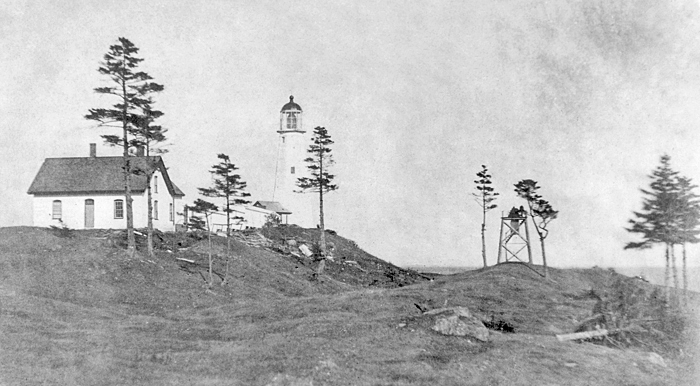
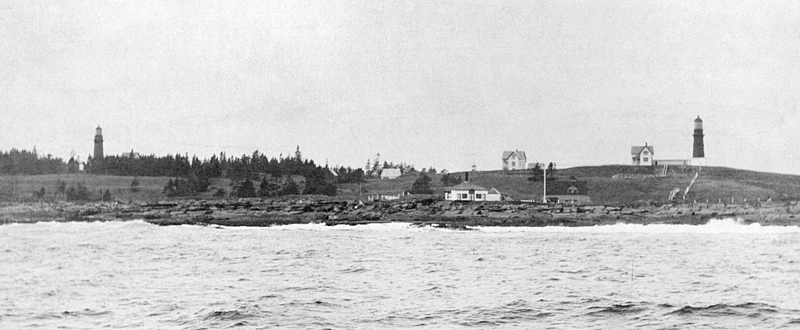
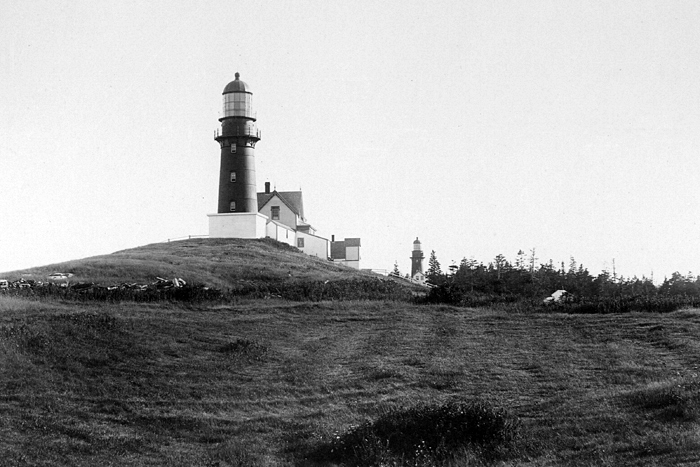
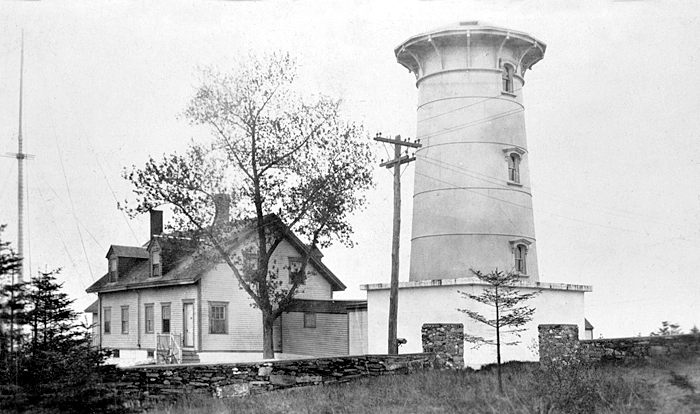
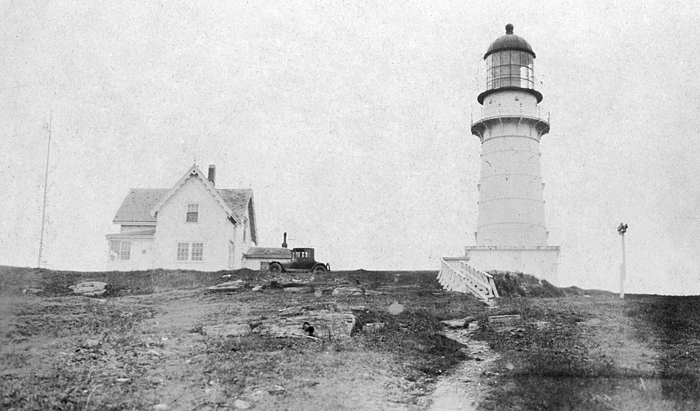
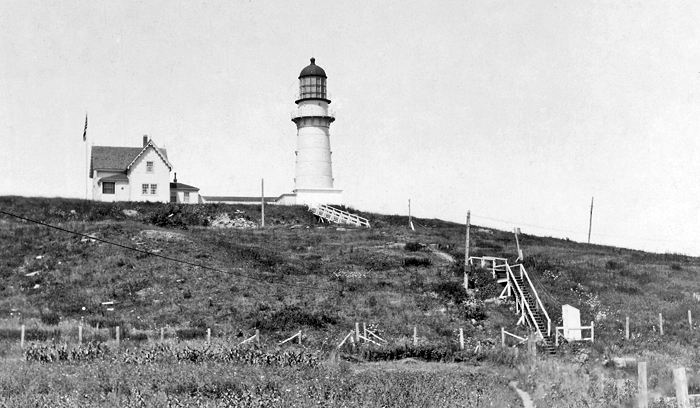
A $30,000 appropriation was made in 1873 for rebuilding the western tower, but this money proved sufficient to fund the erection of two matching sixty-seven-foot, brick-lined, cast-iron towers set 923 feet apart and featuring elegant Italianate details. A second-order revolving Fresnel lens remained in use in the west tower, while a new fixed first-order Fresnel lens replaced a fixed second-order lens in the east tower. These iron towers were originally painted brown.
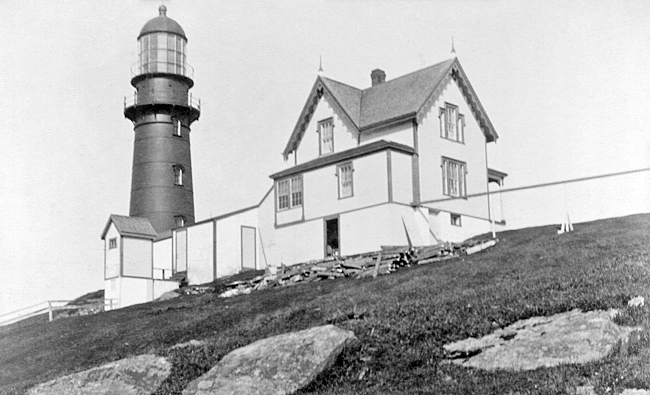
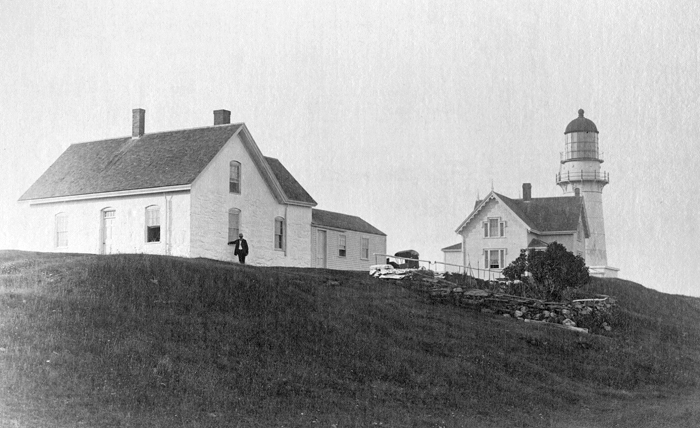
In 1878, a new wood-frame, one-and-a-half-story dwelling was built for the principal keeper near the east tower, and the nearby old stone dwelling was repaired. At this time, Keeper Marcus Hanna and his wife Louise, the station’s third assistant keeper, lived in the new dwelling, while the second assistant keeper lived in the stone building, and the first assistant keeper lived in a frame dwelling near the west tower.
A frame dwelling replaced the old stone dwelling in 1890. After Keeper Hanna resigned in 1888, the station was staffed by four families instead of three, and the Lighthouse Board requested funds so a fourth dwelling could be built near the west tower. After requesting funds for a new dwelling for a decade, money was finally provided to enlarge the dwelling near the west tower in 1901 so it could accommodate the first and third assistants.
|
In 1924, the east light was changed from a fixed white, incandescent oil vapor light to a group flashing white, electric incandescent light, and the light in the west tower was discontinued. To affect this change, a fixed, third-order lens formerly used at Matinicus Rock was installed in the west tower, while that tower’s second-order lens was sent to New York so it could be modified before being installed in the east tower. The rebuilt lens produced a group of six flashes followed by seventeen seconds of light in every thirty seconds.
In January 1934, sixty-five-year-old Keeper Joseph H. Upton went up the station’s tower about 9:30 p.m. to activate an auxiliary light in place of the main light that had failed. When Mrs. Upton awoke two hours later and couldn’t reach her husband by telephoning the tower, she began a search for him and discovered him unconscious with a fractured skull where he’d fallen at the base of the east tower. He was taken to a Portland hospital but passed away the next day from his injuries. Some claim that the ghost of an older man in a lighthouse uniform seen near the tower is Upton’s spirit.
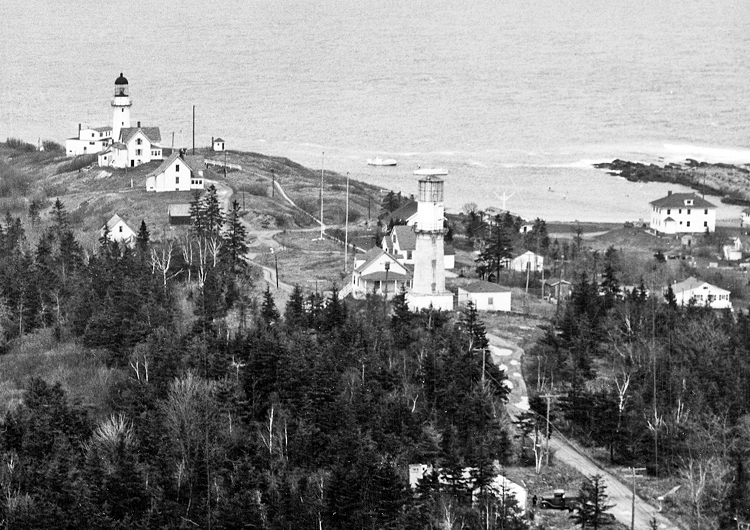
During World War II, the west tower became an observation point after a cylindrical turret was installed atop the tower, which had had its lantern room removed after being discontinued. It was auctioned to the highest bidder in 1959. In 1971, actor Gary Merrill, ex-husband of Bette Davis, purchased the west tower for $28,000. Merrill sold it in 1983, and a new house was built next to it.
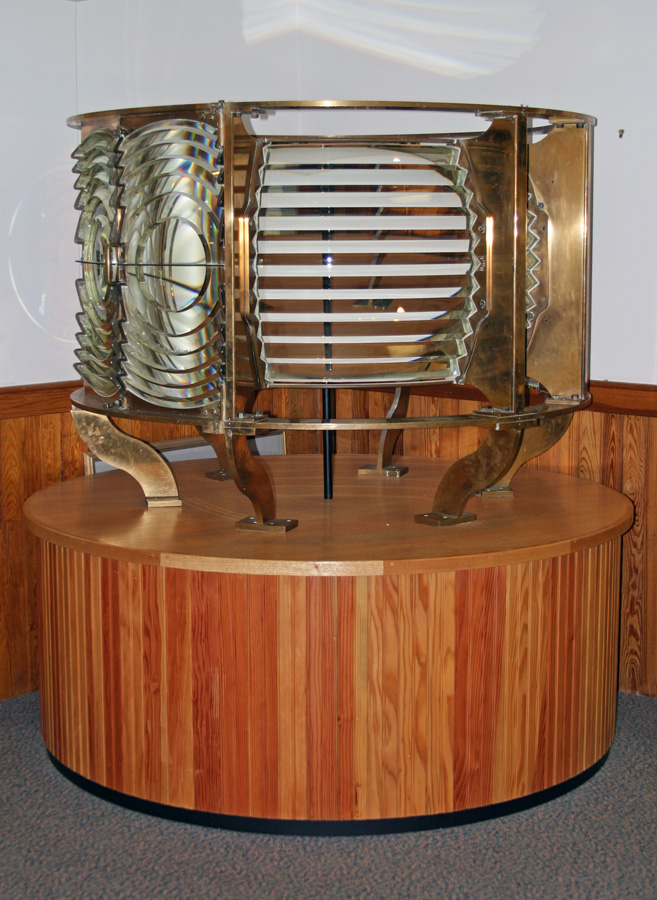
The 1878 keeper’s house adjacent to the east tower has been privately owned for several decades and was purchased by William Kourakos for around $450,000 in 1995 after the previous owner died. Amid some controversy in the 1999, that house was remodeled and enlarged making it markedly different from the dwelling immortalized in Hopper’s paintings. The east light was automated in 1963, and its 1,800-pound second-order Fresnel lens was removed and placed on display at the Cape Elizabeth Town Hall. In 2013, the Town of Cape Elizabeth gave up the lens when it needed to reconfigure its town hall. The lens was going to be returned to the Coast Guard, but the Maine Maritime Museum agreed to accept the lens so it could remain in Maine. The lens is now on display in a replicated of the original lantern at the Maine Maritime Museum.
In 1997, the Coast Guard named its fourth Keeper Class coastal buoy tender Marcus Hanna, in honor of the celebrated keeper of the lights on Cape Elizabeth. The vessel was built in Marinette, Wisconsin but was appropriately homeported in South Portland.
The east light is maintained by the Coast Guard and remains an active aid to navigation, although the tower itself was licensed to the American Lighthouse Foundation in 2001. In 2008, J.B. Leslie Masonry Company of South Berwick, Maine repaired the concrete base of the east tower thanks to $9,000 donated by William Kourakos of Cape Elizabeth and $2,500 provided by New England Lighthouse Lovers. In 2016, the American Lighthouse Foundation gave its Keeper of the Light Award to William Kourakos, the owner of the keeper’s dwelling, for his longtime support, including $52,000 to repaint the east tower in the fall of 2014.
Keepers:
References