Cape Flattery, WA 


Select a photograph to view a photo gallery
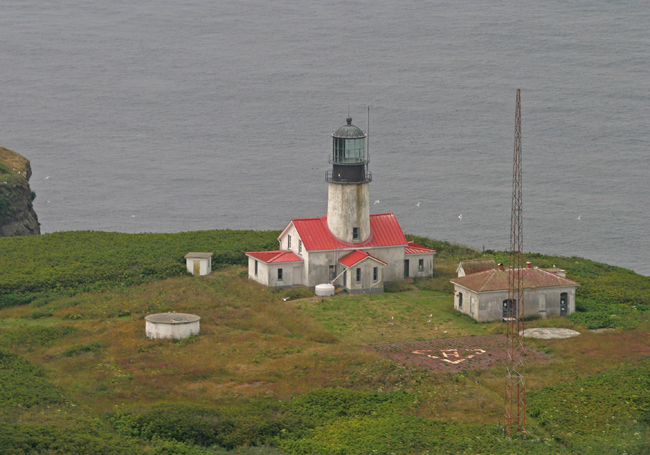


Photo Gallery
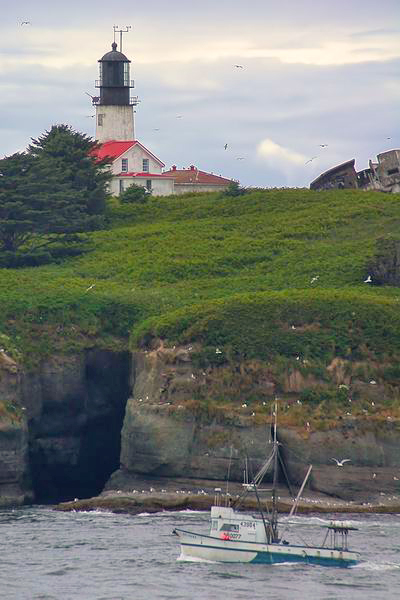
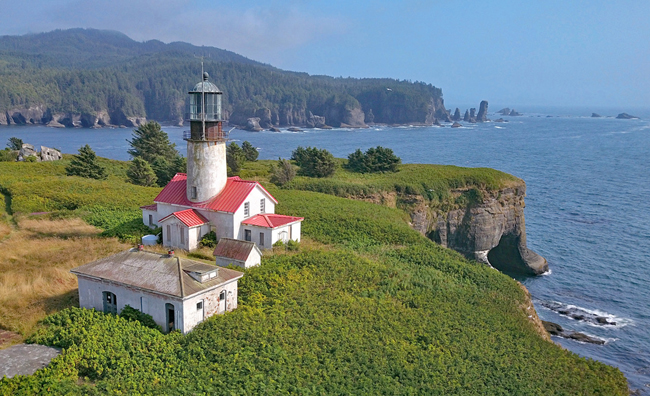

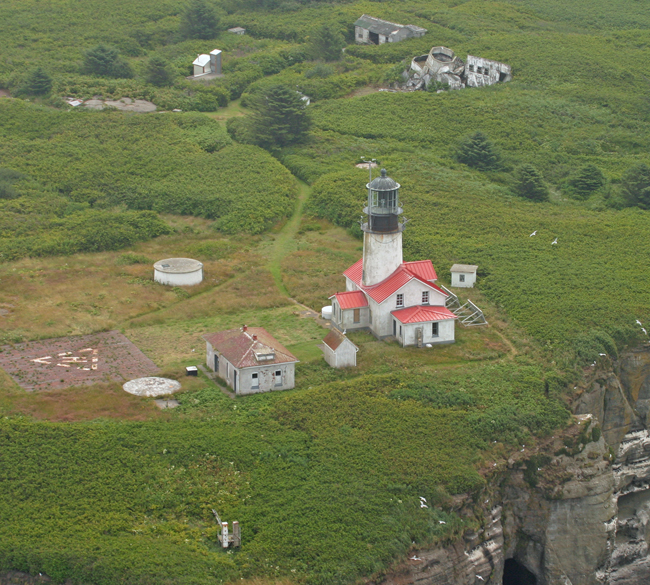
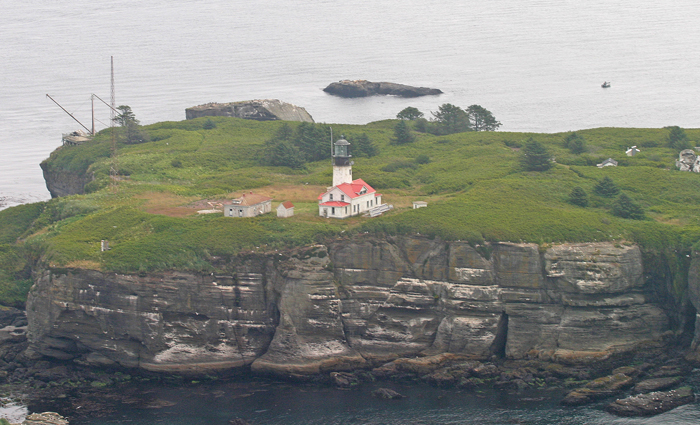
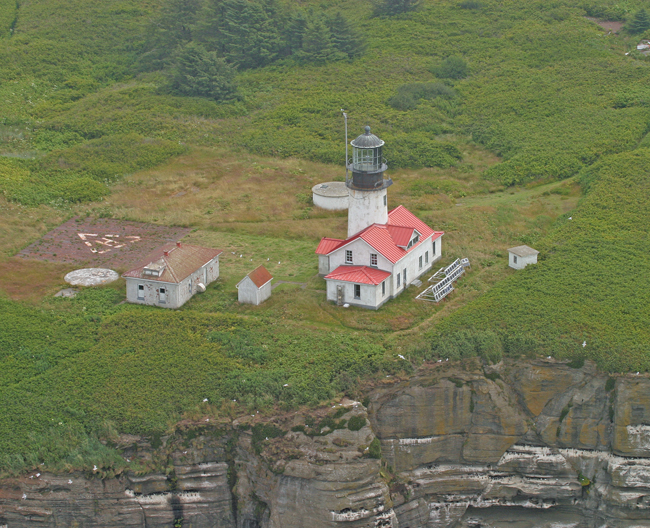
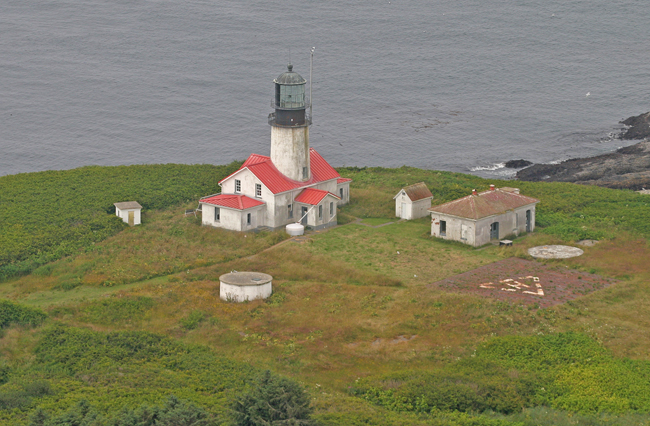
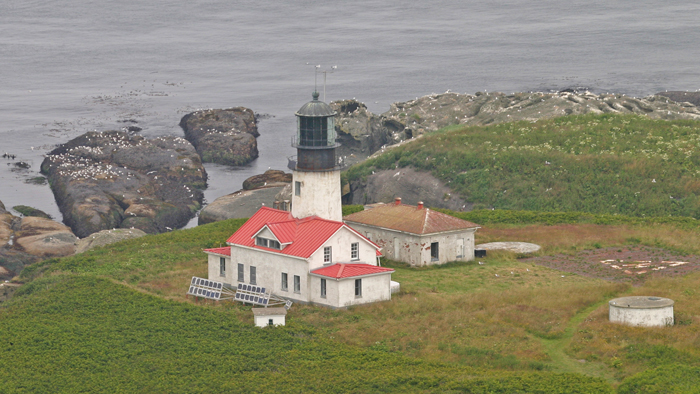
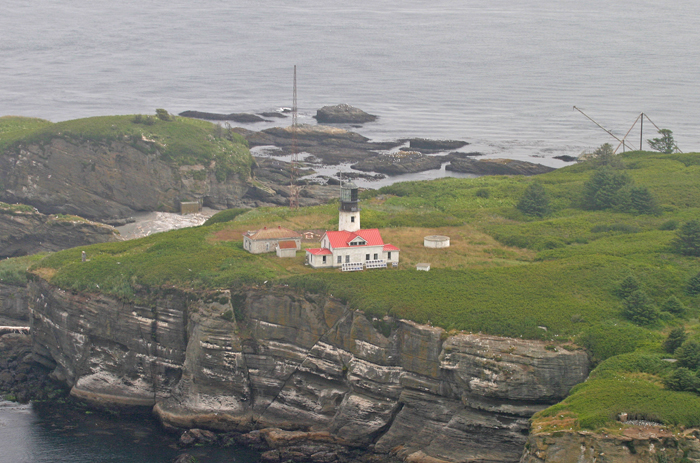
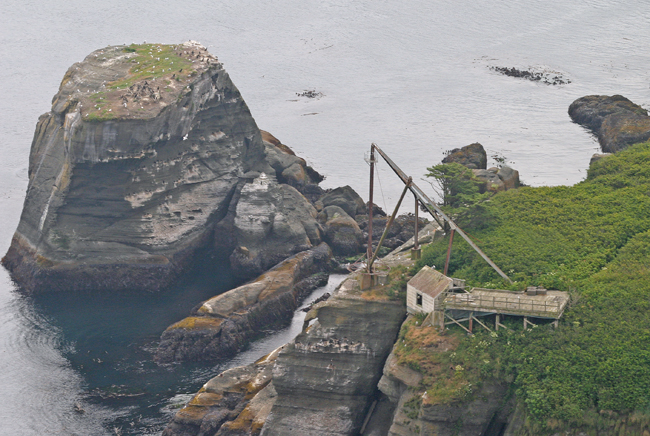
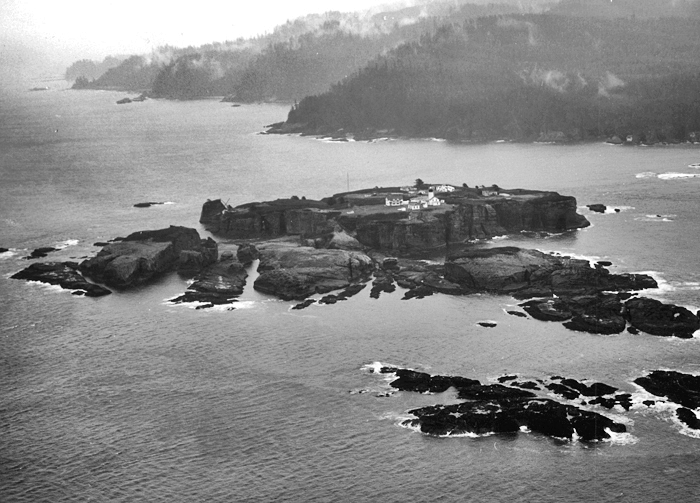
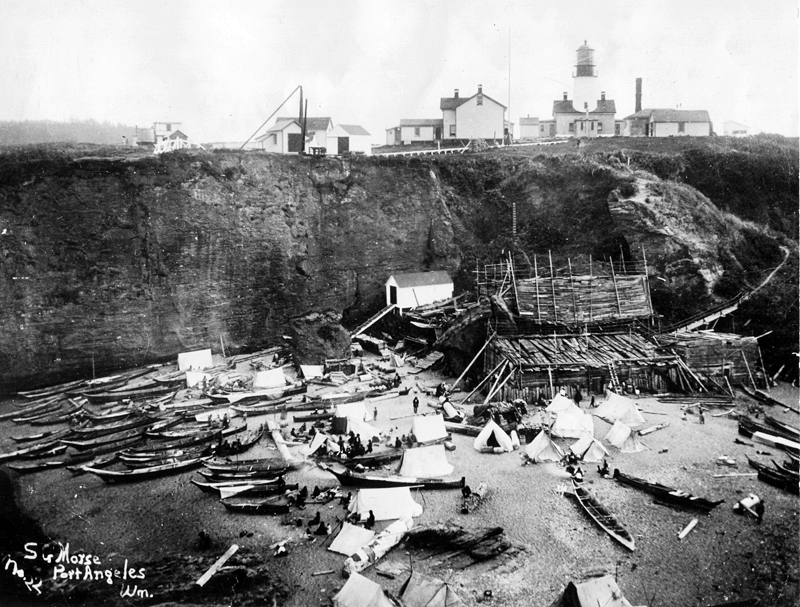
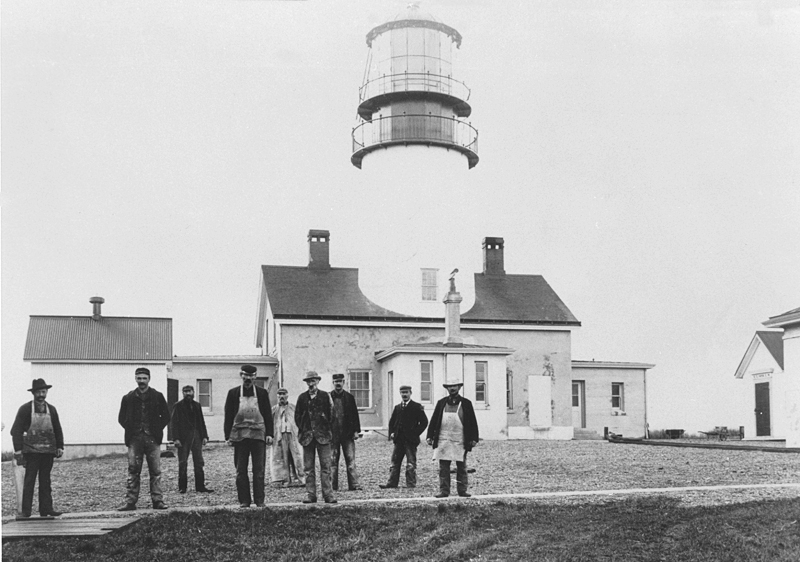
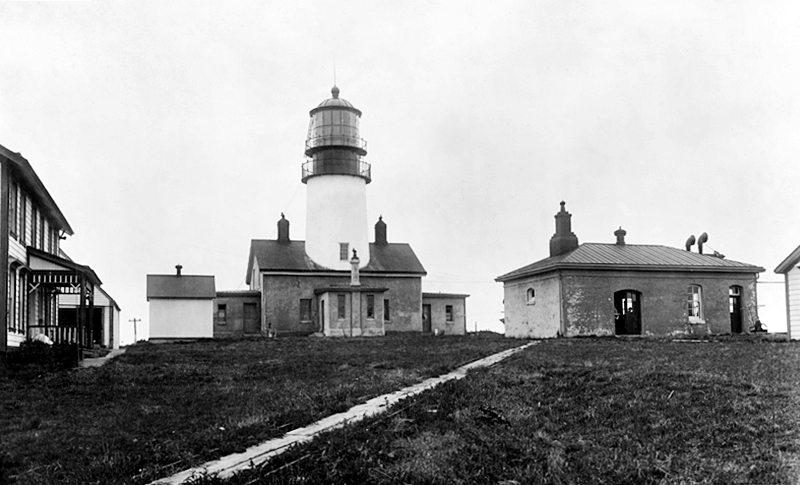
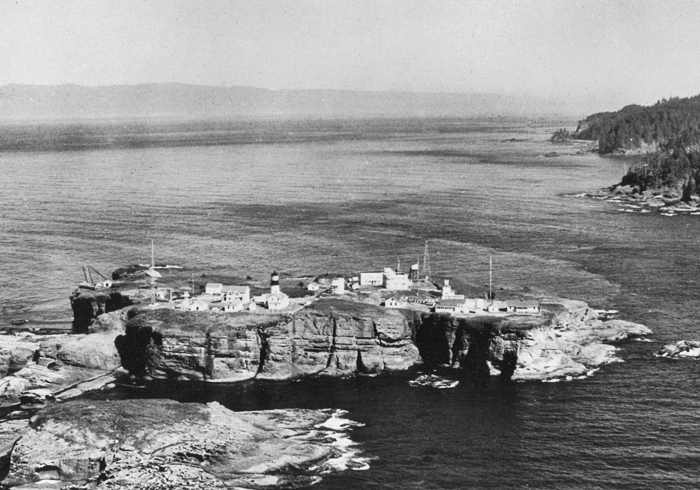
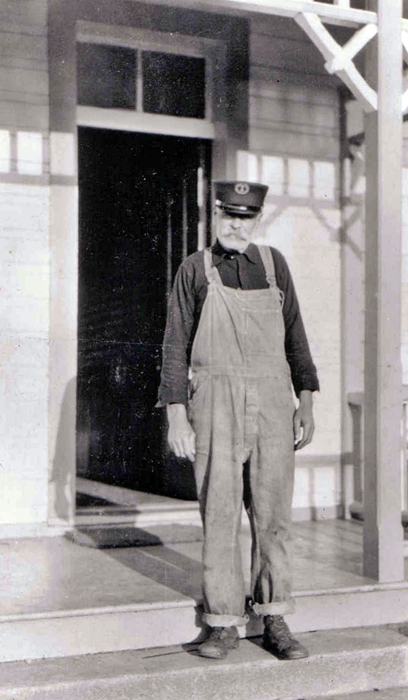
Photo Gallery
Photo Gallery
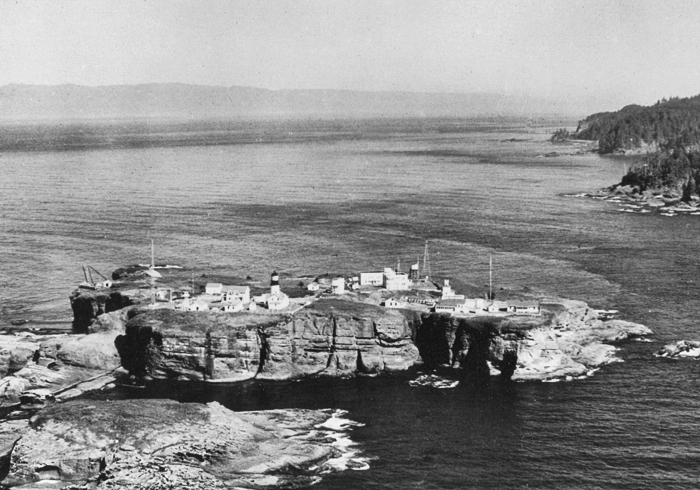
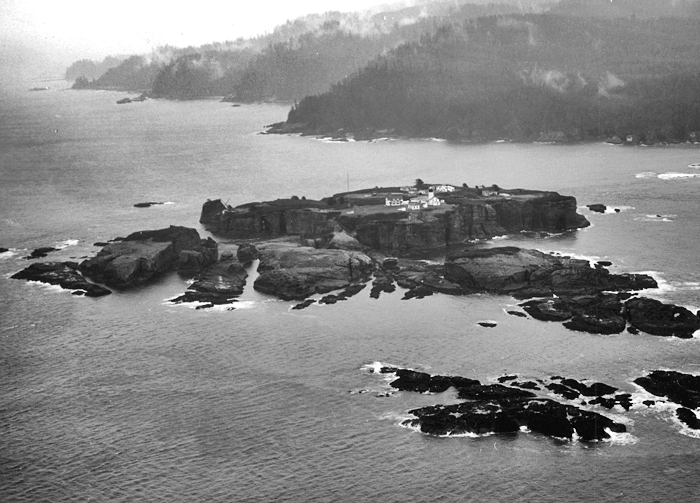
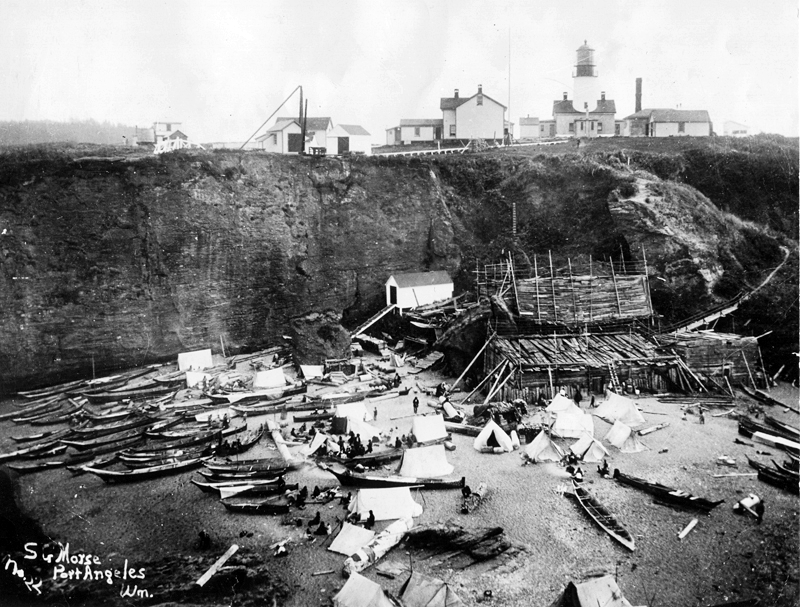
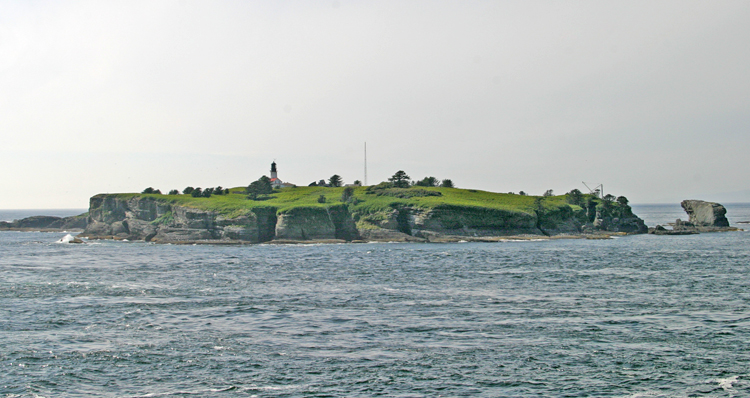
In 1788, Captain John Meares, one of several explorers who managed to confirm the existence of the Strait of Juan de Fuca, visited a small island a half mile off Cape Flattery where he encountered the “surly and forbidding” Tatooche, chief of the Makah Indians. Meares named the island after the chief who had been using the island as a summer base for hunting whales, and catching and drying salmon for years.
|
A lighthouse is much needed also at Cape Flattery and I would recommend that it be situated on Tatoochi Island, a small island almost touching the Northwest extremity of Cape Flattery … to vessels bound from seaward a lighthouse on this island would be of much assistance. It would enable them to enter the straits, when the absence of a light would frequently compel them to stay at sea until daylight.
Congress allocated $39,000 in 1854 to construct lighthouses on Tatoosh Island and on New Dungeness Spit. These two lights were part of the second batch of eight lighthouses authorized for the west coast.
Although the government had paid $30,000 for all of the Makah’s traditional lands except a small reservation at Neah Bay, the construction crew did not receive a warm reception upon their arrival. An outbreak of smallpox had killed several hundred of the Makah Indians in 1853, and the Makah were understandably reluctant to have more disease bearing “Bostons” around. The Indians continued to use the island during the summer, prompting the construction workers to build a blockhouse of rough-hewn timbers for protection before beginning work on the lighthouse. One member of the work crew was always on guard duty, but other than a few missing supplies and tools, there were no problems with the Indians.
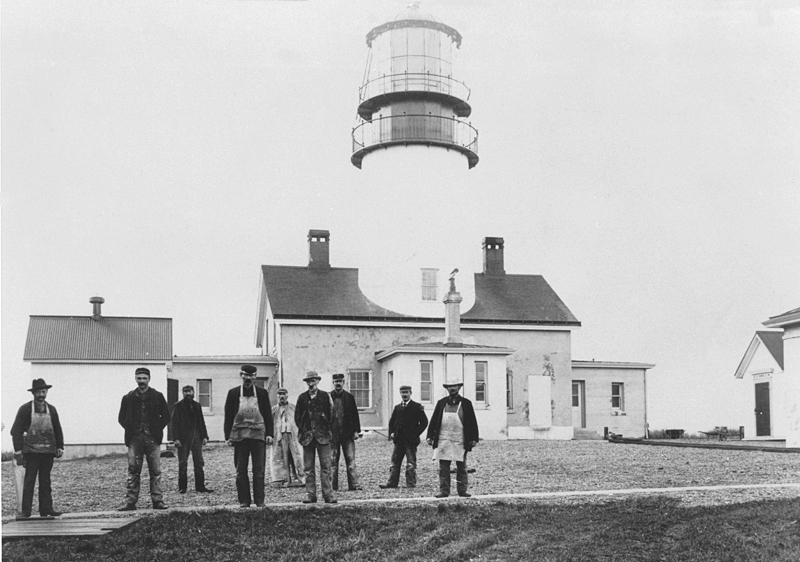
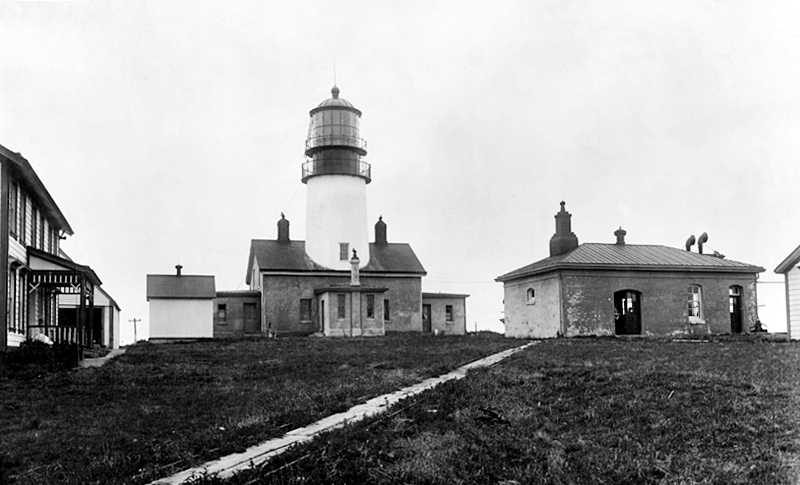
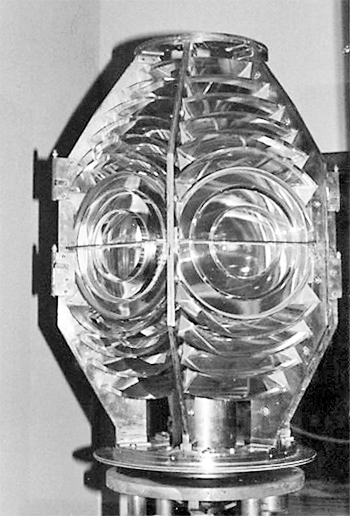
Like most of the early west coast lighthouses, the construction plans called for a one-and-a-half-story, stone dwelling with a circular brick tower protruding through the roof. This design permitted the keepers to access the tower without having to be exposed to the possibly harsh weather that might exist outdoors. With a height of sixty-six feet, the tower of Cape Flattery lighthouse was taller than most of the Cape-Cod-style lighthouses, and it was also large enough to house a first-order Fresnel lens. The Louis Sautter lens, found to be too large for the Point Loma Lighthouse for which it was ordered, was first illuminated in the tower on December 28, 1857, two weeks after the New Dungeness Lighthouse. Cape Flattery’s fixed white light had a focal plane of 162 feet above the sea and was the fourteenth light established on the west coast.
During the first years at the lighthouse, several keepers resigned due to poor pay and the miserable conditions they encountered on the island. A visitor to the island in 1861 noted the dilapidated state of the lighthouse. The roof leaked, moss grew on the interior walls, and winds blowing across the top of the chimney caused smoke to back up in the dwelling. The keepers were given an extra amount of fuel to help dry the house out, and the district engineer was asked to devise a permanent remedy to the problem.
|
A fog signal building with a twelve-inch steam whistle was completed on the island during the summer of 1872, along with a 33,000-gallon cistern fed by a water shed of 3,000 square feet to supply the necessary water. Due to lack of water, the whistle could not be placed in operation until November 1, 1872, after the rainy season had begun. In October 1895, the keepers were forced to sound the fog signal once every five minutes instead of each minute as their water supply was nearly exhausted due to lack of rain that year.
In 1873, the lighthouse dwelling was described as “not fit to be occupied, as the walls are damp and moldy nearly all the year, and it is totally inadequate for the accommodation of the four keepers at this station.” After Congress provided $18,000, a new duplex, with six rooms in each side, was built on the island in 1874, and the rooms in the lighthouse were used for storage. When families arrived at the station, more living space was required, and the dwelling in the lighthouse was made habitable once again in 1894. The island’s population increased when the United States Signal Service built a four-room cottage on the island in 1883 and erected a flagstaff for displaying storm signals.
Repairs to the fog signal were delayed for several years with the expectation that a new signal would be built on Middle or West Island where it could be more distinctly heard by passing vessels. The planned relocation was apparently abandoned as a new brick fog signal was built on Tatoosh Island in 1897. Around 1910, the fog signal was changed to an air siren, and then in 1917, it was changed to an air diaphone.
Though living conditions on the island improved over the years, it was still an isolated place. To supplement the lighthouse tender deliveries, the keepers hired local Indians to transport people, supplies, and mail to the island. The Indians received $1 per trip in calm conditions, and that sum was doubled if the seas were rough. One fearless Indian named Old Doctor lost three dugouts on the island’s rocks while trying to deliver supplies. It is claimed that a piano and even a cow made it to the island thanks to the Indian’s delivery service.
|
The next story might be a bunch of …, well you’ll see. A seventy-mile-per-hour gale that swept across the island in 1921 sent Keeper John M. Cowan tumbling across the island for some 300 feet. By tenaciously clinging to vegetation growing on the island, Cowan avoided being swept off the island and was eventually able to crawl to safety. The Cowan’s bull, equipped with only its hoofs, was not as fortunate and was blown off the island. The bull was listed in the station’s log as “lost at sea,” but to everyone’s surprise it managed to swim ashore and was rewarded with extra rations.
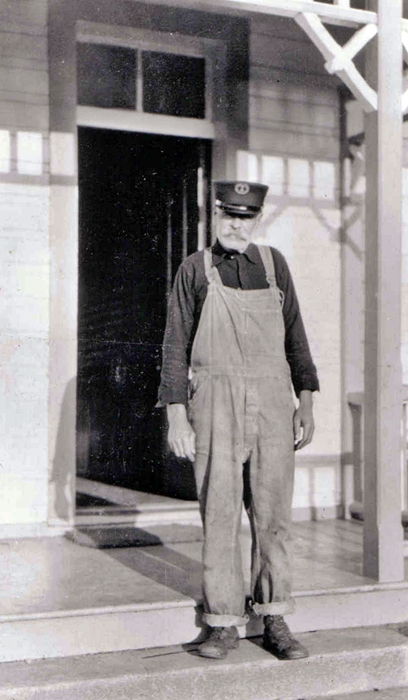
Keeper Cowan arrived at Cape Flattery Lighthouse in 1900 with his wife and seven children, and another child was born to the couple four years later. For ten years, the Cowans sent their children to live with relatives in Portland so they could attend school, but the family was always together on the island during the summer months. The Cowans never left the island during that period, as they had to save every penny to support their children. A school was eventually established on the island, when the families serving at the light, radio, and weather stations had enough children to merit one.
Keeper Cowan is credited with saving the lives of five people while serving at Cape Flattery. One of Cowan’s rescues involved a boat that was traveling between Tatoosh Island and Neah Bay on February 18, 1911. When Cowan saw that the vessel was foundering in heavy seas, he set off in the storm to offer assistance. He managed to rescue two navy radio men, but was unable to save the three other individuals aboard the vessel including his own twenty-one-year-old son Forrest, who was serving as his assistant.
Forrest Cowan wasn’t the only keeper to lose his life while leaving or returning to the station. On October 27, 1900, Assistant Keeper Nels Nelson and Frank Reif attempted to leave the island in a small boat during a storm, and their bodies were found over a week later on a Vancouver Island beach. Thirty-five-year-old Keeper Nelson left behind a wife and a one-year-old daughter.
On September 18, 1934, Second Assistant Keeper Ole Rasmussen rowed two men who had completed repair work on the island’s radiobeacon station out to meet the Neah Bay mail boat. While returning to the island, heavy swells capsized the small boat, and Rasmussen was struck in the head by the craft. After much effort, Rasmussen’s floating body was recovered, but attempts to revive him failed.
Keeper John Cowan served at Cape Flattery Lighthouse for thirty-two years, leaving the station only because he reached the mandatory retirement age of seventy on October 12, 1932. Less arduous assignments had been offered to Cowan during his tenure on Tatoosh Island, but he turned them down preferring to remain on the island. The forty inhabitants of the island were in tears when the Cowans, beloved by all, left the island on October 18.
A fourth-order lens with three flash panels replaced the first-order Fresnel lens in June 1932. A power plant consisting of three 2-½ kW, gasoline-engine-driven generators was also installed on the island that year allowing the station to be electrified. The use of a 750-watt electric incandescent lamp in the new flashing lens increased the light’s candlepower from 13,000 to 300,000. A new double-dwelling for the keepers was completed in 1934.
The weather station on Tatoosh Island was closed in 1966, and its buildings were demolished. The light station was automated in 1977, and the island lost its last year-round inhabitants. A modern beacon replaced the tower’s fourth-order Fresnel lens in 1996.
In 1999, substantial maintenance and repair work was performed on the island’s remaining structures. Windows and rotten beams were replaced, walls were plastered, smoke detectors were installed, and the fog signal was repaired. A fence was rebuilt around the cemetery, which contains the graves of two children, a reminder of the many people who once called Tatoosh Island home.
In September 2009, a three-phase clean-up of Cape Flattery was completed by the Coast Guard. A thirty-foot skeletal light tower topped by a solar-powered LED light was installed on the island in 2008, allowing old generators and fuel tanks to be removed. The decommissioned Cape Flattery Lighthouse has been turned over to the Makah Indian Tribe, who controls the island.
In 2017, the National Trust for Historic Preservation named Cape Flattery Lighthouse a National Treasure, reflecting the lighthouse’s historical significance as a gateway to two countries and an Indian nation.
Keepers:
References