Isla de Mona, PR 

Select a photograph to view a photo gallery
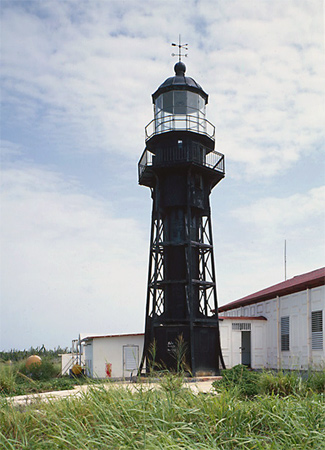
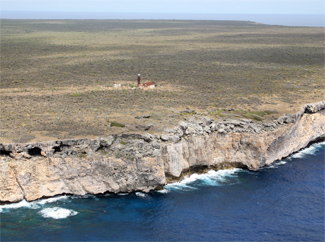
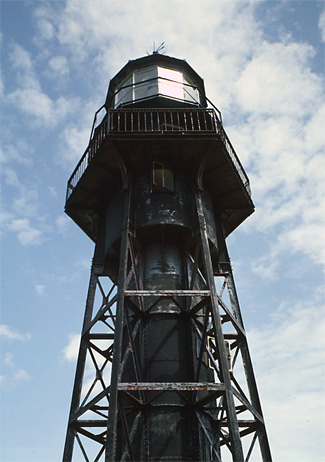
Photo Gallery
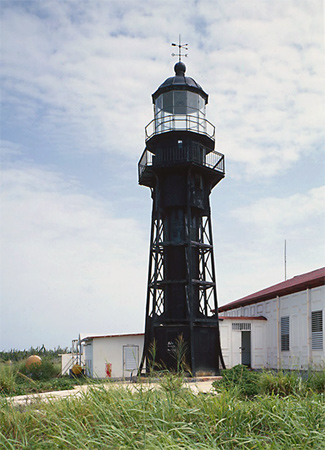
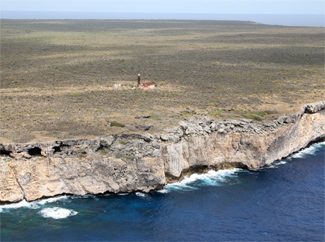
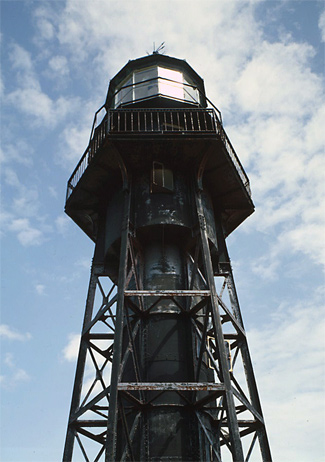
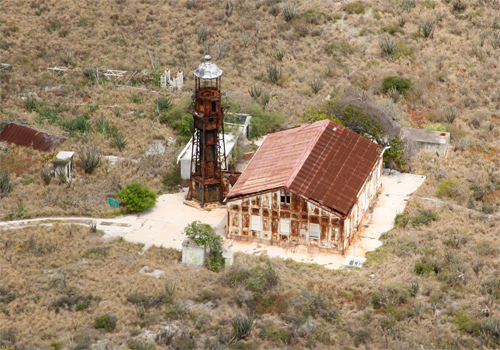
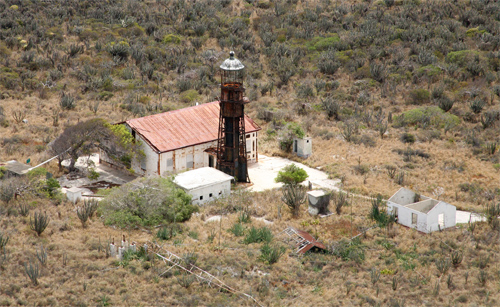
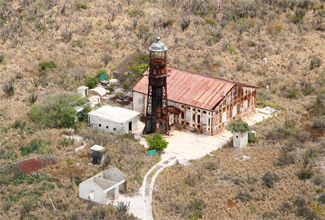
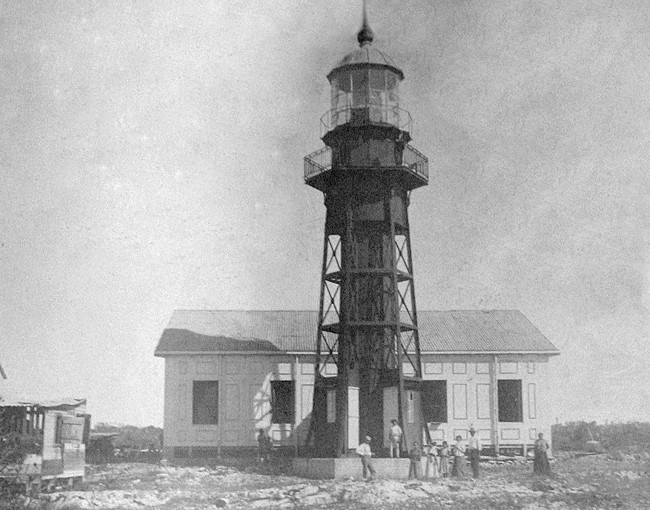
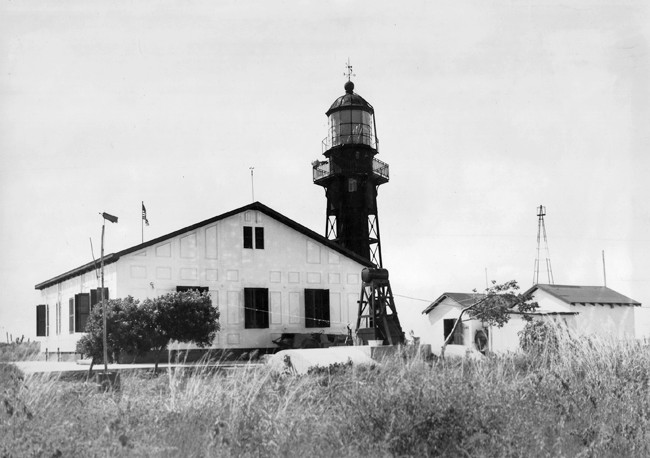
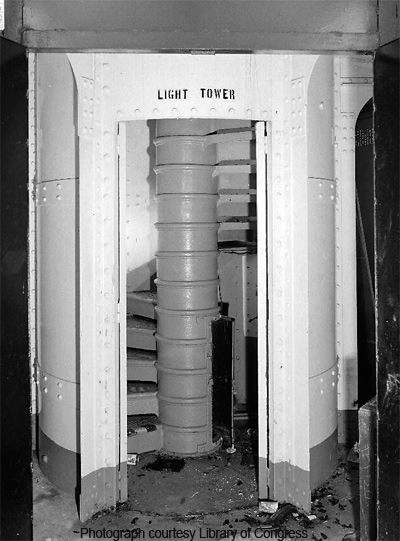
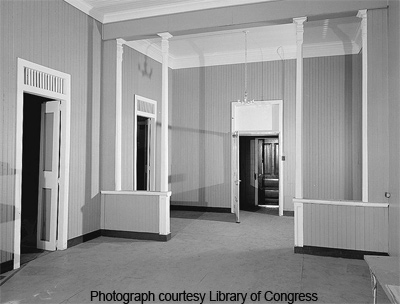
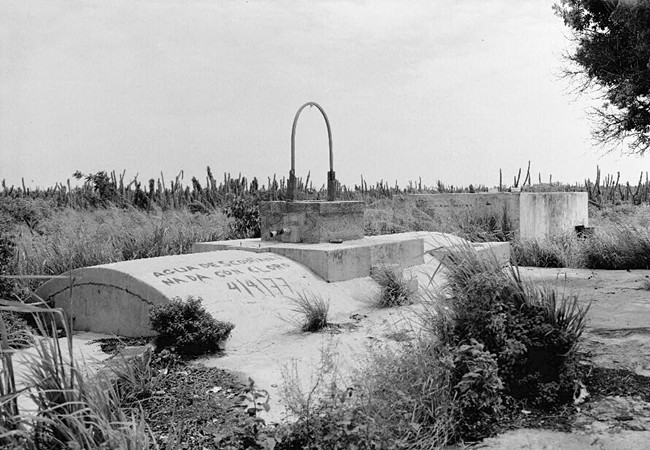
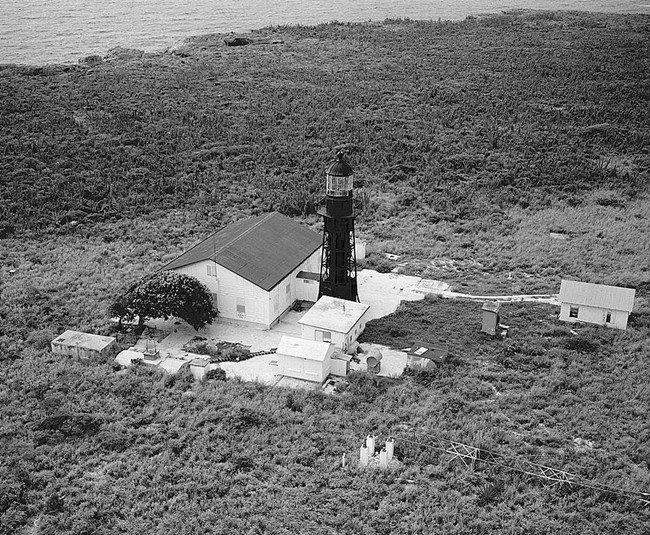
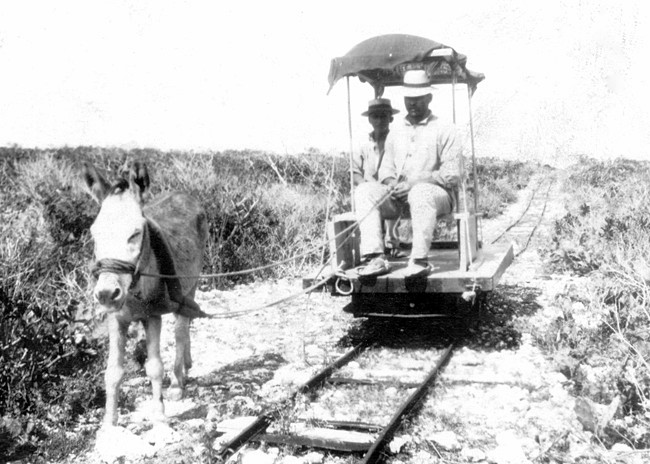
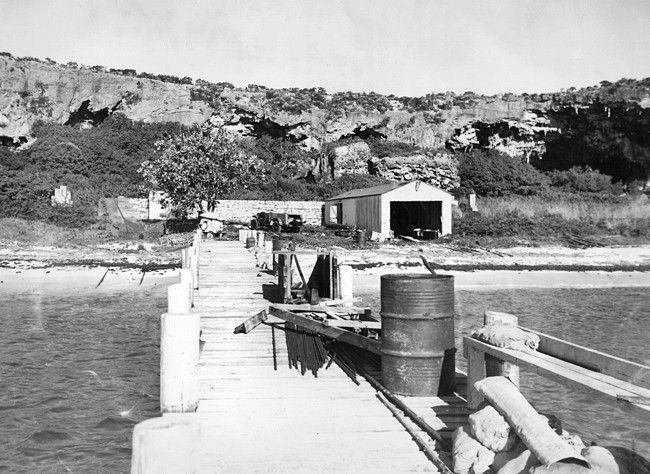
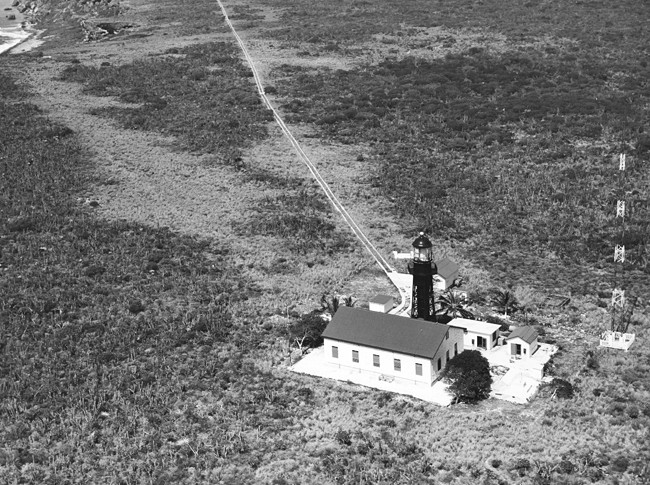
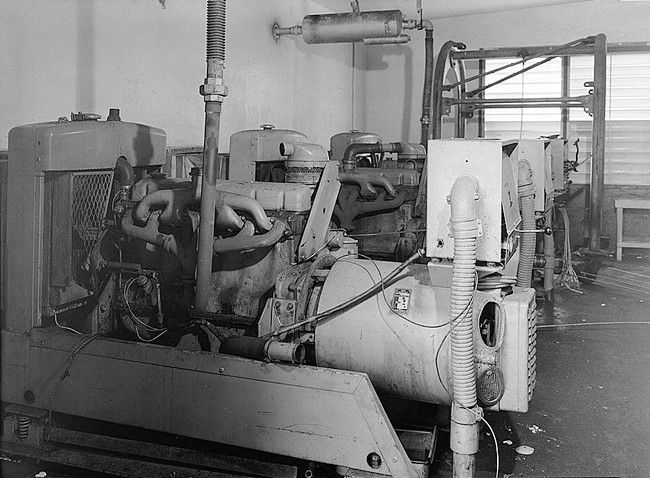
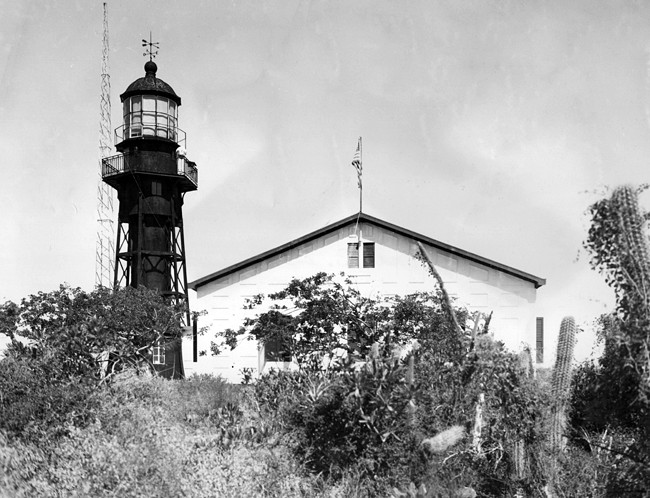
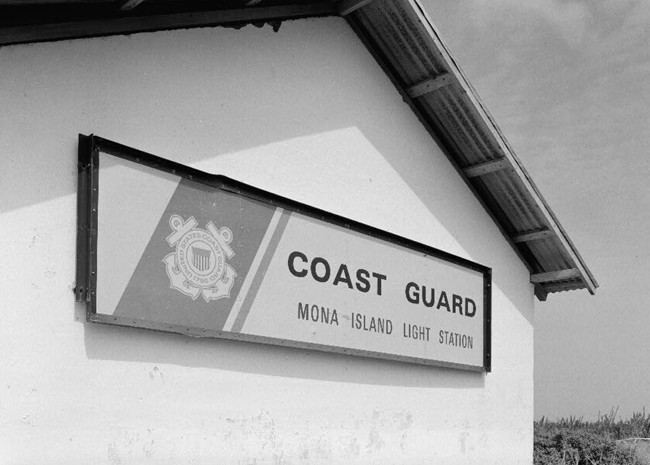
Photo Gallery
Photo Gallery
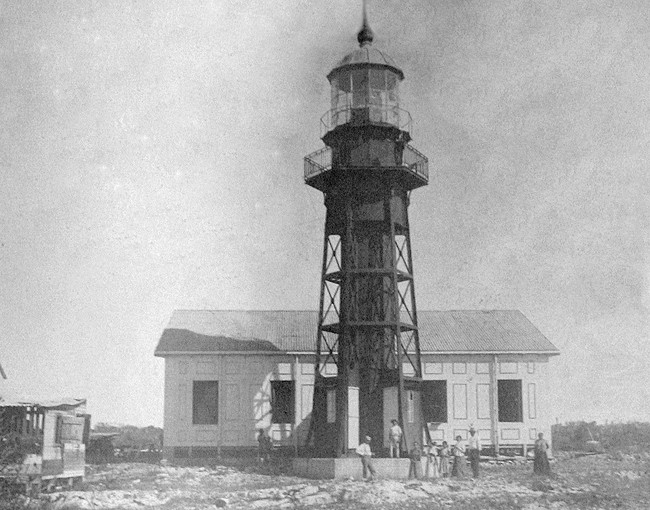
Two sets of plans were drawn up between 1885-1886 for a lighthouse on the eastern cape of Mona Island to help mark Mona Passage, which runs between Mona Island and Puerto Rico. One set of plans called for a second-class light with a range of twenty-two miles that would be displayed from an octagonal masonry tower rising to a height of seventy-five feet. The accompanying keeper’s dwelling was to be 124’ x 79’ and contain twenty-five rooms built around a central courtyard. This structure, with walls up to three feet thick, was intended to house three keepers.
|
The necessary materials were fabricated in France by Duclos & Cie. and then shipped to Mayagüez on the western coast of Puerto Rico. From Mayagüez, the building supplies were loaded on schooners and transported to Mona Island, where a steam launch was employed to shuttle the cargo between the schooners and the island. Two landing sites were used: one a mile from the construction site, and the second four miles distant. A narrow gauge track was laid on the island and a road carved out to move the materials across the island. Before work had progressed very far, events leading up to the Spanish-American War halted the effort around 1895. After the United States gained control of Puerto Rico in late 1898 at the end of the conflict, the Lighthouse Board decided that work on the lighthouse should be resumed. Money for constructing the lighthouse consisted of funds from the 1900 appropriation for repairs of lighthouses and from $60,000 set aside by an act of Congress on June 6, 1900 for the Puerto Rican lighthouse service.
The following paragraph on Mona Island was included in the Annual Report of the Lighthouse Board for 1901.
Mona Island, which is uninhabited, is about 6½ miles long and 5 miles wide, and is without a harbor. The vessels coming here for phosphate and guano anchor in the open roadstead. When storms arise from the eastward, the vessels, it is said, drop both their anchors and veer out all their chain cables. The crews than take to their boats and go ashore. In too many cases the vessels follow them. Within the last two years eleven such vessels were wrecked.
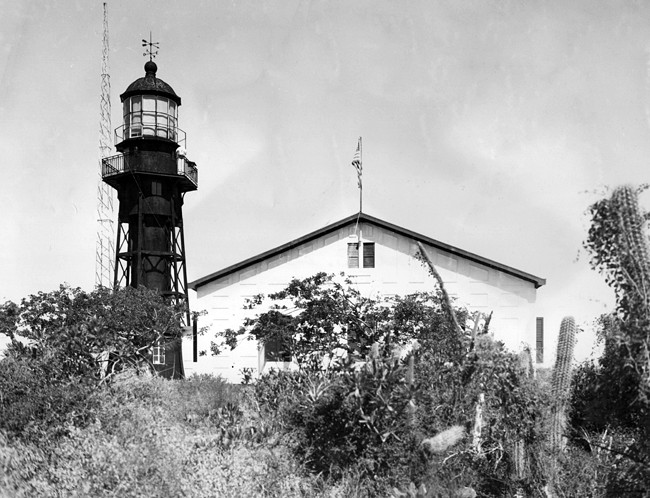
A good portion of the building materials deposited on the island by the Spanish had been painted with red lead, which protected them from rust during the years the work was suspended. As some parts had still rusted and others were stolen or lost, a few new shipments of materials were required before Mona Island Lighthouse was completed and then first activated on April 30, 1900. Under the direction of the Puerto Rican board of public works, the materials were transported up some 231 feet from the seashore, then roughly a mile overland to the selected construction site.
|
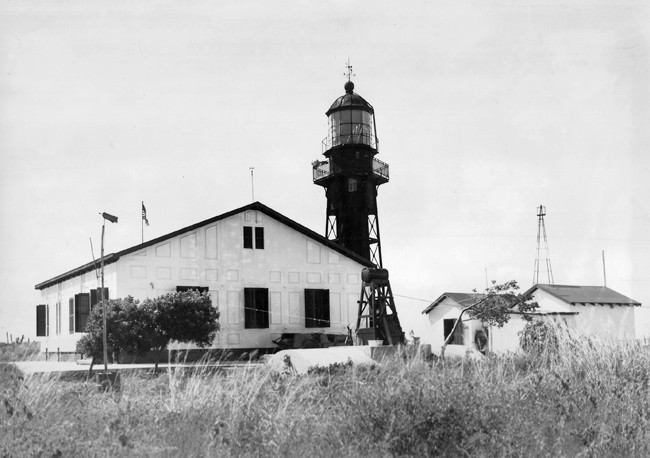
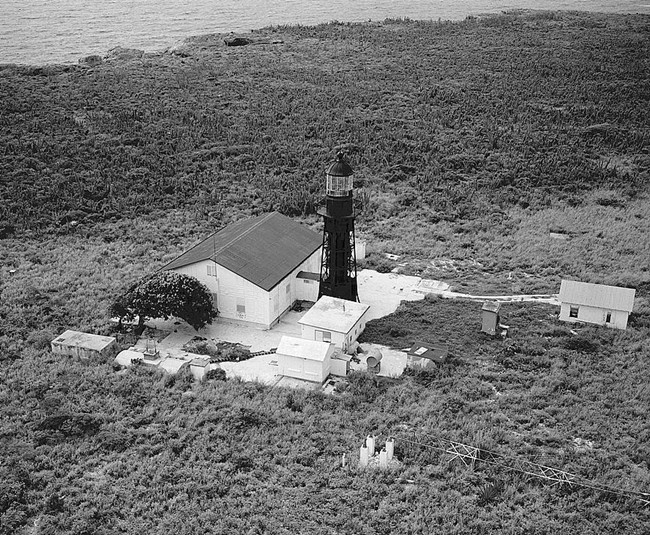
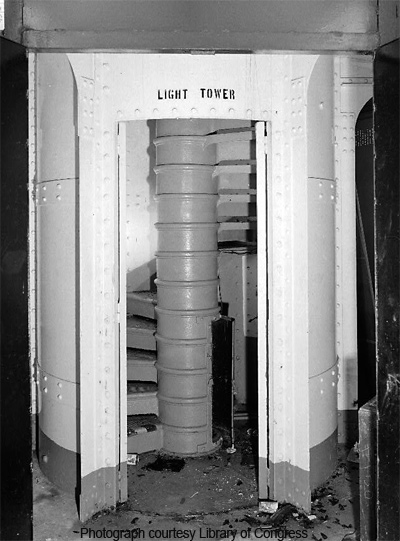
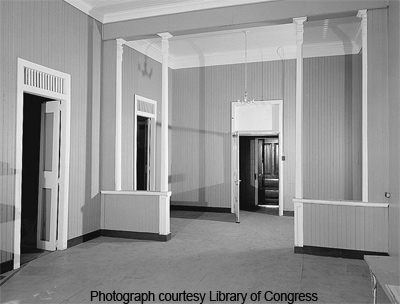
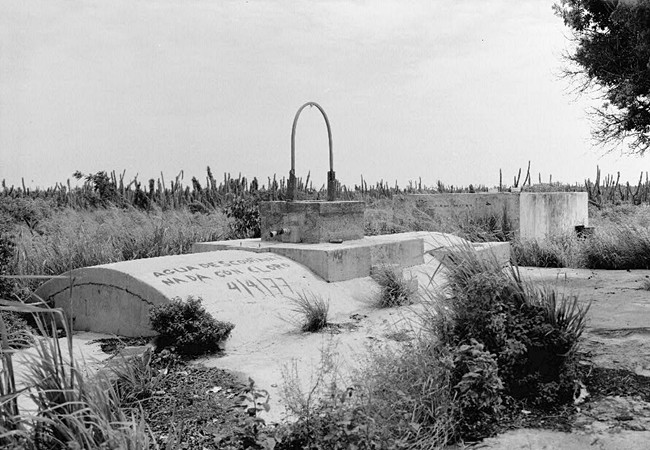
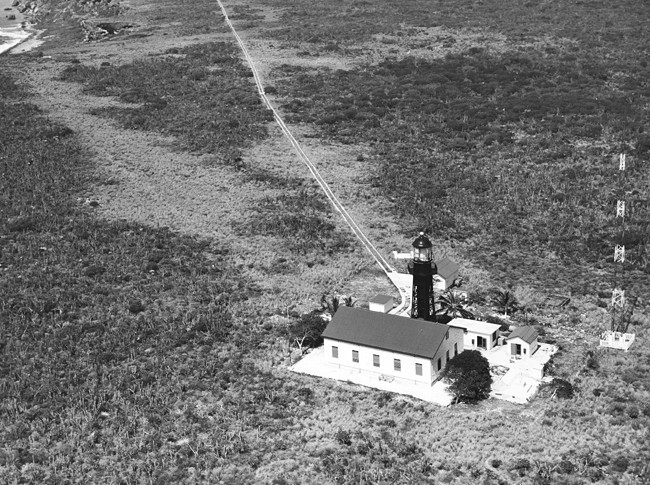
The keeper’s dwelling, built with steel plates and wooden framing, measures roughly 66’ x 33’ and is divided into seven rooms. The dwelling was painted gray with a red gable and was connected to the tower by a covered steel passageway. Two additional structures on the site served as kitchens, and the station also had two cisterns: one near the dwelling, and a second about half a mile distant. The material for the second dwelling was placed in storage in 1900 and never used for that purpose.
Commander G.W. Metz was assigned to oversee the fifteen lighthouses of Puerto Rico in November 1901, and he gave the following report on the Mona Island Lighthouse. “The station is the most isolated and unattractive one in this subdistrict, its shores being surrounded by reefs through which it is impossible to enter safely except at certain seasons of the year. It is farther out to sea than any other lighthouse under the charge of the Light-House Service.”
Metz continued:
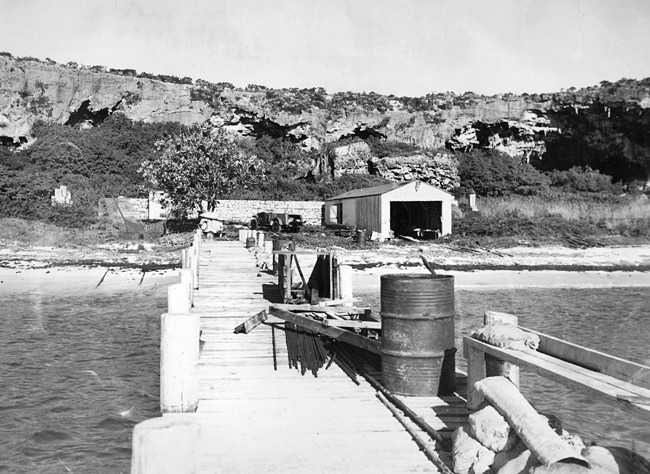
There is only one landing and this is on the weather side of the island through an opening blasted in the reef, and which is just large enough for the passage of a boat: heavy breakers are constantly breaking at this point, and without a large steam tender it is impracticable to send a party on shore or to land supplies. Even the station boat, with a keeper in charge who understands the situation perfectly, runs great danger, and he is frequently obliged to stand off and on for days at a time before a favorable opportunity comes to get within the reef. He has several times been blown miles out of his course, once even nearly to Santo Domingo.The place is so unattractive to the keepers that it is difficult to get anyone to go there. None of the keepers are willing to reside there more than two years. It is impracticable to secure the services of physician at this station in less time than four days, as Mayaguez, the nearest port, is forty miles distant and he has to make the trip there in a small sail boat. No one lives on the island except the light-house keepers and three or four peons - fishermen – and the soil is so poor and arid that little will grow except cactus and palm trees.
While there was a high turnover rate with the assistant keepers, two had keepers spent over a decade on the desolate island. Simeon Martin was in charge of the station from 1902 to 1914, and Manuel P. Castillo was head keeper for the next decade. On April 28, 1919, Keeper Castillo used the station’s launch to render assistant to a party whose schooner struck rocks near Mona Island. In 1922 and 1923, Keeper Castillo was awarded the efficiency flag for having the model station in the district.
|
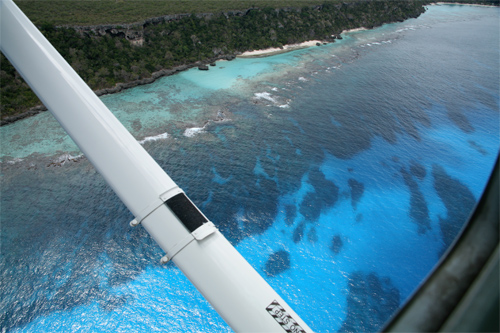
After a rough trip of four hours in Mona Passage the strange island structure of Mona came into view, a tableland rising abruptly from the water. The seas were breaking against the cliffs and over the reef on the southeast side through which the tender’s whaleboat was to find an opening to a little strip of sand known as “Playa Pájaro,” or Bird Beach. …Thanks to the work of a former company of guano workers, there are useful range marks on the beach to define the only opening through the reefs. These were plainly discernible from seaward, brightened by the morning sun. On the near approach to the reefs, in shoaler water, it was also noted that the seas were coming shorter and higher. Every breaker carried the boat toward the reef at great speed, so that the steering called for skill and judgment. At the moment of passing through the critical passage in the reefs a giant comber shot the boat forward on its crest for a distance of perhaps a hundred feet into a placid sheet of water behind the reefs. …
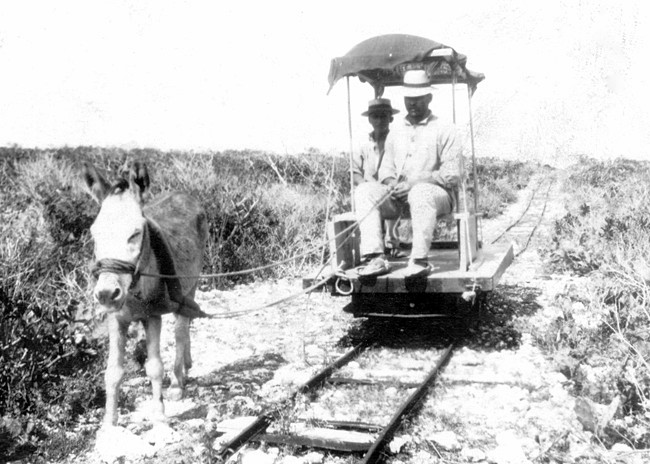
In former days a tram-road was built to the light station. A little four-wheeled car, with canopy top ingeniously contrived by the keepers, with “Macario,” a droll-looking, mouse-colored mule, the size of a goat, furnish transportation. Here we were met by the lightkeepers, in their spotless white uniforms with polished brass buttons. While the keepers speak only Spanish, they are not greatly different in their character, vicissitudes of life, and experience from keepers in the United States. They are devoted to their families and very solicitous about the education of their children, willing to make any sacrifice for them. At this station they must be hardy, experienced sailors. …
At last the light station is reached and Macario sets up a great bray. Chickens, goats, and children are in abundance around the station. …This location is a healthy one for keepers were it possible to do any gardening or secure any fresh provisions, but no soil exists on the honeycombed surface of the rock, so that no gardening is possible. The eggs and chickens that escape ravenous wild hogs in the cactus brush about the station are very useful. Keepers with children of school age leave their families in Porto Rico during the school term. …
The maintenance work of a light station in such a location is a problem that requires study. Nature never stands still. The cactus spreads over the ground at the station, intent on covering it all, and has to be fought back. To maintain the only means of transportation, the mile and a quarter of tramroad and the additional mile of roadway is a constant care. The ravages of the “comején” (wood-eating ants) have transformed a frame kitchen into a shell. To replace it with concrete requires that all the material be transported from the beach. …But these items are a part of a day’s work. One has to know the country and the people to overcome such difficulties.
The first hurricane of the 1926 season passed over Mona Island on July 23, destroying the road linking the station to the boat landing and damaging the station’s structures. While repairs to the tower and dwelling were made in 1929, a derrick had to be used to raise supplies from the landing at the beach to the top of the mesa until a roadway up the cliff was finished in 1930.
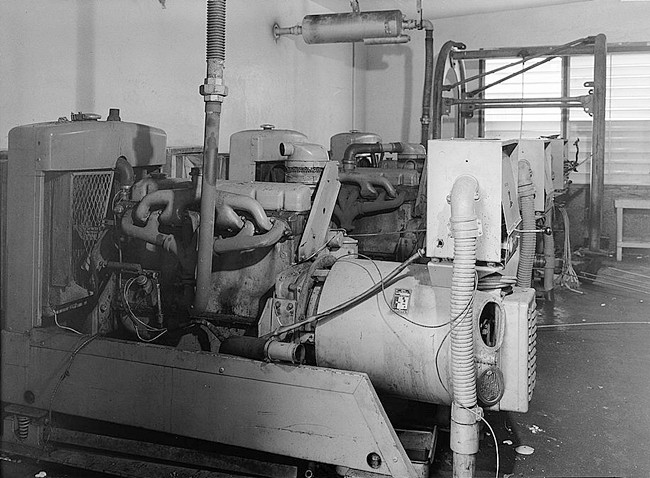
The station was electrified in 1938 through the installation of engine generators and an electric-wind plant. With the availability of electricity, a radiobeacon was established on Mona Island – the first such navigational aid in the West Indies.
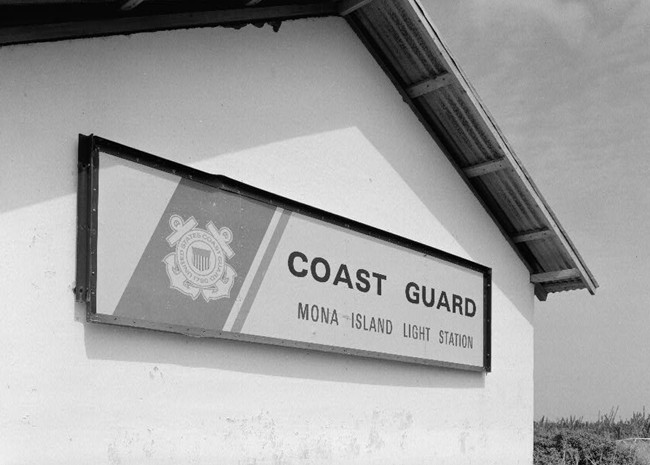
The light was automated in 1973, and then in 1976 the lens was removed from the tower and the light was relocated to a position near the center of the island. The Department of Natural Resources of Puerto Rico currently controls the station, which has been abandoned by the U.S. Coast Guard.
Keepers:
References