Point No Point, WA 


Select a photograph to view a photo gallery
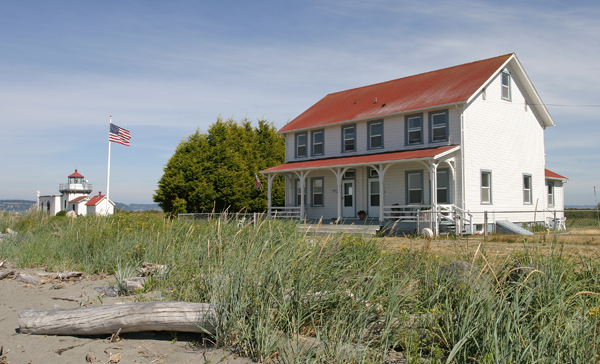
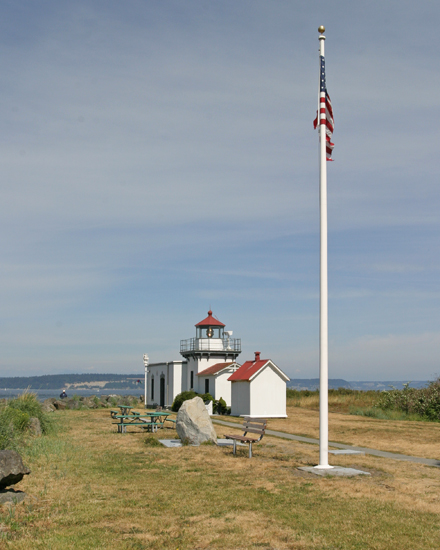
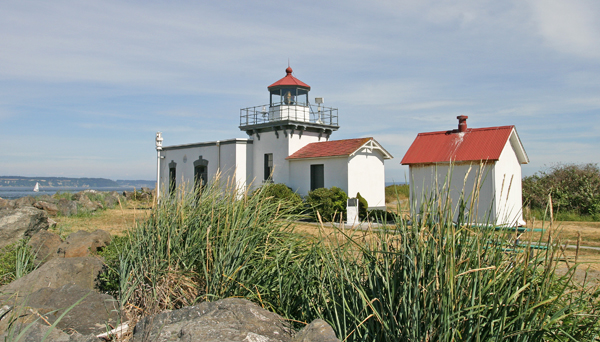
Photo Gallery
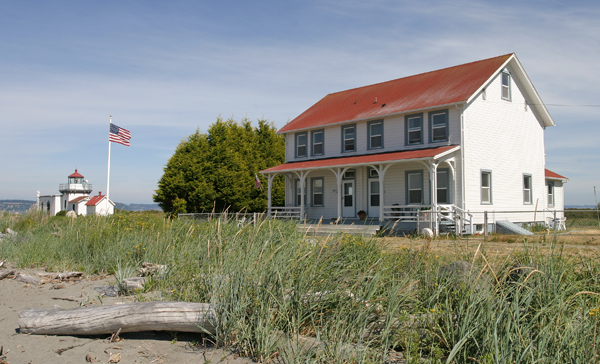
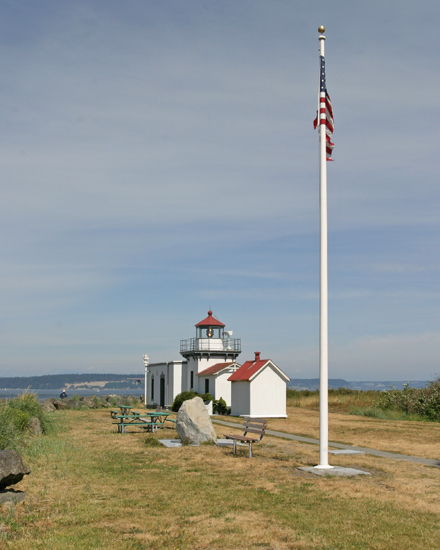
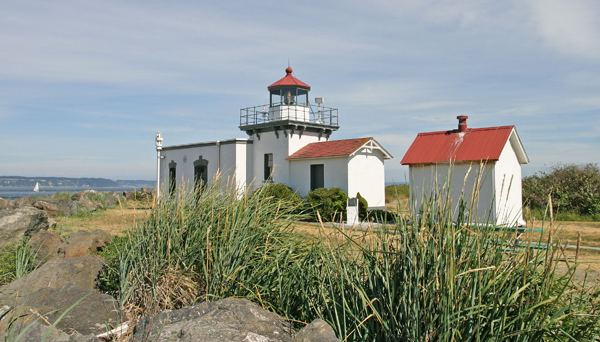
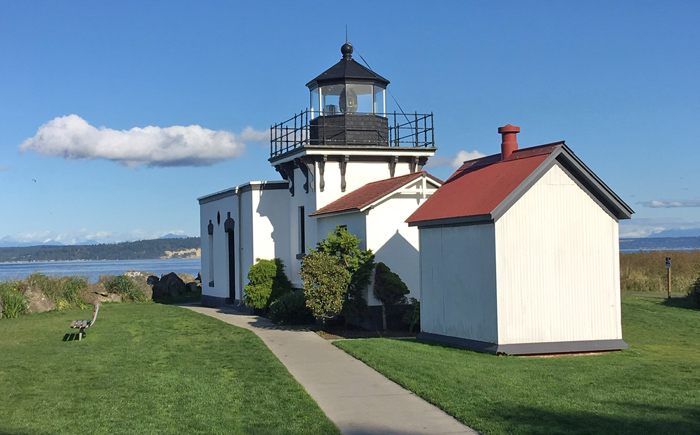
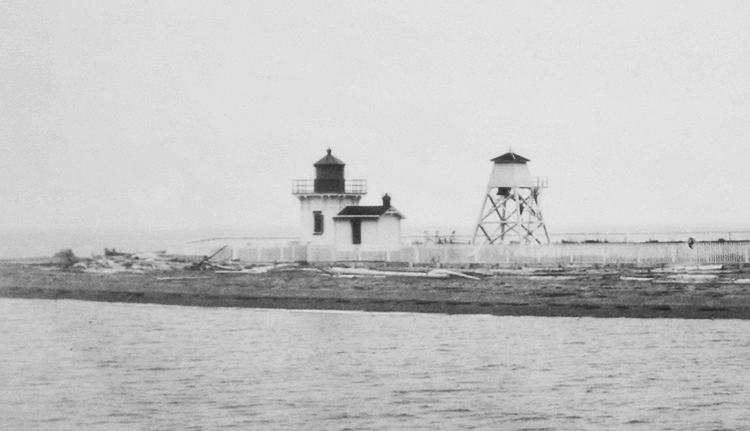
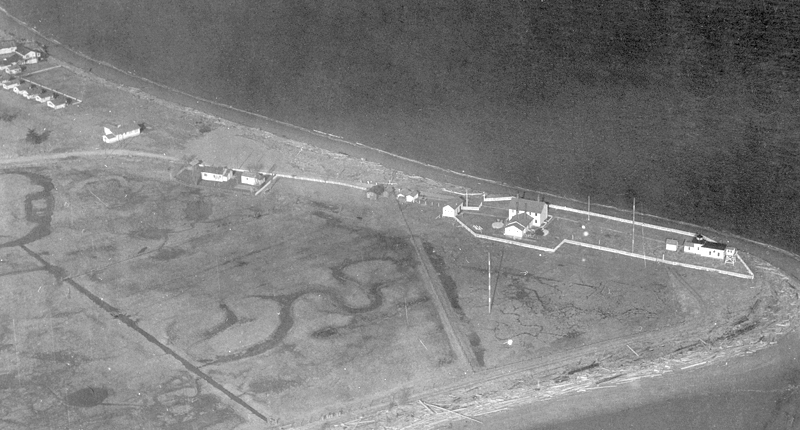
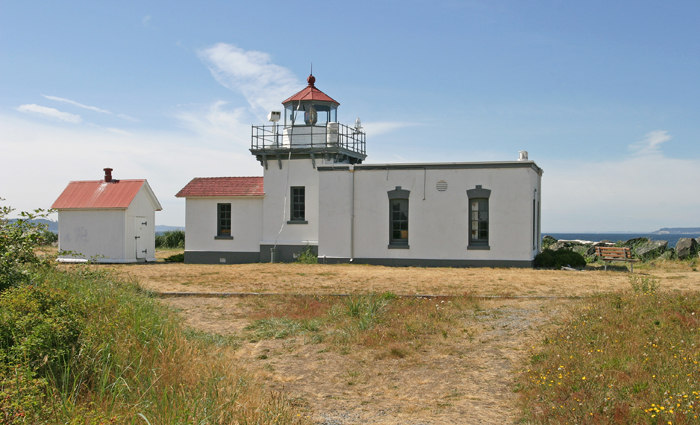
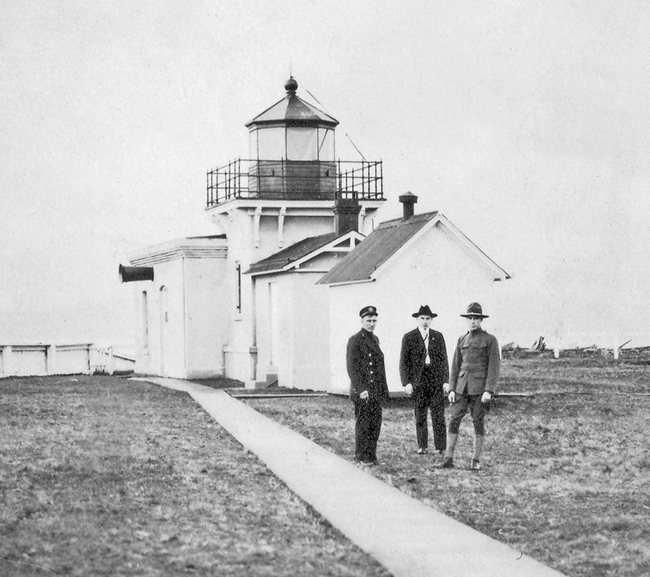
Photo Gallery
Photo Gallery
This point is about twenty miles from Port Townsend on the route to Seattle, Territory of Washington. The rapidly increasing importance of the commerce of Puget Sound, which will be still augmented by the Northern Pacific Railroad, requires the construction of such aids to navigation as will more effectually open these waters to foreign as well as home trade.
Congress granted the requested funds on March 3, 1873, but Francis James, the owner of the point, was reluctant to sell the property. The Lighthouse Board might have expected a struggle over the land, as James had demonstrated his fighting nature while briefly serving as a keeper at Cape Flattery. There, a dispute with a fellow keeper had escalated into a gunfight. James finally agreed to sell ten acres on the point for $1,000 in March 1879, and work started on the station’s buildings that September.
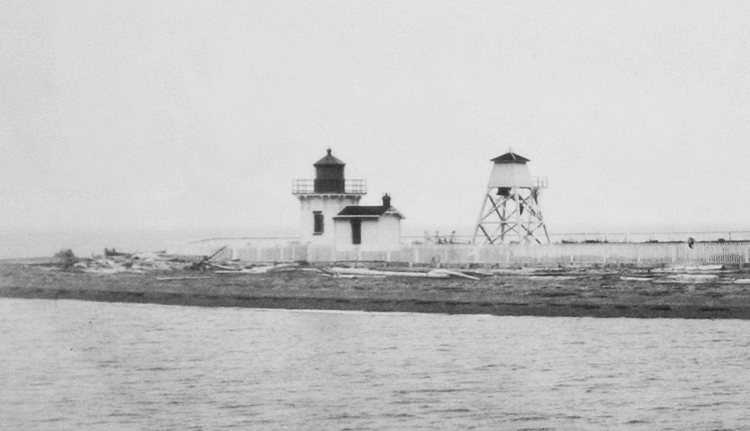
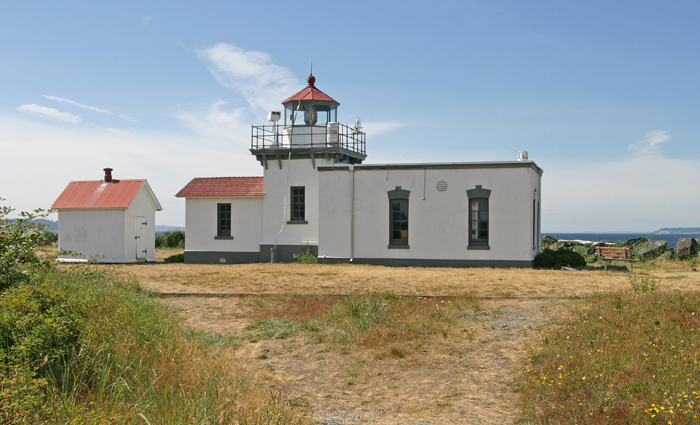
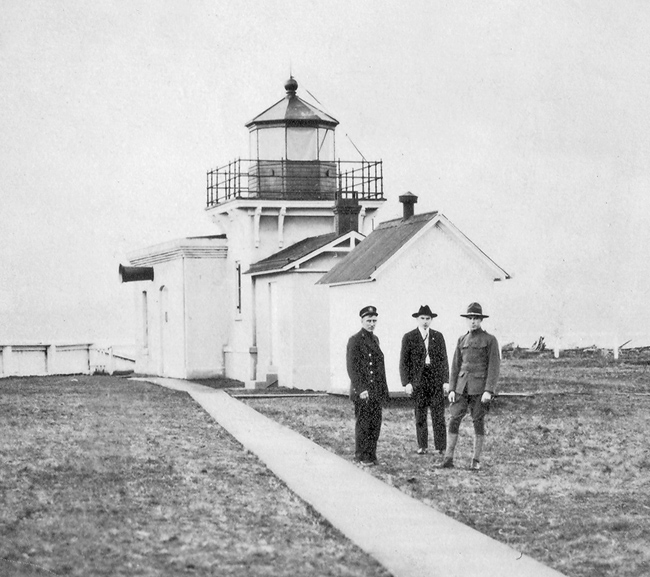
By the end of the year, the eleven-foot-square, brick tower and keepers’ duplex were close to completion, but the lens and glass panes for the lantern room had not arrived. The Lighthouse Service was determined to have the light exhibited on January 1, 1880 as printed in a Notice to Mariners, so John Maggs, the first keeper, who also had a dental practice in Seattle, was ordered to hang a common kerosene lantern from the dome of the lantern room that evening. A fixed, fifth-order, L. Sautter, Lemonnier et Cie Fresnel lens arrived on January 10, and the glass planes followed on February 1. Shortly thereafter, the lighthouse was fully functional, using a Hains’ mineral-oil lamp to exhibit a fixed white light at a height of twenty-seven. A brick watchroom, measuring ten by twelve feet, was attached to the landward side of the square tower.
Caroline Maggs and her two young children also arrived at the station in February, and, given Caroline’s delicate condition, a cow was ordered to supply milk for the expected baby. The bovine arrived by schooner, was lowered over the vessel’s side using a sling, and then swam ashore. The first baby born at the station in July 1880 was a girl named Mollie.
A 1,200-pound fog bell, formerly used at New Dungeness Lighthouse, was transferred to Point No Point in April 1880, and a square, pyramidal, frame tower for it was built a short distance south of the lighthouse. The enclosed upper portion of the tower contained weight-driven machinery that would strike the bell once every ten seconds. Once wound up, the weights would operate the bell for two-and-a-half hours before descending the twelve-and-a-half feet to the ground.
Maggs encountered difficulties with one assistant keeper named Abram Manning. One of many run-ins between the two keepers was recorded by Maggs in his logbook: “This a.m. Assistant Manning ran bell between 12 and 1 o’clock when there was a good horizon three miles off with not a particle of halo around the light and when I told him about it, that there was no need of running bell he said that I was a ‘damned liar.’” Enraged at the accusations, which included keeping the light in a sloppy manner, Manning armed himself with a pistol and, accompanied by another man, took control of the tower. Inspector Reiter soon arrived to investigate the situation, and Manning and his family were required to pack up their belongings and leave with the inspector. Maggs recorded his feelings in his log on that long-awaited day when Manning departed after just over six months at the station: “Myself and family all feel great relief that the Mannings are all gone for we have suffered untold annoyances from the first day that they arrived here until today they left from here.”
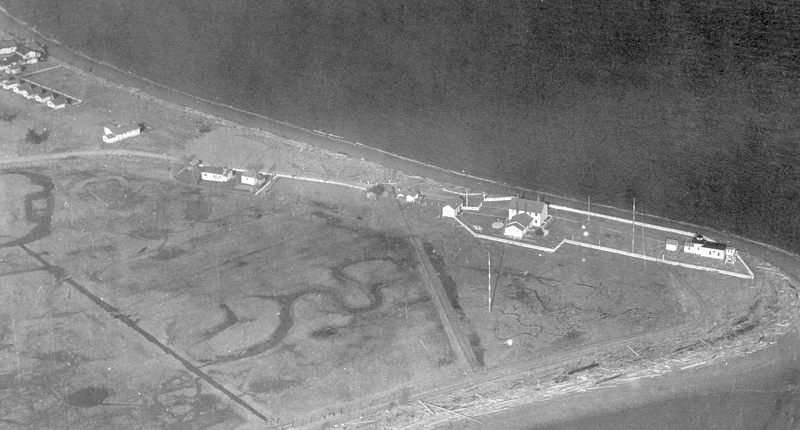
In 1880, a four-mile-long horseback trail was opened through dense underbrush to enable the keeper to obtain his mail by land from the post office at Port Gamble. The station was supplied with a boat and boathouse, and landings were made on the gently sloping sand beach near the dwelling.An 1881 inspection report declared the station unhealthy, with its residents suffering from “fevers.” During the summer and fall, Indians caught large quantities of dog fish on the point for oil and discarded their bodies on the beach, where they would decompose and produce a sickening stench. Not much could be done to solve that problem, but a dike was built along the west side of the property to reclaim salt marshes, which served as breeding grounds for mosquitoes.
A few years after the establishment of the station, settlers started to occupy the high land northwest of the lighthouse. One of the first settlers was Hans Zachariasen, for whom Hansville is named. The lighthouse was tightly connected to the small community. From 1893 to 1914, Mary Scannell, wife of Keeper Edward Scannell, served as the postmistress. Later, Cora Cary, wife of Keeper William H. Cary, opened a store in the town and subsequently operated a weather reporting station out of the lighthouse. Cora would take readings from the instruments three times a day and phone the information to the weather service at Boeing Field in Seattle.
In 1893, the Lighthouse Board noted “the present fog bell at Point No Point does not satisfy the needs of the service,” and requested $6,000 for a first-class fog signal for the station. The requests were repeated annually until Congress finally approved the funds on July 1, 1898. Workmen and the necessary materials were landed at the point on October 4, 1898, and a brick fog signal building, attached to the lighthouse by a passageway, was completed on the seaward side of the tower by the end of November.
A Daboll trumpet and oil engines were not shipped from the East until June 1899, and the Daboll trumpet commenced operation on April 1, 1900, sounding three-second blasts separated alternately by silent intervals of three and twenty-one seconds.
In 1915, the light source was upgraded to an incandescent-oil-vapor lamp inside a fourth-order, group-flashing Fresnel lens, which is still mounted in the tower today. On May 20, 1930, lightning struck the lighthouse, and, instead of following the lightning rod to the ground, it passed through the lantern, the lens pedestal, and copper oil supply tubing and air tubing to reach the ground.
The station was automated in 1977, but the keepers’ dwelling still served as a home for Coast Guard personnel for several years. Kitsap County expressed interest in acquiring the lighthouse in 1992, but it wasn’t until 1998 that the Coast Guard declared the property as surplus, and a long-term lease on the property was granted to the county. In a forward-looking move, the county has since purchased roughly thirty-five acres adjacent to the lighthouse, providing one-and-a-half miles of publicly accessible beach with views of Mount Rainier, Mount Baker, the Seattle skyline, and Whidbey Island.
On June 16, 2006, the Fresnel lens stopped its years of countless rotations, having been replaced by a modern, plastic beacon mounted by the Coast Guard on the railing outside the lantern room. Also that year, Friends of Point No Point Lighthouse was formed to help with the restoration and interpretation of the site.
The U.S. Lighthouse Society relocated from an office building in San Francisco’s financial-district to one side of the keepers’ duplex in April 2008. The other half of the duplex is now available to the public as a vacation rental, to provide an income stream for maintaining the property.
In 2009, Point No Point Lighthouse, deemed excess by the Coast Guard, was offered at no cost to eligible entities, including federal, state, and local agencies, non-profit corporations, and educational organizations under the provisions of the National Historic Lighthouse Preservation Act of 2000. Kitsap County submitted its application for the lighthouse property in April 2010, and in July 2012, the Department of the Interior announced that the lighthouse would be transferred to the county.
During the spring of 2010, Point No Point Lighthouse was one of twenty-five historic properties to participate in an online Partners in Preservation poll, sponsored by American Express and the National Trust for Historic Preservation. Eleven properties received significant grants, with $100,000 going to Point No Point Lighthouse. The money was used to rehabilitate the oil house, install new shingles around the base of the lantern room, hang a new front door, run a new electrical line to the lighthouse, remove an inactive modern fog signal, replace the lantern room glass, and strip, patch, prime and paint the exterior walls.
A re-opening celebration was held at the restored lighthouse on May 12, 2012. “After 133 years of service, this Kitsap County landmark will continue to shine for another century,” said Jeff Gales, Executive Director of the U.S. Lighthouse Society in announcing the completion of the work. “It offers awareness, comfort and hope to all who gaze upon her, and quietly reminds us of this region’s rich maritime history. The Point No Point Lighthouse summons all of us to lend our support and to contribute to her ongoing preservation in some way, because unlike the past, today all of us can become keepers of the light.”
Keepers:
References